
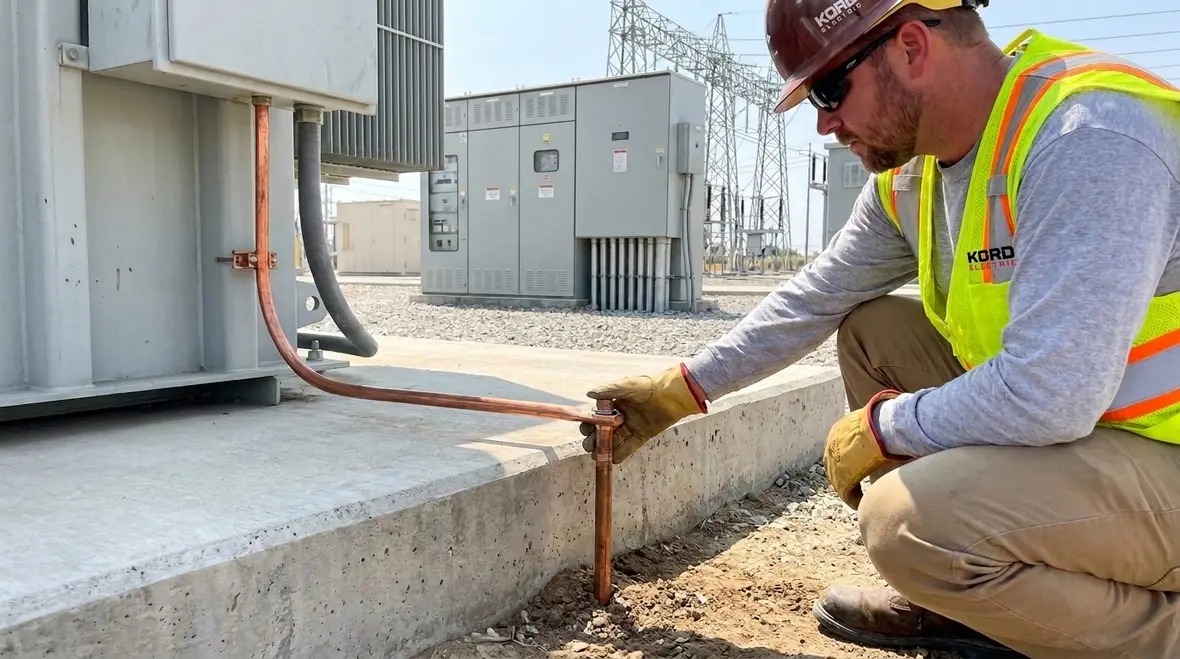
NEC Grounding Electrode System 2 kV NFPA 70 270.50
In commercial and industrial facilities, the NEC grounding electrode system 2 kV is not a “set it and forget it” item. Within the first pass, our team at Kord Electric makes sure the foundation of safety is correct, because the rules in NFPA 70 Section 270.50 focus on how to build the grounding electrode system when the service equipment goes above 2 kV. And yes, that means higher voltage brings higher expectations. If you have ever watched a movie where one wire “almost” does the job, you already know why electrical codes do not trust “almost.”
In this guide, we explain what NFPA 70 Section 270.50 requires, how our technicians verify compliance, and why a properly designed grounding electrode system protects people, equipment, and operations. We keep the tone steady, like a calm voice in a busy control room, because grounding work deserves focus, not drama.
What NFPA 70 Section 270.50 is really trying to prevent
NFPA 70 Section 270.50 addresses the grounding electrode system used for services and installations operating at 2 kV or more, and it expands beyond the simple grounding you might see in smaller sites. When voltage rises, fault currents can rise too, and the path to earth must stay reliable. Therefore, the code focuses on creating a system that can handle fault conditions without turning the earth into a chaotic side character.
In plain terms, the grounding electrode system must connect the service neutral and bonding points to earth in a way that supports stable system performance. As a result, our expert service staff at Kord Electric checks bonding continuity, electrode placement, and materials before any energization. This is not just paperwork. It is how commercial and industrial facilities keep power events from becoming long outages, equipment failures, or safety incidents.
How the NEC grounding approach changes above 2 kV
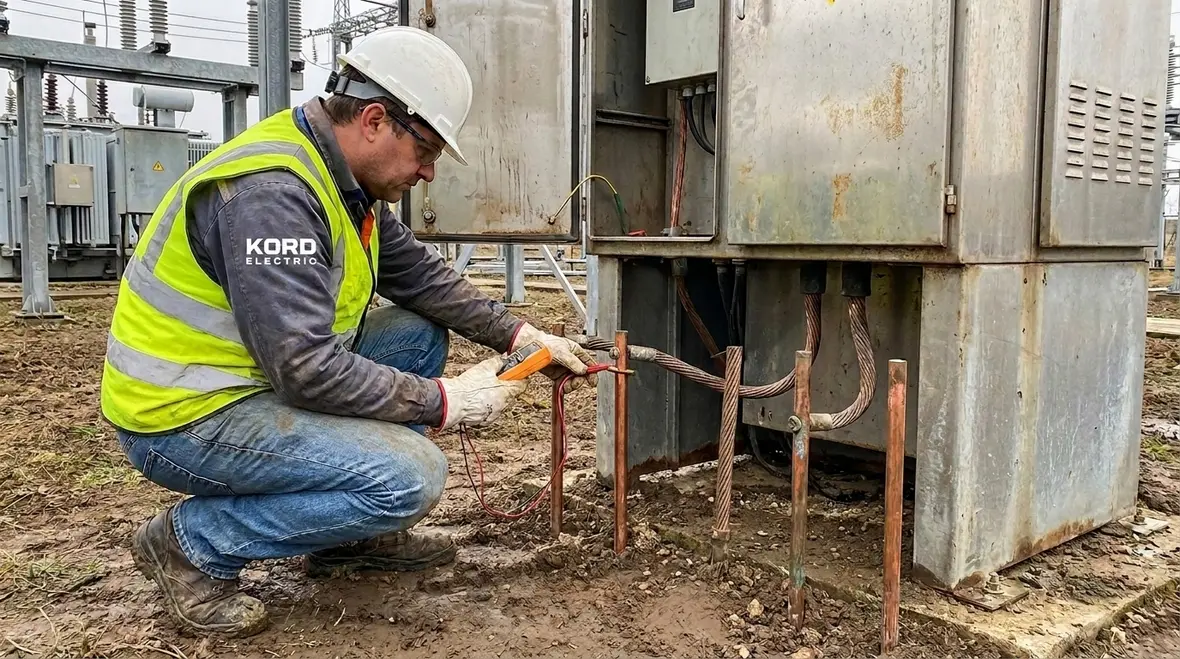
Once a facility passes the threshold where the NEC grounding electrode system 2 kV rules kick in, we stop thinking in one simple line and start thinking in a network. Fault current must flow to ground through electrodes designed for the environment and the required electrical performance.
Our technicians explain that the goal is both electrical and practical. Electrically, electrodes must form an effective grounding path. Practically, they must be installed so they remain effective through soil conditions, building expansion, and future modifications.
Because many sites include multiple systems, the design must coordinate with other grounding and bonding components. Consequently, if the grounding electrode system is weak or disconnected, other parts of the system may carry extra stress. That is when you see nuisance alarms, protective device misoperation, or damaged switchgear. And then the maintenance team gets the fun task of chasing a problem that never had to exist.
Electrodes, connections, and material choices that hold up in the real world
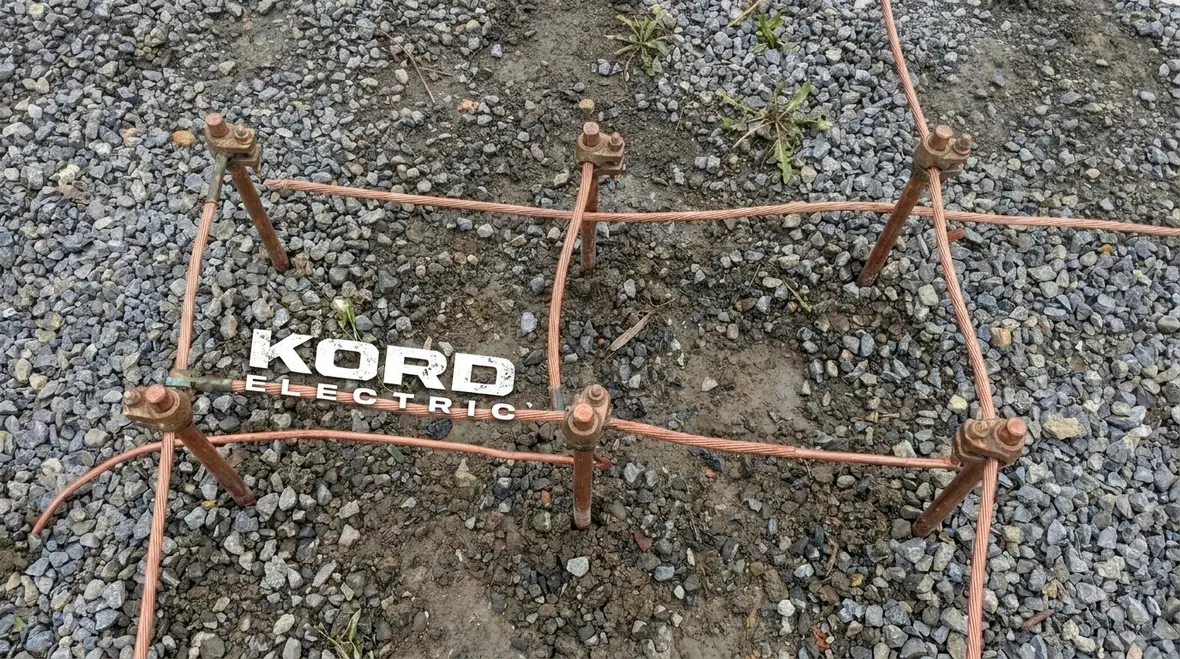
Section 270.50 does not only tell you that electrodes must exist. It also guides how they connect and how they function as part of the grounding electrode system. At Kord Electric, we treat this as an engineering review, not a site guess.
First, we confirm which electrodes apply to your facility based on the service design and grounding scheme. Then, we examine how those electrodes connect to each other and to the system bonding points. In practice, this means we verify connection methods, routing, and how the connections remain durable over time.
Second, we evaluate materials with site conditions in mind. Soil chemistry varies widely across commercial campuses, manufacturing plants, and mixed use major properties. Therefore, corrosion resistance and long term integrity matter. Our team looks at the full installation path, from electrode placement through conductor runs and terminations.
We check bond integrity so the grounding path stays continuous during normal operations and fault events.
We review conductor routing to reduce strain, damage risk, and future rework during construction.
We verify electrode placement and coverage based on the grounding scheme, not convenience.
When we document these steps, our customers do not just get a compliance checkbox. They get a clear trail of decisions that supports safe commissioning and easier troubleshooting later. If you want a broader NEC context while you review these details, resources like Understanding NFPA 70: The National Electrical Code Explained for 2026 help tie grounding work to the overall code framework for commercial and industrial facilities.
Design review steps our technicians use for major property buildings
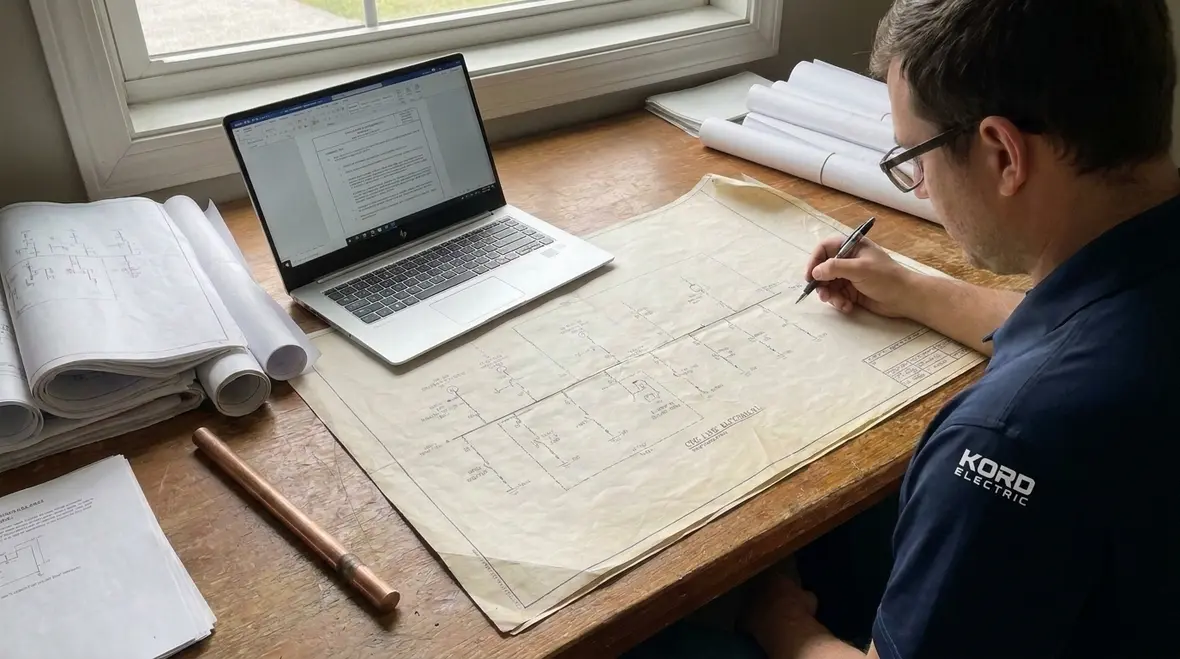
Commercial and industrial facilities rarely stay frozen in time. They expand, add generators, upgrade transformers, and adjust switchgear. For that reason, our review process plans for present needs and future changes.
Our technicians follow a structured flow. First, we study the one line diagram, the service rating, and the grounding and bonding details tied to the equipment. Next, we compare that to what NFPA 70 requires for installations above 2 kV, including the grounding electrode system responsibilities. After that, we assess field conditions such as existing grounding, available earth electrodes, and the physical layout where new electrodes can be installed without creating future conflicts.
Then we do something many people rush: we validate the installation details before they get buried. Finally, we confirm testing and documentation expectations so the system performs as intended.
To keep it relatable, think of commissioning like tuning an instrument. You can build a great instrument, but if you tune it wrong, the music still sounds off. Likewise, a grounding electrode system that “looks right” but lacks continuity or correct connections can lead to problems that show up at the worst time. And as we all know, power failures always pick the most inconvenient moment.
Testing and documentation so the system remains reliable over time
After installation, we treat verification as a normal part of the job, not an afterthought. The grounding electrode system must function correctly when it matters, so testing must align with the facility’s design and the compliance goals.
Our expert service staff explains that testing also protects your budget. When issues show up during construction closeout, you can fix them with controlled effort. When issues show up after the building is fully operational, the cost rises fast due to downtime, repair labor, and potential impacts to production or tenants.
Therefore, we focus on documentation that supports both ongoing maintenance and inspection readiness. That includes recordkeeping for electrode installations, conductor paths, bonding points, and any commissioning notes tied to the NEC grounded design. For larger properties, this documentation can also help with future alterations because it gives the next contractor a map instead of a mystery.
For facilities that combine high voltage distribution with critical operations, we often align grounding verification with other compliance planning steps inspired by broader NEC resources. Articles like How to Read NFPA 70: A Practical Guide to the National Electrical Code help facility leaders see how testing, documentation, and code interpretation work together when they review 2 kV and above systems.
Coordination with other standards and related code sections
Electrical systems live inside a larger safety ecosystem. While NFPA 70 is the core for the NEC rules, facilities often reference other requirements for fire protection, generator systems, and emergency preparedness. For commercial and industrial sites, coordination helps prevent gaps where one part of the safety plan assumes another part will cover it.
For example, fire pump systems and life safety circuits depend on dependable power quality and grounding performance. If grounding and bonding do not support stable fault behavior, it can indirectly impact sensitive controls and protective coordination. That is why we work with facility stakeholders and related trades to align installation details.
Organizations like fire pump education groups and code focused resources highlight how life safety systems rely on strong electrical foundations. We also encourage teams to review relevant NEC guidance in the context of their overall project. If you want an accessible overview of the NEC and related topics, Kord Electric points customers to educational resources, and Kordfire content adds context around the NEC framework, including deep dives such as NFPA 70: All About the National Electrical Code (NEC) 2026. For additional local guidance, Kordfire Australia also shares useful explanations that help teams understand how code language translates into field practice.
Our role stays focused on major property buildings and commercial and industrial facilities. We do not chase random residential jobs. Instead, we build grounded systems that keep operations stable, keep equipment safer, and support inspection readiness.
Because grounding is tied so closely to system stability, facilities that rely on high uptime often combine NEC grounding work with broader reliability planning. That can include coordination with services like Los Angeles County electrical services for multi site portfolios that need consistent standards across locations.
FAQ: NFPA 70 270.50 and grounding above 2 kV
Ready to upgrade or confirm your grounding electrode system?
If your facility operates above 2 kV, do not leave the grounding electrode system to chance. Kord Electric supports commercial and industrial teams with clear design review, expert installation oversight, and documentation that helps you stay inspection ready. We send technicians and expert service staff who explain what the code requires and why it matters, so your staff can make confident decisions. Contact us to review your current grounding electrode system and plan a safe, compliant path forward. We will keep the process steady, thorough, and on schedule.
For multi building portfolios or facilities planning broader upgrades, pairing a NEC grounding review with services like regional electrical troubleshooting, preventive maintenance, and panel upgrades helps keep the entire system aligned with NFPA 70 guidance. Whether you start with a single service entrance or a campus wide plan, the grounding electrode system is one of the best places to invest in long term reliability.
If your team wants to connect the details of NFPA 70 Section 270.50 to the bigger NEC picture, combining this guide with educational pieces from both Kord Electric and Kord Fire will give you a practical roadmap from code text to field ready decisions.


