
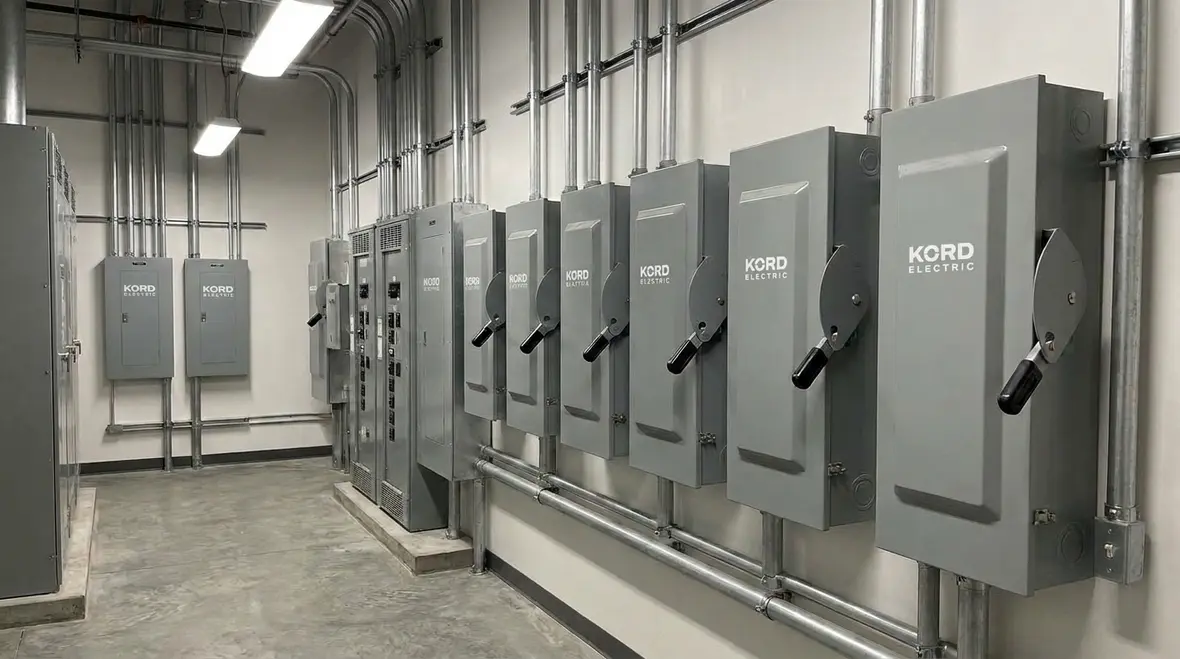
NEC Grouping of Disconnects Rules Code for Safer Shutdowns
NFPA 70 Section 225.34 lays out the Grouping of Disconnects Rules, and in the commercial and industrial world, that guidance keeps equipment shutdowns predictable, safe, and easier to maintain. At Kord Electric, we apply these NEC grouping disconnects rules code concepts with care when we plan electrical rooms, site layouts, and service arrangements for major property buildings. Specifically, Section 225.34 helps limit how disconnects get placed, so the right gear can be turned off without a scavenger hunt. And yes, we have seen teams look for the “mystery breaker” like it is a hidden boss fight.
Now, let us walk through what those rules mean in real life, how our technicians explain them on site, and how you can use the guidance to avoid costly rework.
NEC grouping of disconnects rules code: the backbone of safer shutdowns
In simple terms, Section 225.34 focuses on the way disconnecting means are arranged and grouped. For commercial and industrial facilities, that matters because shutdown procedures must work under stress, under maintenance, and during abnormal conditions. Consequently, the code treats grouping as more than convenience. It becomes a safety strategy.
When our expert service staff reviews designs, we look at how disconnects relate to equipment and to the access needs of qualified personnel. Then, we confirm that the arrangement does not create confusion about which disconnect controls which load. This is where misunderstandings happen. For example, one facility might group devices based on physical location only, while another might group based on electrical control relationships. Section 225.34 pushes teams to align physical grouping with the intended shutdown function.
Also, we remind project teams that code compliance must work during real operations. Fire drills, maintenance schedules, and after-hours troubleshooting all depend on clear electrical control layouts. In other words, the wiring diagram can look perfect and still fail the field test if grouping and access do not match what the code expects.
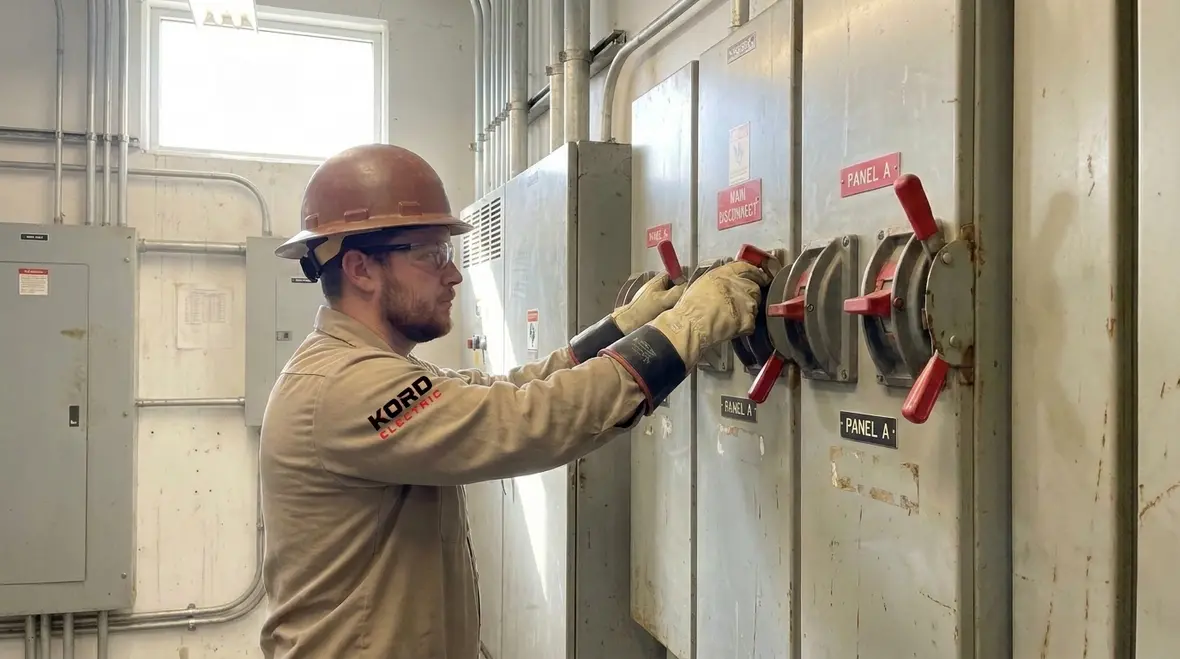
What Section 225.34 really demands for C and I facilities
In Section 225.34, the NEC makes a simple but powerful demand: disconnects that serve the same piece of equipment or the same structure need to be arranged together so qualified people can understand and operate them without guesswork. In commercial and industrial facilities, that plays out during power interruptions, emergency responses, and scheduled shutdowns for maintenance.
In practice, the NEC grouping disconnects rules code framework forces you to ask, “When someone needs this equipment off, where do they go, and what exactly do they operate?” That question goes beyond just “Where can I physically mount a switch?” Instead, it pushes the layout toward a logical, predictable shutdown path.
When our expert service staff reviews designs, we look at how disconnects relate to equipment and to the access needs of qualified personnel. Then, we confirm that the arrangement does not create confusion about which disconnect controls which load. This is where misunderstandings happen. One facility might group devices based purely on nearby wall space, while another might group based on electrical control relationships. Section 225.34 encourages teams to align physical grouping with the actual shutdown function so people do not have to “interpret” the layout under pressure.
We also connect Section 225.34 to the broader NEC context. If you are already exploring resources like Understanding NFPA 70: The National Electrical Code Explained for 2026, this grouping conversation becomes part of a bigger picture: how shutdowns, overcurrent protection, and system organization all work together to keep people and property safer during planned and unplanned events.
Also, we remind project teams that code compliance must work during real operations. Fire drills, maintenance schedules, and after-hours troubleshooting all depend on clear electrical control layouts. In other words, the wiring diagram can look perfect and still fail the field test if grouping and access do not line up with how people actually move through the space when the pressure is on.
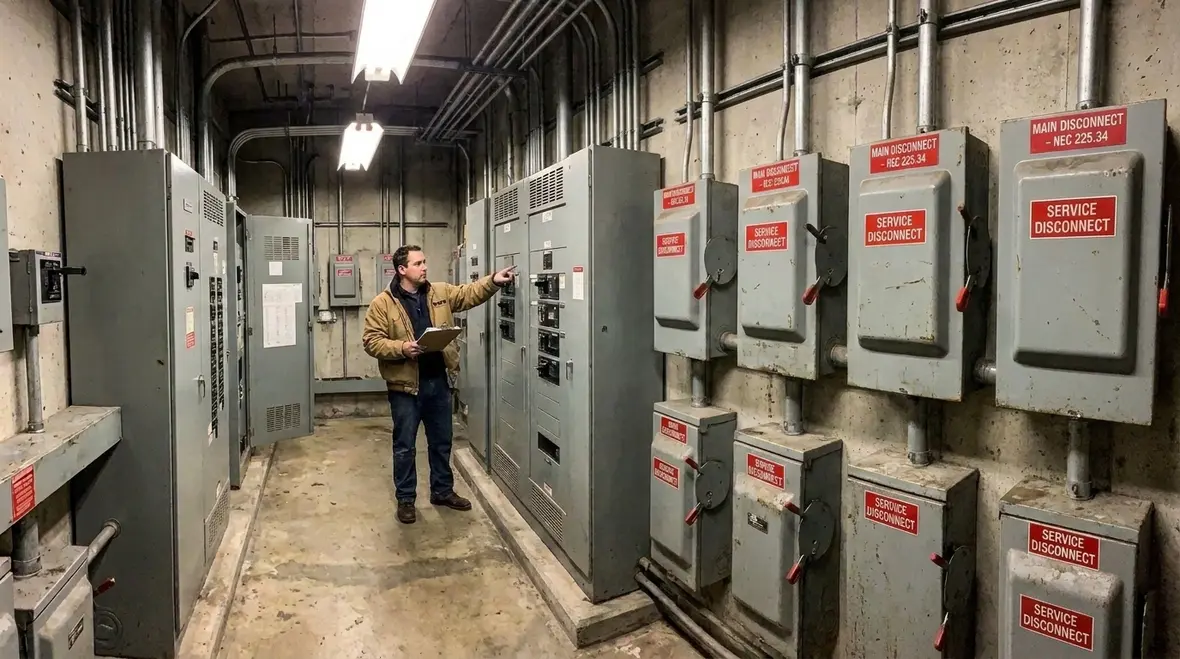
How grouping impacts labeling, access, and field work
Once grouping decisions are made, access and identification carry the load. Even if your disconnects meet placement rules, confusing labels can defeat the purpose of grouping. Therefore, we stress two practical points during commissioning support: clear labeling and reasonable working access.
Our technicians often explain it this way: if a qualified person must guess, they will waste time. And time, in electrical systems, acts like an uninvited guest. It shows up, sits down, and makes everything harder than it needs to be.
To avoid that, we align the grouping layout with how maintenance teams actually work. We also help ensure the disconnects connect logically to the equipment they serve. Additionally, we consider the pathway from the equipment area to the shutdown location. When panels and disconnects sit behind crowded racks or in tight corners, grouping can create friction instead of clarity. So, we review the site with the same eye you would use to find your way in a dim hallway with a flashlight that keeps dying.
We also link grouping decisions to other NEC driven practices like branch circuit identification and terminal labeling. If a facility is already following guidance similar to what we describe in our resources on branch circuit identification and NFPA 70 terminal identification concepts, the grouped disconnects become part of a consistent story: labels, directories, and device locations all point to the same clear shutdown logic.
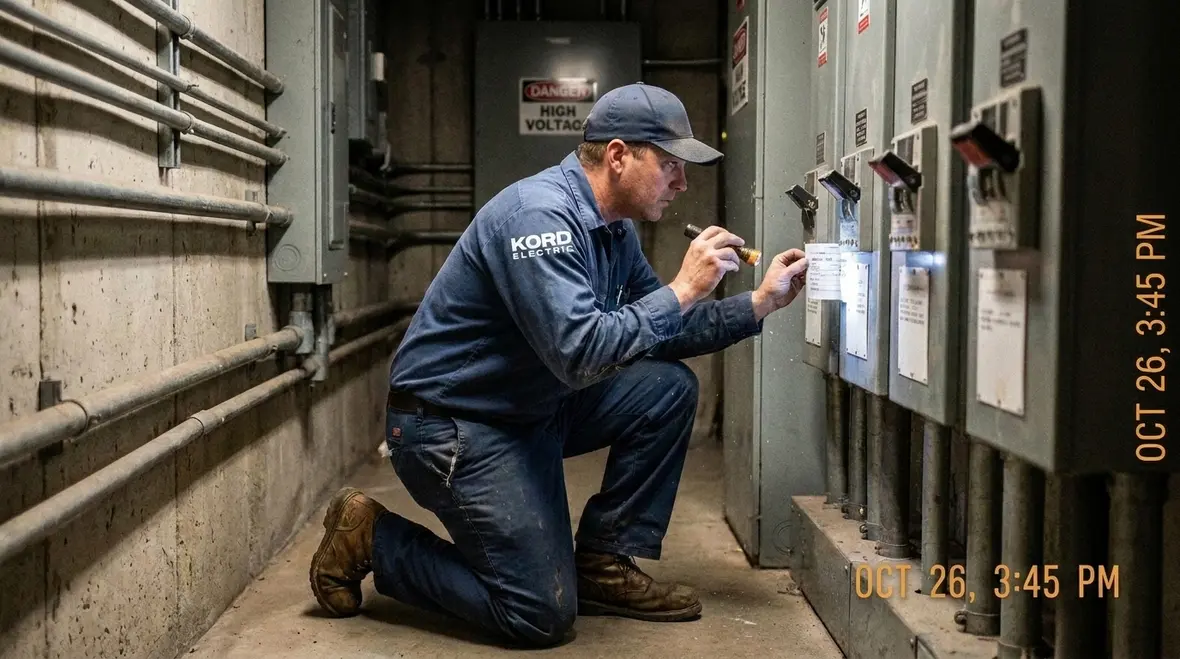
Translating grouping and labeling into everyday workflow
In day-to-day work, operators and technicians rarely think about Section 225.34 by number. They think about what it feels like to shut something down in a hurry without tripping the wrong load or creating a new problem. So we translate the NEC grouping disconnects rules code into simple field questions:
Can a qualified person reach the group of disconnects quickly, without moving obstacles or climbing over equipment?
Do the labels on those disconnects match the way the equipment is actually named on drawings, in the CMMS, and in operating procedures?
Does the group cover everything that needs to be shut down for safe work, or are there “stray” sources hidden somewhere else?
Would a new technician, on a night shift, understand which handle to operate just by reading and looking?
When those questions have clear answers, grouping and labeling are doing their job. When they do not, Section 225.34 becomes a starting point for corrections before the next outage, inspection, or emergency makes the gaps obvious.
Rules in practice: coordination with switchboards, panels, and feeders
In major property buildings, disconnecting means do not exist in isolation. They connect with switchboards, switchgear, panelboards, and feeder distribution. As a result, NEC grouping disconnects rules code requirements influence how a whole system gets laid out from the main service point onward.
Here is what we typically check during design review and field verification. First, we confirm that the grouped disconnects correspond to the equipment they control, including any feeders or branch circuits that supply it. Next, we verify that the grouped arrangement supports safe isolation for maintenance. Then, we ensure the arrangement does not disrupt required access around the equipment.
We also coordinate grouping with other NEC requirements that shape how power moves through the building. When you read about application scope, branch circuit limitations, or GFCI protection in the broader NEC framework, grouping becomes part of a layered safety system. Each decision about where to place and group disconnects either reinforces that system or undercuts it.
It is also important to coordinate with fire protection teams and life safety systems. Even though disconnect grouping is electrical, shutdown strategies can affect how systems are serviced. In that same breath, we keep an eye on related requirements you may encounter when teams reference fire code guidance, including materials and emergency response planning. If you are working alongside partners like KordFire, fire pump specialists, or fire code consultants, you will find that clear electrical shutdown logic makes the broader safety plan easier to implement. We have seen it again and again, especially when sites retrofit older layouts.

Field checks that keep grouping aligned with real operation
During walkthroughs, our technicians use a mix of drawings, labeling, and real-world observation to verify that the NEC grouping disconnects rules code intent is still being honored:
Trace the path from equipment to disconnects. We literally walk the route someone would take during a shutdown and confirm it matches documented procedures.
Check for “drift” after modifications. Tenant improvements, added mechanical loads, or new specialty equipment can scatter disconnects if updates were made piecemeal instead of with a grouping strategy in mind.
Confirm that grouped disconnects do not violate working clearances. Grouping should never come at the expense of safe approach and work space.
Align with AHJ expectations. Authorities Having Jurisdiction pay close attention to how grouping affects safe shutdown and emergency operations, especially in larger or more complex occupancies.
Common mistakes that teams make when they skip the intent
When people treat Section 225.34 like a checklist exercise, they often miss the intent. That intent is simple: make shutdown safe, make it clear, and make it dependable. Unfortunately, real projects sometimes fall into predictable traps.
One mistake is grouping disconnects based on convenience rather than control relationship. Another is ignoring the access needs of qualified personnel. Also, some teams group equipment in ways that complicate labeling, meaning the field crew cannot quickly identify the correct disconnect.
We also see errors during changes. A facility expands, adds new mechanical loads, and the electrical layout evolves without a full review. Then, the grouped disconnects no longer match the original control logic. At that point, the code compliance story becomes less “planned” and more “patched.” And yes, electrical patching can work, but it should not replace proper design coordination.
How to spot when your grouping strategy is slipping
You can usually tell that NEC grouping disconnects rules code intent is slipping when everyday tasks start to feel like detective work. Common red flags include:
Shutdown procedures that live only in one person’s head instead of in written, well understood steps
Disconnect groups that contain devices serving unrelated equipment with cryptic labels
New equipment fed from distant panels because “that was the easiest place to land a breaker”
After-hours calls where technicians lose time tracking down which disconnect actually controls the problem load
Our approach stays grounded. We review the updated one line, we confirm the disconnect relationships, and we document what the equipment will shut down. Then, we explain the reasoning in plain language, because our technicians do not just install. They also train teams on safe operation. When people understand the why, they stop treating safety like a guessing game.
How Kord Electric supports compliance on real sites
Kord Electric serves commercial and industrial facilities and major property buildings. We help projects move from design intent to field results without the usual surprises. To do that, we rely on experienced technicians and knowledgeable service staff who explain requirements clearly and support teams from planning through verification.
In many cases, we work alongside general contractors, facility managers, engineering teams, and electrical stakeholders. Consequently, we focus on how disconnect grouping affects the whole operation: maintenance access, shutdown procedures, and safe troubleshooting. When a site uses multiple systems across floors, wings, or process areas, we treat grouping as a coordination challenge, not a solo task.
We also support ongoing maintenance strategies. Over time, equipment gets added, moved, or upgraded. When that happens, our team helps you keep the NEC grouping disconnects rules code principles intact through change orders and service updates. The goal is stability. If the facility can shut down safely and predictably today, it should still do the same tomorrow.
And if you are thinking, “We will handle it later,” we politely suggest you do not. Later has a habit of showing up wearing a hard hat and demanding answers.
For facility leaders responsible for a portfolio across Southern California, it often makes sense to coordinate grouping reviews and broader code work through regional support. That is where our Los Angeles County electrical services come in, connecting NEC driven planning, installation, and maintenance across sites so shutdown strategies stay consistent instead of being reinvented building by building.
FAQ: NEC grouping disconnects rules code and Section 225.34
Facility teams often ask similar questions when they first focus on Section 225.34. The answers below highlight how the NEC grouping disconnects rules code concepts apply in real shutdown and maintenance work.
Next steps for your facility: book a Kord Electric review
If your facility plans a retrofit, a tenant improvement, or a new build, do not wait until the last inspection day to figure out disconnect grouping. We at Kord Electric review electrical layouts with a focus on the intent behind NEC grouping disconnects rules code and on how your team will use the equipment in real operations.
During a review, we walk your spaces the way your technicians do, test your shutdown paths against the NEC expectations, and identify where grouping, labeling, and access may need to be corrected before problems show up as failed inspections or extended outages. From there, we coordinate with your contractors, internal staff, and any fire protection partners to align electrical shutdown logic with your broader safety plan.
Contact us to schedule a compliance oriented walkthrough with our technicians and service staff, and we will help you move forward with clarity, safer shutdowns, and fewer field surprises. The sooner you align your disconnects with Section 225.34 and the rest of your NEC strategy, the easier it becomes to keep every shutdown predictable instead of dramatic.


