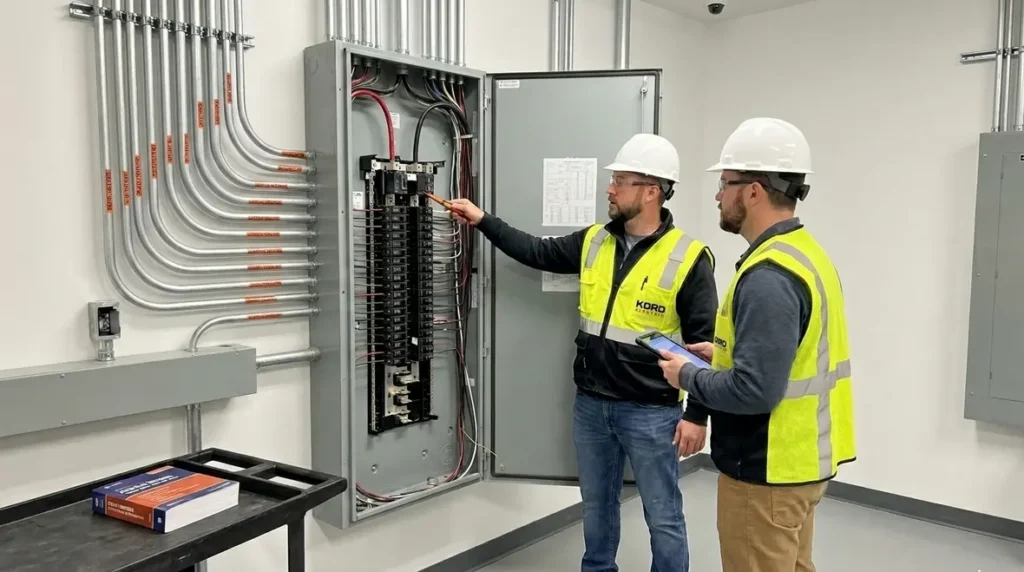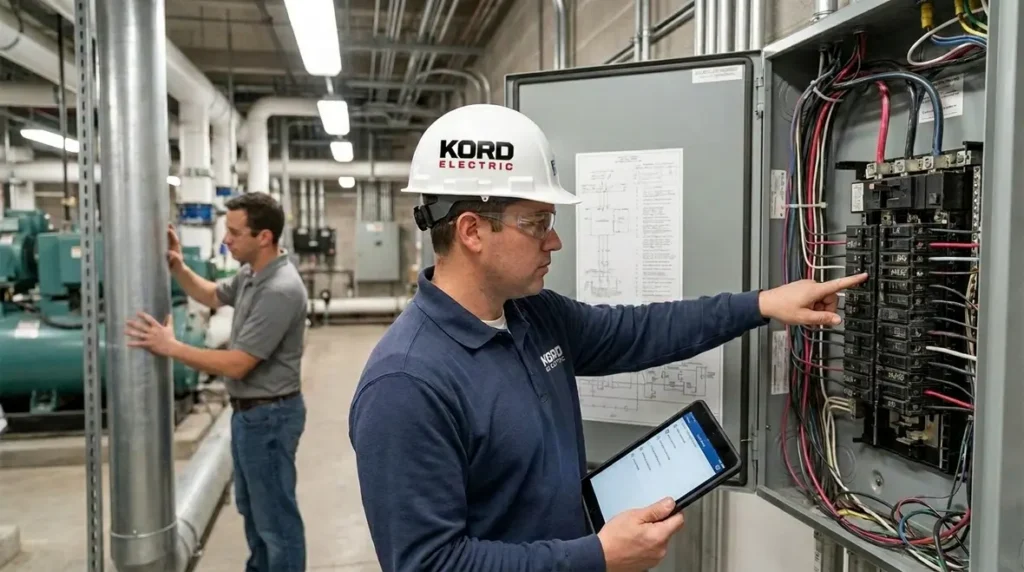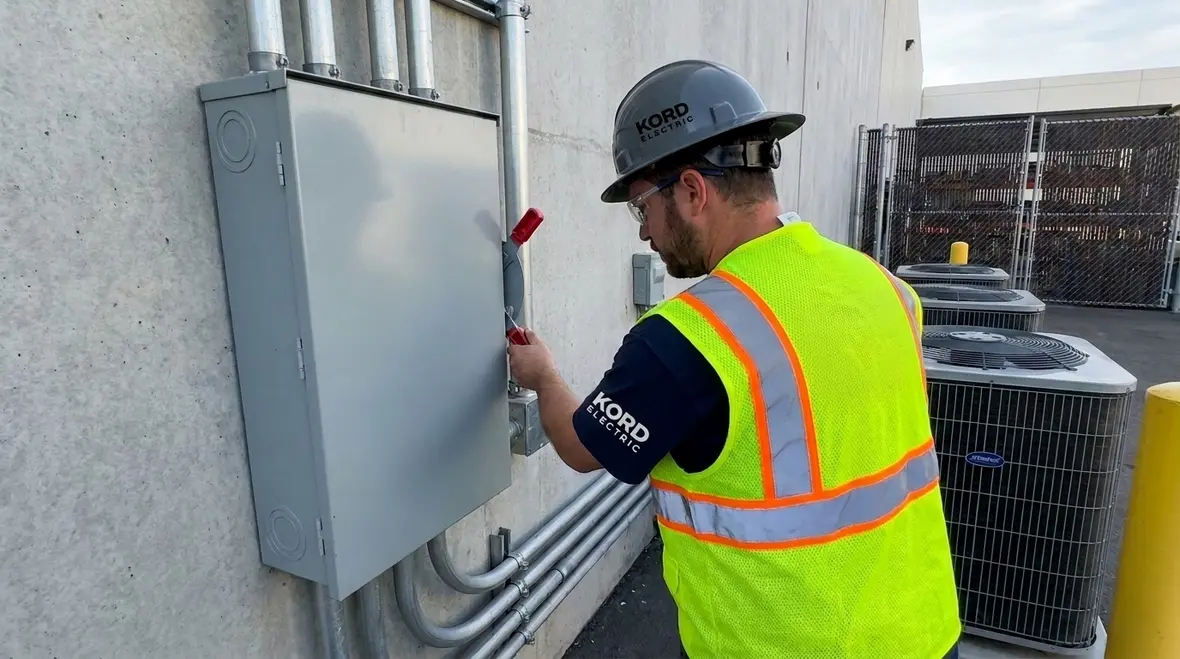
NEC Outside Disconnecting Means Code NFPA 70 225.31
In the real world, every commercial site has one simple goal: keep power under control, safely, and on schedule. That is why the NEC outside disconnecting means code matters so much to property managers and electrical contractors. In this guide, we explain NFPA 70 Section 225.31, the rules for outside disconnecting means, and what they mean when you design, upgrade, or troubleshoot electrical systems at businesses, warehouses, and major buildings. Then, as our Kord Electric technicians do on job sites, we translate the text into plain work practices your team can follow.
Now, before you picture a storm of red tape, remember: we are not here to make your day harder. We help you follow code so your equipment stays protected, your inspections go smoother, and your downtime stays shorter. If that sounds like a superpower, yes, it is. Sadly, it does not include lasers. Yet.
NFPA 70 Section 225.31 and how it protects commercial sites
NFPA 70 Section 225.31 sets requirements for the outside disconnecting means that serve certain loads. In simple terms, it ensures that responders and electricians can cut power from a safe location, typically near the equipment, without having to guess where the safest place is. For commercial and industrial facilities, this matters because systems often sit in outdoor yards, on building exteriors, or in areas with limited access.
Additionally, Section 225.31 supports two practical outcomes. First, it improves safety for maintenance and emergency response. Second, it reduces the risk of working live equipment during troubleshooting. And when you run a facility, live equipment accidents do not stay funny for long. Even if you like pop culture jokes, physics and arc flash still do not care.
Our expert service staff explains these rules with a clear process: they look at the specific installation, match the equipment to the NEC requirements, and confirm that the disconnect location, access, and labeling meet inspection expectations. They also document decisions so the next team does not have to “interpret” yesterday’s work like it is an ancient puzzle.
If your team wants more context on how these outside disconnecting means rules fit into the broader National Electrical Code framework, you can connect this planning with resources like Kord Electric’s guide Understanding NFPA 70: The National Electrical Code Explained for 2026, which lays out how the NEC shapes commercial and industrial projects from design through inspection.
Where the outside disconnecting means code applies and what your team should check
For many commercial and industrial buildings, the key question is not whether disconnects exist, but whether the disconnects follow the NEC outside disconnecting means code in spirit and detail. Section 225.31 applies in situations where an exterior disconnect is required for certain appliances and equipment. However, the exact match depends on the equipment type, how it is installed, and how the system is laid out.
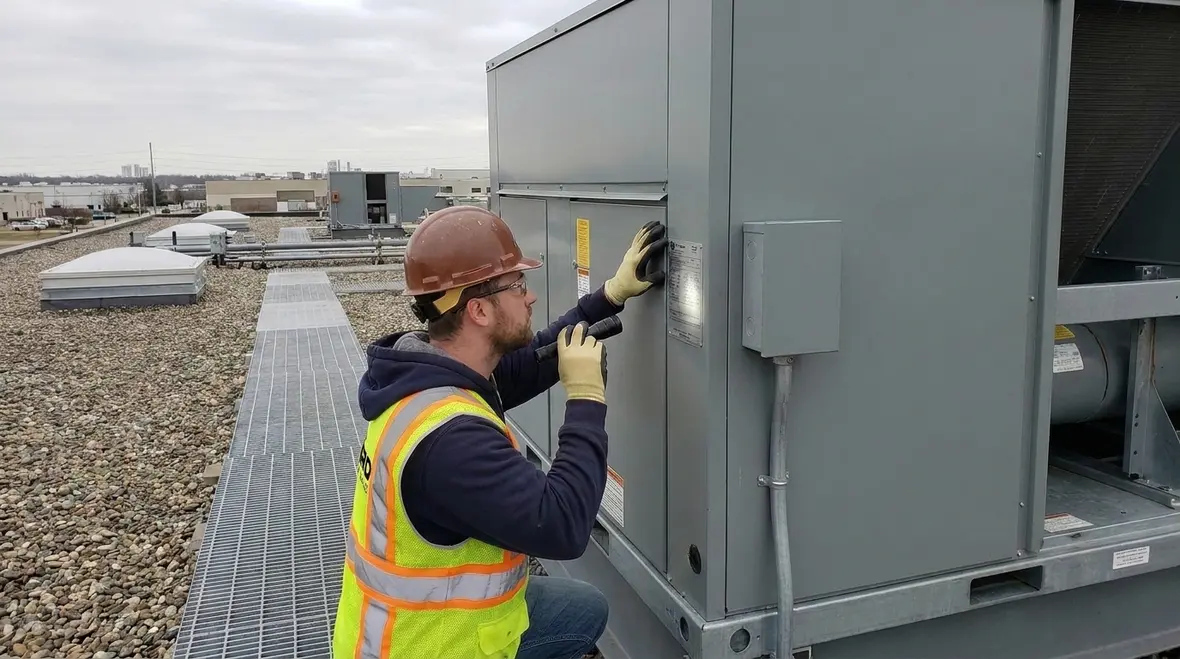
To keep projects accurate, we recommend a field-first checklist. First, our technicians confirm the equipment being served, including nameplate ratings and the conductor routing. Next, they verify whether the disconnect location provides safe access and whether it sits where it should, not where it was convenient during construction.
Then, they check labeling and physical setup. In many inspections, the disconnect can be present but still fail due to missing identification, blocked access, or a location that does not meet the required intent. And yes, contractors sometimes mount devices where the view is nice, not where the safety is. We handle that mismatch early so nobody learns the hard way that “nice view” is not a safety feature.
Finally, we align our documentation with the facility’s operations. Major property buildings often run tight schedules. Therefore, we help teams plan any modifications to reduce downtime and keep site operations steady.
Clear access, safe location, and real inspection expectations
Commercial inspections do not only check whether a disconnect exists. Inspectors also evaluate whether the disconnecting means supports quick and safe shutdown. That means the location must allow access without hazards, and the equipment must be arranged so workers do not need to navigate dangerous conditions to reach it.

In practice, our service team looks for several field signals. If a disconnect sits behind fences without proper access, it creates delays during emergencies. If it is installed behind obstructions, the disconnect becomes a “museum piece” instead of a functional safety device. And if it is placed in a way that forces people to reach into sharp corners or hazardous zones, then the setup undermines the whole goal of Section 225.31.
To keep things calm and controlled, we explain to facility managers what “accessible” means in day-to-day work. Access includes pathways, clearance, and the ability to operate the disconnect without unsafe strain. Our technicians also check that signage and identification match the served equipment. When labels are correct, the next technician finds the right disconnect on the first attempt, not the third attempt, which is when tempers usually start to rise.
For large properties, we coordinate with site rules. Some buildings require permits, escort rules, or lockout and tagout plans before any work begins. We follow those rules, then we still make sure the final installation supports safe operation and inspection readiness.
Coordination with fire and life safety planning
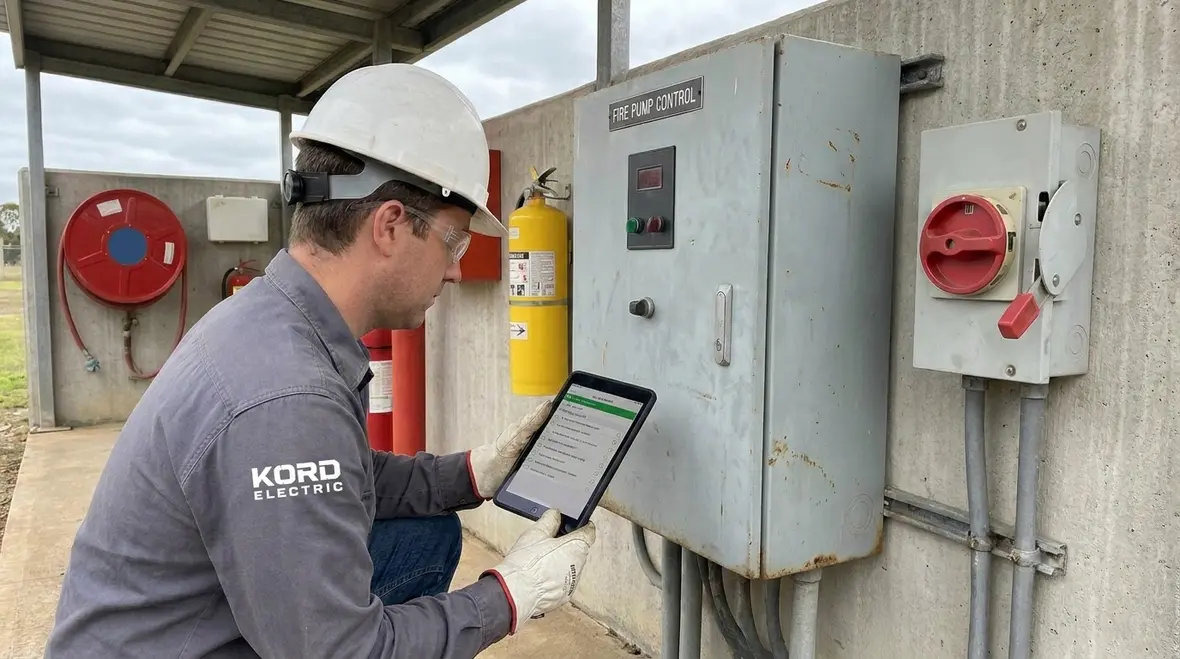
Electrical disconnects connect directly to life safety strategy, especially in major property buildings. Even when code requirements focus on electrical design, the real-world outcome affects fire response and maintenance operations. That means the outside disconnecting means often sits inside a larger plan that includes fire pumps, fire alarm systems, emergency procedures, and responder access routes.

In many facilities, teams already reference fire and emergency guidance, and we respect that. Kord Electric works alongside project partners and related systems so electrical control points align with operational needs. For example, fire pump systems and emergency loads require careful coordination because shutdown steps must not interrupt life safety functions incorrectly.
To support this broader view, we also stay consistent with industry education from organizations that discuss the NEC and fire system reliability, including resources connected through Kord Fire and industry groups such as Firepumps.org, along with other NEC explainers. That approach helps us speak the same language as the teams who manage life safety and emergency response.
And if you are thinking, “We just need the disconnect, not a full emergency doctrine,” we hear you. However, in large buildings, disconnect location and identification often decide how smoothly the next emergency response runs. We help keep those outcomes predictable.
Installation and upgrade steps our technicians follow
When a commercial facility needs new work or a correction, we handle it like a measured process, not a last minute scramble. Our technicians start by reviewing existing drawings, equipment details, and on-site conditions. Next, they confirm which loads require an exterior disconnect and whether current installations meet the intent of NFPA 70 Section 225.31.
Then, we plan the upgrade steps to reduce disruption. For industrial settings, shutdown windows can be tight, and for major property buildings, work must respect tenant operations. Therefore, we map the scope clearly, schedule the work, and prepare materials before we open anything up.
After that, we complete the physical installation with attention to details that inspections reward. We verify that the disconnecting means is installed in the proper location, that it provides safe access, and that it is identified so workers can find it quickly. We also confirm that workmanship supports durability in outdoor environments, where sun, weather, and vibration can wear equipment over time.
Finally, we test and document results. Documentation matters because it supports future maintenance and helps facility teams answer questions quickly. When we explain what we did, our expert service staff does not just hand over paperwork. They walk through the key points, and they do it in a calm, direct way that helps others feel confident about the installation.
Common problems we see during commercial electrical audits
Even well-built facilities can miss details. During audits, our team often finds issues tied to access, labeling, and mismatch between equipment and disconnect requirements. Sometimes the disconnect exists, but it serves the wrong load due to old wiring changes. Other times, the outside location becomes blocked over the years by new fencing, storage, or construction staging.
In other cases, the disconnect may look correct at a glance, yet it fails the “real world” test. If workers cannot reach it safely, the disconnect fails its purpose. If identification is unclear, the team wastes time in emergencies and delays troubleshooting in maintenance.
Also, we see situations where upgrades were done without coordinating with the bigger system layout. When teams add new loads, they can create confusion about which disconnect controls what. Then, the site ends up with mismatched expectations, and nobody wants to be the person who says, “We thought someone else labeled it.” That person always ends up being the unlucky hero.
Our response is simple. We verify served equipment, we confirm shutdown points, and we correct gaps so commercial sites remain code aligned and operationally steady.
FAQ
Schedule a code check with Kord Electric
If your facility faces an upcoming inspection, a remodel, or persistent electrical questions, we can help you get clarity fast. Kord Electric brings expert service staff and field driven technicians who explain requirements in plain language, then verify your outside disconnecting and shutdown points meet NFPA 70 Section 225.31. Reach out for a commercial focused review and next step plan. Let us handle the details so your team can get back to running the building, not deciphering it. Safety is calm, predictable, and code compliant.
For multi-site organizations or facilities across Southern California, you can align this outside disconnecting means review with broader support through Kord Electric’s Los Angeles County electrical services, so code checks, maintenance, and future upgrades all follow the same practical, NEC grounded plan.
When you combine a focused review of NFPA 70 225.31 with a larger look at your electrical system design, documentation, and life safety interfaces, your next inspection stops feeling like a guessing game and starts looking like a confirmation of the work you already did right.