
NFPA 70 Section 225.25 Outdoor Lamp Placement Rules
NFPA 70 Section 225.25 and NEC outdoor lamp placement for commercial property teams
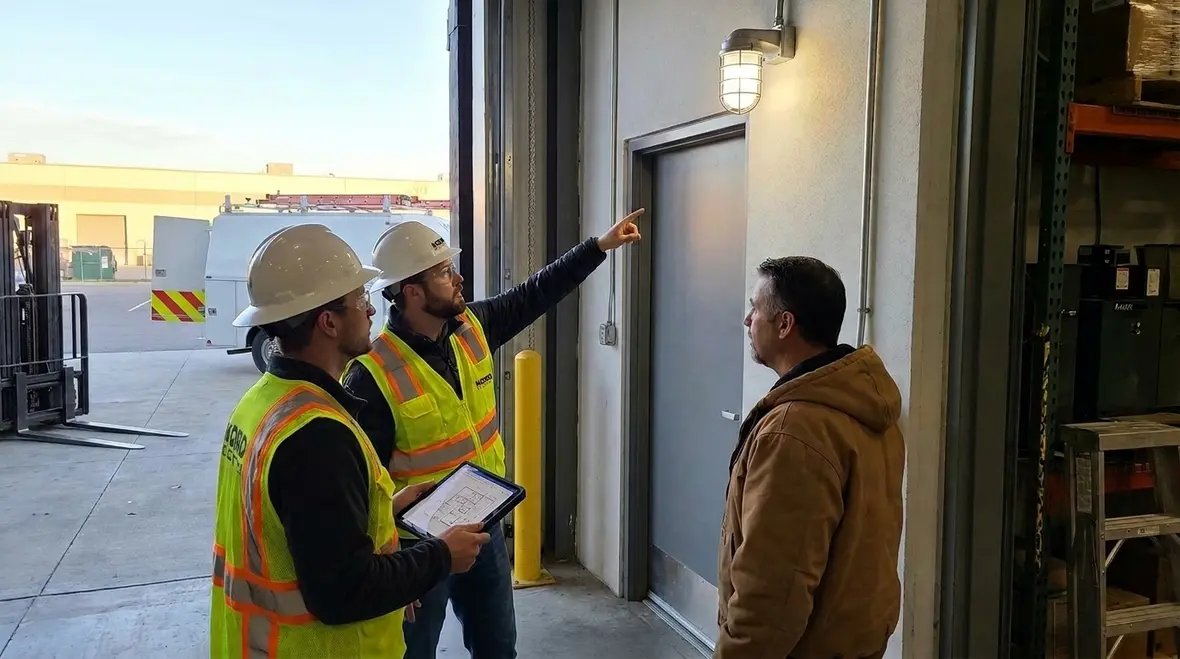
At Kord Electric, we follow the NEC outdoor lamp location rules early because Section 225.25 focuses on where outdoor lamps can sit, not just how they look. In the first pass, our technicians check the lamp placement for safety around people, traffic paths, and building surfaces. Then we verify that the installation supports correct protection from impact and weather, along with proper wiring methods that match the risk level outside. After that, we make sure your facility stays compliant before anyone starts asking the “why” questions. And yes, those questions usually show up after a tenant complains. We prefer to handle it before the complaint, like adults in a world that still has dial up internet.
Why Section 225.25 matters to facilities and property managers
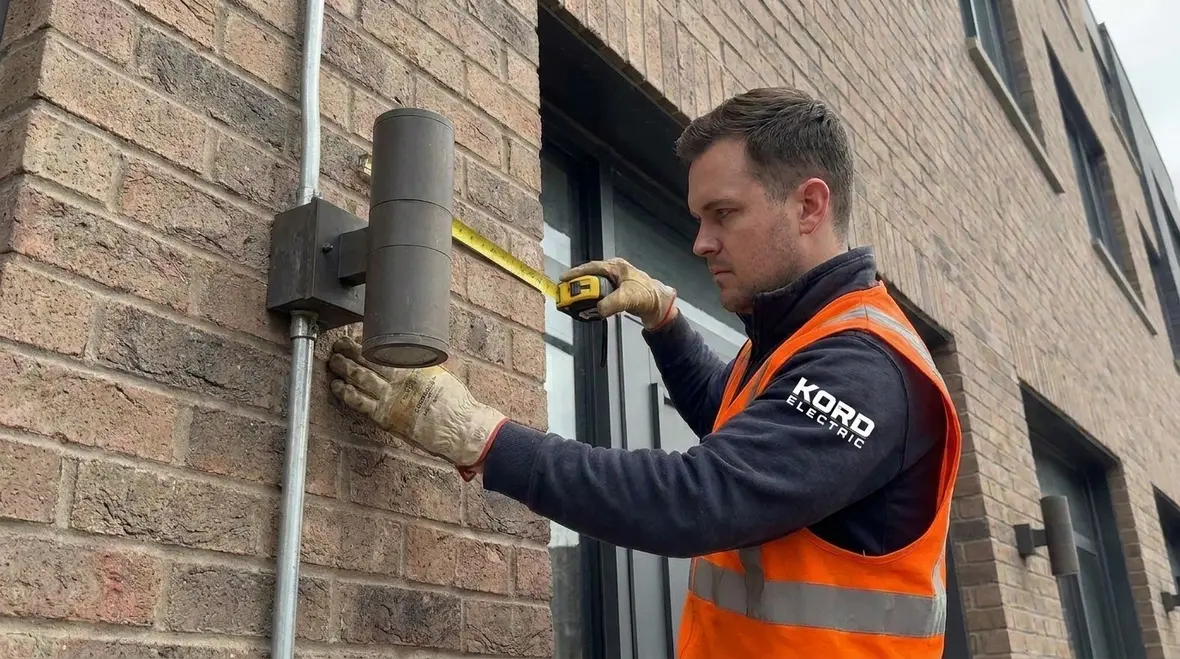
NFPA 70 Section 225.25 governs location of outdoor lamps, which directly affects how a commercial or industrial building functions day to day. When a lamp sits in the wrong spot, it can create hazards for pedestrians, maintenance staff, and emergency response teams. It can also increase exposure to damage from vehicles, cleaning equipment, or landscaping work. That is why we treat placement like a system, not like a last minute detail.
In addition, this section interacts with the rest of the NEC framework. For example, the lamp location can influence cable routing choices, the need for physical protection, and the way the fixture meets environmental conditions. Therefore, we do not just point at a rule and move on. Our expert service staff explains how placement changes risk, and then we map that to the building’s actual layout.
For facilities and property managers who want a broader NEC perspective while they plan upgrades, our team often points to resources like Understanding NFPA 70: The National Electrical Code Explained for 2026 and the deeper NEC overview at Kord Fire’s NFPA 70 guide, which help you see how Section 225.25 fits into the larger compliance picture.
How we plan outdoor lamp location rules during site review
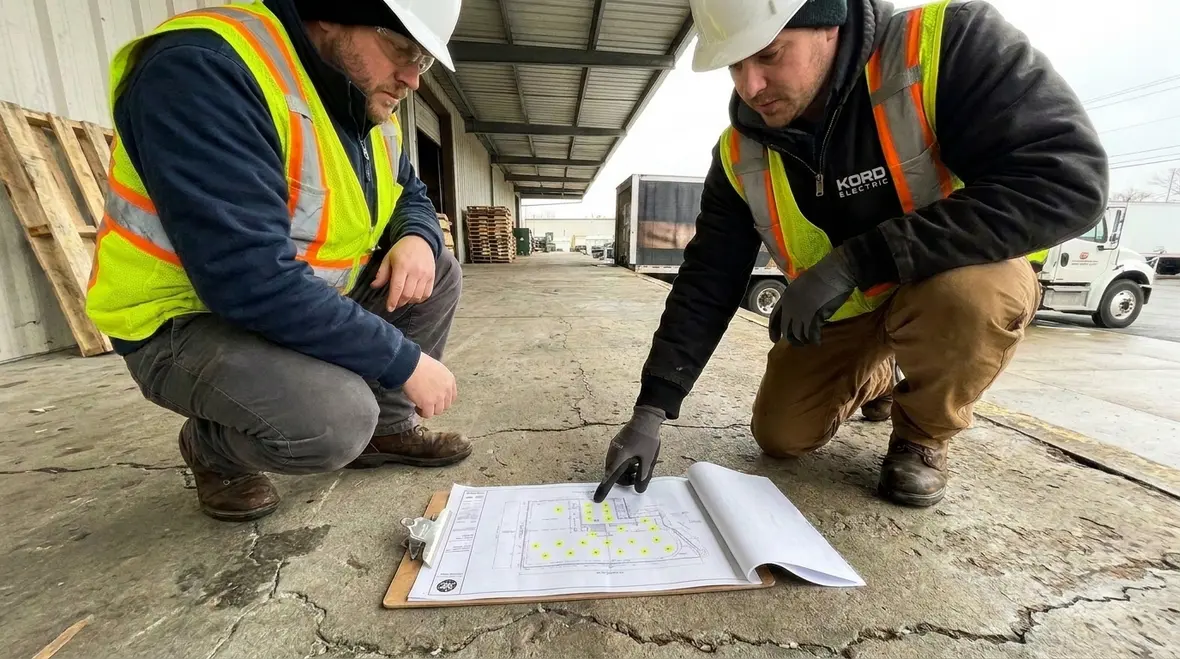
We start with a site walkthrough and a simple goal: reduce surprises later. Then we build a placement plan that fits the building design and the use patterns of the facility. Our technicians typically review the following, step by step.
- We identify areas where people walk, wait, or access entrances, because outdoor lighting must support safe movement
- We check for vehicle paths and loading zones, since a fixture in the wrong location can get hit and fail
- We examine surfaces, overhangs, fences, and walls where lamps mount, because attachment points matter
- We verify clearances around doors, ramps, stairways, and equipment, so service work stays safe
- We document planned locations so future maintenance crews understand the why
Next, we coordinate with facility leadership and other trades. Then we confirm that the outdoor lamp plan matches electrical design choices, including how wiring travels and what physical protection looks like at that spot.
Because Section 225.25 lives inside the broader NEC structure, our crews also check how the placement logic connects to topics like calculated loading and feeder planning that we discuss in resources such as our NEC load determination coverage and system design guides on the Kord Electric blog.
Fixture placement near access points, traffic routes, and equipment areas
Outdoor lamps work best when they support real movement patterns. Therefore, when we review NFPA 70 Section 225.25, we focus on how the lamps relate to entrances, sidewalks, dock areas, and perimeter routes used by staff. If a lamp creates glare or sits too close to a path, it may push people to walk around it, and that is when minor injuries turn into major reports.
Also, a commercial site never stays still. Over time, a facility adds signage, new racks, temporary barriers, or updated traffic control plans. As a result, a location that once felt safe can become less safe. Our approach includes thinking ahead and designing for how people and equipment shift.
Here is where our technicians earn their paycheck. They explain placement logic in plain language, and they do it in a way that building teams can act on. For example, they may point out how a lamp might block visibility at a gate during night shift checks. Then they propose a location that improves coverage without forcing staff to “interpret” shadows like it is a crime drama.
For busier properties, especially in dense parts of Southern California, we often combine this placement review with a broader look at power distribution and reliability. That is where our Los Angeles County electrical services for commercial facilities help connect exterior lighting, branch circuits, and emergency power planning into a single, coordinated plan.
Physical protection and mounting choices that keep lamps alive
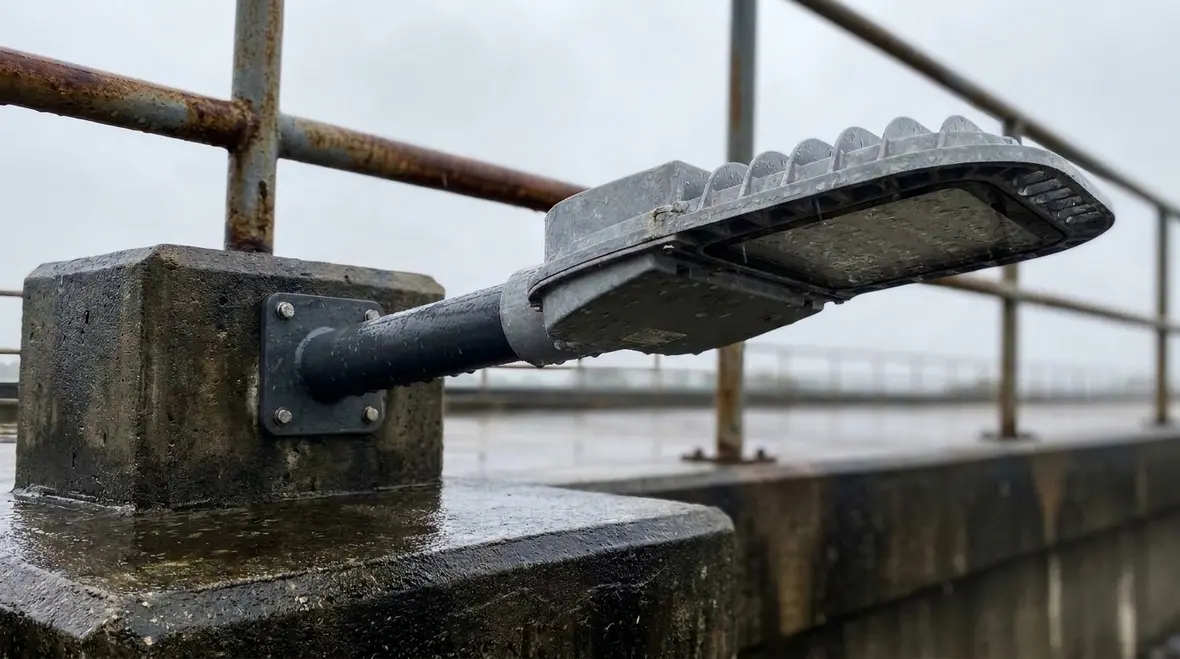
Outdoor lamps live a tough life. They face impact, cleaning cycles, vibrations, and weather stress. Even when the lamp works on day one, it can fail early if the location ignores likely damage. Therefore, we treat physical protection and mounting as part of the Section 225.25 conversation.
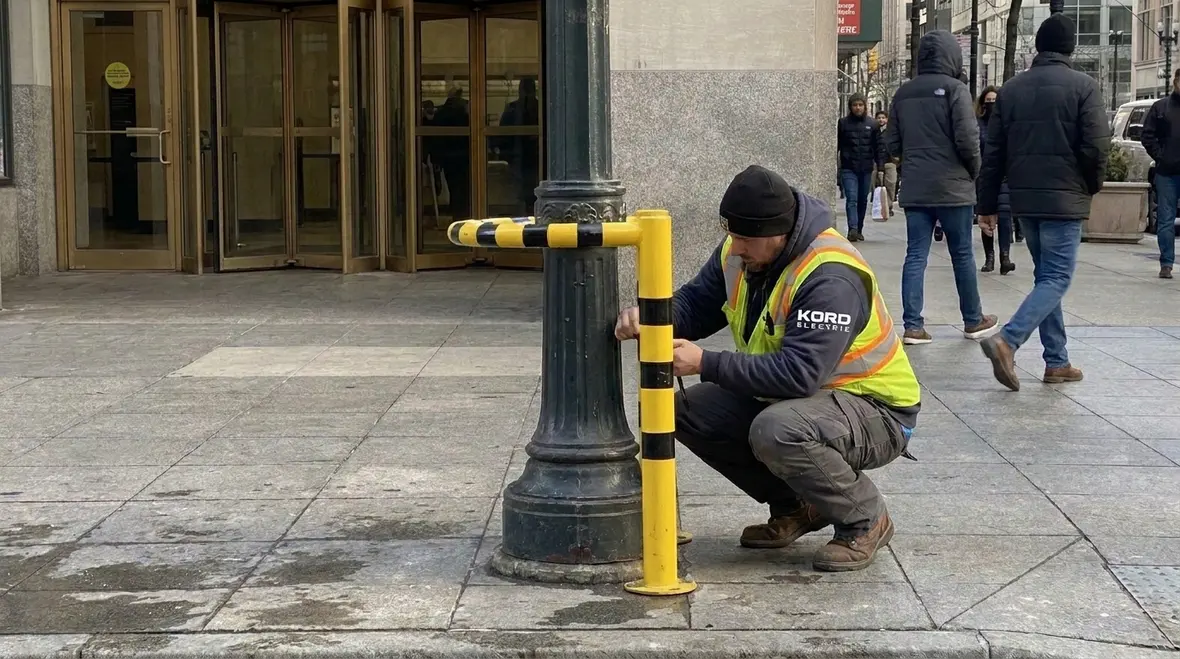
Depending on the area, we evaluate whether the fixture needs barriers, guard rails, or mounting heights that reduce the chance of accidental strikes. We also check how the fixture ties into the building structure, since a weak mounting point turns a safe placement into a risky one over time.
In parallel, we coordinate wiring routes and enclosure choices so the installation resists outdoor exposure. So, instead of thinking about the fixture alone, we look at the entire outdoor lighting assembly: lamp, raceway or cable path, support hardware, and protection.
And if that sounds like a lot, it is. But in the commercial and industrial world, “a lot” usually beats “costly.” Nobody wants to replace a fixture after one season because it sat where a forklift decided to take a scenic route.
Weather, corrosion, and environment driven placement decisions
Placement rules also connect to the environment. Coastal areas, industrial exhaust, snow events, and high moisture conditions all change how quickly outdoor components wear. Therefore, we help property owners plan lamp locations that reduce direct exposure where possible and support proper drainage and maintenance access.
We also consider how lamps interact with the ground and nearby surfaces. If water pools around the base or if the fixture sits where debris collects, you will get faster deterioration and more cleaning labor. Then the cleaning labor introduces the risk of accidental damage, which brings us right back to safe positioning and protection.
To keep things clear, our expert service staff uses a simple rule: we place fixtures so routine work does not punish the equipment. That means maintenance access stays realistic, and the installation design helps staff do the job without climbing into danger. It is practical, not theatrical. Think of it as the opposite of a sitcom where the safety inspection happens only after someone screams.
In harsher environments, we often coordinate lamp placement with broader resilience work, like surge protection and emergency power planning. If you are already thinking about how your building rides through storms and outages, resources such as Kord Electric’s emergency power and power surge damage guides give additional context for how lighting fits into that continuity plan.
Coordinate compliance with broader NEC guidance for major properties
Section 225.25 rarely stands alone. We handle compliance as a connected system with the rest of NEC requirements, plus the realities of commercial project timelines. For example, when we align outdoor lamp placement with broader code requirements, we also review how the design handles grounding, wiring methods, circuit protection, and how the exterior installation stays reliable under normal building loads.
Furthermore, we keep documentation clean and usable. That matters for audits, insurance questions, and future upgrades. If your facility later expands the parking lot, revises loading operations, or adds a new security camera mount near a light pole, you want clear records that explain the original location decisions.
Kord Electric and our service partners take this seriously because commercial and industrial clients run on uptime. We work to prevent lighting systems from becoming a recurring headache. We also coordinate with teams aligned to fire and life safety concerns, including organizations that discuss NEC background and practical compliance, like Kord Fire and related resources at firepumps.org.
When clients want to understand how their outdoor lighting tweaks fit into a full-code strategy, we often connect Section 225.25 placement questions back to bigger-picture NEC primers such as our “What Is NFPA 70?” and National Electrical Code explainers on the Kord Electric blog and Kord Fire’s NEC 2026 overview.
FAQ
Book an outdoor lighting compliance review with Kord Electric
If you manage a commercial or industrial facility, we can help you get outdoor lighting right the first time. Kord Electric reviews outdoor lamp location decisions tied to NFPA 70 Section 225.25, then we coordinate mounting, protection, wiring routes, and maintenance access so your system stays safe and reliable. Reach out to schedule a site review and let our technicians walk your team through the findings. Avoid the late night call when a lamp fails. We prefer a calm building, not a dramatic one.
For teams planning larger upgrades that combine exterior lighting with panel work, emergency power, or broader NEC compliance, our Kord Electric blog and Kord Fire resources give you a deeper backdrop while our field crews handle the details on site.


