
NEC High Leg Marking Requirements in Section 110.15
NEC high leg marking requirements start with Section 110.15
In commercial and industrial facilities, the NEC high leg marking requirements show up in NFPA 70 Section 110.15, and they aim to prevent dangerous mistakes before they happen. In our experience at Kord Electric, others often treat this like “just a label,” but that is not how the code reads, and it is not how job sites behave when the next person picks up the screwdriver. We see it time and again: a high leg gets misidentified, someone assumes it is a normal phase, and suddenly the electrical system turns into a surprise themed episode. Our expert service staff explains what matters, where it matters, and how to verify it in the field.
In the sections ahead, we walk through what Section 110.15 expects, how it connects to transformer secondary wiring, and why correct marking helps everyone from electricians to maintenance teams. If you manage major property buildings, you already know: clarity is a safety feature.
Why high leg voltage exists in the first place
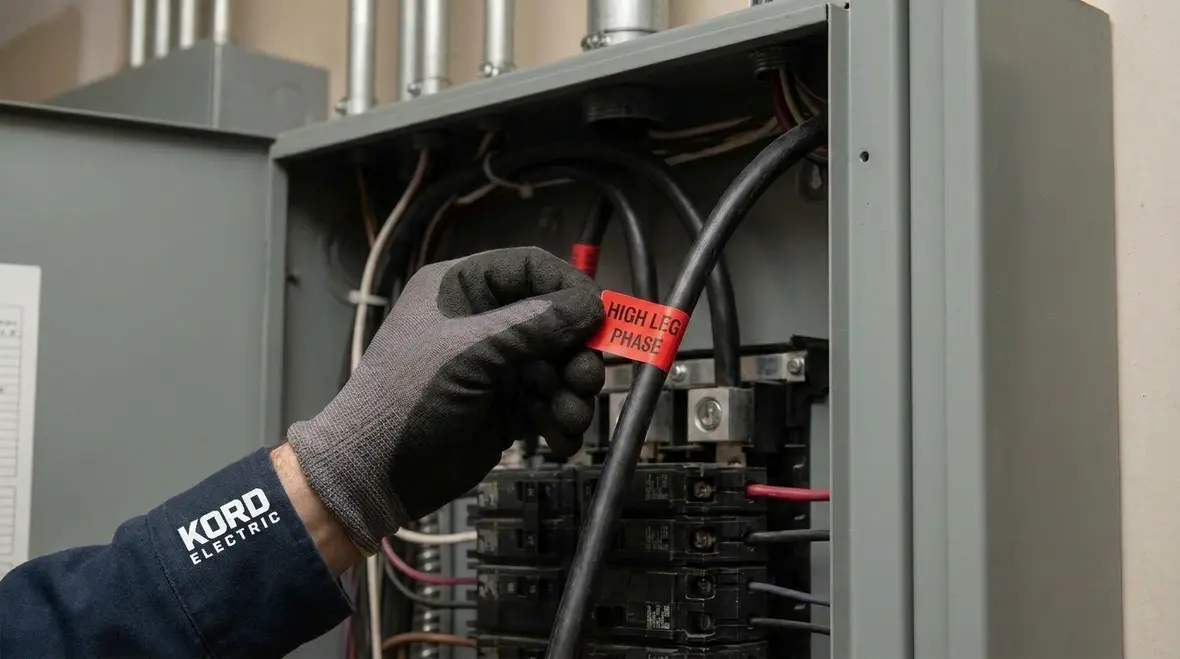
To understand why we mark anything at all, we need to understand the electrical reality. Many commercial and industrial services use a transformer with a three wire secondary that creates two “hot” legs and one neutral. However, one of those hot legs typically measures higher than the other relative to neutral. That is the high leg. It does not show up because someone forgot to tighten a screw; it shows up because of how the system is designed.
Now, when people work on panels, they often work fast. They trust labeling, they trust color, and they trust habits. Therefore, if one leg behaves differently, the entire facility benefits when it gets unmistakable identification. Next, consider how maintenance is scheduled: it happens at odd hours, with short windows, and with contractors who might not know your exact past decisions. Because of that, Section 110.15 focuses on making the marking clear, durable, and consistent.
Our technicians, including the ones who have spent years in the field, frequently say the same thing in calmer words than this article: “If it can be misread, it will be misread.” And then, the marking becomes the difference between routine work and a report you would rather not write.
NFPA 70 Section 110.15: what the code asks for
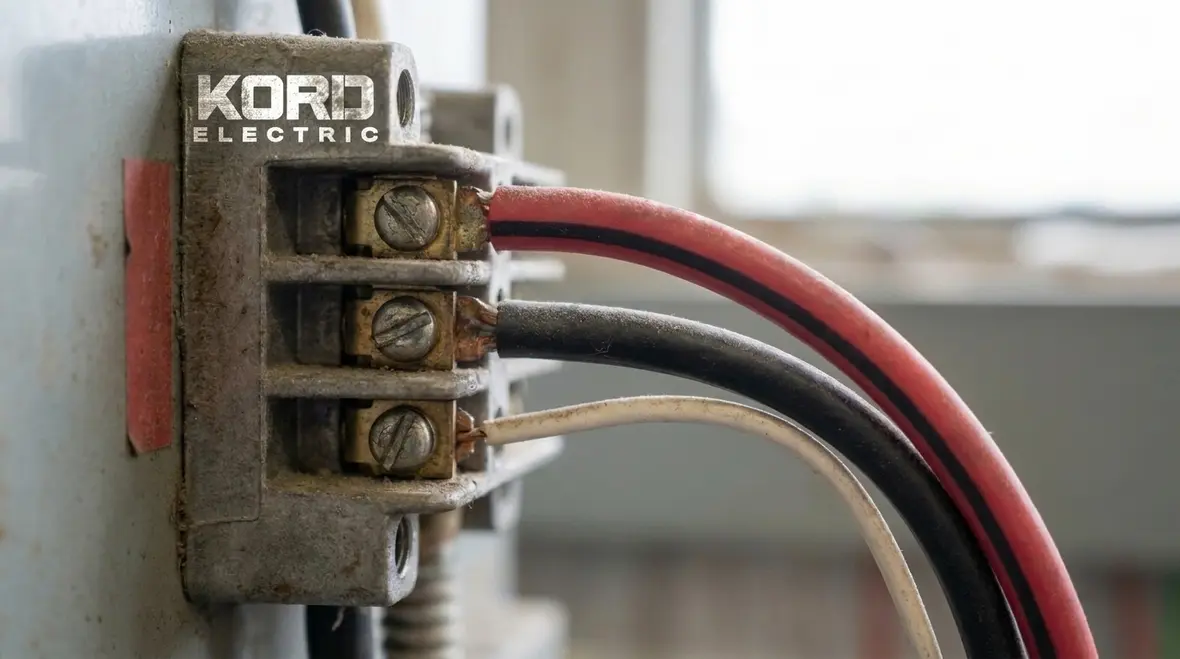
NFPA 70 Section 110.15 sets expectations for identification and marking, especially in cases where the system includes conductors that do not have equal characteristics. In practice, it ties directly to scenarios involving a high leg, such as certain three phase, four wire and transformer secondary configurations where the high leg exists in relation to neutral.
First, Section 110.15 requires the high leg to be identified so that anyone who opens a panel can recognize it without guessing. Next, it expects a marking method that stands up to the environment. In commercial and industrial spaces, that often means panel doors, nameplates, and conductor identification that survive heat cycles, vibration, and typical cleaning processes.
Second, we have to treat marking as part of the work, not an afterthought. Therefore, we often align marking with how the conductors are routed and terminated, because mismatched labeling creates the exact confusion the code tries to eliminate.
Finally, our expert service staff follows a simple philosophy: mark it so the next person can confirm it quickly. In other words, the marking should support safe operation, safe troubleshooting, and safe load planning.
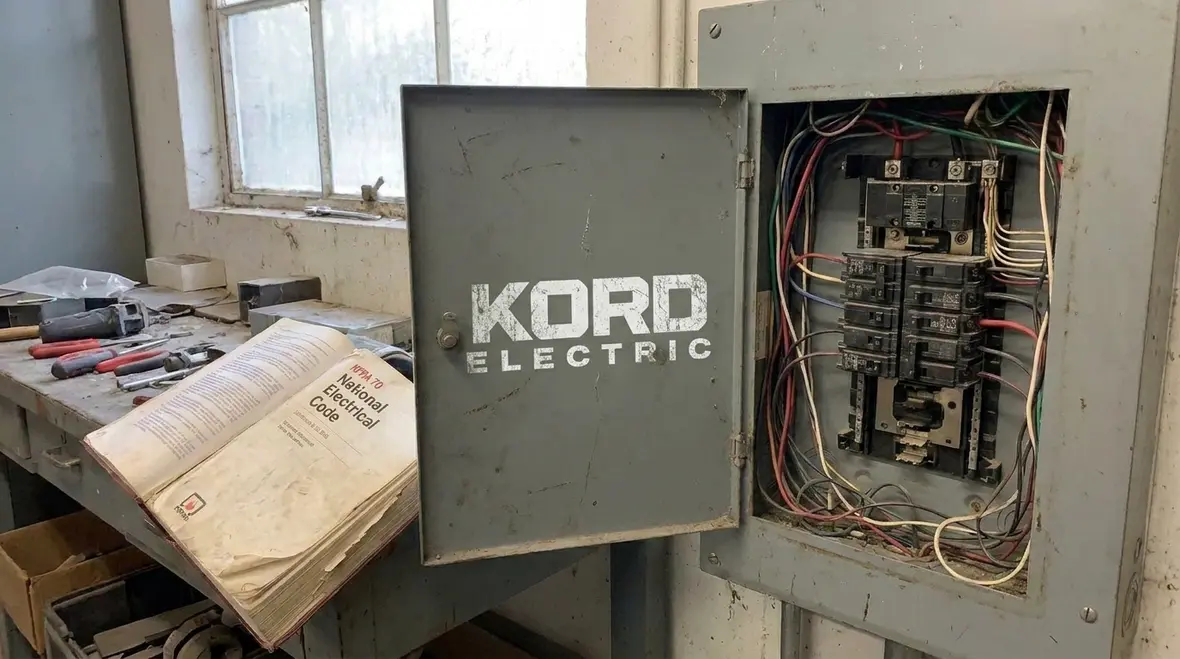
For facility leaders who want to go deeper on how NFPA 70 shapes overall electrical design, we often pair this topic with our internal resource on code fundamentals, including our article Understanding NFPA 70: The National Electrical Code Explained for 2026, so teams can see how NEC high leg marking requirements fit into the broader rulebook they live with every day.
How we identify a high leg during service work
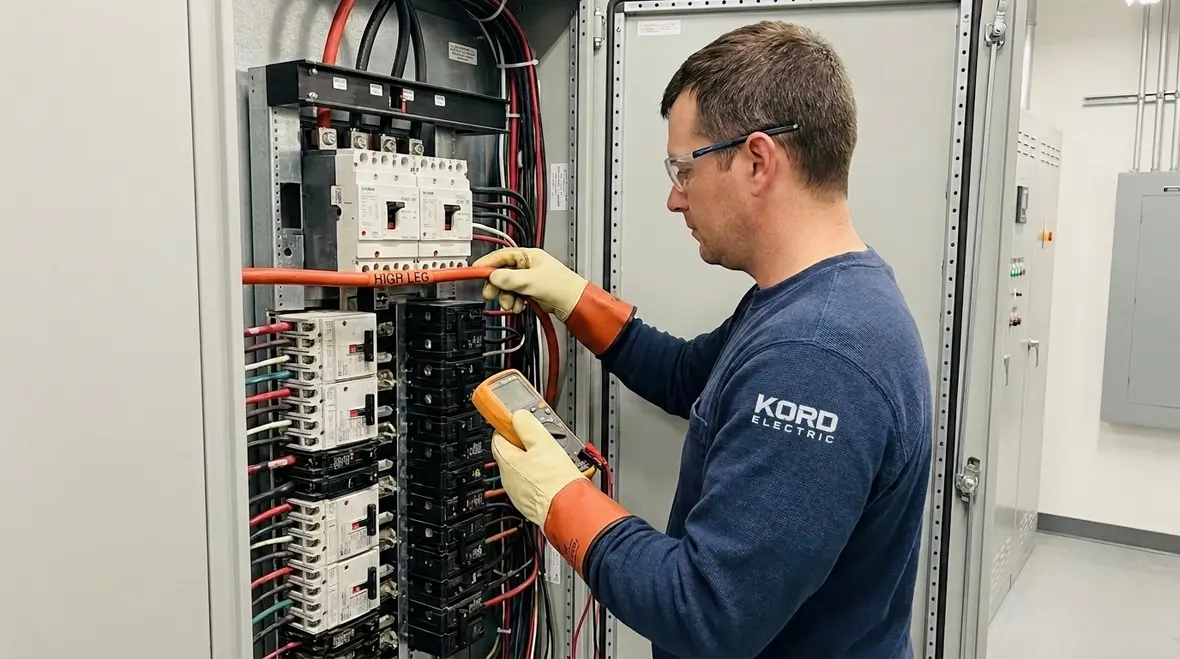
At Kord Electric, we do not rely on assumptions. We verify. That means we inspect transformer secondary connections, review original wiring documentation when available, and measure as needed. Then we correlate those readings to the panel layout and conductor routing.
After the verification, we apply identification so it matches the actual conductor behavior. Because this is a field task, our technicians use a consistent process that supports repeatable results across multiple buildings. And yes, repeatable means fewer “mystery panels” on future maintenance calls.
When we find that a site already has marking, we still check it. Old labels can fade. Labels can be swapped. A panel can get reworked, and the labeling might not keep up. Therefore, we treat existing marking as a starting point, not a final authority.
Once we confirm the high leg, we also educate the facility team. We explain where the marking appears, what it indicates, and how it helps technicians plan safe connections and troubleshooting steps.
Marking methods that stand up in commercial and industrial settings
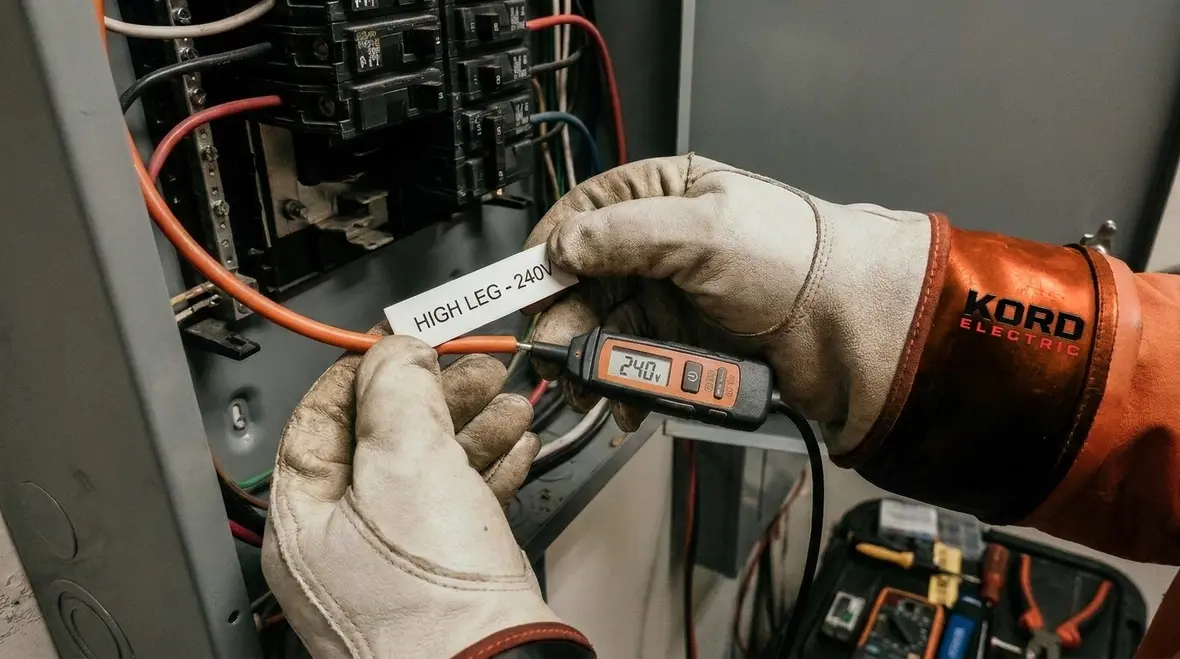
Section 110.15 puts the focus on identification, but it also indirectly demands durability and clarity. A label that looks neat today but disappears in six months does not protect anyone tomorrow.
In major property buildings, our technicians plan for the real world. They consider how panels get opened and closed, how the space gets cleaned, and how electrical gear gets serviced over time. Then they select marking approaches that align with those realities.
Depending on the equipment, marking can include conductor identification at terminations, labeling on panels, and legible identification consistent across service equipment. Additionally, we coordinate labeling with the facility’s documentation system so operations teams can find the same information on site drawings, panel schedules, and maintenance records.
And because work happens under pressure, we also make the marking easy to see. That means correct placement and clear readability. After all, nobody wants to play “Where is Waldo” with a live panel. We respect the hazards too much for that.
These same principles show up in other planning work we do, from data driven electrical design to load balancing and emergency power strategies. When NEC high leg marking requirements are treated with the same seriousness as system design and protection choices, facilities get a safer, more predictable electrical environment instead of one that relies on luck and memory.
Common failure points and how to prevent them
Even when teams know the code exists, problems can still happen. We see a few recurring failure points in commercial and industrial facilities, especially during upgrades, tenant changes, or panel replacements.
First, teams sometimes mark after the fact, when the wiring already got modified. That can lead to mismatches between the conductor that actually carries the high leg and the one that gets labeled. Next, markings can get copied from old documentation without confirming the actual field configuration, which ignores how systems change over time.
Second, we often find incomplete marking. A label might exist at one panel, but related equipment might not carry the same identification. Then the next worker opens a different door, looks for the familiar sign, and cannot find it. Third, labels sometimes degrade. Heat, moisture, and repeated maintenance can reduce readability.
To prevent these issues, we build a habit around verification. Our technicians check identification during installation and during service calls. Meanwhile, our expert service staff coordinates with property managers and electrical contractors to ensure marking remains consistent across equipment and over future work windows.
In short, we treat NEC high leg marking requirements as part of safety engineering, not just compliance paperwork. When we do that, we cut confusion and we reduce risk for the whole facility team.
FAQ for facility and property teams
Final call from Kord Electric
When a commercial or industrial facility lives on uptime, clarity matters as much as power. Kord Electric helps property owners and facility teams meet NFPA 70 expectations by verifying high leg conditions, applying clear identification, and supporting future maintenance with explanations from our expert service staff. If you are planning an upgrade, responding to a troubleshooting issue, or simply want your labeling to match the real wiring, contact us. We will show you what we find, what the code expects, and how to keep your electrical system calm and dependable.
For facilities across Southern California, especially those coordinating complex projects and inspections, our broader Los Angeles County electrical services support everything from NEC compliance and high leg verification to panel upgrades, load balancing, and emergency power planning, so your building can treat the electrical system as a calm background actor instead of the star of the next outage story.


