
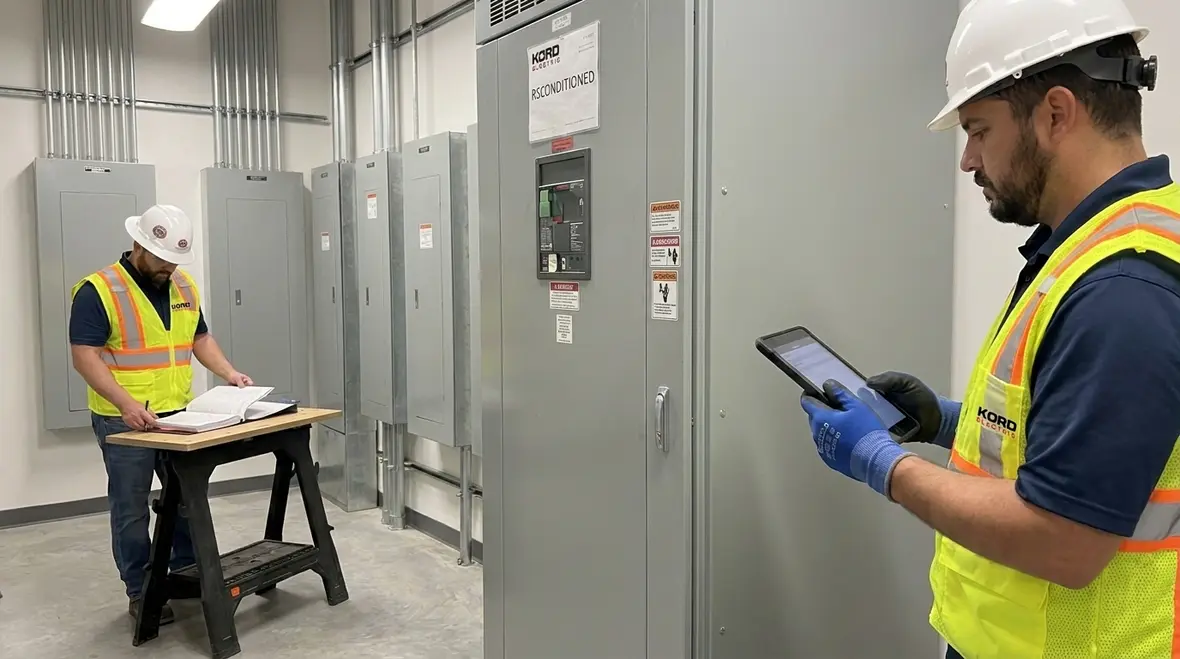
NFPA 70 Section 110.20 for NEC Reconditioned Equipment
In commercial and industrial facilities, reconditioned electrical gear can be a smart, cost-conscious choice—or a hidden liability waiting to surface during inspections. NFPA 70 Section 110.20 draws a bright line between the two. It connects how equipment is rebuilt and verified with whether that equipment remains acceptable for use under the National Electrical Code (NEC). For facility managers, major property owners, and project teams, understanding this section is the difference between “We passed with no surprises” and “Why is this breaker suddenly a legal debate?”
At Kord Electric, we work every week with commercial and industrial facilities and major property buildings where electrical systems must stay reliable, traceable, and safe. Our technicians and expert service staff apply the NEC reconditioned equipment listing rules in Section 110.20 on real projects, not just in theory. In this guide, we walk through what those rules expect, how we apply them in the field, and how you can keep reconditioned equipment from turning into a compliance headache later.
Why NFPA 70 Section 110.20 matters for reconditioned gear in commercial buildings
At Kord Electric, we work with commercial and industrial facilities and major property buildings where electrical systems must stay reliable, traceable, and safe. That is why the NEC reconditioned equipment listing rules in NFPA 70 Section 110.20 matter from day one. In plain terms, when a piece of electrical equipment has been rebuilt or reconditioned, it does not automatically earn a free pass back into service just because it looks fine. Instead, the rules focus on whether the reconditioned item still meets listing requirements or whether it is handled in a way that preserves safety and performance. In the rest of this article, our technicians and expert service staff explain how we interpret and apply these requirements in real projects, without the courtroom drama.
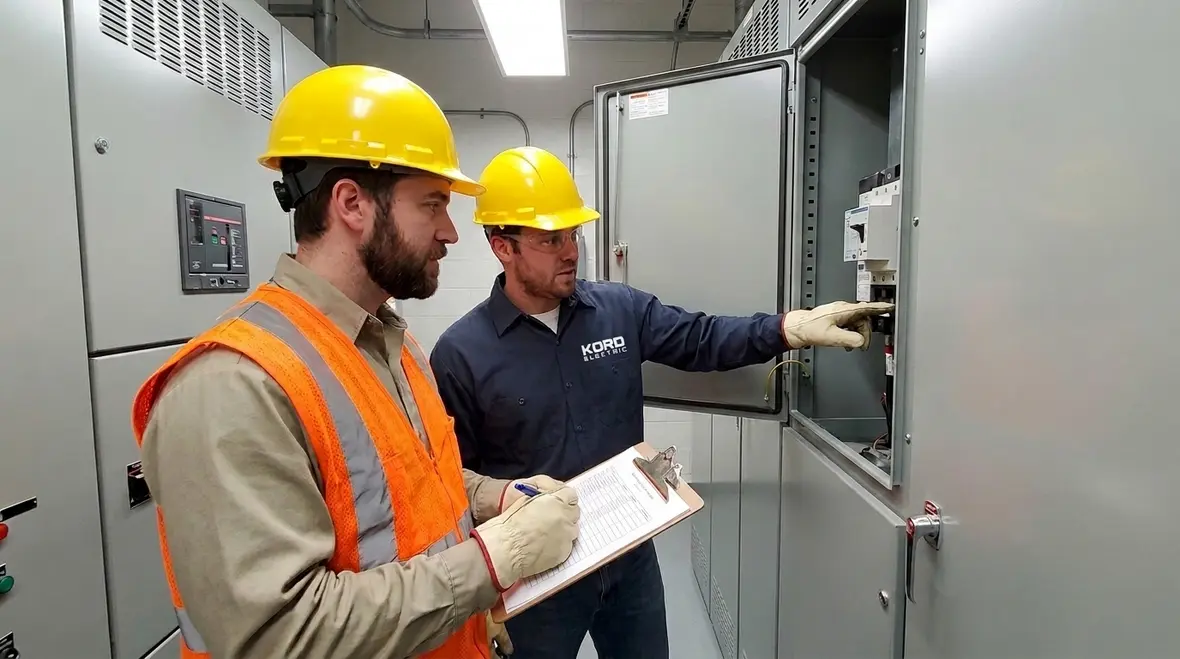
If your team is still getting comfortable with the broader NEC landscape, it helps to start with a bigger-picture reference. Kord Electric’s resource on Understanding NFPA 70: The National Electrical Code Explained for 2026 shows how the code ties design, installation, and inspection together. From there, Section 110.20 becomes one more focused tool in the same safety toolbox, especially when you rely on reconditioned switchgear, panelboards, or distribution equipment.
In the real world, budget pressures, schedule constraints, and supply chain delays all push project teams toward reconditioned gear. Section 110.20 does not tell you to avoid that path. Instead, it reminds everyone that reconditioning has to protect the same safety outcomes that a properly listed and installed new product would provide. That is why we treat reconditioning decisions as part of the design and planning process—not as a last-minute shortcut on the loading dock.
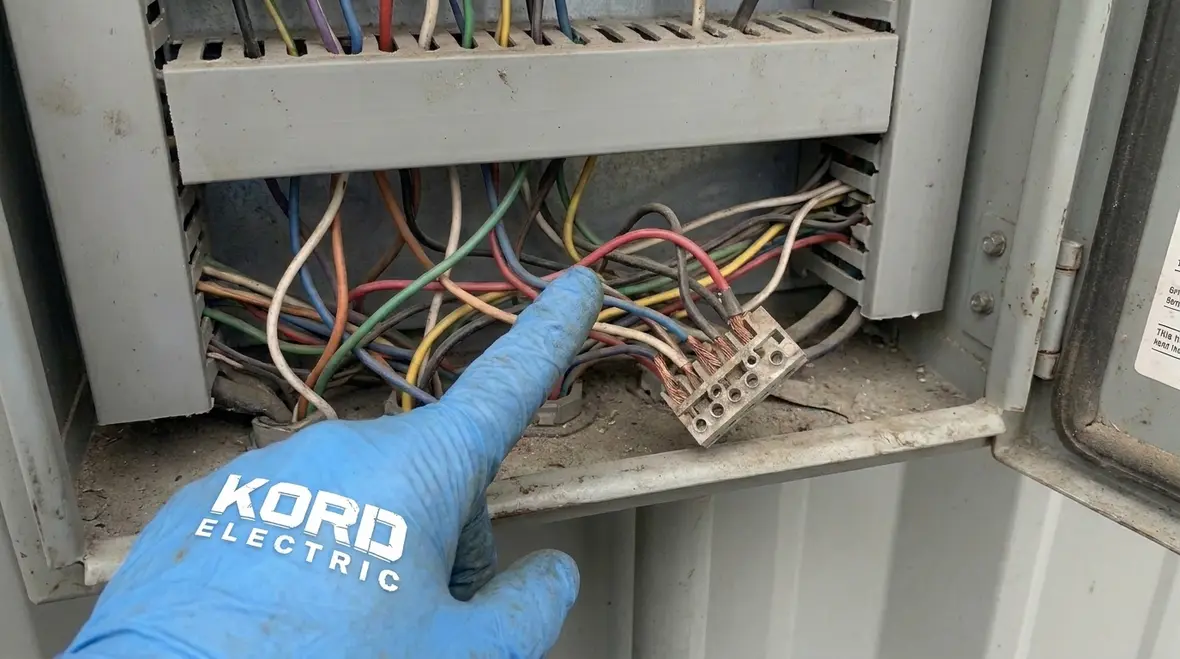
What Section 110.20 requires before reconditioned equipment goes back into the field
NFPA 70 Section 110.20 addresses the broader goal of “safe equipment in safe hands.” Specifically, it connects the permission to use equipment with how that equipment is evaluated, identified, and accepted. Even when a facility uses reconditioned equipment to control cost or extend life, the electrical code still expects the equipment to remain equivalent to what listing rules were created to protect.
In practice, we see three recurring checkpoints. First, the reconditioned equipment must be handled so that it continues to meet the conditions of its original evaluation or an acceptable equivalent standard. Second, the facility needs proper identification so the equipment can be traced, verified, and inspected. Third, the work process must avoid “fix it and hope” behavior. We all love a good movie montage, but the field does not. Our expert service staff explains that safety depends on controlled procedures, not luck.
While the National Electrical Code covers a lot of ground, this section focuses on the meaning of listing and on the responsibilities attached to using equipment. Therefore, you cannot treat reconditioning like a casual refurbishment. You treat it like controlled restoration that preserves the electrical and mechanical performance you rely on.
For facility managers who spend more time thinking about uptime than code chapters, the key phrase we repeat is “listing equivalence.” Reconditioned gear should not simply “work.” It should work in a way that continues to honor the original listing intent, including clearances, insulation performance, short-circuit ratings, and coordination assumptions. That is why we pair Section 110.20 with broader resources such as Kord Electric’s articles on NEC general requirements, wiring workmanship, and product certification. Together, they give your team a practical map instead of a random list of rules.
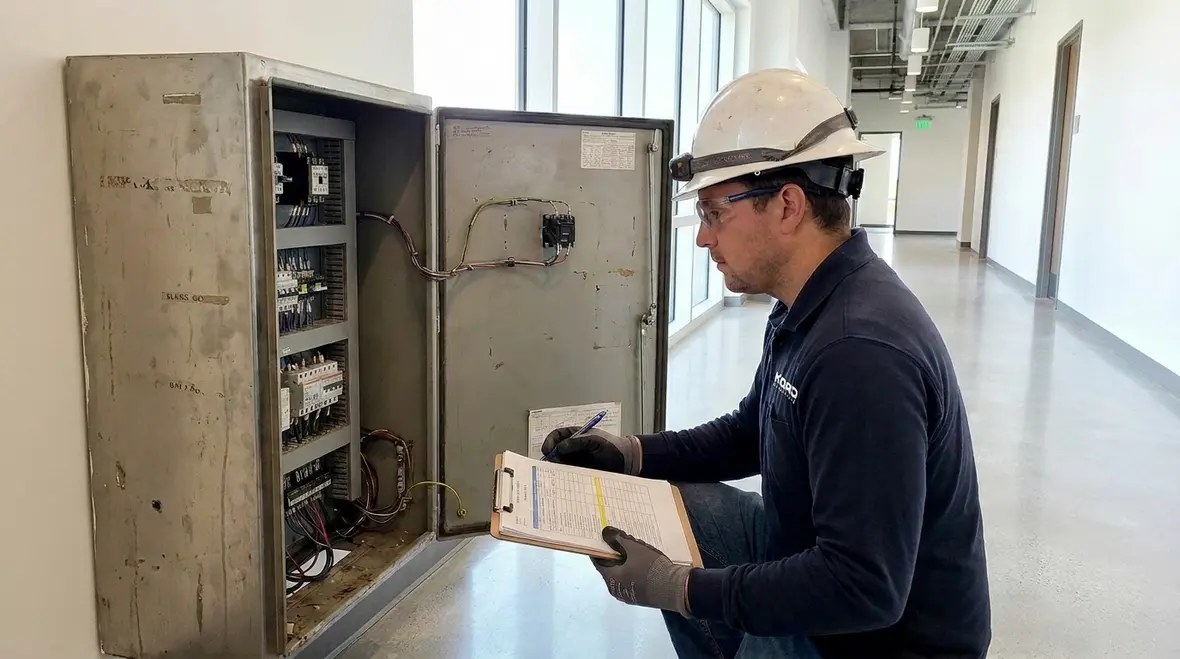
How we verify compliance in commercial and industrial settings
When our team evaluates reconditioned equipment, we start by asking what the facility needs, then we match the equipment to that need while staying aligned with the NEC reconditioned equipment listing rules. After that, we move into verification, which is where most projects either stay smooth or get complicated.
Here is how our technicians typically break it down for commercial and industrial sites:
- Review the original listing intent: We determine what the equipment was designed to do and what the listing was meant to confirm.
- Confirm reconditioning scope: We look at what was repaired, replaced, or tested, and whether the reconditioning kept the performance characteristics intact.
- Validate identification and documentation: We make sure the equipment bears clear markings and records that allow inspection teams to verify what was done.
- Plan for inspection readiness: We prepare the site and documentation so inspections do not turn into a scavenger hunt.
- Coordinate with facility requirements: We align with the building’s operating constraints, uptime needs, and switching plan.
Then we add a calm, practical layer that contractors appreciate. Our service staff explains findings in plain language so that facility managers, maintenance teams, and project stakeholders can understand what is compliant and what needs adjustment. In other words, we reduce surprises. Surprises are fun in popcorn. They are expensive in switchgear.
On larger campuses and major property portfolios, we also coordinate reconditioned gear evaluations with broader code-focused planning. For example, when a client is reviewing NEC 110.1 general requirements or studying how to read the National Electrical Code effectively, we use that same foundation to explain why a specific breaker, relay, or section of busway does—or does not—belong back in service after reconditioning. The more your teams see how these sections connect, the easier it is to defend decisions during audits and third-party reviews.
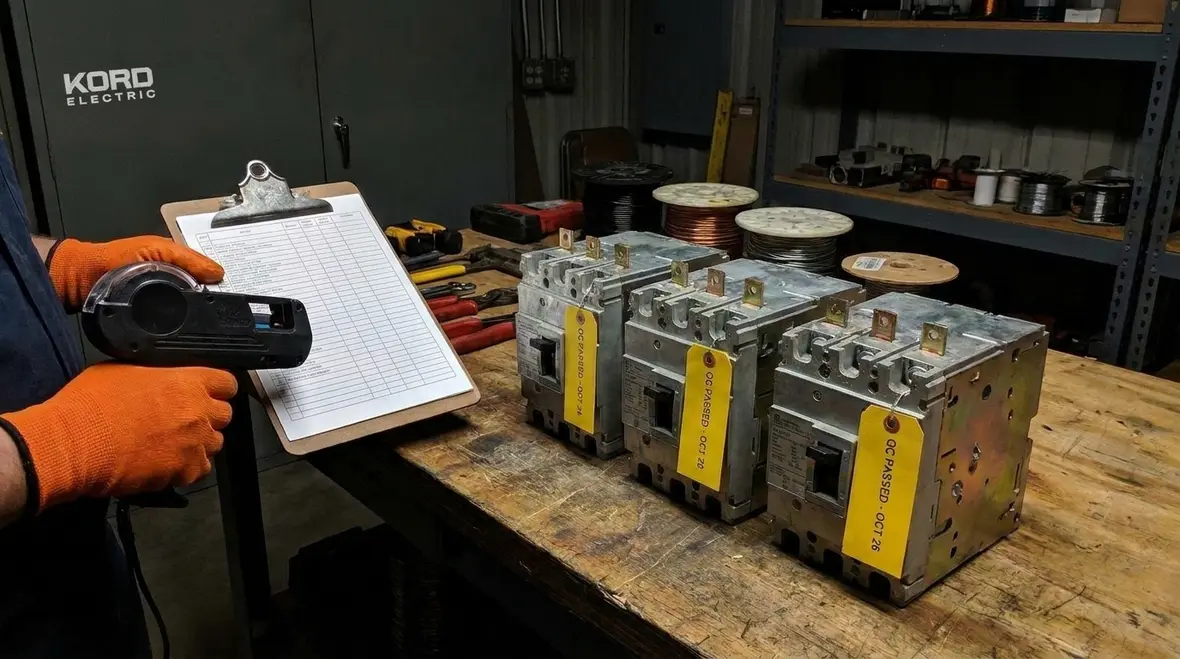
Common failure points we see during reconditioning and installation
Even with good intentions, issues show up when reconditioned equipment enters a project without the right checks. Therefore, we highlight the common failure points so you can prevent them early, not after the shutdown.
First, equipment can receive repairs that restore function but do not preserve the conditions needed for listing equivalence. For example, components may be replaced with parts that work electrically, yet change the thermal behavior, insulation characteristics, or mechanical fit. That is where code expectations start to matter.
Second, identification can become messy. If markings, labels, or records are missing or unclear, inspectors and maintenance teams lose the ability to verify history. As a result, the equipment becomes harder to operate safely, and it becomes harder to defend compliance during review.
Third, testing and quality control can fall short. Reconditioning should include checks that confirm the equipment performs as required. When testing is skipped or treated as optional, defects can hide in plain sight.
Finally, installation practices can undermine compliant equipment. We often see correct equipment introduced into the wrong environment, such as mismatched wiring, inadequate clearances, or improper connections. In addition, field modifications without documentation can erase the thread that ties listing and reconditioning together.
Kord Electric helps commercial and industrial facilities avoid these pitfalls because our teams plan at the same pace as your project. We work like partners, not like observers. When we provide guidance on NEC reconditioned equipment listing rules, we also look at the surrounding system: panel condition, available fault current, grounding and bonding, and the overall health of the distribution network. That context keeps a single piece of reconditioned gear from becoming the weak link in an otherwise robust design.
NEC reconditioned equipment listing rules in real inspections and field decisions
During inspections, the question usually becomes less about what people hoped was true and more about what can be verified. That is where the NEC reconditioned equipment listing rules show their value. They give inspectors and facility owners a consistent basis for judging whether reconditioned equipment remains acceptable for use.
Our technicians guide stakeholders through what inspectors typically look for. They focus on documentation, markings, and how the equipment was handled. However, we also help you understand the bigger meaning: safety is not only a design goal. It is also a process goal.
Additionally, we advise facilities to build reconditioned equipment decisions into project planning. For example, you need time for verification, not just time for delivery. You need a clear installation scope that avoids untracked modifications. And you need a maintenance mindset that keeps equipment traceable throughout its service life.
To keep everything grounded, we align our process with guidance found in educational resources about the NEC and NFPA standards. For anyone managing major property buildings, understanding how the code explains safe utilization helps you coordinate better with engineering teams, contractors, and inspection authorities. If you are learning from the same materials we do, the theme is consistent: the code wants equipment to be understood, evaluated, and accepted in a way that protects people.
That is also why our team frequently references core explainers such as Kord Electric’s NEC scope and enforcement guides when we support inspections. When a facility has read about general requirements, wiring integrity, and product certification on the Kord Electric blog, conversations around Section 110.20 feel familiar instead of intimidating. Everyone is working from the same playbook, just focused on reconditioned equipment instead of brand-new installations.
Practical steps Kord Electric uses to keep major facilities audit ready
Facilities do not just need safe electrical gear. They need repeatable proof that the gear remains safe. So we focus on a practical workflow that works for commercial and industrial sites and major property buildings. Here is the approach our expert service staff supports:
- Early equipment intake: We collect equipment details, make, model, and condition status before procurement decisions harden.
- Reconditioning verification plan: We define what documentation and testing must exist so the project stays aligned with applicable NEC expectations.
- Controlled installation checklist: We ensure wiring, grounding, torque values, and connection methods match the equipment requirements.
- Labeling and traceability: We help confirm that identification stays intact so maintenance teams can verify equipment history later.
- Commissioning support: We work through functional checks so the system starts correctly and stays stable.
And yes, we keep it business casual. We talk like humans. We do not hide behind jargon like it is a secret identity. Still, we take documentation seriously because your facility needs answers when questions come up. If you run a building, you already know: paperwork only becomes painful after people ignore it.
For facility teams planning broader electrical upgrades, our audit-ready workflow connects directly to other services such as code upgrade consulting, commercial load testing, and tenant improvement planning. When we review reconditioned breakers or switchgear, we can also flag when panel capacity, fault current calculations, or grounding details need an update. This holistic view helps you avoid the trap of fixing a single piece of gear while leaving the surrounding system stuck in the past.
Because reconditioned equipment often appears during renovation work, we also align our steps with project schedules, shutdown windows, and other trades. We want the story to be simple: the equipment was received, evaluated under NEC reconditioned equipment listing rules, installed to match those expectations, and documented thoroughly. When an auditor or insurance reviewer asks what happened, you have more than a memory. You have a clear record.
Where NEC reconditioned equipment decisions meet everyday facility strategy
Section 110.20 might look narrow at first glance, but it intersects with a lot of everyday facility decisions. When you evaluate whether to replace or recondition equipment, you are also deciding how you will manage risk, documentation, and future flexibility. Choosing to recondition a critical piece of gear may save capital today, but only if you invest the time and expertise needed to keep that decision defensible under the NEC.
Our clients often ask how to weigh that tradeoff. We usually break it down into a few questions: Does the equipment still have a clear, traceable history? Do we understand exactly what the reconditioning process changed? Can we show that those changes respect the original listing intent, or an equivalent standard? And finally, do we have a plan to keep this equipment labeled, documented, and maintained in a way that supports inspections five or ten years from now?
For some projects, the honest answer is that new equipment is the better path. For others, especially where lead times are long or gear is highly specialized, careful reconditioning supported by NEC-focused verification is the smart move. Our role is to make sure that whichever path you choose, you do it with eyes open and paperwork ready—not with fingers crossed and “we will sort it out later” as the unofficial plan.
Because we serve commercial and industrial facilities throughout Southern California, including complex campuses and high-value properties, we bring those lessons learned back into each new project. Whether you are planning an NEC-driven system upgrade or evaluating a single reconditioned main breaker, the goal stays the same: safe people, stable operations, and inspections that end with signatures, not surprises.
FAQ: Reconditioned equipment and NFPA 70 Section 110.20
Planning next steps with Kord Electric
If you manage a commercial or industrial facility and you are considering reconditioned electrical equipment, do it with confidence, not guesswork. Kord Electric brings expert technicians and a steady process that helps you verify documentation, maintain traceability, and support inspection readiness. We explain the requirements clearly, plan for real field constraints, and help keep systems safe for the people who rely on them every day.
For multi-site portfolios or high-value properties in Southern California, we also connect NEC-focused consulting with broader service offerings. From Los Angeles County electrical services for commercial and industrial facilities to detailed code upgrade planning and load testing, our team designs solutions that match how your buildings actually operate. Reconditioned equipment becomes part of a larger, defensible strategy instead of a one-off exception you hope never gets scrutinized.
When you are ready to move from “We think this is fine” to “We know this is compliant,” bring us into the conversation early. We will help you evaluate options, interpret NEC reconditioned equipment listing rules, and build a plan that keeps your projects on schedule, your people safe, and your documentation ready for whatever questions come next.
Reach out to us today to discuss your project and build a compliant path forward for every piece of reconditioned gear that keeps your facility running.


