NEC Lockable Disconnect Lockout Requirements for Teams
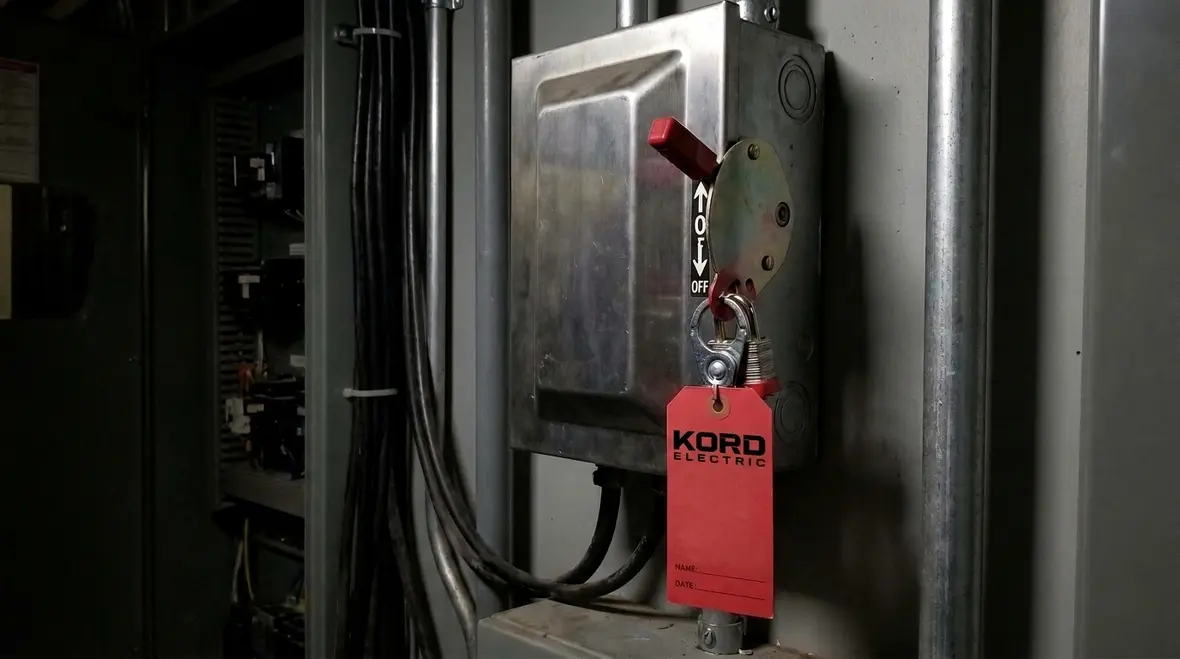
At Kord Electric, we explain the NEC lockable disconnect lockout requirements early, because mistakes here do not stay small. Under NFPA 70 Section 110.25, the code requires lockable means for disconnecting equipment so authorized staff can prevent unexpected energization during service or maintenance. In other words, we help owners and facility managers stop the “surprise power” problem before it turns into downtime, injury risk, or a very expensive lesson.
In this article, our expert service staff and technicians walk through what Section 110.25 actually asks for, how it connects to real field work, and how major property teams can meet the intent without turning every panel into a fortress of random hardware. And yes, we will keep it practical, because the only thing that should be locked out is the circuit, not your schedule.
NEC lockable disconnect lockout requirements: what commercial and industrial teams must get right
For commercial and industrial facilities and major property buildings, NEC lockable disconnect lockout requirements sit at the intersection of uptime, worker safety, and compliance. When a disconnecting means can be locked in the open position, it gives maintenance teams a defined electrical boundary they can trust. When it cannot, every service call becomes a small gamble, and over a full year of operations those gambles add up.
Because of this, our technicians do not treat lockability as an accessory. They look at how your system is actually operated, which devices see the most service activity, and where surprise energization would have the most impact. Then they align physical hardware with written procedures so your lockout plans live in the real world, not just in a binder.

NFPA 70 Section 110.25 in plain business language
First, we frame the purpose of NFPA 70 Section 110.25. The rule targets situations where workers service electrical equipment. Therefore, the disconnecting means must be capable of being secured so other people cannot reenergize it during the work. This supports lockout and tagout programs that facilities already run, and it also reduces the chance that someone “just checks” a live circuit.
Next, we emphasize that Section 110.25 focuses on the equipment’s disconnecting means, not on the whole building’s electrical story. It is about the immediate step that separates normal operation from maintenance work. If the disconnect can be locked, the system gains a controlled boundary.
Now, let’s be clear. Some teams treat lockability as a box to check. However, in the field, lockable provisions have to fit the actual device and the actual procedures used on site. Our technicians help teams align the hardware, the operating access, and the work plan so the disconnect stays lockable when maintenance happens.
When facility leaders want a broader view of how NFPA 70 shapes these requirements, we often point them to our NEC resources. For example, our guide Understanding NFPA 70: The National Electrical Code Explained for 2026 and the Kord Fire article NFPA 70: All About The National Electrical Code (NEC) give property teams a practical backdrop before they drill into specific sections like 110.25.
Where lockable disconnecting means show up on real sites
Commercial and industrial facilities and major property buildings use disconnecting devices in many places. Consequently, Section 110.25 shows up across typical power pathways where maintenance is likely. While every building layout differs, we often see these lockable disconnect needs around:
- Mechanical and electrical rooms that host distribution equipment
- Switchgear sections that feed floors or production zones
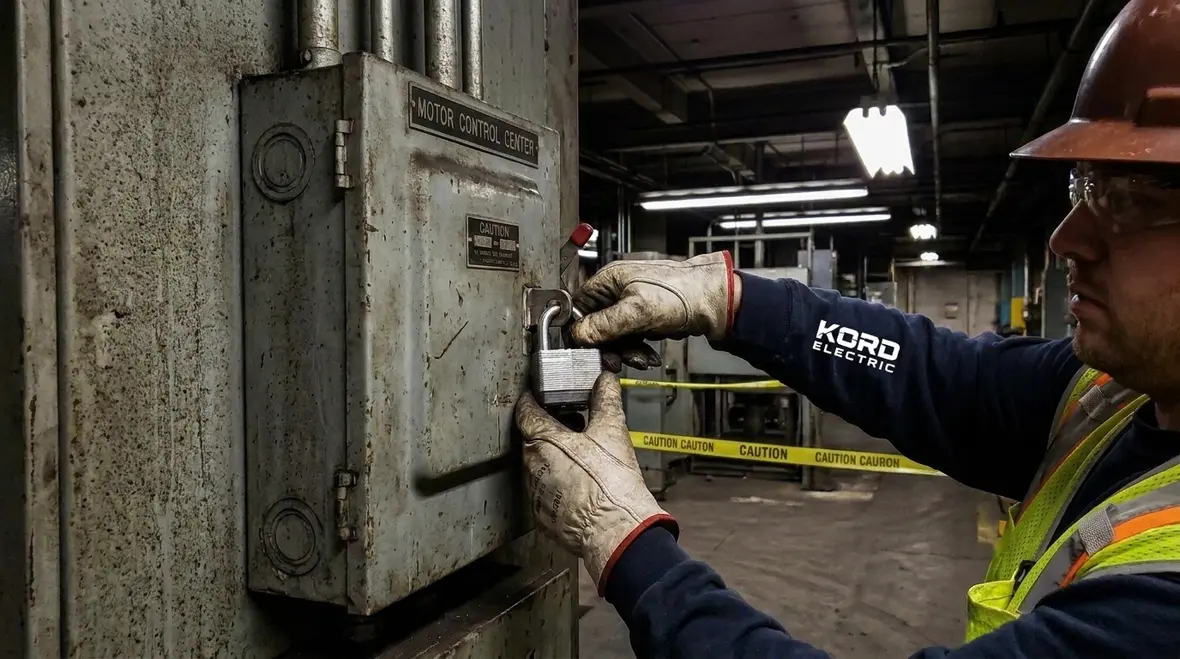
- Motor control centers where maintenance workers access specific feeders
- Service equipment and disconnects that support upstream deenergization
- Elevator and life safety related equipment areas, where access and control must be deliberate
Furthermore, our expert service staff notes that the disconnecting means must be practical to use. If a facility installs lock hardware that does not match the actual lockout tools, workers will improvise, and improvisation is how incident reports are born. So, we guide property teams toward solutions that support their existing lockout and tagout practices.
A small pop culture truth: “This will only take a minute” is the line that always comes before the longest delay. Lockable disconnecting means help stop that plot twist.
How we evaluate lockability during inspections and upgrades
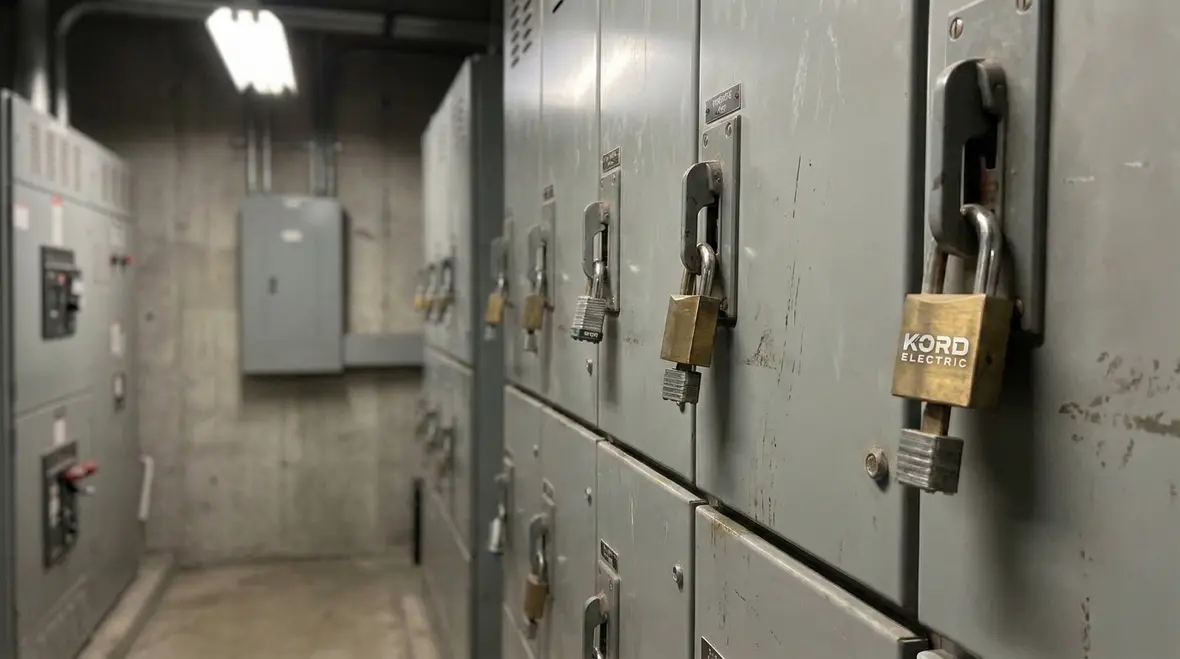
At Kord Electric, we do not treat lockability as guesswork. Instead, we evaluate how the disconnect is operated, where workers stand, and whether the device can accept a lock in a way that stays secure during the task.
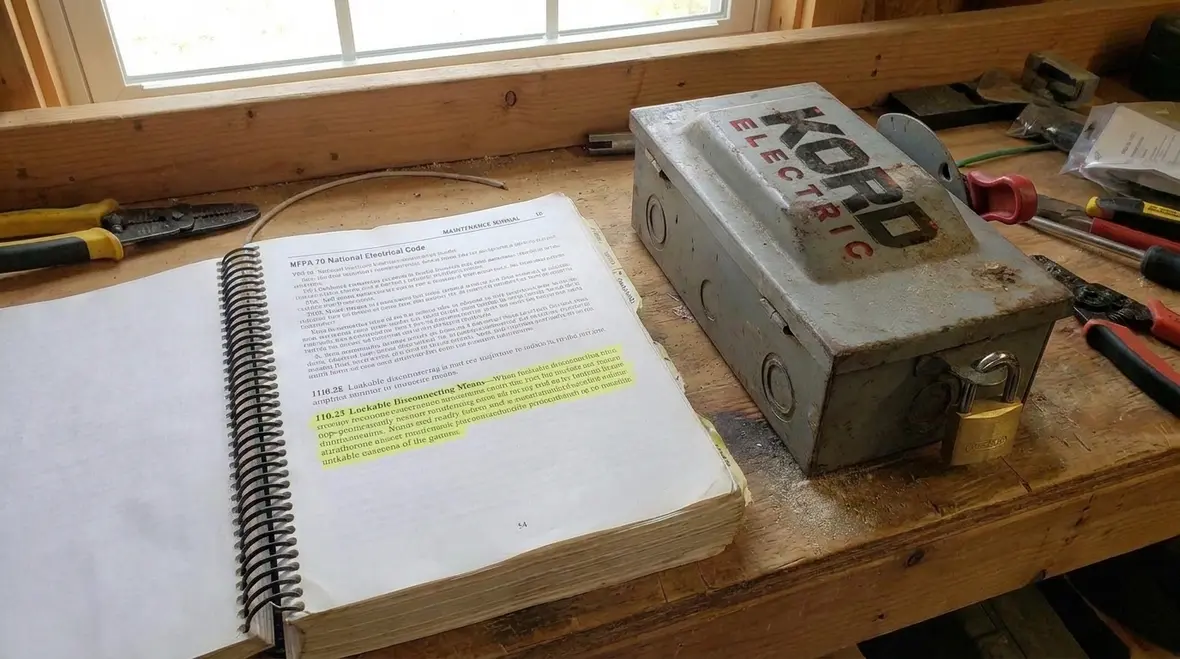
First, our technicians verify that the disconnecting means provides a place for lock devices as intended by Section 110.25. Then, we check that workers can apply the lockout equipment without reaching into hazardous areas or bypassing any safety steps. After that, we confirm that the lock does not interfere with normal operation when the circuit returns to service.
Next, we document what we find in a way facility teams can use. Owners and maintenance leaders want clarity, not mystery. Therefore, we describe what meets the code intent, what needs adjustment, and what risks exist if a non lockable device remains in service.
We also connect the evaluation to the larger NEC approach for 2026 and beyond, because building teams must manage code updates in a steady, realistic way. For additional context on how we explain the NEC for complex facilities, we align our guidance with the broader NEC education we publish on our resources pages at kordelectric.com and kordfire.com, including NFPA 70 all about the National Electrical Code (NEC). When the code language feels dense, we translate it into decisions your facility can execute.
This lockability review often pairs well with other NEC-focused assessments we perform, such as scope checks under NFPA 70 Section 90.2 or safety baselines under NEC 110.1. When our technicians review those elements alongside Section 110.25, the result is a more coherent electrical safety picture instead of a pile of isolated corrections.
Lockout and tagout alignment: making the rule work in the field
Lockability alone does not guarantee safe maintenance. However, lockable disconnecting means create the foundation for lockout and tagout. Therefore, we advise facility managers to align equipment design and field procedure.
In practical terms, our expert service staff helps teams ensure:
- Only authorized personnel access the locked disconnect
- Locks and tags used onsite match the hardware and the operating sequence
- Maintenance teams know which disconnecting means controls the equipment they service
- Labels support the work order so workers do not “hunt” for the right switch
- After work ends, the restoration steps follow the required checks
Moreover, we help reduce confusion when multiple feeders or sections exist. On many major property sites, a person can stand in front of a row of disconnects and still pick the wrong one. That is not a skills issue. It is a system design and communication issue. So we recommend clear identification, organized access, and lockable provisions that make the correct boundary obvious.
And yes, we have seen cases where a panel door was labeled clearly but the disconnecting means did not support locking as required. The label is helpful, but it cannot replace compliant lockable hardware. The code does not care how confident someone feels.
This is also where electrical safety training and site-specific lockout procedures connect back to NEC expectations. When we help teams review their training requirements or NFPA 70 reading approach, we include Section 110.25 examples so staff can see exactly how lockable disconnects fit into their daily work instead of treating them as abstract code language.
Common gaps we see and how to fix them
Field teams often mean well, yet some installation patterns create trouble for Section 110.25. As a result, we see repeating gaps during upgrades, tenant turnover, and renovation projects in major properties.
Some common issues include:
- Non lockable disconnecting means installed where maintenance requires a lock boundary
- Locking points that exist in theory but do not accept real lock devices used by staff
- Access limitations that make safe locking difficult or unsafe
- Missing or unclear identification that leads to wrong-device lockout
- Changes to equipment that occur during renovations without updating the lockout plan
To fix these, we start with targeted upgrades rather than blanket replacements. Then, we coordinate with facility leadership so downtime stays tight and work remains planned. When equipment changes, we help update labels and documentation so the lockable disconnect lockout requirements stay clear for the next maintenance cycle.
Here is a calm truth. If the electrical room feels like a maze, your workers will treat it like one. We help reduce that maze effect by bringing structure to disconnect access, lock compatibility, and labeling clarity. It is less dramatic than a movie plot, but it works.
FAQ for featured snippets on Section 110.25
Conclusion: let’s lock in compliance before the next maintenance call
NEC lockable disconnect lockout requirements are not paperwork. They are a real safety boundary that protects your technicians, your uptime, and your reputation. Kord Electric serves commercial and industrial facilities and major property buildings, and our technicians explain the code in plain terms while they deliver field-ready solutions. If you want to confirm your disconnects meet NFPA 70 Section 110.25, we can assess your equipment and guide your upgrade plan. Call us, and we will make this part of your electrical system as steady as your best shift lead.
If your facility is planning broader electrical work, you can also connect these lockable disconnect upgrades with our wider Los Angeles County electrical services. Coordinating code-driven improvements across panels, feeders, life safety systems, and lockout provisions helps you move from “fixing whatever broke this week” to a structured, long-range plan.