NEC Working Space Equipment Clearances for NFPA 70 110.26
In commercial and industrial facilities, NEC working space equipment clearances do not feel optional, because they directly affect who can safely work around electrical equipment and how quickly people can respond during faults. Kord Electric builds our service practices around NFPA 70 Section 110.26, and we make sure technicians keep working spaces clear so electricians, inspectors, and maintenance teams can do their jobs without playing a high stakes game of “duck and cover.” When we plan a site, we also think about how conductors enter equipment, how doors open, and how access stays safe even after renovations. Others call this boring. We call it preventing the kind of surprise that makes a manager sweat through a shirt.
NFPA 70 110.26 working space and why it matters on real job sites
NFPA 70 Section 110.26 sets rules for working spaces about equipment, meaning the clearance a worker needs while standing, reaching, and adjusting electrical apparatus. In practice, this affects switchboards, panelboards, industrial control panels, transformers, and motor controllers. It also affects you if you manage facilities, because inadequate space can slow maintenance, increase risk, and trigger expensive corrections after construction.
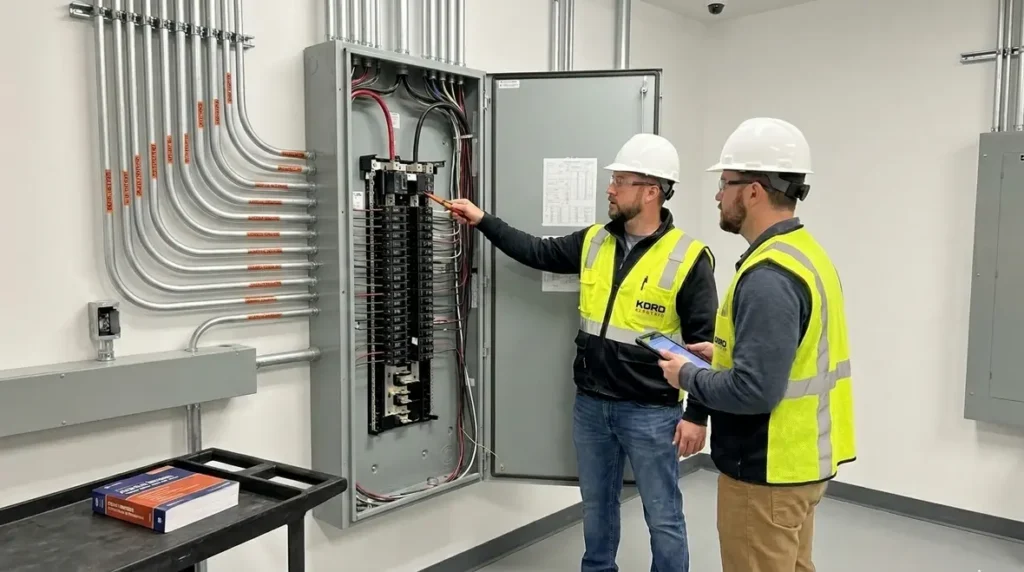
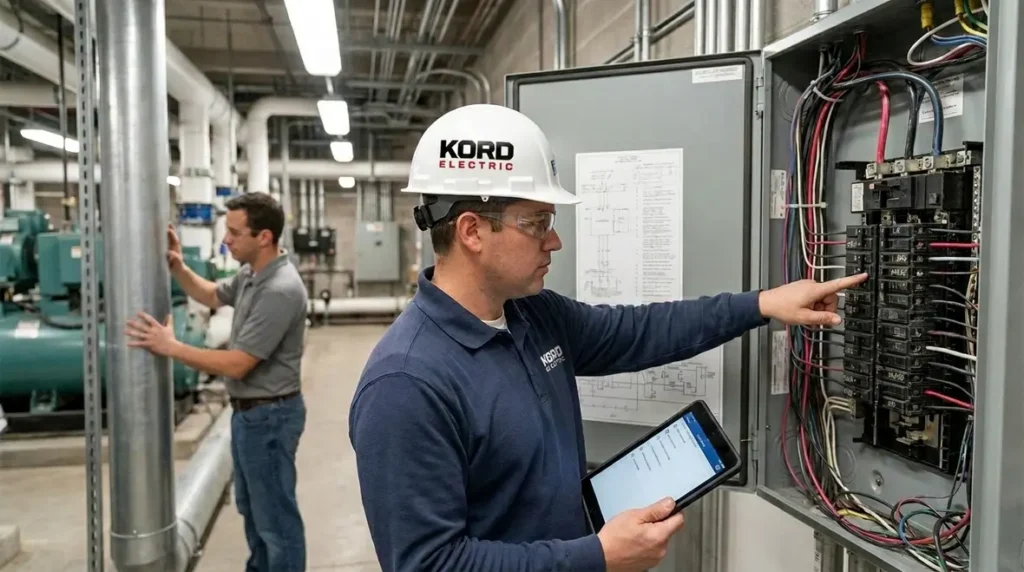
At Kord Electric, our expert service staff explains this in plain language during walkdowns. We do not just quote code. Instead, we look at the actual room dimensions, the equipment layout, and the routes people use to reach the equipment. Then we connect the dots so the working space is not theoretical. It becomes real, measurable, and inspectable. And yes, we have seen rooms where a “temporary” shelving unit stayed for three years. Temporary is the word people use when they want you to stop arguing.
NEC working space equipment clearances in plain terms, not guesswork
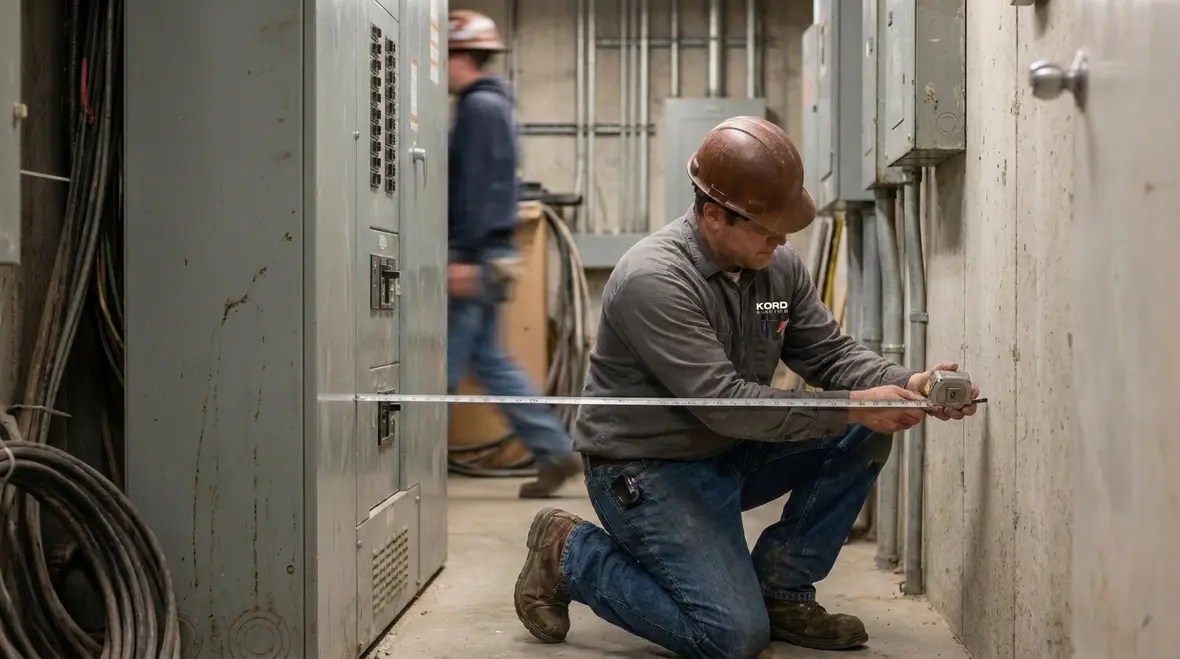
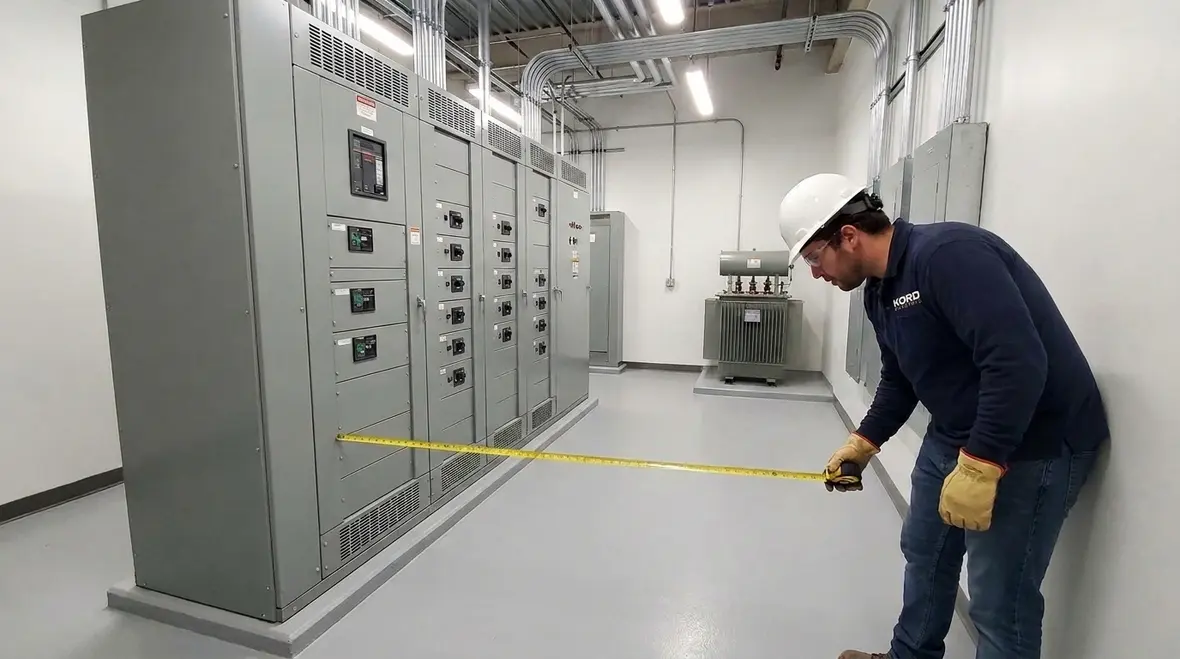
The goal of the rules in Section 110.26 is simple: people must be able to work around electrical equipment without exposing themselves to energized parts or blocking safe access. To do that, the code requires adequate clear width, depth, and height around the equipment. It also requires that the working space remain unobstructed, so workers can stand on a stable surface, open doors, and reach required areas.
Our technicians think in scenarios. For example, if someone needs to remove a cover or access terminations, the worker needs room to stand and reach. Furthermore, if an arc flash event occurs, responders need access that matches the design intent. Therefore, Kord Electric evaluates the working area as a whole system, not as a single clearance number. We also document findings so contractors and facilities teams can resolve issues before inspection day, not after.
How we apply working space rules around switchboards, panels, and control gear
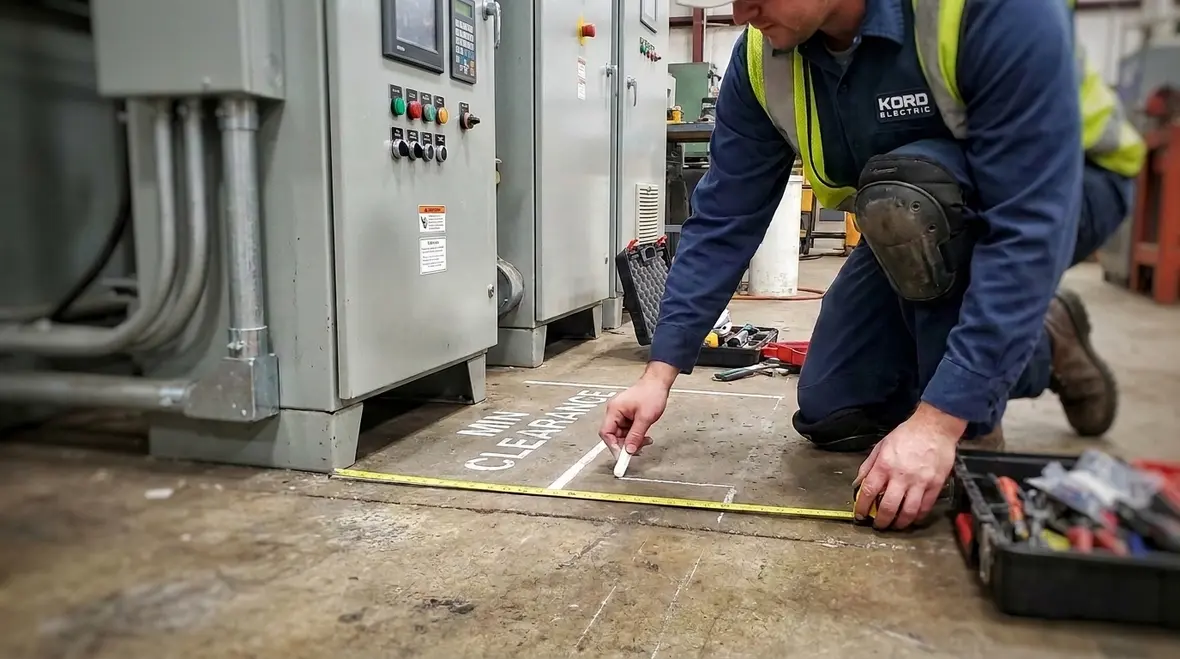
In commercial and industrial buildings, equipment layouts often change with tenant fit outs, production needs, or new process lines. For that reason, we apply NFPA 70 110.26 with an eye toward how the space will function over time. Our expert service staff checks equipment that includes
- Switchboards and switchgear with required front access and door swing clearances
- Panelboards in electrical rooms and distribution corridors
- Industrial control panels, motor control centers, and disconnects
- Transformers and their access routes
Next, we verify that obstructions do not creep in during renovations. Pipes, conduit racks, cable trays, storage, ladders, and even “helpful” barriers can reduce working space. Additionally, we confirm that signage, cabinets, or temporary storage do not block access. Kord Electric treats this as a maintenance issue, not just a compliance issue, because the working space must support safe operations today and after tomorrow’s changes.
Distance, doors, and obstructions that quietly break compliance
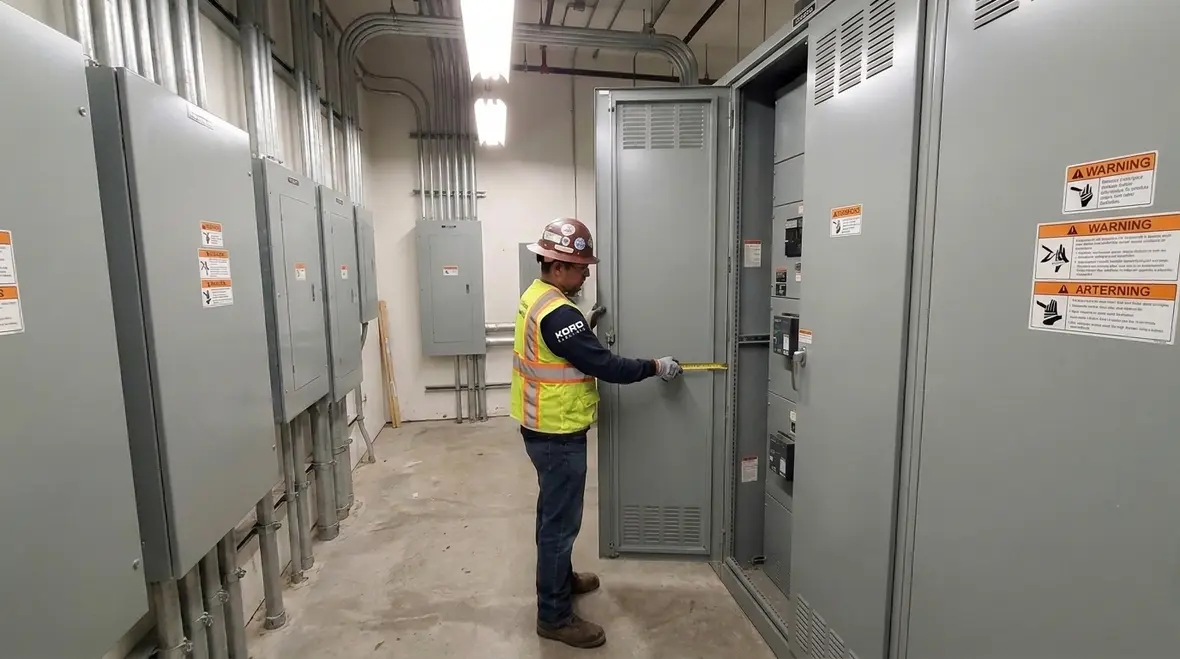
Working space gets complicated when geometry becomes messy. For example, the presence of protruding parts, doors, or equipment in a row can reduce the space a worker needs to approach and work. Also, the code accounts for how far energized parts may be from the working position, and how that affects the required clearances. In other words, you cannot simply measure the “front” and call it done.
At Kord Electric, our technicians walk the space like they plan to work there. We check the door swing path, the reach range to terminations, and the ability to access while standing at the designated area. Then we look for obstructions that do not show up in drawings, such as conduit clamps, cable supports, or low hanging items. Finally, we confirm the area stays unobstructed during normal operations, not only during the first inspection walk.
We have even found cases where a protective barrier was installed “for safety,” yet it blocked access and created a new problem. That is like putting a bike lock on a car door. It feels responsible, until the moment you need the thing to work.
Our service approach for commercial and industrial facilities
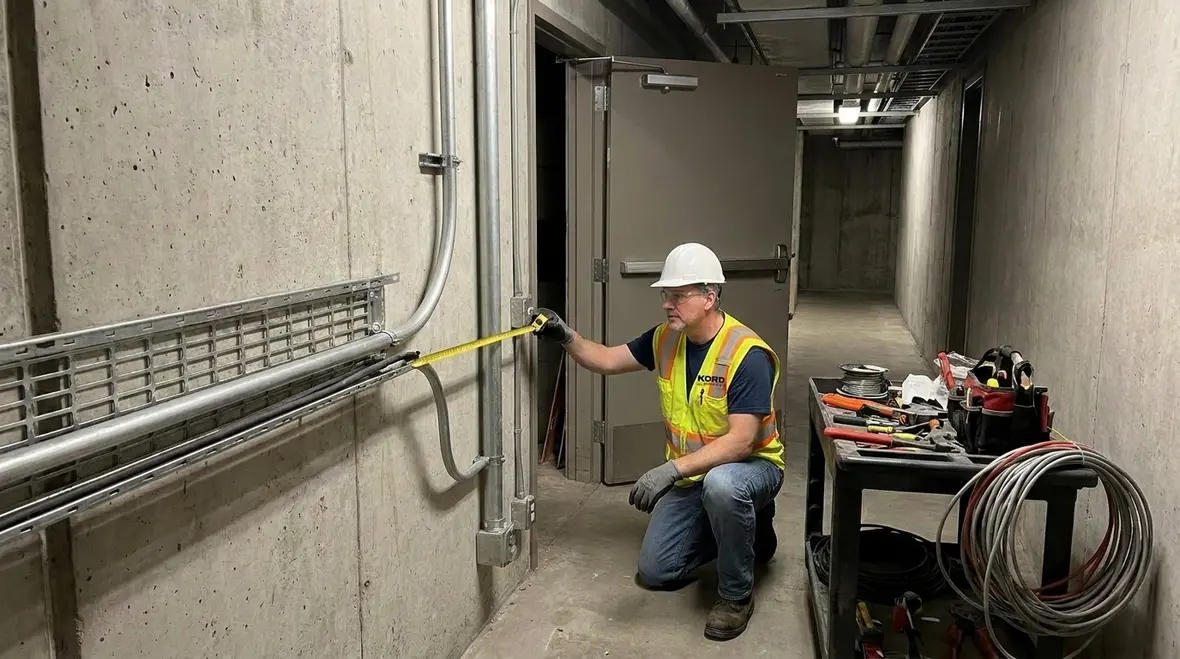
Kord Electric works with commercial and industrial facilities and major property buildings, and we treat NFPA 70 compliance as part of safe facility operations. When our customers request a review, we coordinate with facility leadership and the electrical contractor. We then plan a practical inspection that matches how the building actually operates.
Typically, we follow a process that includes
- Site survey of equipment locations and working clearances
- Verification of access paths and obstruction checks
- Documentation of findings with clear next steps
- Coordination for corrections during planned downtime
Additionally, we explain the “why” behind each requirement. That matters, because teams manage budgets, schedules, and future projects. When facilities leaders understand the intent, they make better decisions faster. And our expert service staff makes the education stick by walking people through what a technician needs to do on site, not just what a rule says on paper.
Where the rules connect to safety planning and incident response
NFPA 70 110.26 does not live in isolation. Working space supports safer troubleshooting, safer maintenance, and safer access for emergency response. Therefore, the clearance requirements align with broader electrical safety goals such as minimizing exposure to energized parts and enabling controlled access to equipment.
When Kord Electric reviews equipment spaces, we also consider operational realities. For instance, a facility may need to maintain equipment while production runs. If the working space is tight, workers improvise, and improvisation is where incidents hide. Moreover, if the layout blocks access during an alarm or fault, responders lose time. That loss can turn a manageable event into a major disruption.
Our team keeps it calm and methodical. We explain what changes reduce risk, what changes improve access, and how to coordinate those changes with the building schedule. If you have other systems nearby, such as fire protection equipment, you benefit from a coordinated plan because crowded rooms cause chain reactions across disciplines. For a deeper dive into how electrical and fire protection codes work together, facility teams often pair this topic with resources like Kord Fire’s overview of NFPA 70: All About The National Electrical Code (NEC) 2026 and its role in broader life safety planning.
Featured snippet FAQ
What does NFPA 70 Section 110.26 require?
It requires adequate working space around electrical equipment so workers can safely approach, stand, and reach parts that need service, while maintaining safe access.
Why do working spaces need to stay unobstructed?
Obstructions can block access, reduce the available working area, and increase the chance that workers contact energized components during maintenance or emergency response.
Does 110.26 apply to commercial and industrial buildings?
Yes. It applies to installation and equipment in those occupancies, especially where electrical equipment requires safe working access.
What types of equipment fall under working space rules?
The rules apply to equipment such as switchboards, switchgear, panelboards, transformers, and control equipment, depending on the installation and access conditions.
How does Kord Electric help facilities meet these requirements?
We review equipment access and clearances, identify obstruction and geometry issues, and recommend practical fixes coordinated with facility operations.
Frequently overlooked issues we see during on site reviews
Even strong teams miss certain problems. First, they may focus on front clearances but overlook side obstructions caused by cable trays, conduit, or mounting hardware. Next, they may assume future tenant improvements will not affect electrical rooms, yet renovations often move equipment and add storage. Also, they may measure once at installation and forget that doors, racks, and signage may change later.
Kord Electric also notices how people use the space. If the working area becomes a convenient storage zone, the clearance no longer matches the design intent. This is where our technicians step in with friendly clarity. We tell teams that “storage” and “working access” cannot share the same space without consequences, and those consequences usually arrive on inspection day or during the next urgent repair. It is like expecting a fire extinguisher to double as a coat rack. People do it until they need it.
Connecting NEC working space equipment clearances to broader compliance
Clearances under NFPA 70 110.26 do more than help technicians move comfortably; they support a broader compliance story that touches design, maintenance, and training. When we review a site, we often reference companion resources like our technical reading on Understanding NFPA 70: The National Electrical Code, Explained for 2026, because working spaces and equipment clearances only make full sense when you see how they connect to conductor choices, protection strategies, and inspection expectations.
For large commercial and industrial properties, that connection shows up in planning documents, not just in electrical rooms. Teams who account for NEC working space equipment clearances early in design avoid awkward compromises later, like shifting panels at the last minute or arguing about whether a storage rack really needs to stay. By pairing clearance planning with system design, you get cleaner drawings, fewer field conflicts, and a smoother path from energization to long term operation.
We also see clearance planning surface in training and safety programs. When facility staff learn where they can stand, what they must keep clear, and why those distances exist, they stop treating electrical rooms as spare storage. Articles like Kord Electric’s guidance on electrical safety training requirements and NFPA 70 awareness help leadership build that culture so clearances remain respected long after the first inspection is over.
From working space assessments to county-wide electrical support
Many commercial owners first call us for a specific problem: a tight electrical room, an upcoming inspection, or a renovation that might squeeze clearances. Once we walk the site together, they realize that the same discipline we bring to NFPA 70 110.26 also supports bigger goals like reliability, expansion planning, and life safety coordination.
That is why our assessments often evolve into broader projects: reorganizing equipment layouts, reworking feeders and raceways, or coordinating with other trades to keep critical panels accessible. For facilities across the region, Kord Electric can extend this support through our dedicated Los Angeles County electrical services, so your NEC working space equipment clearances align with the same technical rigor we apply to power distribution, lighting, and emergency systems throughout your properties.
When we connect localized clearance checks with county-wide service coverage, facility teams gain a consistent playbook. A manager in one building knows the same clearance philosophy, documentation standards, and inspection readiness mindset will show up in other sites as well. That consistency reduces surprises, supports better budgeting, and helps you prove due diligence when auditors or insurers ask how you manage electrical risk.
Conclusion and call to action
Kord Electric helps commercial and industrial facilities maintain safe, code aligned working spaces around electrical equipment under NFPA 70 Section 110.26. When our expert service staff reviews access paths, doors, and obstructions, we help you reduce risk, protect staff, and avoid expensive rework. If you manage a major property building or oversee electrical compliance, reach out to us for a working space clearance assessment and a practical plan for corrections. We will explain findings in plain terms and keep your operations moving, calmly and safely.
If you want to take the next step after reviewing your NEC working space equipment clearances, you can connect this effort with broader electrical planning, design, and maintenance work. Whether you are preparing for a focused NFPA 70 review or a full system upgrade, Kord Electric is ready to help you tie the details together so your electrical rooms, documentation, and incident response plans all point in the same safe direction.