
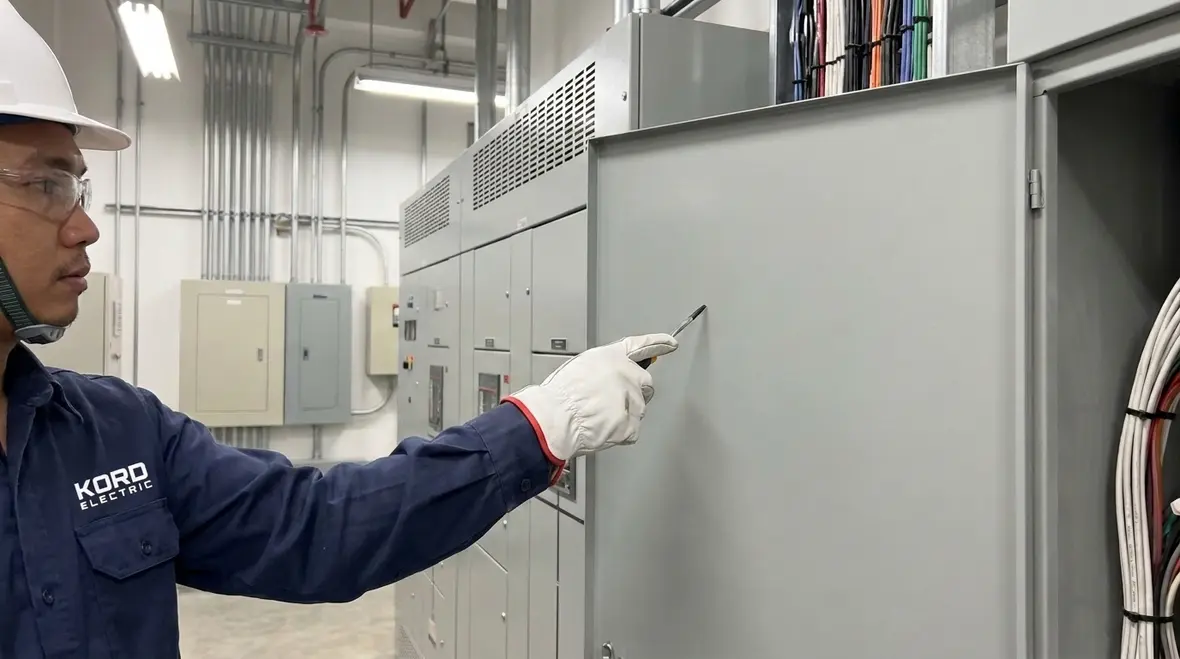
NEC Available Fault Current Marking Under NFPA 70 110.24
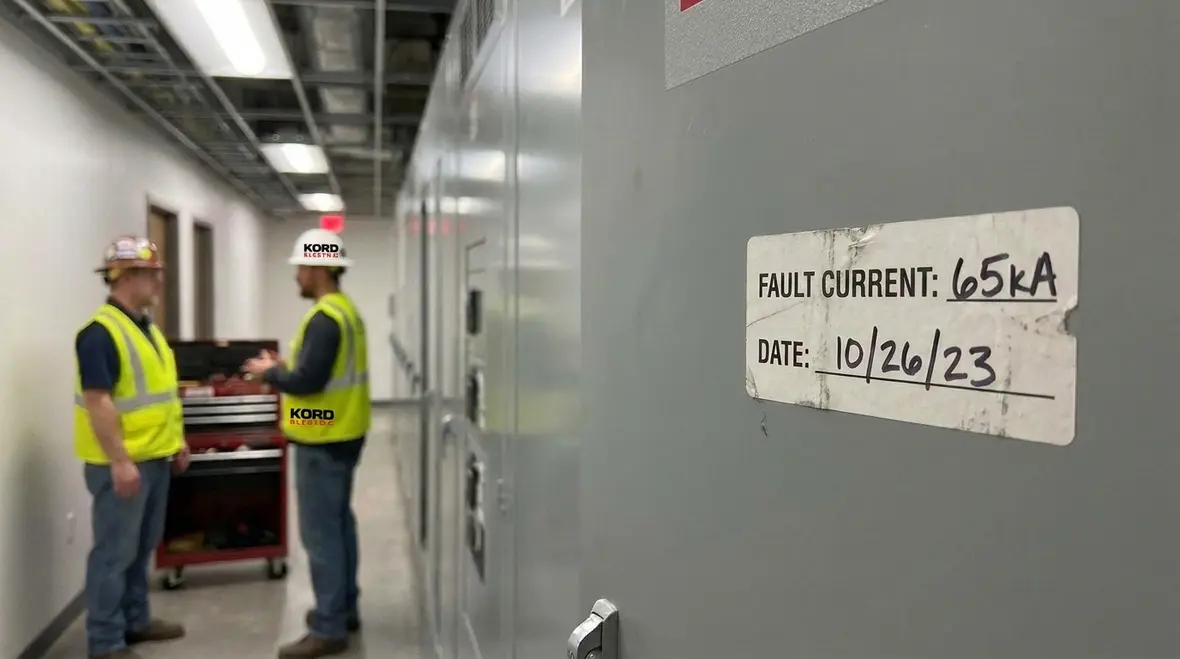
At Kord Electric, we help commercial and industrial facilities stay safe and compliant by using NEC available fault current marking practices that align with NFPA 70 Section 110.24. In plain terms, we make sure the right fault current information shows up where it needs to, so engineers, electricians, and inspectors can make decisions without guesswork. And yes, we have seen what happens when someone treats electrical labeling like a sticky note that “might still be there next week.” That is why our expert service staff explains the rules clearly, then installs and verifies them on real projects.
NFPA 70 Section 110.24 for commercial and industrial sites
NFPA 70, the National Electrical Code, sets expectations for safe electrical systems. Section 110.24 focuses on marking available fault current so equipment ratings match real-world conditions. First, the code recognizes that fault current can be high in normal operation and even higher during faults. Then it requires a clear way to identify what the system can deliver at each point. This matters most for commercial buildings, industrial plants, and major property facilities where one wrong assumption can ripple through the entire electrical design.
In practice, we guide teams through the fault current path: utility sources, transformers, switchgear, distribution panels, and finally the loads. As a result, the available fault current can change from one location to another. So we do not treat labeling as a one time task. Instead, we treat it as a system requirement that stays correct when the design changes.
What we mark and why the details matter
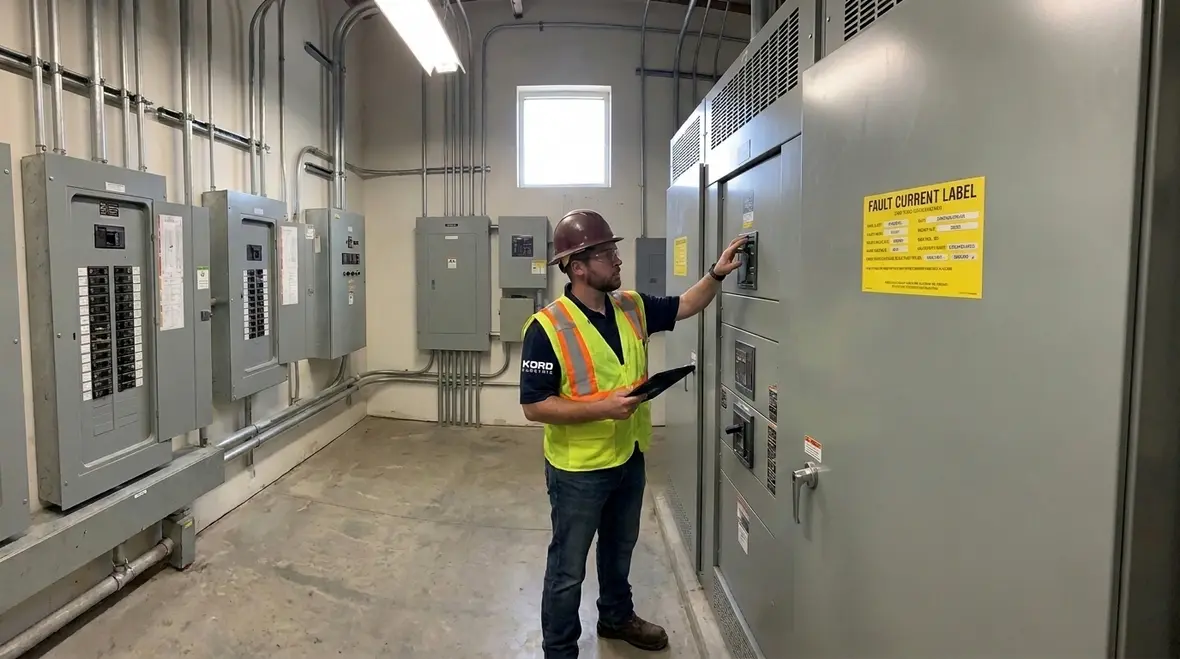
Under Section 110.24, the goal is to mark the available fault current at appropriate equipment where decisions depend on that value. Typically, this appears on equipment like switchboards, switchgear, and panelboards that could face fault currents higher than the protective device design expects. Next, the marking supports short circuit and coordination work. It also helps confirm that interrupting ratings and protective device settings remain valid.
Here is the practical reality: labels prevent mismatch. When the available fault current is higher than equipment can safely interrupt, you invite failures, damage, and downtime. And downtime in a commercial setting can cost more than the entire label would ever cost. Our technicians and expert service staff show teams how to interpret the marking so the right people make the right calls, not just the fastest calls. We keep it calm, because panic is not a project management method.
How NEC available fault current marking connects to short circuit ratings
Short circuit current ratings determine whether equipment can withstand and interrupt fault current without hazardous results. However, the rating only matters when you know the system value at that point. Therefore, NEC available fault current marking acts like the bridge between design calculations and field reality.
When we work with major property buildings and industrial facilities, we often see scenarios where the electrical one line diagram tells a story that the real site can still upset. Utility feeds change, transformers get swapped, voltage drops shift, or protective devices get updated. Consequently, the available fault current at a given bus can move. If the marking stays generic or outdated, you lose the point of the whole requirement.
Our team does not just label and walk away. We make sure the marking ties to the correct fault current study, and we help stakeholders understand what the numbers mean for coordination and equipment selection. In other words, we keep the electrical system from becoming a mystery novel where the ending is burn marks.
Where the marking belongs in the field
Section 110.24 does not treat labeling like decoration. It requires placement where it supports use. That means we plan marking locations based on how the equipment gets selected, installed, and serviced. Then we confirm that labels remain visible, durable, and accurate through routine maintenance.
In commercial and industrial facilities, the field layout often includes multiple voltage levels, bus types, and feeder paths. As a result, we coordinate marking with the equipment schedule and the one line diagram. We also account for who uses the information. Engineers need it during design reviews. Electricians need it during installations and upgrades. Inspectors need it to verify compliance. Facility teams need it for troubleshooting and safe operation.
Our technicians explain the “where” as much as the “what.” They slow down, point out the equipment that actually drives interrupting decisions, and show how a correct label helps the next person avoid costly assumptions.
Common mistakes we see during upgrades
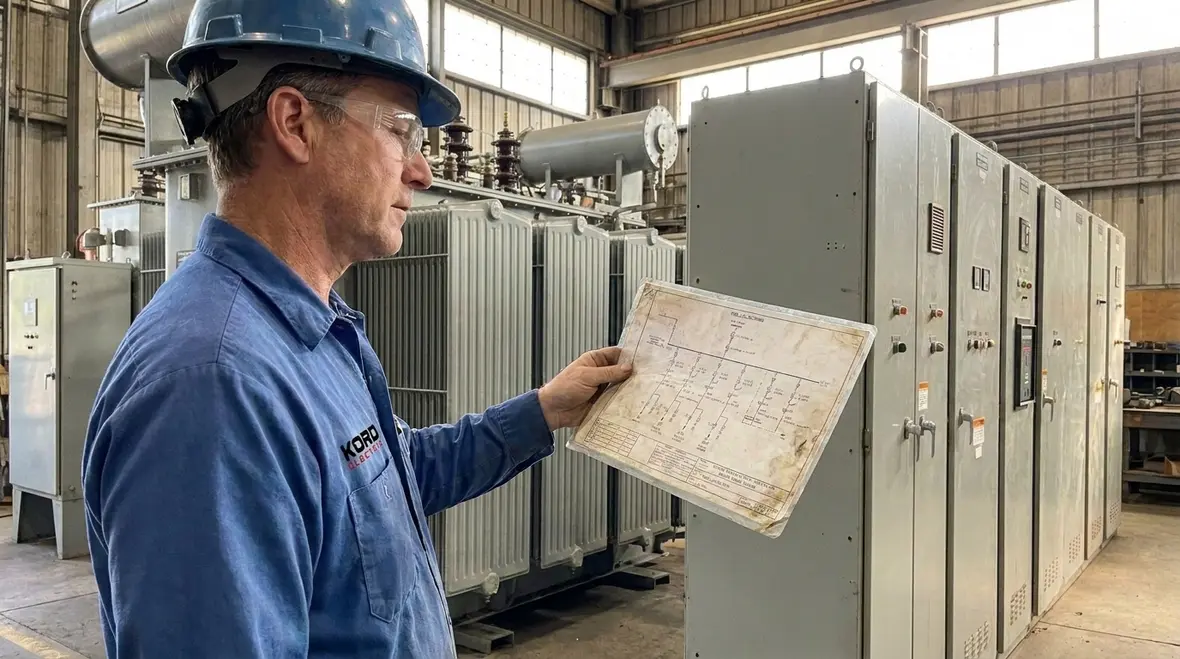
Even well run companies can stumble when projects run fast. First, some teams reuse older fault study numbers even after equipment changes. Next, others apply labels in a place that looks tidy but does not help the people who need the data. Then there are cases where the short circuit study gets updated, but the field marking does not.
We also see confusion about available fault current versus other values that appear in documentation. Available fault current represents what the system can deliver at a point during a fault. Other figures, like fault current at the device terminal or values impacted by specific protective device behavior, can get mixed in. If the label does not match the correct reference point, you create a compliance gap.
Our expert service staff clears this up by walking teams through the reference point logic. We explain in plain language, and we verify the physical installation. And yes, sometimes we have to gently remind people that electrical labeling is not like naming a pet. It does not get changed every time someone feels like it.
Coordinating marking with NFPA 70 and real compliance workflows
NFPA 70 serves as the backbone for electrical safety and practical compliance. However, available fault current marking becomes truly useful only when it fits into real workflows. So we align it with submittals, commissioning steps, testing results, and documentation management.
From a design perspective, we support teams that use fault current studies to select equipment with appropriate interrupting ratings. From an installation perspective, we ensure the field marking reflects those calculations. Then from an operations perspective, we help facility teams keep the labeling current when upgrades happen, like panel replacements, transformer work, or switchgear modifications.
We also keep an eye on broader code context that affects electrical safety decisions. Our approach follows the same mindset described in our NFPA 70 educational resources, including What Is NFPA 70? Understanding the National Electrical Code and related Kord Electric blog articles that connect NEC requirements to practical field work. Kord Electric serves commercial and industrial facilities and major property buildings, so our compliance process aims at fewer surprises, cleaner audits, and calmer maintenance days. If compliance feels like a weather report, we want it to be the one that actually warns you before the storm.
Double checks we run before we call it done
Before we finalize NEC available fault current marking, we apply a careful review process. First, we confirm the equipment identity matches the fault study reference. Next, we confirm the label value uses the correct available fault current level for that bus point. Then we confirm the label content aligns with the expected format used by the project documentation and the code intent.
Finally, we inspect visibility and durability. A label that gets covered by paint, cable trays, or routine maintenance access will fail when you need it most. Therefore, we position labels so technicians can read them during troubleshooting and so inspectors can confirm them without moving half the building.
Our goal stays simple. We want electrical safety information to be accurate, readable, and actionable. And we want your teams to spend time on production, not on detective work during an incident.
FAQ
Call Kord Electric for expert help with fault current labeling
If your commercial or industrial facility plans an upgrade, a commissioning step, or a compliance audit, we can help you handle NEC available fault current marking the right way. Kord Electric brings experienced technicians and expert service staff who explain the requirements clearly, verify the field labeling, and support a smooth documentation trail. Contact us to review your project scope and confirm your fault current marking stays accurate. Let us help you keep the lights on and the inspections calm.
For teams planning broader power reliability improvements, NEC available fault current marking also fits naturally alongside work like electrical load balancing for commercial power reliability, data-driven design, and preventive maintenance programs. When these pieces work together, your electrical system behaves less like a mystery and more like a plan you can defend during every inspection and upgrade meeting.
Kord Electric already supports property owners across Los Angeles County and Southern California with a full range of commercial and industrial electrical services. If you need help with available fault current, coordination, or broader system upgrades, our Los Angeles County electrical services team is ready to support your project from study through labeling and long term maintenance.
When you are ready to move from discussion to implementation, we will walk your facility, review your documentation, and build a labeling plan that aligns with NFPA 70, supports your operations, and keeps your NEC available fault current marking accurate as your system grows.


