
NEC Neutral Equipment Grounding Banned 2 kV Explained
NEC neutral equipment grounding banned 2 kV sounds like a strange rule you’d only hear in a late night tech show, but for commercial and industrial electrical systems it matters. Section 270.142 of NFPA 70 blocks a setup called “neutral as ground.” In plain terms, it stops facilities from using the neutral conductor as a substitute for the grounding path, especially when equipment faults can push damaging voltage onto exposed metal parts. At Kord Electric, we rely on our expert technicians and service team to explain these rules clearly, so building owners and facility managers can keep people safe and keep operations steady. And yes, we still find time for a small joke when the situation earns it.
Why the NEC forbids neutral as the grounding path
In many power systems, the neutral conductor and the grounding conductor do different jobs. The neutral carries unbalanced current under normal operation. The grounding conductor exists so fault current takes a safe route to the earth system and clears the fault fast. When we treat neutral as ground, we blur that line. Therefore, the system can behave in ways that are hard to predict and harder to control.
NEC neutral equipment grounding banned 2 kV rules exist because neutral-as-ground setups can energize equipment frames. If a fault or a loose neutral connection occurs, current may travel through pathways that were never meant to carry it. As a result, exposed metal can become energized, and shock risk rises. Moreover, protective devices may not trip in the expected way, which means faults can linger longer than they should.
To put it in business casual terms, neutral is for return current. Ground is for safety. Mixing them is like using a fire door as a storage closet. You can do it, but the building inspector and physics both show up eventually.
What Section 270.142 actually protects you from
NFPA 70 Section 270.142 blocks the practice of using the neutral conductor as the grounding electrode or as the only bonding path. The goal is to keep a stable, low impedance ground path that works during faults. Then, the overcurrent devices can operate as intended, and the earth reference stays reliable.
Our technicians at Kord Electric, along with our expert service staff, often see confusion in the field. A site may already have wiring that “seems to work,” so people assume the code will tolerate it. However, code compliance is not a vibes contest. It is about predictable behavior during abnormal conditions. When a neutral carries current that should have gone through grounding, voltage can appear on equipment enclosures. That is where the NEC neutral equipment grounding banned 2 kV issue becomes more than paperwork. It becomes a safety and reliability matter.
Also, consider the facility side of the story. In commercial and industrial spaces, downtime costs money. If a fault does not clear promptly, systems stay unstable and maintenance costs grow. Therefore, proper grounding keeps both people and process equipment protected.
If you want a broader context for how grounding rules fit into the bigger NEC picture, Kord Electric’s guide on understanding NFPA 70 and the National Electrical Code for 2026 connects these requirements to everyday decisions in commercial and industrial facilities.
How neutral faults create dangerous voltage on frames
Let us walk through a typical failure chain, the kind we help resolve for major property buildings and commercial and industrial facilities. In a neutral-as-ground arrangement, the neutral may share roles with the equipment grounding system. If there is a wiring defect, corrosion, or a loose connection, the neutral conductor does not stay at the assumed reference potential.
Then, voltage can rise on enclosures bonded through paths that involve neutral. Consequently, someone who touches a metal cabinet or connected machinery could receive a shock. Even if the fault current does not trip instantly, the time between the event and device operation is where injuries can happen.
Furthermore, protective device coordination can degrade. Overcurrent devices rely on the expected fault current path. If neutral current returns through a grounding route, the current magnitude and timing at the device may differ from what the design expects. As a result, the system may trip at the wrong time or not trip soon enough.
In short, neutral-as-ground can turn a fault into a surprise guest. It arrives without warning, and it lingers until someone clears it the right way.
NEC neutral equipment grounding banned 2 kV and system voltage behavior

When facilities discuss NEC neutral equipment grounding banned 2 kV, they often mean the rule matters even when system voltage and fault conditions look “manageable.” In reality, once a neutral-as-ground method exists, the grounding reference becomes tied to conductor performance. That performance can change with load imbalance, upstream conditions, and the state of neutral connections.
Therefore, systems that operate fine under light load can still create unsafe conditions during fault events. In a commercial setting, load patterns also vary with shift schedules, motor starts, HVAC cycles, and process equipment. So, the same wiring setup that looks stable at 10 AM may behave differently at 10 PM during peak operation.
Our service team at Kord Electric helps clients evaluate how their grounding and bonding align with the NEC. We look beyond what is visible in one junction box and instead trace how current can move during abnormal conditions. That is the difference between a quick fix and a lasting solution.
What proper grounding and bonding should look like instead

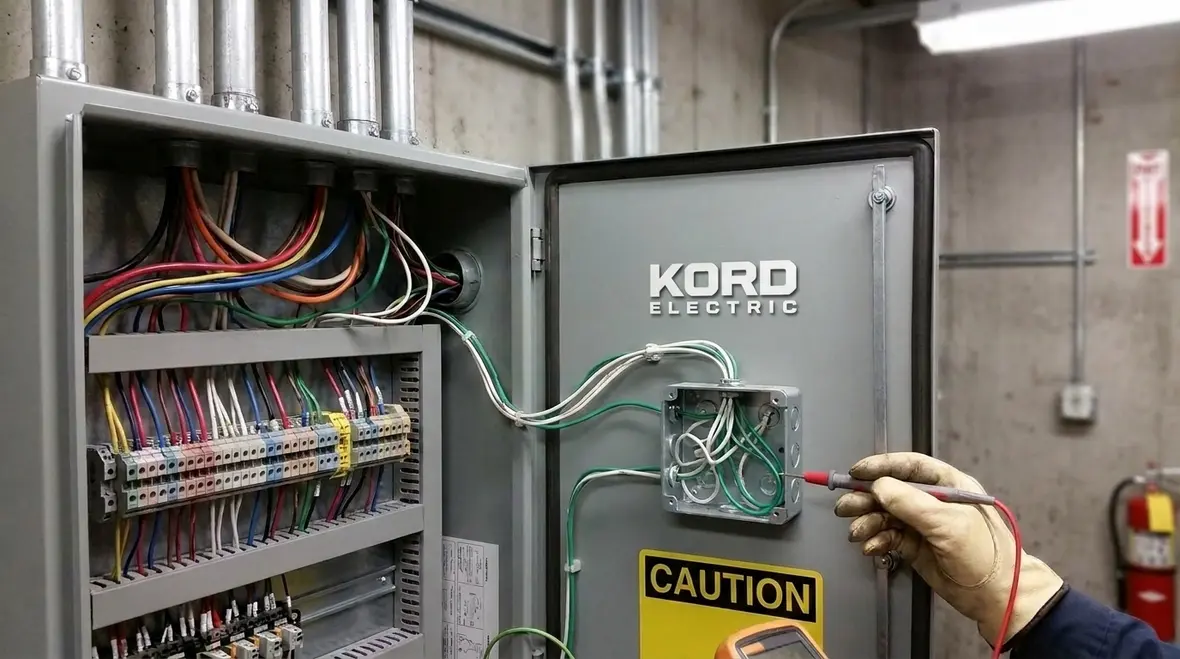
For commercial and industrial buildings, we recommend designing grounding and bonding so that grounding conductors provide a fault path independent of neutral conductors. That means neutral remains a current-carrying conductor, while the grounding system remains a dedicated safety path. Bonds connect the right metal parts to the right grounding system, so exposed equipment stays at a controlled potential.
In practice, we often see these items addressed during audits and upgrades:
Correct bonding of service equipment and separately derived systems so protective devices clear faults predictably
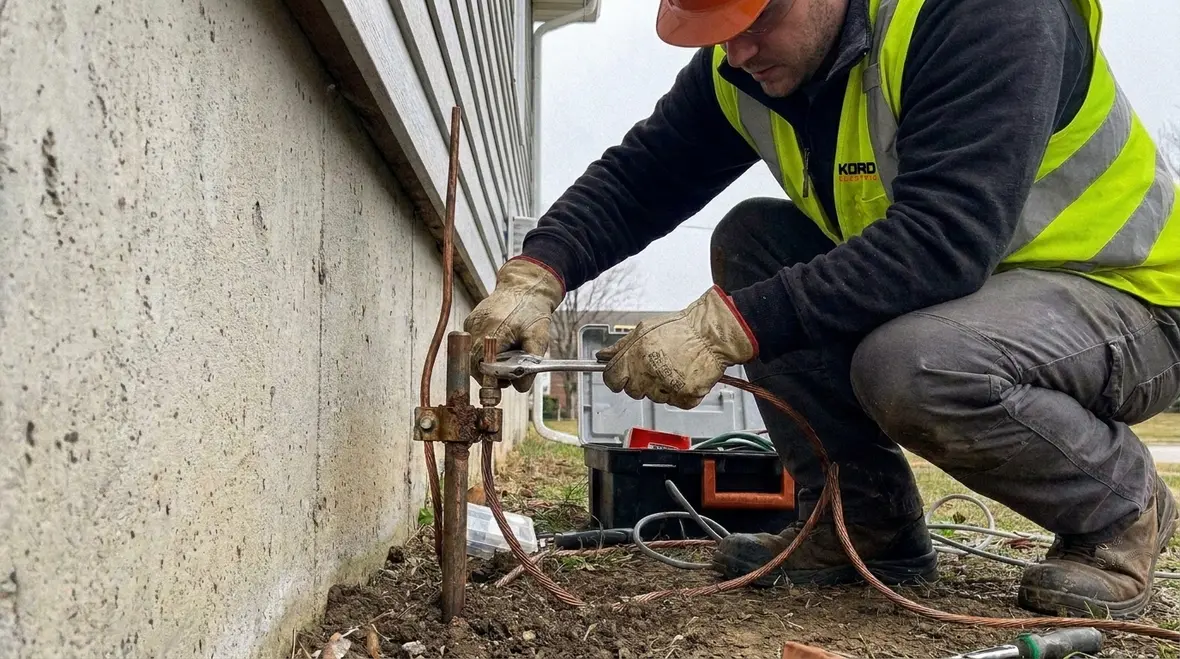
Proper grounding electrode connections so earth reference stays stable and effective
Correct separation and routing of neutral and equipment grounding conductors in panels and feeder runs
Clear labeling and documentation so future maintenance does not undo the safety work
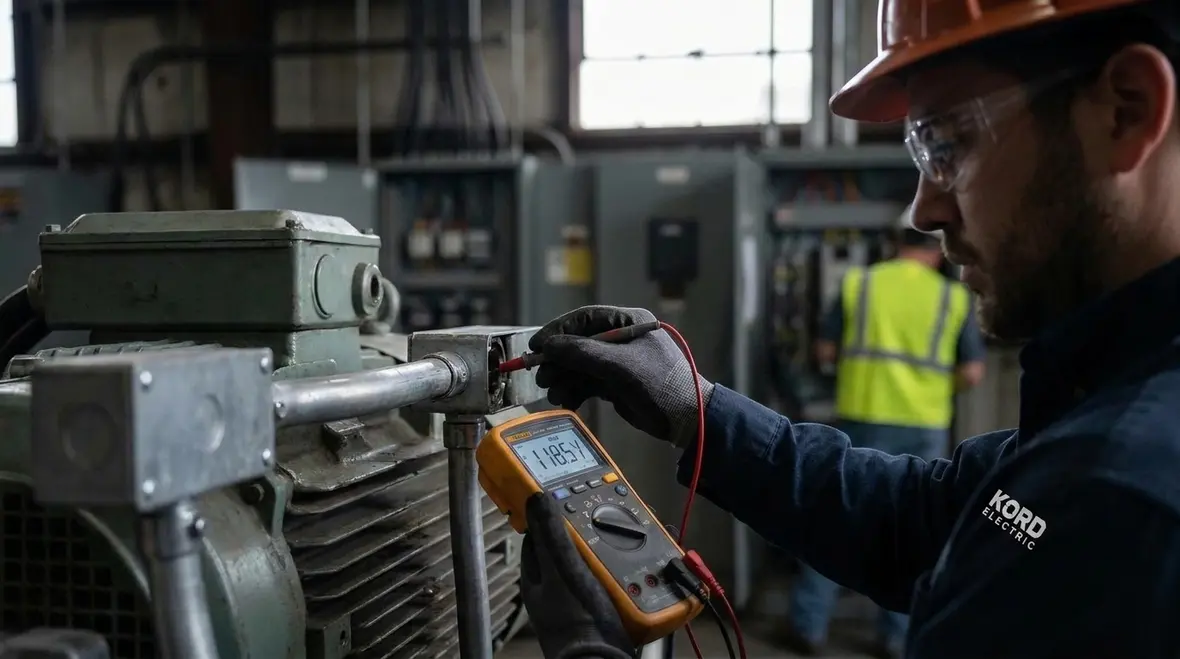
Then, technicians verify continuity, check connections, and review how the system operates under fault conditions. We do not just install and walk away. We confirm. After all, a building’s safety system should not rely on hope.
Field realities in commercial and industrial buildings
Most problems we see start from shortcuts made years ago, during tenant buildouts, panel swaps, or renovations. People may inherit old designs, and later upgrades bring confusion. For example, someone ties grounds “where it seemed convenient.” Later, that convenient tie becomes a code violation and a safety risk.
Additionally, facility managers and electricians might work under time pressure. In the real world, a shutdown window can be tight. Still, our approach at Kord Electric stays practical. We plan the work, coordinate with operations, and explain the “why” in simple terms to the people who manage the site. Our team and expert service staff also help train others so the correction remains intact through future maintenance.
For reference, Kord Electric builds knowledge around NFPA 70 updates and NEC structure, and Kord Fire and Kord Electric resources also support how code understanding improves fire and electrical safety. A helpful example is Kord Fire’s deep dive on NFPA 70 and the National Electrical Code, which links electrical rules to fire protection realities in modern buildings.
Even when you bring in specialized systems, like pumps and life safety equipment, correct electrical grounding helps them operate as intended. Websites like firepumps.org reflect how integrated safety systems depend on reliable electrical performance, and we treat grounding as part of that larger safety picture.
As a pop culture nod, it is like the Marvel rule: the whole team works better when everyone plays their assigned role. Neutral and grounding each have a job. When you swap roles, you get chaos, not heroics.
FAQ for NFPA 70 Section 270.142 and grounding
What to do next if you suspect neutral-as-ground wiring
If you manage a commercial or industrial facility, you do not need to guess. You can verify. First, we recommend an inspection by qualified technicians who understand NFPA 70 requirements for bonding, grounding, and conductor routing. Next, we analyze how the system handles faults and how protective devices respond. Then, if corrections are needed, we plan a practical upgrade that limits downtime and protects the building’s core operations.
At Kord Electric, our expert service staff explains each finding in plain language, so decision makers can act with confidence. We focus on major property buildings and commercial and industrial facilities, because those sites cannot afford “maybe it is fine” electrical safety decisions.
Ready to confirm your grounding and bonding design? Contact Kord Electric for a professional electrical review focused on NEC alignment for commercial and industrial facilities. Our technicians and expert service staff will help you identify neutral-as-ground risks tied to NFPA 70 Section 270.142, explain the real-world hazards, and outline a clear path to correction. You can keep your building stable, protect people, and reduce future downtime. Reach out today and let us handle the heavy lifting while you keep the lights on.
If your facility is located in Southern California, Kord Electric’s Los Angeles County electrical services team can integrate grounding corrections with broader commercial upgrades, emergency power design, and ongoing maintenance, so code compliance and reliability stay aligned instead of competing for attention.
Quick FAQ for featured snippets
What is neutral-as-ground? Using the neutral conductor as a grounding path for equipment enclosures.
Does NEC 270.142 allow neutral-as-ground in any cases? No. It prohibits this practice due to safety and fault-clearing risks.
What danger can neutral-as-ground cause? It can energize metal parts and increase shock risk during faults.
Who should correct wiring issues like this? Qualified electrical technicians familiar with NEC bonding and grounding requirements.
Is this relevant to commercial and industrial buildings? Yes. These sites rely on dependable safety operation and predictable protective device performance.
Bringing it all together
NEC neutral equipment grounding banned 2 kV may sound like an obscure line from a code book, but in real facilities it shapes how safely your electrical system behaves when something goes wrong. Keeping neutral and equipment grounding in their own lanes is not academic theory. It decides whether a fault becomes a routine breaker operation or a shock hazard on a cabinet someone touches every day.
By treating grounding and bonding as part of a bigger safety strategy—one that includes NFPA 70, coordinated overcurrent protection, emergency power design, and reliable distribution—you give your building a better chance of riding through faults without drama. The rules are clear. The hard part is applying them consistently over years of additions, renovations, and “quick fixes.” That is where a disciplined partner makes the difference.
Whether you are reviewing a new project or untangling a legacy system, now is a good time to stop guessing and start verifying how neutral and ground actually behave in your building. The sooner you separate their roles, the sooner your electrical system can go back to being what it should be: quietly reliable background infrastructure.


