
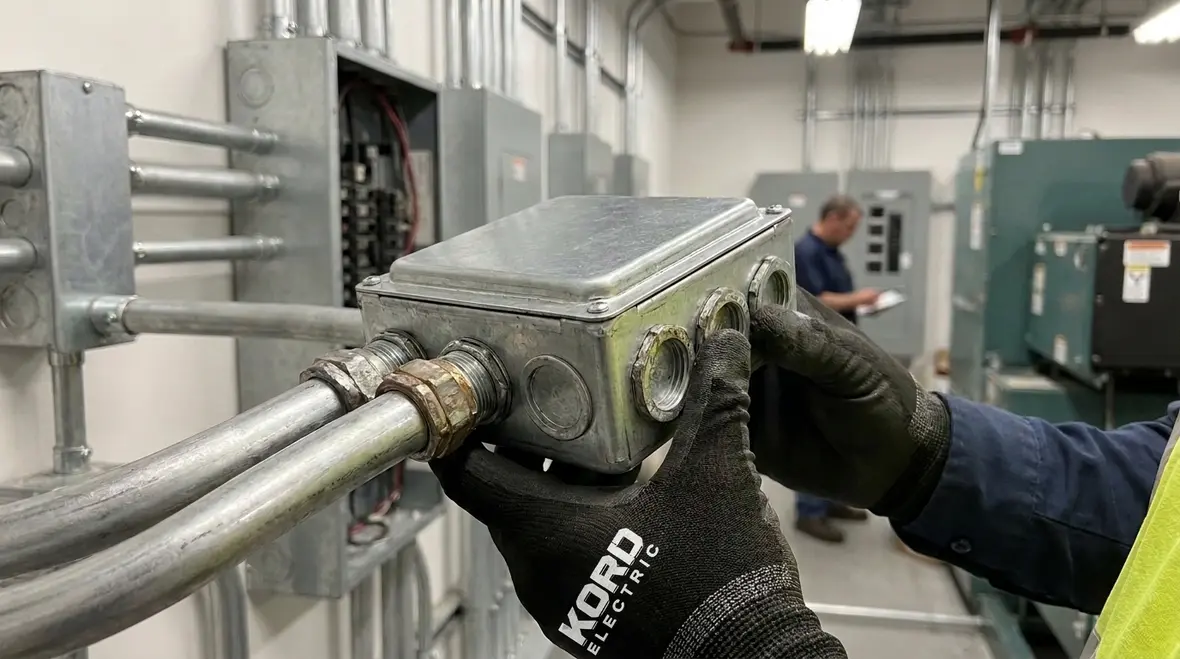
NEC NFPA 70 Section 314.3 Reconditioned Boxes Safety Explained
NEC NFPA 70 Section 314.3 and Reconditioned Box Safety, Explained for Commercial Facilities
At Kord Electric, we support commercial and industrial facilities and major property buildings that need real electrical reliability, not wishful thinking. That is why we often talk through NFPA 70 Section 314.3 and how it governs NEC reconditioned boxes equipment when it is reused in the field. In plain terms, when a box or enclosure comes back from service, we do not treat it like a “second life” without rules. Our expert technicians examine it, follow NEC requirements, and make sure the installation matches code intent. And yes, we have seen how a damaged enclosure can turn a tidy project into a horror movie. Luckily, we do the boring parts so everyone else gets to sleep.
In this article, we explain what Section 314.3 expects, how we verify suitability, and how our service staff communicates the process in a way that managers, facilities teams, and stakeholders can understand. We also connect this guidance to broader NFPA 70 direction, including resources like our Kord Electric blog post on Understanding NFPA 70, the National Electrical Code Explained for 2026, so facility leaders can see how reconditioned equipment choices fit into overall code strategy.
What NFPA 70 Section 314.3 Requires for Reused Enclosures
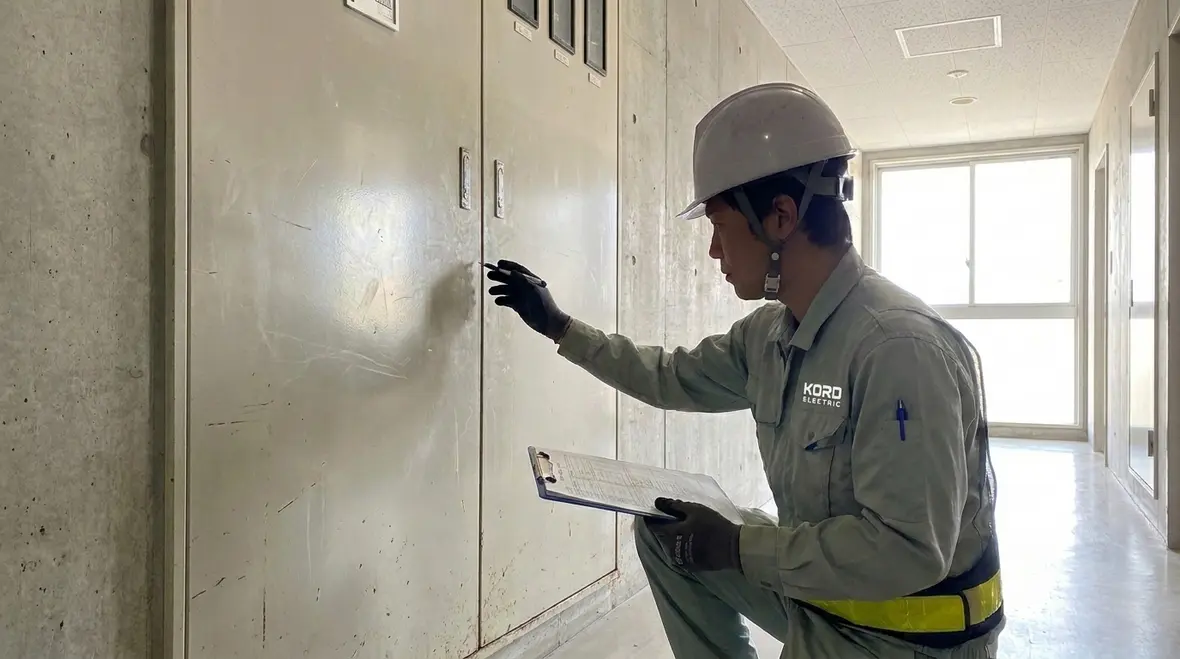
NFPA 70 is the National Electrical Code, and Section 314.3 addresses reconditioned boxes and equipment. In our experience, most facility teams want one thing: a clear path for reuse that still protects people, buildings, and compliance. Therefore, Section 314.3 does not simply allow “used” parts to go back in. Instead, it requires that reconditioned items are brought back to a condition that meets NEC expectations for safety and performance.
Put differently, if the enclosure no longer provides the protection it is supposed to provide, it does not earn a pass. Further, the code expectation ties to the specific role of the box: it must support wiring methods, maintain integrity, and remain suitable for the environment where it is installed. Consequently, when we handle NEC reconditioned boxes equipment, we treat “reconditioned” as a process, not a label.
Our technicians explain it like this during walkdowns. First, they confirm the item’s material and construction. Next, they verify the enclosure features that matter in the installation, such as openings, threads, covers, and fit. Then, they confirm the reconditioned state still supports secure wiring and equipment connections. After that, they document what they found so the facility team understands the why, not just the what.
Connecting Section 314.3 to your overall NEC strategy
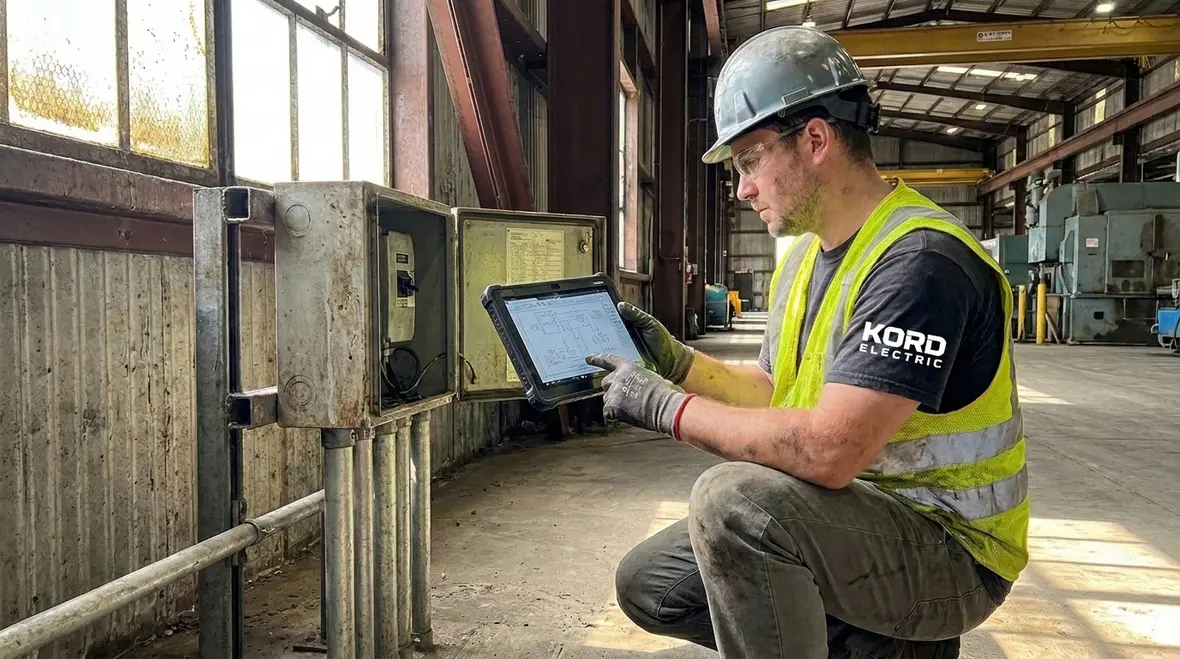
Section 314.3 may read like a narrow rule, but it plugs directly into your larger NEC compliance plan. When we guide teams through NFPA 70 updates, we reference resources such as our articles on what NFPA 70 covers and how the 2026 direction affects planning, then zoom in on how reconditioned boxes support that bigger picture. Reuse choices should never pull your building away from safe load calculations, proper wiring methods, or equipment ratings that match the environment.
How Kord Electric Evaluates Condition, Fit, and Code Suitability
Now we move from the rule to the work. Section 314.3 pushes the responsibility onto anyone who reconditions equipment to ensure it actually meets the standard again. So we focus on practical checks that protect the job from hidden failures. For commercial and industrial sites, that matters because failures cost more than a part. They interrupt operations, create safety risks, and add delays.
Here is how our expert service staff typically evaluates NEC reconditioned boxes equipment before it ever gets installed:
- Structural integrity: We look for cracks, distortion, missing sections, and damage that could weaken the enclosure.
- Opening and cover readiness: We confirm openings are intact and covers or devices fit properly so the enclosure can close as intended.
- Thread and connection condition: We check threads and mating surfaces because a poor connection can lead to looseness or compromised grounding paths.
- Corrosion and contamination: We assess whether the enclosure can safely perform in the building environment, especially where moisture or chemicals exist.
- Compatibility with the wiring method: We confirm that the box configuration still supports the cable and conduit setup that the project requires.
And here is the part facility teams appreciate: we explain the results in clear language. If something falls short, we do not push it through. However, if it passes, we can justify the reuse decision. That is how we keep projects moving without gambling.
Documentation that closes the loop
Evaluation does not stop at a visual once-over. Our reports document what was inspected, the condition we found, and the verification steps that supported reuse or replacement. This ties directly into broader inspection and maintenance records you may already keep for preventive electrical maintenance or business continuity planning, making reconditioned box decisions easy to defend during audits and internal reviews.
Where Reconditioned Enclosures Fit in Real-World Commercial Projects
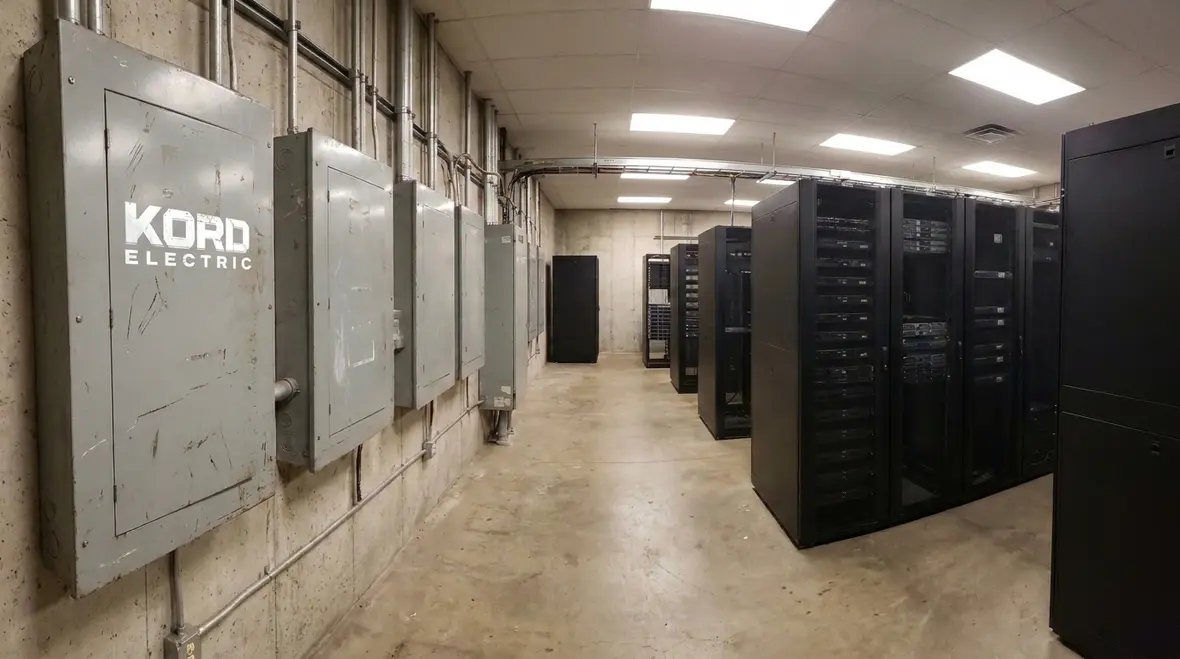
In major property buildings and industrial sites, electricians and facilities teams often face schedule pressure and supply constraints. Naturally, that leads to questions about whether reconditioned equipment can reduce downtime. The code answer, via NFPA 70 Section 314.3, stays focused on safety and function. Therefore, reuse must still satisfy the requirements that protect the installation.
Our work tends to fall into environments where the “small stuff” matters. For example, a box that does not properly close can allow dust or moisture intrusion. Then that intrusion can affect devices, cable terminations, and long-term reliability. Meanwhile, a poorly prepared enclosure can complicate conduit connections or make it harder to secure raceways and fittings.
So, we plan reuse decisions alongside the system design. We also coordinate with the broader scope, including the wiring method and device layout. As a result, NEC reconditioned boxes equipment becomes part of a controlled approach rather than a last-minute substitute. And yes, that control is how we avoid the “why did this start failing two months later?” meeting that always seems to happen on a Friday afternoon.
Keeping reuse aligned with broader electrical projects
When we support larger commercial electrical infrastructure projects or building electrical system design, we treat every reused enclosure like a small but important design decision. Reconditioned boxes must match the project’s fault current calculations, conductor sizing, and environmental exposure planning. That way, reuse does not quietly undercut the resilience you are building everywhere else in the system.
Common Mistakes We Help Teams Avoid During Reuse Decisions
Most compliance problems do not come from bad intentions. They come from skipping steps or treating “reconditioned” like it means “good enough.” When facilities teams and contractors reuse enclosures without a focused inspection approach, they can run into predictable trouble. Then everyone spends time chasing it, which is never fun.
- Assuming cosmetic repair is the same as code readiness: A cleaned surface does not fix cracks, stripped features, or damaged threads.
- Overlooking cover and device fit: A cover that does not close fully can compromise protection and installation quality.
- Ignoring the environment: A box that did fine indoors might not perform in a damp or harsh location after reuse.
- Skipping documentation: Without clear records, the facility team cannot validate the decision later during audits or maintenance.
- Forcing mismatched components: If equipment does not match the application, you can create stress points and connection issues.
To keep things calm, our technicians walk the line between code compliance and practical installation realities. They explain what they check, why it matters, and what changes might be required. Also, they use simple language so the facility leadership team can support the right decisions without guesswork.
How this protects uptime and continuity
Avoiding these mistakes does more than keep a report card clean. When reused enclosures are selected and verified properly, they support uptime goals, preventive maintenance strategies, and business continuity planning. Fewer surprise failures mean fewer emergency calls, less overtime, and less time explaining why a small box just created a big outage.
How We Communicate Compliance: From Technicians to Facility Leadership
Because we serve commercial and industrial facilities and major property buildings, communication is part of the job. When we talk about NFPA 70, the code can sound dense. So our expert service staff translates it into a working plan. We do that through clear steps, site walkdowns, and straightforward reporting.
- What the code expects: We tie Section 314.3 to actual installation outcomes.
- What we verified: We explain the inspection criteria and what the equipment condition shows.
- What the team should do next: We connect recommendations to the schedule, the trade coordination, and the maintenance plan.
In addition, we keep the scope professional and focused. We do not divert into residential topics, because our focus stays where it belongs: commercial and industrial work. The goal is simple. We help other parties make safe choices and complete projects without rework or avoidable risk.
Linking reuse decisions to your wider service plan
For many properties, reconditioned boxes show up as part of broader service efforts such as electrical infrastructure upgrades, automation support, or maintenance contracts. Because Kord Electric supports Los Angeles County and surrounding areas with a full range of commercial and industrial electrical services, we can plug box reuse decisions into a single, unified plan instead of treating them as isolated one-off calls.
FAQ: NFPA 70 Section 314.3 and Reconditioned Equipment
Ready for Code-Right Reuse on Your Next Project?
If your team is planning upgrades, renovations, or maintenance in a commercial or industrial facility, we help you handle reuse the right way. At Kord Electric, our technicians and expert service staff verify reconditioned enclosures and ensure the installation supports safety and NEC intent. We communicate clearly, document results, and help you avoid costly rework. If you want a calm, code-focused plan for your next electrical scope, contact us today and we will get started.
For properties across the region, our team also delivers full service support through our dedicated Los Angeles County electrical services, so your NEC reconditioned boxes equipment decisions plug into a broader plan for safe power, capacity upgrades, and long-term reliability.


