
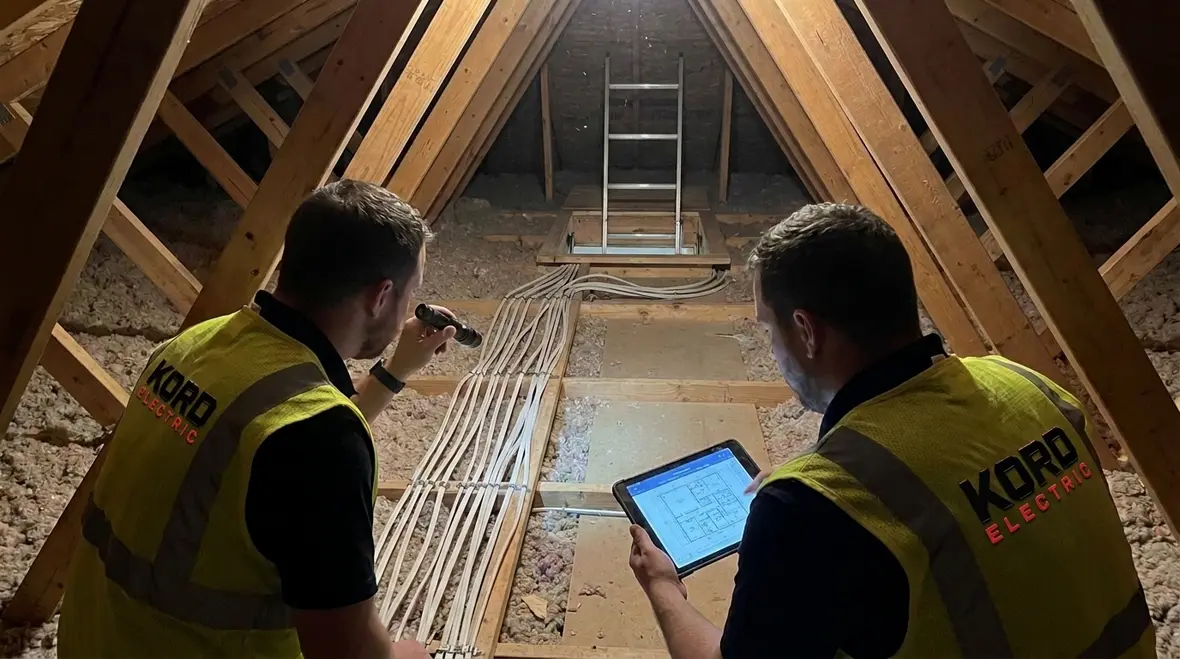
NEC NM Cable in Accessible Attics: What Kord Electric Helps Facilities Understand
At Kord Electric, we deal with NEC NM cable accessible attics in the places that matter most: commercial buildings, industrial facilities, and major property structures where real systems must behave like real systems. In other words, not like that “mystery cable” someone added at 2 a.m. and then pretended they never saw. Our technicians and expert service staff walk through the rules in NFPA 70 Section 320.23 and translate them into site practical steps. As a result, facility teams can plan safer cable routes, reduce risk, and avoid costly guesswork.
To be clear, the goal is not to scare people. Instead, we help others understand what the code expects for NM cable in accessible attics, so their buildings run with fewer surprises and smoother inspections.
NFPA 70 Section 320.23: The Rule in Plain Building Terms
In NFPA 70 Section 320.23, the code addresses how NM cable can be installed in attics when those attics remain accessible. Therefore, the focus stays on whether the cable stays in a predictable condition and whether people can reach it for inspection, maintenance, or replacement.
Our teams explain it like this: when a space is accessible, the code expects the installation to stay workable and not hidden behind layers of “we will deal with it later.” Meanwhile, an attic can look accessible to one person and not to another, so we help facilities define accessibility in a way that matches how the building will be used and how crews will actually work there.
- Accessibility matters because it supports inspection and service.
- Installation condition matters because NM cable has limits based on where it runs.
- Equipment and building use matter because a facility’s routine affects how the attic is treated.
In many commercial and industrial settings, teams store materials, route HVAC runs, or manage cabling in the attic area. Consequently, the NM cable installation must not become an afterthought that gets crushed, overheated, or damaged by normal operations.
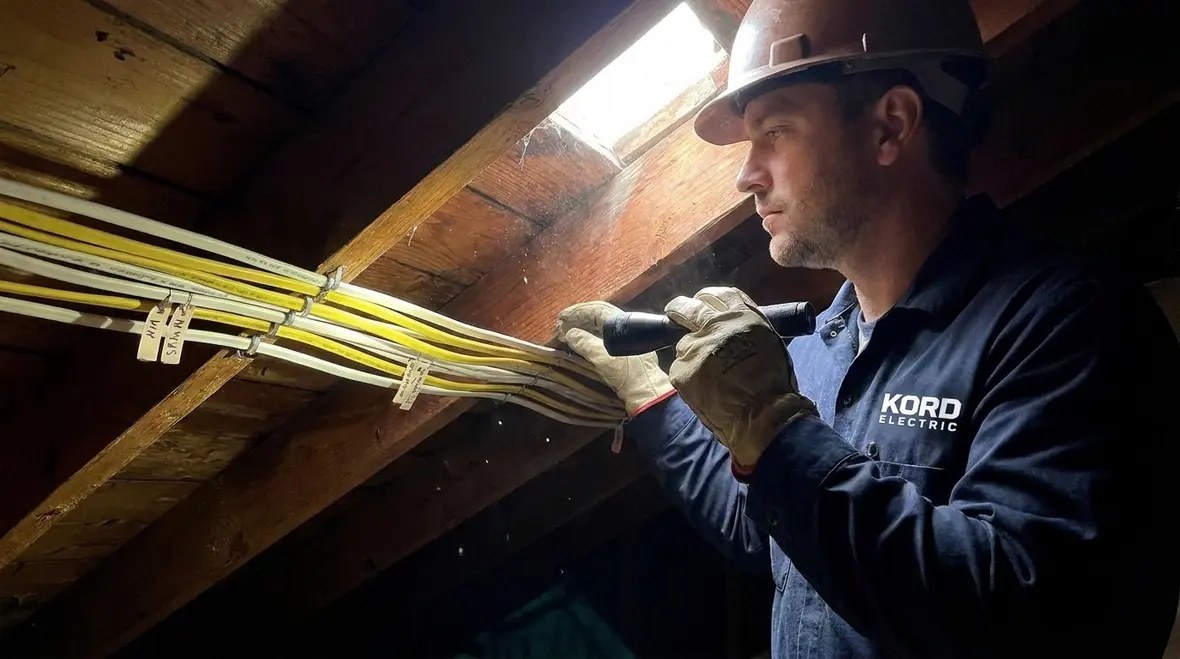
For facility leaders who want a deeper background on how the NEC shapes these attic rules, Kord Electric also shares broader guidance in our resource Understanding NFPA 70: The National Electrical Code Explained for 2026, which lays out how the 2026 code cycle influences planning and inspection strategies for complex buildings.
What Counts as “Accessible Attic” for Commercial and Industrial Sites
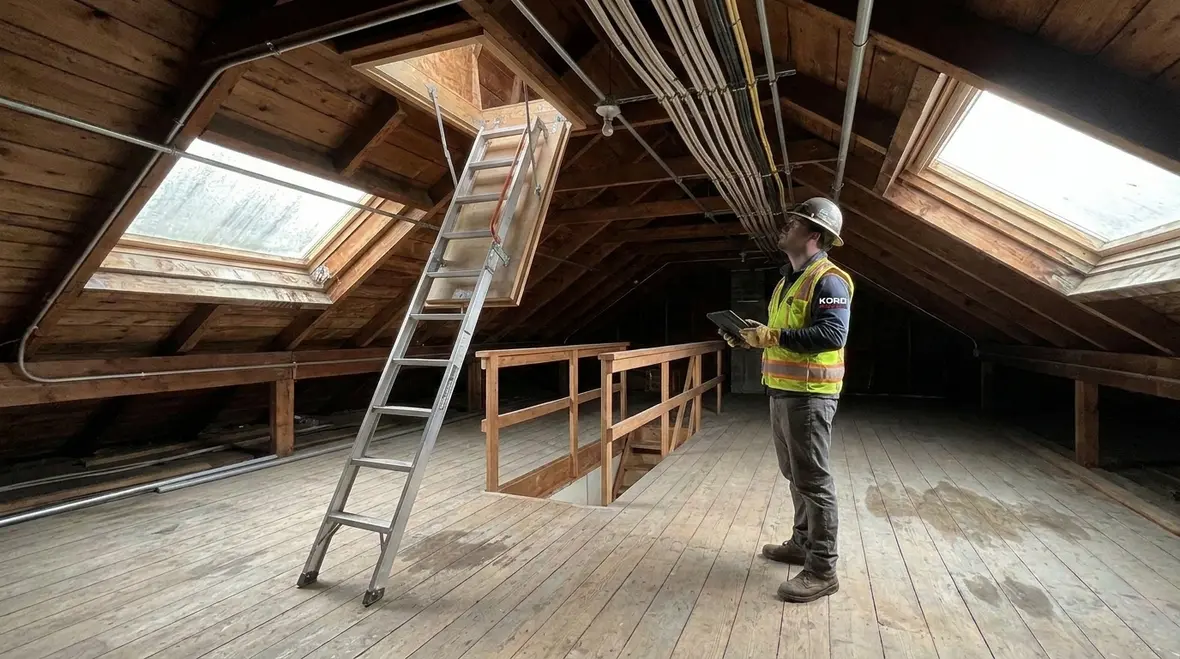
Many people think “accessible” means there is a ladder somewhere in the building. However, in real facilities, accessibility needs to support safe work. So, our expert service staff evaluates the attic like an electrician and like a safety planner.
To keep it practical, we look at factors such as access openings, the ability to move through the space safely, and whether workers can reach the cable without contortions worthy of a late night sitcom. Additionally, the attic layout, lighting, and whether the area is routinely entered for inspections influence how the installation should be treated.
Then we connect the dots back to NEC NM cable accessible attics. When the attic truly supports work, cable can be checked, and repairs can happen without tearing apart ductwork or pulling everything down like a bad magic trick.
In many of our Los Angeles County electrical services projects, accessible attics also tie into broader electrical planning, from multiwire branch circuits to equipment servicing space. That is why we align NEC NM cable decisions with other code sections that affect how technicians move, test, and verify systems in the same building.
Installation Practices That Keep NM Cable Safer Over Time
Once facilities understand the intent, the next step is installation quality. Therefore, Kord Electric emphasizes practices that prevent damage and support long term performance. We do not just “meet minimums.” Instead, we build installations that stand up to real use.
First, we help teams plan routing so cable stays clear of likely hazards. For example, we address edges and corners, avoid tight contact points where vibration can wear insulation, and keep the cable away from sharp metal. Next, we help crews think about heat sources and how air movement in the attic can create hot spots. Even if the attic looks cool at the start of the job, equipment changes and facility operations often shift later.
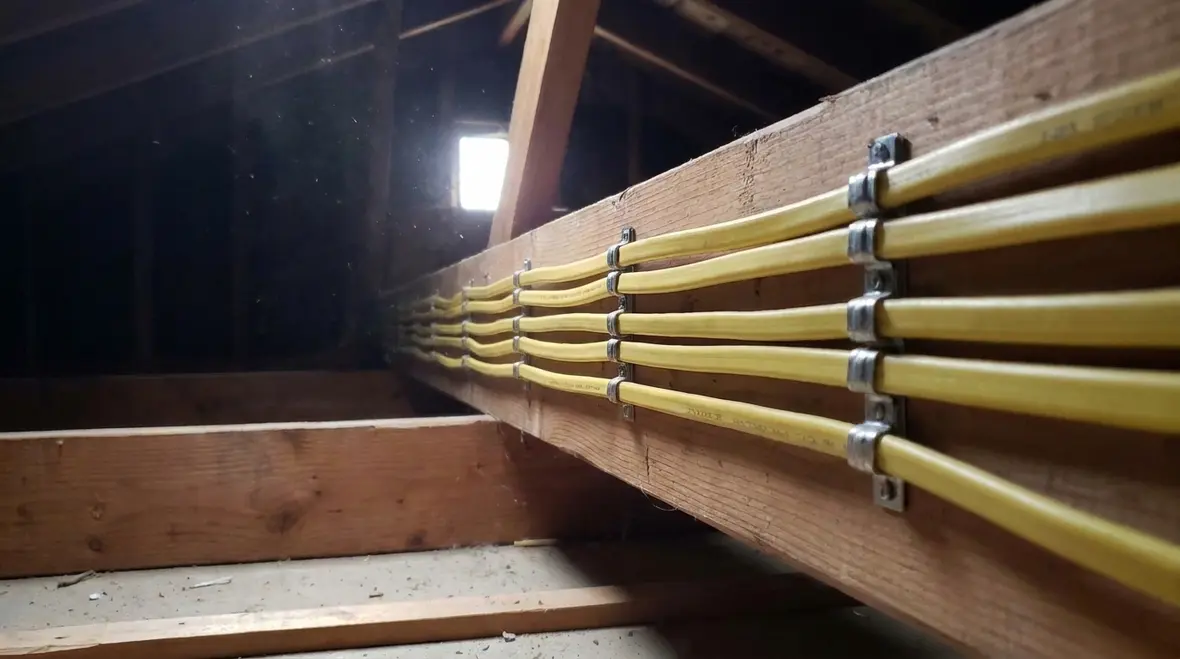
Third, we support proper securing. Cable needs secure placement so it does not sag or move. When cable settles, it can rub against surfaces, snag on future maintenance work, or become a route for accidental contact. At that point, the cable does not fail immediately, but it ages faster, and eventually inspectors notice the difference.
Finally, we discuss labeling and documentation. In commercial and industrial environments, systems get modified. Consequently, it helps when facility teams can identify what cable belongs where, what it feeds, and where it runs in the attic.
- We plan routing to reduce rubbing, snagging, and crushing.
- We consider heat and airflow conditions in the attic space.
- We secure cable properly to stop sag and movement.
- We document cable routes to support future service work.
Because documentation matters so much for future work, our team often pairs NEC NM cable accessible attics planning with updated feeder diagrams, conductor sizing notes, and servicing-space drawings. That way, whoever opens the ceiling tiles years from now has more to work with than “someone probably ran it that way on purpose.”
Common Mistakes We See in Accessible Attics
Even with code knowledge available, mistakes happen. And in the field, we see patterns. So, our technicians and expert service staff break down the most common issues that lead to corrections, delays, or unsafe conditions.
One frequent mistake involves treating the attic like storage rather than a service space. Then the NM cable ends up near stored items, stacked materials, or temporary debris. As a result, people step over it, move it, or crush it during routine activity.
Another issue is unclear access. A facility may have a pull down ladder, but workers cannot reach the cable safely or cannot access it without removing obstacles every time. Therefore, the installation remains “technically accessible” but functionally not accessible.
We also see improper cable support and loose routing. When cable hangs without the right support points, it shifts. Over time, it can end up where it does not belong, and inspections get less friendly.
And yes, we sometimes hear the classic line: “It’s fine, we have never touched it.” That line usually ages like milk. Cable does not get better because nobody asked it to.
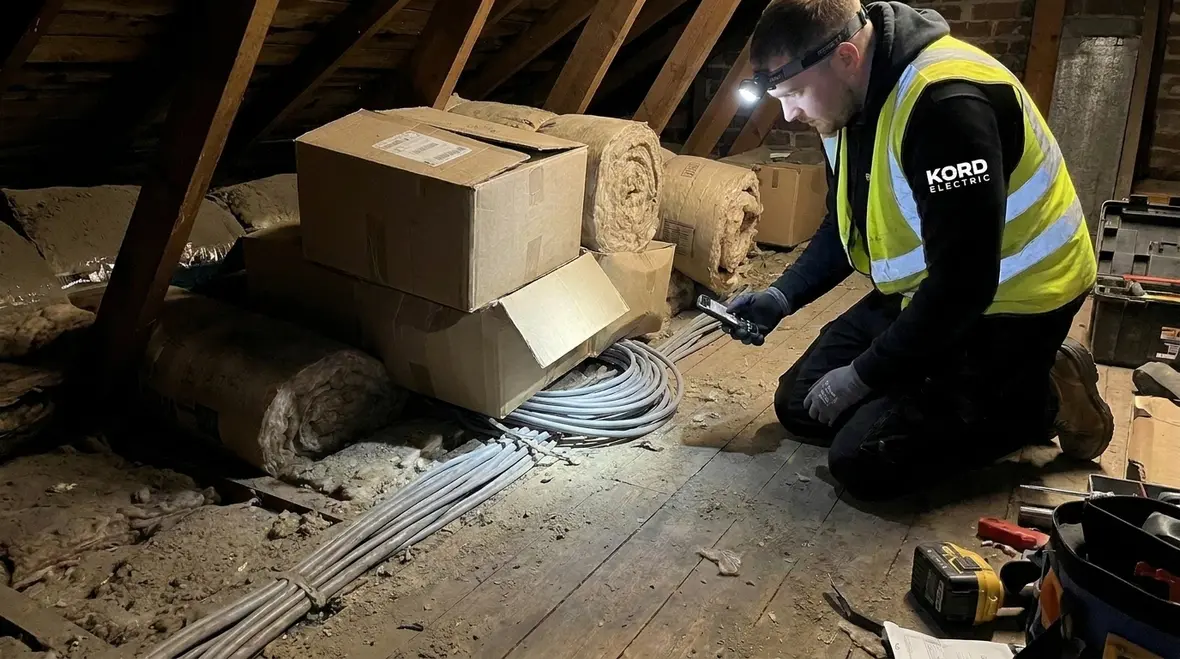
In our experience, these attic mistakes often show up alongside other NEC issues, like cramped equipment servicing space, unclear multiwire branch circuit labeling, or grounding shortcuts. When we correct the visible problems, we also help facility teams look for the “linked” issues, so one attic fix does not hide a larger system story.
How Kord Electric Guides Facilities Through Code Planning and Service
Kord Electric supports commercial and industrial facilities with practical electrical work that aligns with NFPA 70 expectations. In addition, we help teams plan for how the building operates, how crews maintain systems, and how inspectors verify compliance.
We also coordinate with related building safety goals. For example, when fire and life safety systems interact with routing and access, it makes sense to consider how electrical paths affect those plans. For broader context on code basics, our teams often point clients to resources connected to the NEC and fire code education, including guidance available through kordfire.com and region wide safety perspectives via kordfire.com.au.
Additionally, for facilities that manage complex fire protection networks, staff sometimes review system logic alongside electrical code needs. In those cases, our service approach stays grounded in safety and coordination. Some clients also explore educational materials from organizations like firepumps.org to connect how building systems work together.
Most importantly, we explain outcomes clearly. Our technicians do not just install and leave. Instead, we help facility managers understand what was done, where the NM cable accessible attics routes sit, and what future service teams should watch for.
For organizations that prefer a structured approach to NEC planning, we also align attic work with bigger picture resources like our internal NEC reading guides, NFPA 70 section explainers, and summaries that help team members connect specific rules to the larger National Electrical Code framework.
FAQ: NM Cable in Attics Under NEC Rules
Bottom Line: Plan for Safe Service, Not Just Installation
NEC NM cable accessible attics work best when accessibility is real, cable routing stays protected, and installation details support future inspections. Kord Electric helps commercial and industrial facilities follow NFPA 70 expectations with clear, site based planning and skilled work by our technicians and expert service staff. If your building has an attic with NM cable runs, or if you are updating systems for compliance, we can review the plan and help you move forward with confidence.
If your facility is located in Southern California and you want a partner that treats attic wiring with the same care as main distribution gear, explore our Los Angeles County electrical services for commercial and industrial properties. From NEC NM cable in accessible attics to complex conductor sizing, we align projects with the current National Electrical Code and the day to day reality of how your building actually runs.
Contact Kord Electric to schedule an assessment today and turn “we hope that attic wiring is fine” into “we know exactly how it was installed and how it will be serviced.”


