
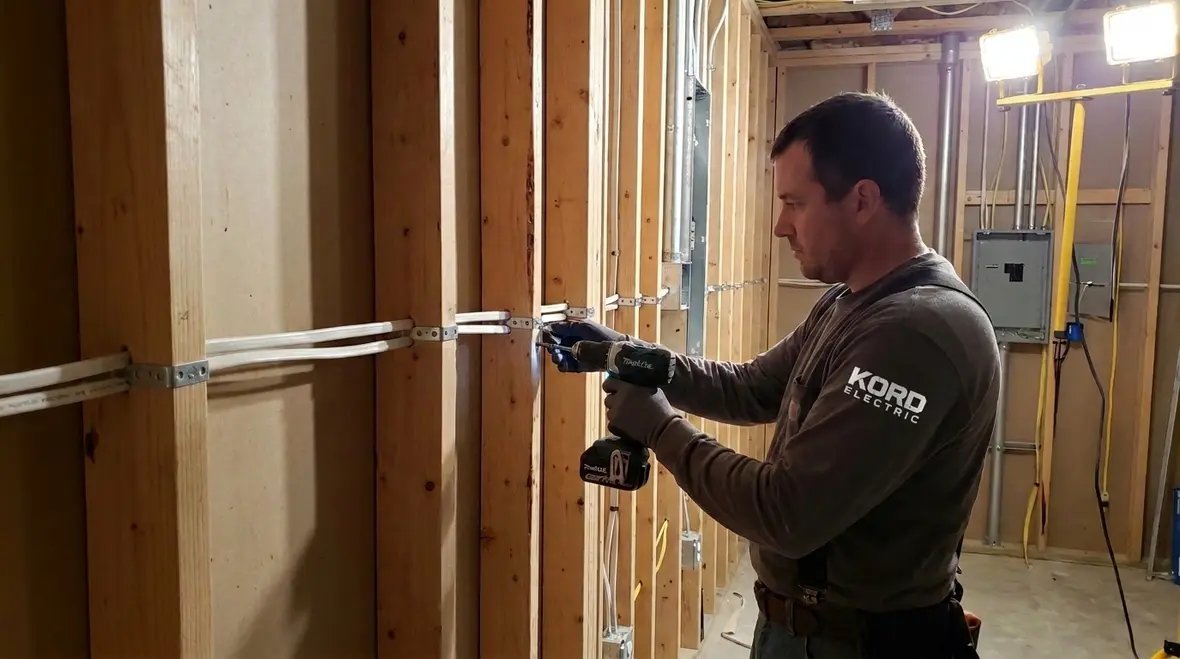
NFPA 70 320.30 NM Cable Support Through Walls
When NEC NM Cable Runs Through Your Walls, You Need the Right Support
At Kord Electric, we see it every day in commercial and industrial facilities and major property buildings: NM cable gets installed, it looks fine, and then time shows up like a villain with a clipboard. That is why NFPA 70 Section 320.30 — Securing and Supporting NM Cable per NEC matters. It tells us how electricians must secure and support NM cable so it does not sag, pull, or get damaged during normal use or building movement. In other words, we do not just “hang wires and hope for the best.”
To help our clients stay compliant and safe, our technicians and expert service staff explain the rules in plain language, then they verify the real-world installation: spacing, fastening methods, and routing details. And yes, we occasionally compare bad cable support to a sitcom prop that never holds its shape. It always fails eventually. Let us walk through what Section 320.30 requires and how teams apply it correctly.
What NFPA 70 Section 320.30 Requires for NM Cable
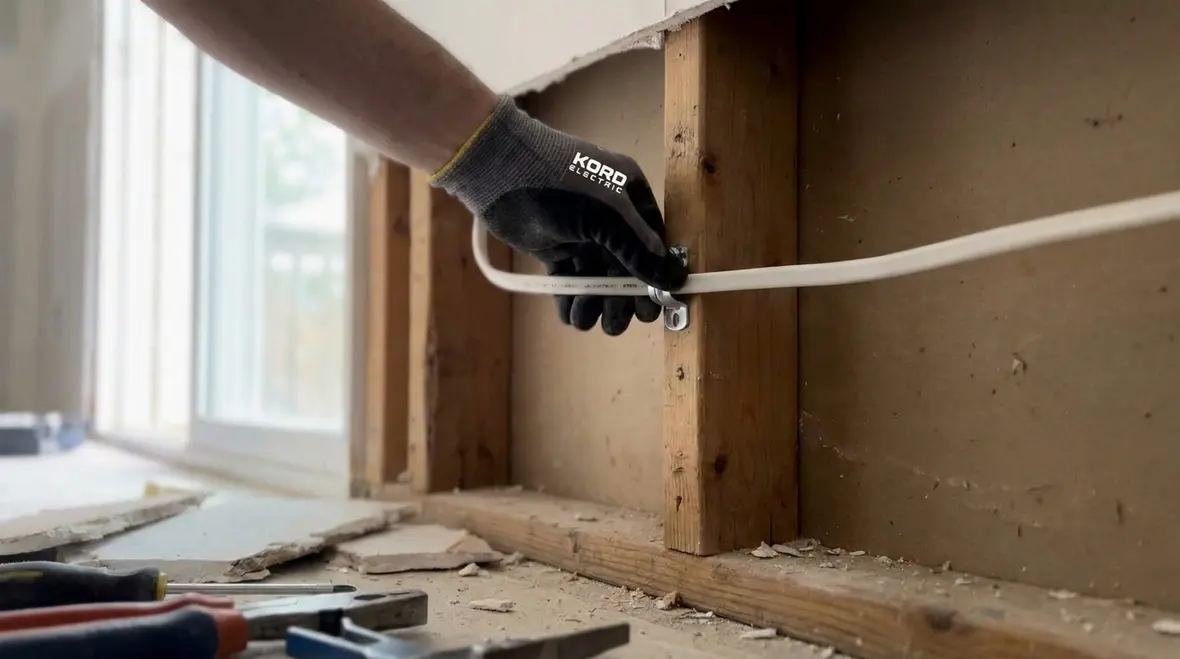
NFPA 70 includes the NEC, and Section 320.30 focuses on securing and supporting NM cable. While each installation varies, the main goal stays consistent: the cable must remain protected from strain and physical damage. Therefore, electricians support the cable at intervals and in ways that keep it firmly in place.
In practice, this means we treat cable support as a system, not a quick step. First, we plan the route. Next, we decide where support devices go. Then we fasten the cable so it stays aligned and does not experience stress at fittings, boxes, or turns. If a cable route changes direction sharply, our technicians account for that and add support so the cable does not get tugged as the bend settles.
Moreover, Section 320.30 aligns with broader code intent throughout the NEC. The code wants dependable installations that stay safe over time, even when the building has routine activity, vibrations, maintenance work, and seasonal movement. In a commercial setting, “good enough” is rarely good enough, especially when inspectors are involved. For clients who want deeper background on how the National Electrical Code works across their facility, we often pair these conversations with resources like our overview of NFPA 70 and the National Electrical Code explained for 2026, so the specific rules for NM cable live inside the bigger safety picture.
How We Determine Securing and Supporting Locations in the Field
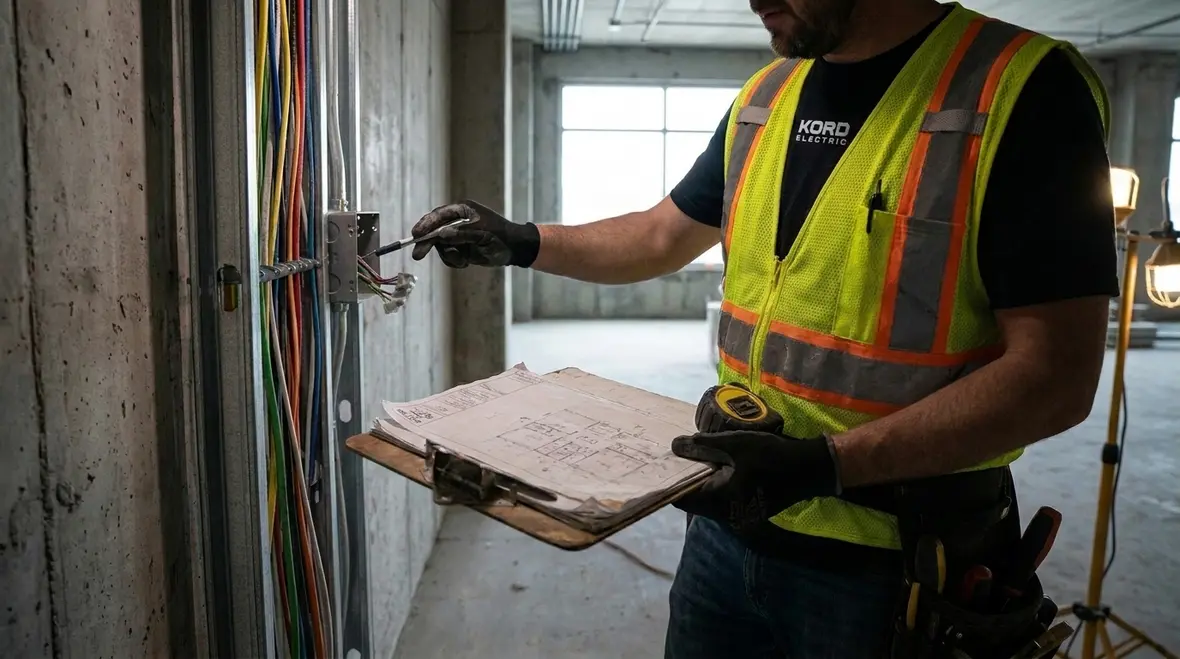
Support spacing is not guesswork. At Kord Electric, we use the NEC requirements alongside the cable type, installation surface, and routing conditions. Consequently, our expert service staff checks more than cable spacing. They also verify that the cable stays protected where it passes near edges, where it might be bumped, or where it could rub against structural members.
When our technicians plan NM cable runs, they consider how the cable behaves from end to end. After that, they decide on practical support points so the cable does not hang between anchor locations. If the cable spans long distances, it needs additional fastening so tension does not concentrate at terminations. Also, if there are offsets or multiple bends, we add support near those areas to reduce strain.
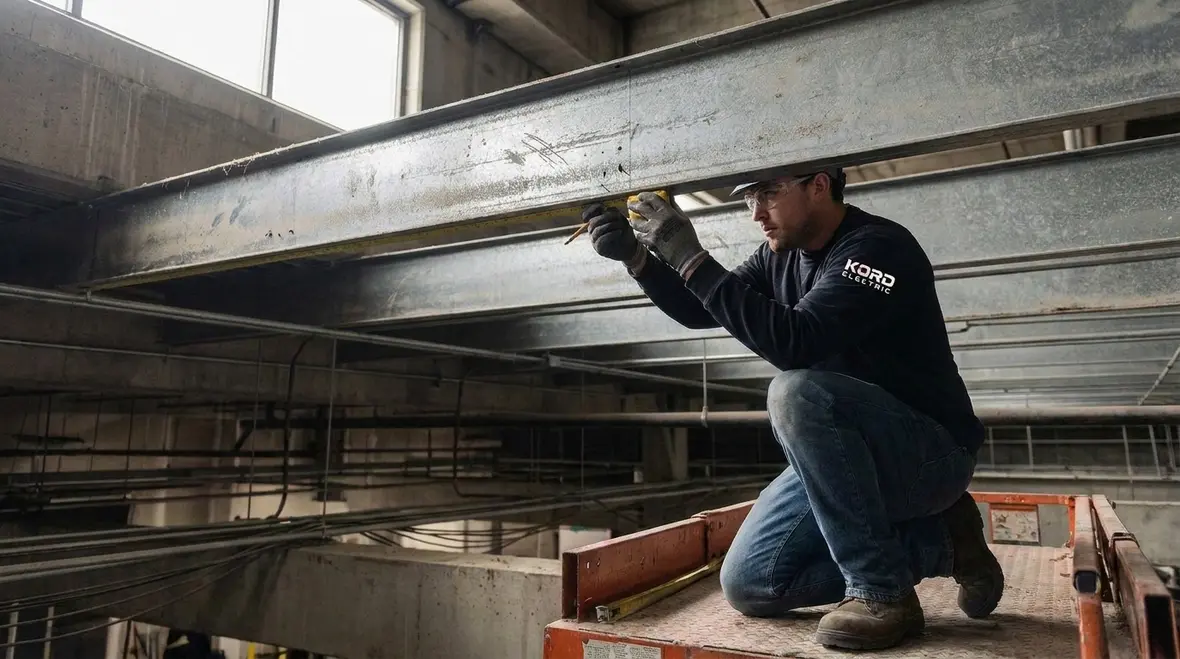
Additionally, we look at the type of building environment. In commercial and industrial facilities, cable routes often cross busy spaces, mechanical rooms, and areas with equipment that creates vibration. So we ensure the securing method stays solid and durable. This is where our approach feels calm and methodical: measure, map, support, verify. No frantic last-minute “wire juggling.”
Securing Methods That Hold Up Under Real Building Movement
Once we know where supports belong, we focus on how we secure NM cable. Section 320.30 expects fastening that keeps the cable properly supported and not stressed. Therefore, we use listed and approved methods suitable for the installation location and raceway or cable path conditions.
Our technicians commonly secure NM cable using appropriate clamps, straps, or other approved supports. They install supports so they do not crush the cable and so the cable remains aligned. Then they confirm the cable does not shift after fastening. If a support method allows movement, we replace or adjust it. We do not treat supports like temporary scaffolding for a project that already passed inspection.
In addition, we pay attention to cable transitions at boxes, fittings, and equipment entries. At these points, pulling forces can become concentrated. Thus, proper securing helps reduce stress and helps the connection remain reliable. If a cable gets pulled even slightly during future maintenance, correct support can be the difference between a stable installation and a callback nobody wants.

Common Installation Mistakes We See in Commercial Jobs
Even careful crews can make mistakes, especially when deadlines pressure the schedule. However, code compliance does not work on wishful thinking. Here are the recurring issues we spot in commercial and industrial facilities and major property buildings, along with how we address them.
Support gaps that stretch too far: When installers leave long spans between fastenings, the cable can sag and create tension at terminations.
Improper fastening near bends: If supports ignore routing changes, the cable experiences strain at the bend. Eventually, that strain shows up as a weak point.
Supports that do not remain firm: If a clamp or strap loosens, the cable moves. Then abrasion and stress risks increase.
Skipping checks at transitions: Where NM cable enters boxes and connects to devices, we confirm the cable remains secured and protected. This is not the spot for “we will fix it later.”
Now, a quick joke, because even inspectors deserve a little humanity. Some crews treat cable support like a playoff bracket, assuming the cable will “hold” because it has held before. Building movement does not care about past success. It cares about physics. And physics always clocks in on time.
Coordinate Support With the Whole NEC Installation Plan
Section 320.30 does not live in isolation. In a real electrical system, NM cable runs alongside conduits, devices, panels, grounding components, and pathways for power and control circuits. Therefore, we coordinate cable support with the broader project plan so it does not conflict with other work.
First, our technicians align the cable route with how other trades will access the area. Then we coordinate with layout drawings and field conditions so the cable remains protected and accessible. Also, we plan support so it does not block access panels or create unsafe clutter in mechanical spaces.
Next, we align with fire and life safety expectations by following correct installation practices that reduce the chance of damaged cable. Additionally, we document what we install so facility managers can understand the system later. When someone opens an electrical room months down the road, we want them to see a clean, code-aligned installation, not a mystery novel.
For our clients who also reference NFPA guidance and want more context on code structure, we point them to resources that explain how the NEC fits into overall electrical safety thinking, including how NFPA 70 connects to installation practices. If you are evaluating broader code compliance, organizations that focus on fire and electrical safety also help teams understand why these requirements exist, not just what the words say.
A Practical Checklist Our Technicians Use for NM Cable Support
To keep commercial and industrial installations dependable, we use a field checklist approach. It helps us move fast while staying accurate. Then our expert service staff confirms the installation details align with NEC expectations and the specific project standards around NEC NM cable securing supporting usage inside walls, ceilings, and equipment spaces.
Dual column overview for quick jobsite verification
What we verify |
Why it matters |
|
Support spacing along the NM cable route |
Reduces sag and limits tension at terminations |
|
Securing method at clamps, straps, and transitions |
Prevents cable damage and supports stable connections |
|
Routing near edges, obstacles, and access areas |
Helps prevent abrasion and accidental impact damage |
|
Support around bends and offsets |
Reduces strain where the cable changes direction |
|
Coordination with other trades and equipment access |
Keeps the installation usable and safe for maintenance |
Frequently Asked Questions About NM Cable Securing and Supporting
Choosing Kord Electric for Code-Aligned NM Cable Support in Your Facility
When we secure and support NM cable correctly, you get a system that stays stable, safe, and easier to maintain in commercial and industrial environments. If your project needs a compliant installation plan or a real-world review of existing cable runs, Kord Electric brings expert service staff, disciplined field checks, and clear explanations. We work at the pace your building demands and with the standards inspectors expect.
For multi-site portfolios, upgrades, or new construction, our team can integrate NM cable support into broader electrical design decisions, from branch circuit protection to emergency power and lighting controls. When your facility in Southern California needs inspection-ready work, our Los Angeles County electrical services team supports evaluation, upgrades, and new installations built around NEC compliance and long-term reliability.
Contact Kord Electric today, and let us help your electrical work age like a pro, not like a cautionary tale.


