
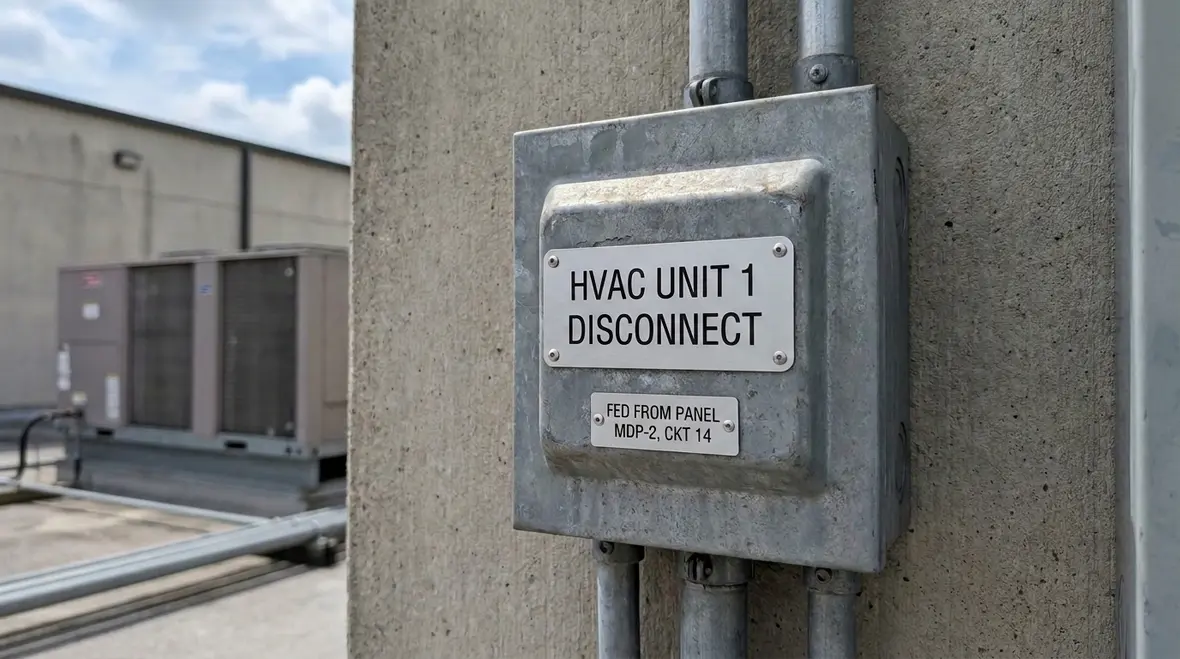
NEC Outside Disconnect Identification with NFPA 70 225.37
At Kord Electric, we see it every day: a well planned electrical system, then one small missing detail that creates big confusion during service or emergencies. That is why we focus on NEC outside disconnect identification and we make sure it aligns with NFPA 70 Section 225.37. In simple terms, when an electrical disconnect sits outside, the building team must be able to find it fast, understand what it controls, and verify it safely. Next, we also help the facility owner and others confirm labels, access paths, and signage so that the next maintenance visit does not turn into a scavenger hunt.
Now, let’s slow down and make this clear, in the way our technicians and expert service staff explain it on site. Because yes, electricity is serious, but we can still laugh a little while we keep people safe. Think of it as the difference between “where is that thing” and “oh there it is, under control.”
NFPA 70 225.37 sets the rules for what others must see
NFPA 70 Section 225.37 focuses on Outside Disconnect Identification. It requires clear markings that help people identify each disconnect device that serves a load, especially when that device is located outdoors. This matters most in commercial and industrial facilities where equipment is installed across multiple buildings, parking canopies, pump areas, switchgear yards, and rooftop or ground mounted spaces.
At Kord Electric, we treat this as a core part of safety and operations, not just code paperwork. In practice, facility teams need three things. First, the disconnect must be recognizable as the correct device. Second, it must indicate what it controls or serves. Third, it must be placed and labeled so that the information remains readable when weather, dust, and time show up for work.
Our technicians do not guess. Instead, they review the one line, confirm the equipment served, and then match the label to the real circuit and real function. That is how we prevent a situation where someone flips the wrong handle and then spends the afternoon playing “guess the load.”
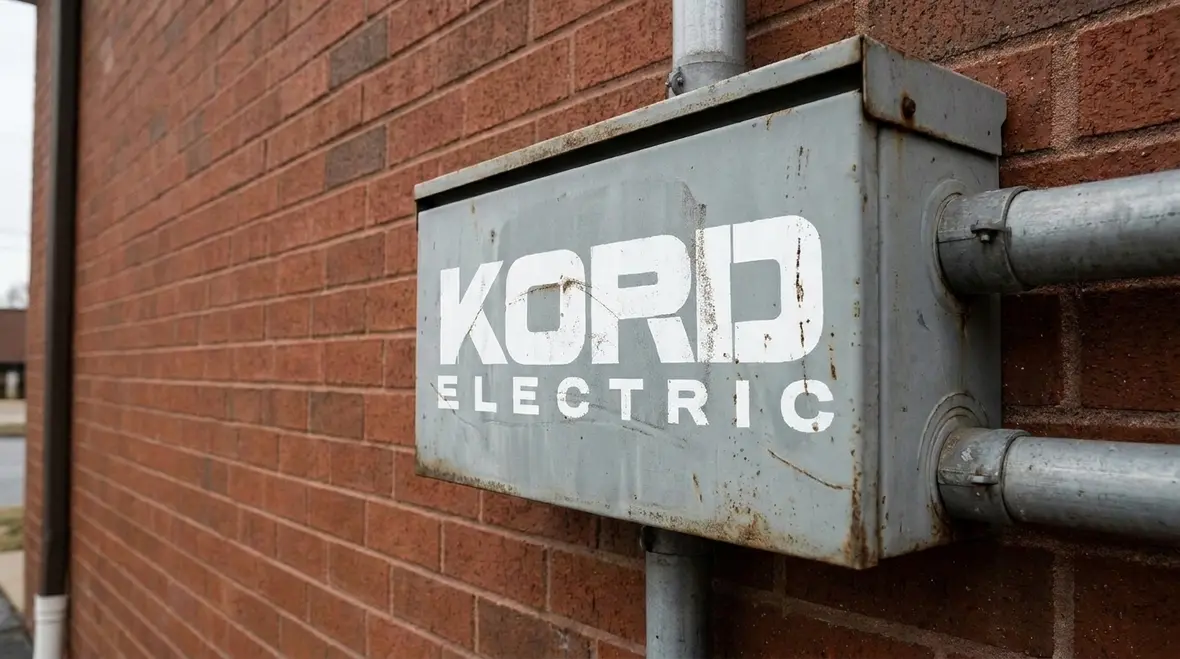
What “outside disconnect identification” should look like in the real world
In the field, identification is not only about putting a sticker on a box. So, we plan it like part of the system. The label should connect the disconnect to the equipment it controls, and the marking should support quick decisions during troubleshooting, commissioning, and emergency response.
Because commercial and industrial sites often include fast paced maintenance, our approach looks at how people work. For example, electricians and technicians may approach the disconnect while the building is in operation, while lights are limited, or while other trades are already on site. Therefore, labels must be clear from a practical standpoint, and they must match the operational language used by the facility.
We also consider long term reliability. Outdoor labels face sun, moisture, temperature swings, and vibration. So we select marking methods and materials that hold up, then we verify legibility during routine inspections. In the same way that a movie villain relies on dramatic lighting, an equipment label relies on boring, steady readability. One of those is safety, the other is just theater.
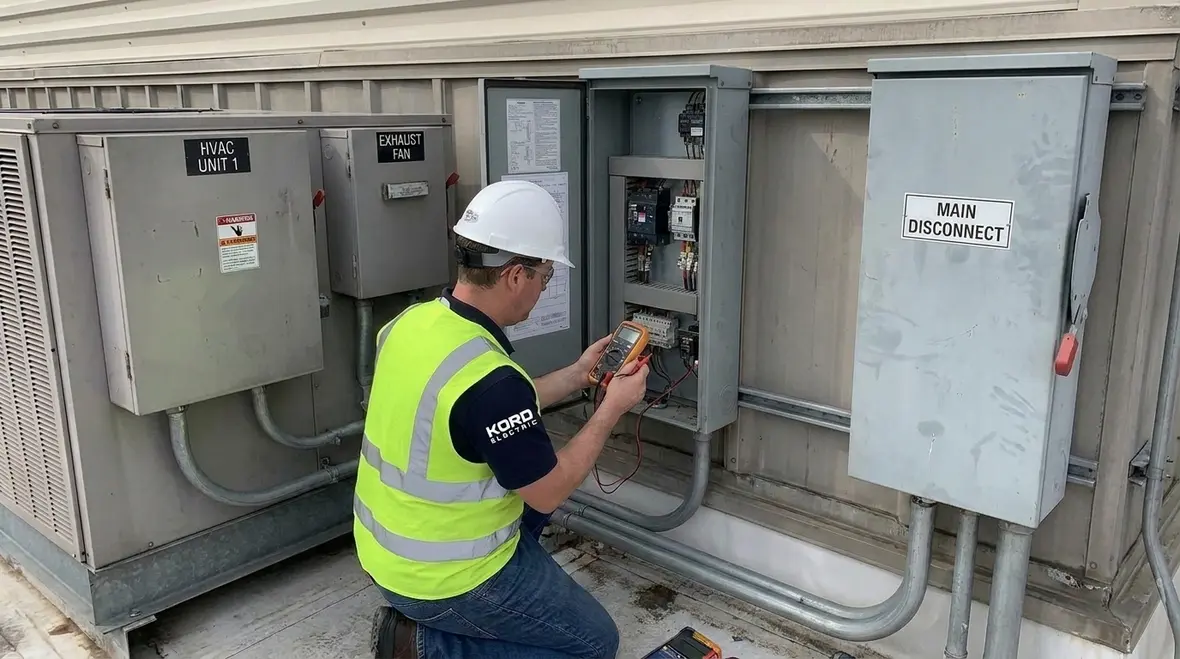
How we confirm labeling accuracy during installation and service
Many facilities experience trouble when identification falls out of sync. Equipment gets moved. Circuits get updated. A contractor swaps a component. Then the label stays the same, like it is living in the past. That is when confusion becomes costly and sometimes unsafe.
To stop that, our expert service staff uses a confirmation process that keeps the system and the signage aligned. First, we trace the disconnect to the panel or load it serves. Next, we document the labeling output so it matches the one line and the actual wiring. Then we check spacing and mounting so the label remains visible without awkward reach or unsafe access.
After that, we coordinate with the site team. We explain the meaning of each label in plain terms, and we make sure facility personnel understand what they should look for before performing lockout and tag out steps. We also tell them what to do if something does not match, because the best time to correct a mismatch is before anyone starts pulling levers.
Our job is to make the disconnect identification process predictable. When the building team knows what each label means, downtime drops, troubleshooting speeds up, and everyone spends less time searching and more time fixing.
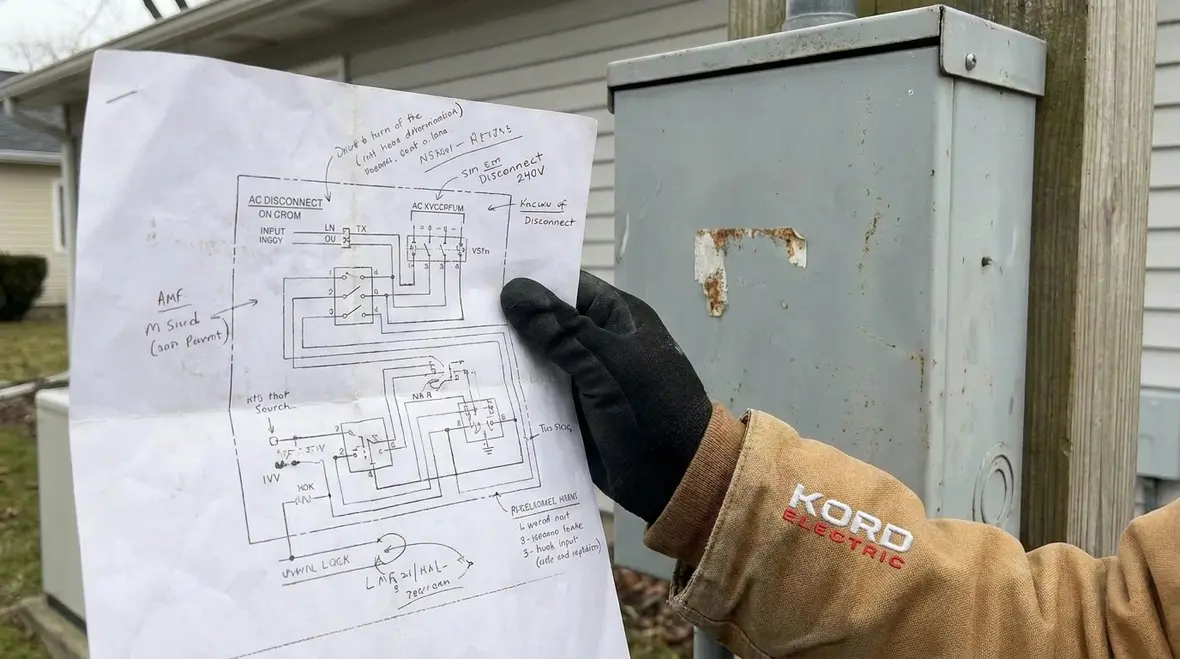
Why identification matters for safety and faster troubleshooting
Outside disconnects often control equipment that people treat like “always on,” until it is not. That includes HVAC components, exterior lighting loads, water features, pumps, process gear, and other critical functions common in major property buildings. When a disconnect is not identified clearly, responders waste time, and technicians risk working in the wrong zone.
In safety terms, identification supports correct system isolation. In operational terms, it supports quicker restoration. Both effects show up in the bottom line. For commercial and industrial sites, even short downtime can ripple through production, maintenance schedules, and tenant satisfaction.
Therefore, we connect identification to the practical workflow. When our technicians arrive, they can verify which disconnect belongs to which load. Then they can test and repair without delays. And when someone else takes over later, the label still tells the story, even if we are not standing there explaining it again.
That is also why our service approach remains consistent with how the NEC and related resources describe good practice for clear system identification. When the rules are followed, the site runs smoother. When they are not, the site runs like a sitcom where every character holds the wrong key to the wrong door. Funny in a script, expensive in real life.
Common problems we find on major properties and how we fix them
Over time, we see patterns. One of the most common issues involves labels that control the right equipment in theory but fail in practice. The label might be too small, placed where it is blocked, or written in vague terms that do not match site language. Another issue involves labels that become inaccurate after upgrades.
We also notice cases where disconnects exist outdoors but the identification does not reflect the actual service layout. Sometimes the disconnect serves a circuit that changed during a retrofit, yet the older marking remains. Other times, the label does not mention enough detail for a technician to know what to isolate.
So we fix it the way we would handle any serious equipment problem. First, we verify the actual wiring and load assignment. Next, we update identification to match NFPA 70 Section 225.37 requirements. Then we explain what changed to the facility team so the building operators and maintenance staff can follow the new system map.
When needed, we also help with broader code awareness. Kord Electric and our partner resources help people understand the National Electrical Code approach, not just memorize line items. For facility leaders who want to study the bigger picture, we often recommend pairing this topic with resources like Understanding NFPA 70: The National Electrical Code Explained for 2026, so teams can see how section level rules connect back to the full NEC framework.
Best practice checklist for commercial and industrial facilities
To keep NEC outside disconnect identification working as intended, we recommend a simple checklist that facility teams can use. We apply this in our own projects and in our field service work for commercial and industrial buildings.
- Confirm each outdoor disconnect serves a specific load and that the label reflects that real service
- Use durable marking so labels stay readable outdoors through sun, moisture, and time
- Place identification where someone can see it safely and without obstruction
- Verify labels after any panel changes, equipment swaps, or circuit rework
- Coordinate label language with site procedures so technicians do not rely on guesswork
- During service, check that the identification matches the equipment status and the one line
- Keep records of labeling updates so future work remains consistent
And yes, if anyone tells you labels never drift, they have not been on a real construction job site. Things change. Our method makes sure identification changes with them.
FAQ: NFPA 70 225.37 and outside disconnect labels
Make it right the first time with Kord Electric
When a facility team respects NFPA 70 Section 225.37 and treats outside disconnect identification as part of the electrical system, they avoid confusion, speed up troubleshooting, and support safer isolation. At Kord Electric, our technicians and expert service staff verify the load served, update durable labels, and explain the changes in plain language for your maintenance teams. If you manage a commercial or industrial facility and you want dependable labeling across major property buildings, contact us today for an on site review and a clear next step.
For leaders planning broader upgrades or modernizations, our team can also coordinate disconnect identification with larger code driven projects, from branch circuit mapping to panel upgrades. When you are evaluating options for complex facilities, exploring services like our Los Angeles County electrical services can help you align NEC outside disconnect identification, power distribution planning, and inspection readiness under the same strategy instead of in isolated tasks.
If your facility team wants more background on how NEC rules connect across equipment, labeling, and maintenance, you can also explore related topics on the Kord Electric blog, including practical explainers on NFPA 70 sections that affect commercial and industrial buildings every day. The more your crew understands the rulebook, the easier it becomes to keep those outdoor disconnects clearly identified, safely accessible, and ready when the next call comes in.
When you are ready to move from “where is that thing” to “there it is, under control,” we are ready to help.


