NEC Over 250 Volts Bonding: What Section 250.97 Means For Commercial Power
In commercial and industrial spaces, we often deal with systems that operate above 250V to ground, where the NEC over 250 volts bonding rules start to matter in a serious way. We see it when facilities add new panels, upgrade transformers, or expand distribution. Technically, NFPA 70 Section 250.97 sets bonding requirements for those systems so that metal parts and grounded conductors stay electrically connected in the right way. If that sounds like a rule for “preventing weird surprises,” that is exactly the vibe, and it keeps people safer and equipment happier. And yes, we have heard the old joke that electricity never forgets, but thankfully code helps us remember on behalf of the building.
Third person point of view can feel like the building is narrating, and in a way, it is. Still, Kord Electric technicians and expert service staff will explain the practical steps so teams can design and maintain systems without guesswork.
Where NFPA 70 Section 250.97 fits in real electrical design
NFPA 70, also called the NEC, organizes grounding and bonding by system type and voltage conditions. Section 250.97 specifically addresses bonding rules for systems that operate over 250V to ground. Therefore, it does not replace general grounding rules under Chapter 2. Instead, it adds structure for a risk level that goes up when voltage to ground increases. In other words, engineers and electricians do not get to “wing it” because the code says so. The code expects the bonding path to be reliable, because fault currents and stray voltages behave differently at higher system potentials.
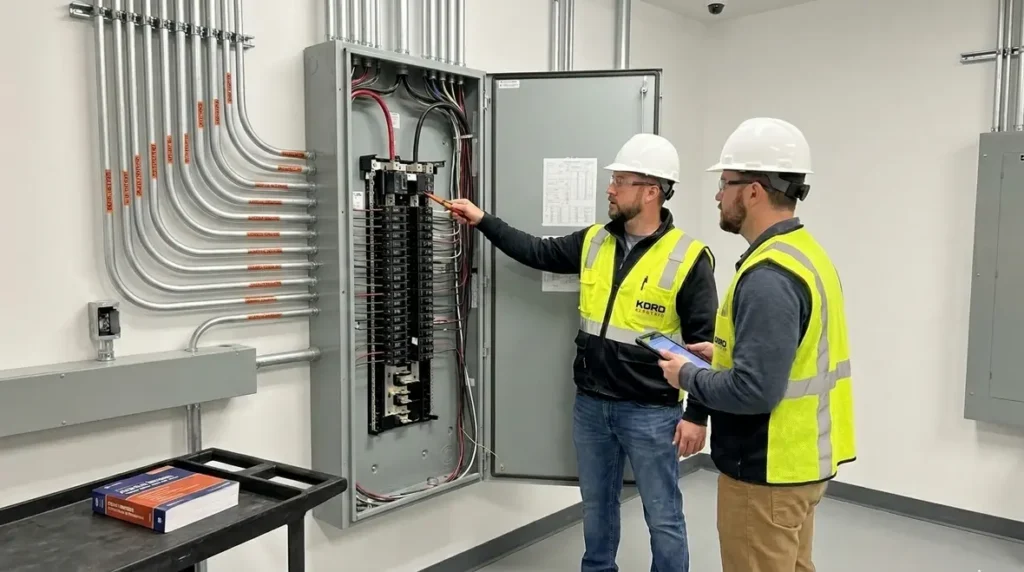
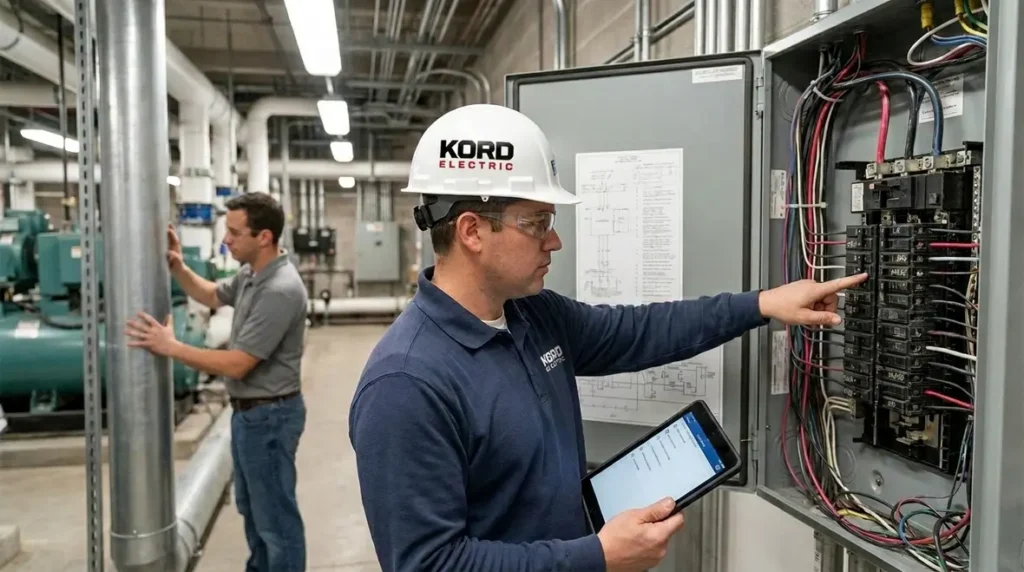
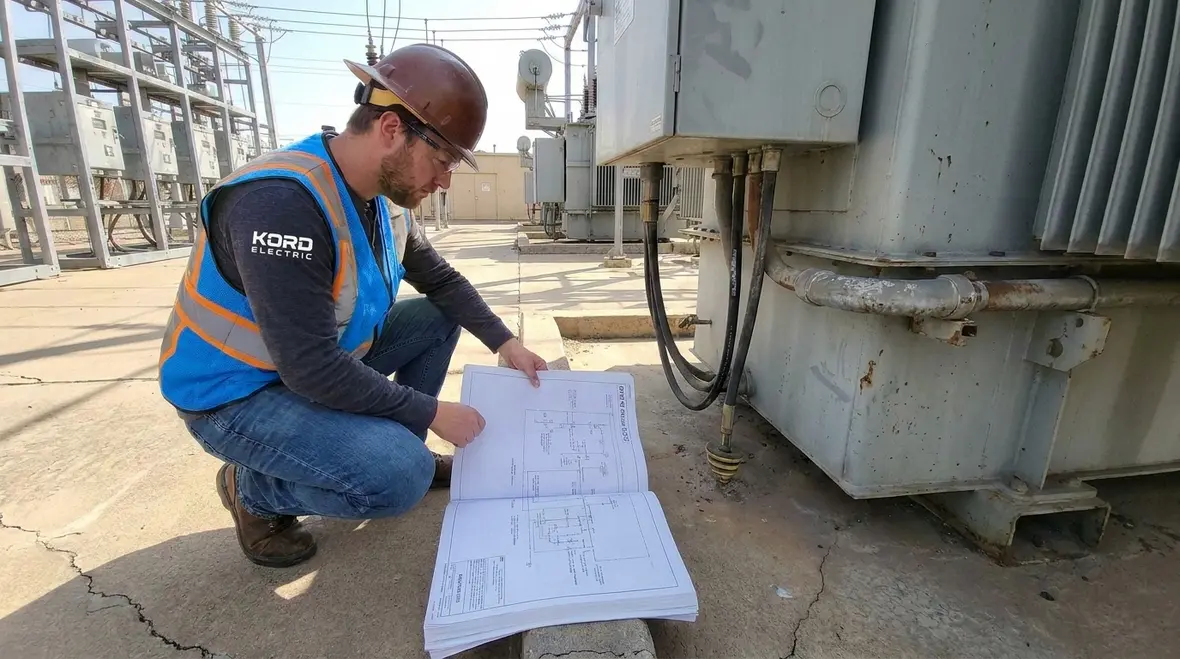
Kord Electric’s team often sees projects where drawings show a bond, but field connections tell a different story. For that reason, we stress that the requirements must match how equipment is actually installed. Our technicians inspect the bonding points, verify terminations, and confirm that metal parts remain part of the intended grounding and bonding scheme. When the field and drawings agree, the system behaves like it should.
Bonding basics: how the section protects people and metal parts
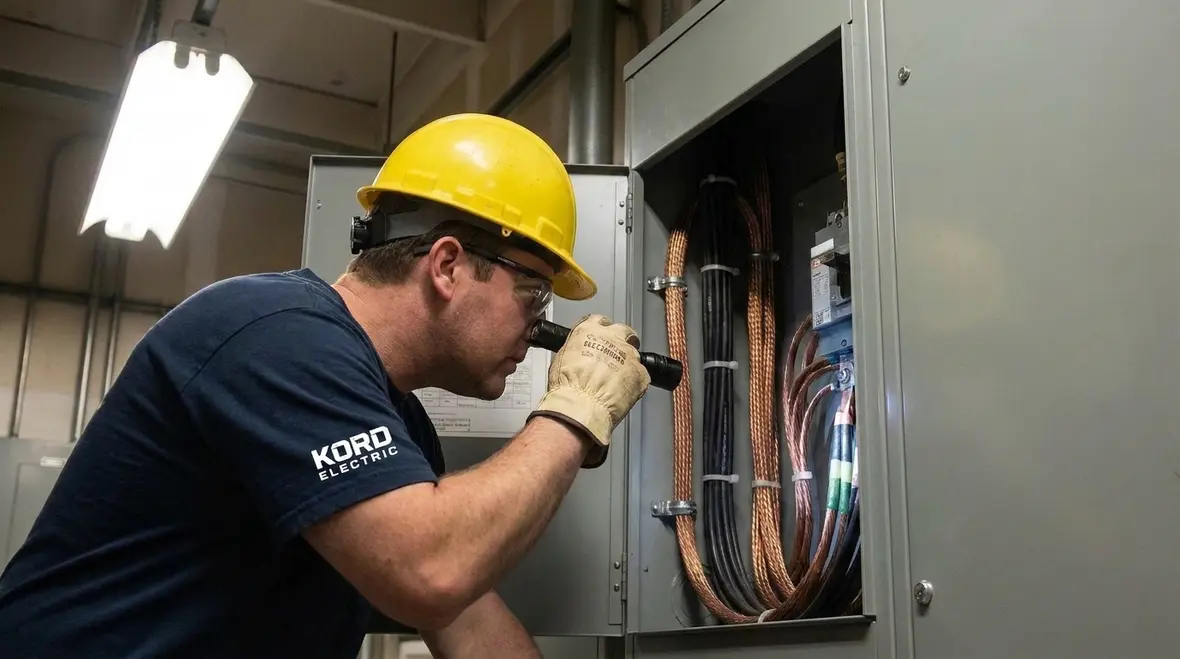
Bonding does not just make the system “work.” It makes it safer. When a fault occurs, bonding creates a clear low impedance path that helps protective devices act faster. Meanwhile, it limits voltage differences between metal parts that people might touch. So, the goal is not mystery. The goal is control.
Under Section 250.97, bonding is tied to how the system is grounded and how grounded conductors connect to bonding conductors. Consequently, metal enclosures, frames, and other non current carrying parts get connected so they do not float at an unexpected potential. That matters in commercial and industrial facilities where equipment sits near traffic, doors, catwalks, and maintenance work zones. In these locations, small voltage differences can become noticeable and, under fault conditions, dangerous.
Kord Electric’s expert service staff explains it in plain language during site reviews. They show managers where voltage can build up, then they trace how proper bonding routes that energy where it belongs. It is not flashy, but it is the kind of work that prevents a small problem from turning into a headline.
Practical installation points that teams miss
Paper compliance is one thing. Field compliance is another. And in the real world, details decide whether bonding rules actually perform. For facilities in design, renovation, or tenant improvements, the common gaps usually show up during commissioning or later troubleshooting. However, most of those issues are avoidable when teams plan bonding early and verify it often.
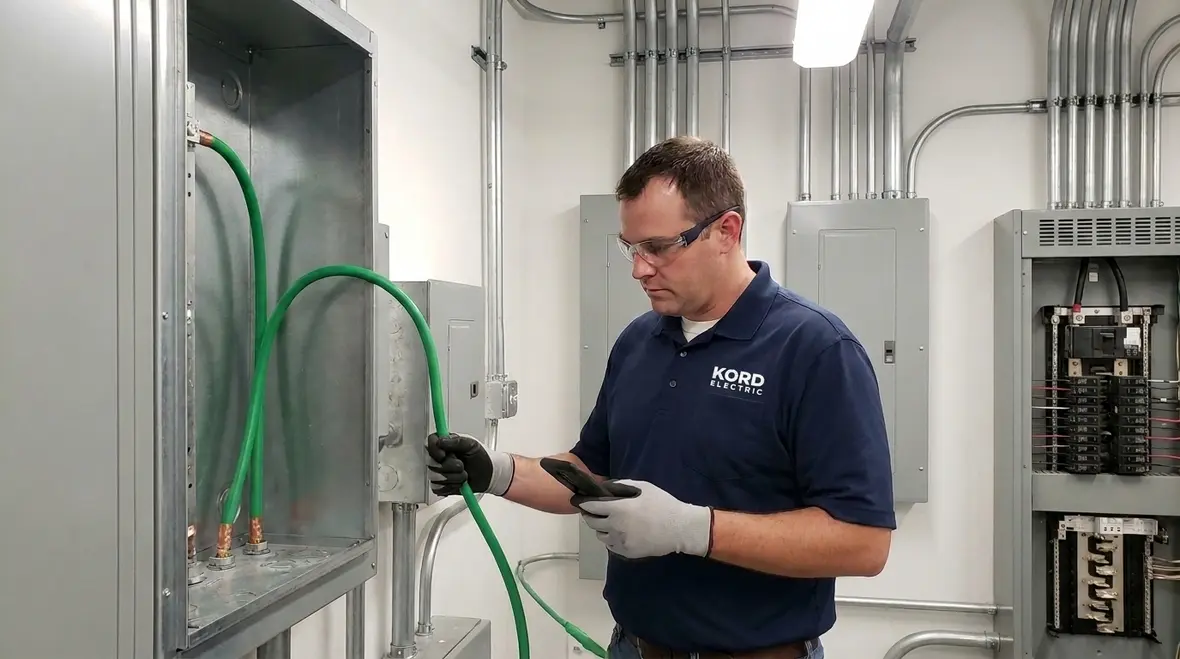
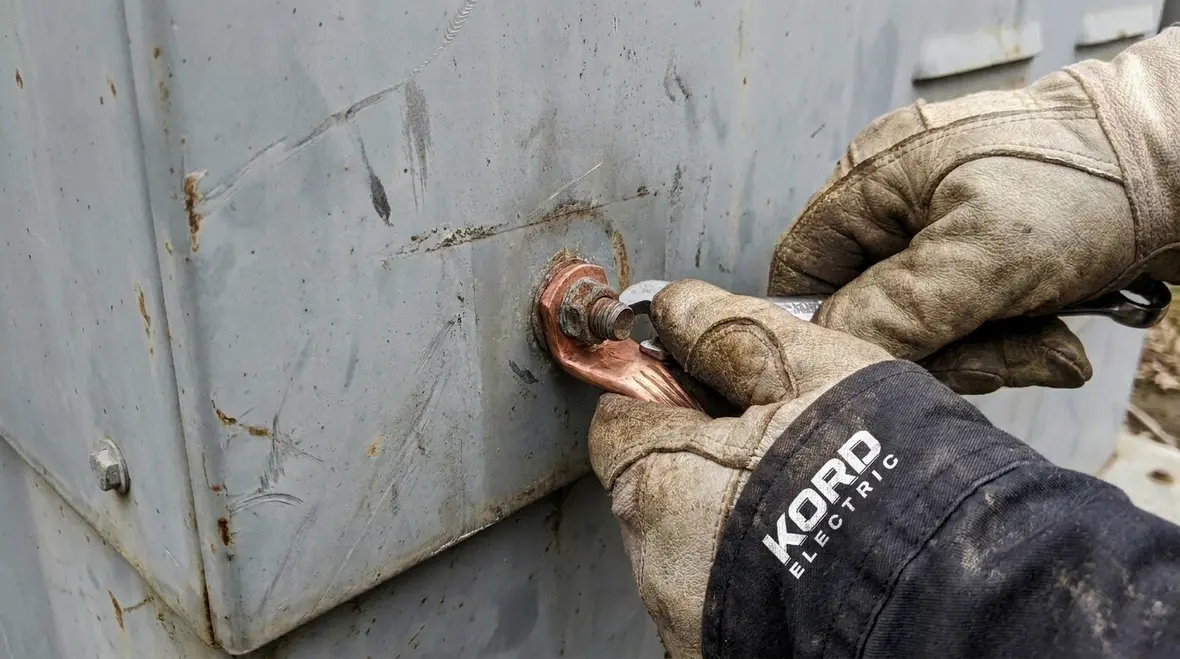
First, termination quality matters. Bonding conductors must connect to listed lugs and proper mounting points, with secure connections that do not loosen due to vibration or thermal cycling. Second, metal raceways and enclosures must bond correctly so the path stays continuous. Third, the location of bonding jumpers and the size of conductors must follow the requirements for systems over 250V to ground. When teams use “similar parts” instead of correct parts, they create a future failure point.
To keep commercial and industrial work tight and predictable, Kord Electric focuses on verification. Technicians check connections, confirm continuity where required, and document findings so the next contractor does not “discover” the same problem twice. Because nothing says fun like paying twice for the same fix.
How the requirements interact with grounded conductors and service equipment
Section 250.97 does not live alone. It interacts with the grounding scheme used for the facility, including the relationship between grounded conductors, equipment grounding conductors, and bonding jumpers. Therefore, when someone changes a transformer, upgrades switchgear, or reroutes feeders, bonding has to remain consistent with the intended grounding method.
Service equipment and distribution gear often include multiple enclosures, meter sections, and grounded conductor terminations. Consequently, bonding must address how each metal part connects to the grounding system. If the grounded conductor connection and bonding conductor connection get separated in the wrong way, the protective system can lose its ability to clear faults effectively. Also, it can create unwanted voltage gradients that affect sensitive equipment, controls, and communication gear.
Kord Electric coordinates this thinking across teams so design intent matches installation reality. Our technicians also explain these relationships to facility engineers and electrical supervisors. They do not overwhelm people with code talk for sport. They highlight what impacts safety and uptime, then they show where to verify during inspection.
For a broader code backdrop around how these bonding and grounding concepts fit into the 2026 NEC cycle, many facility teams pair Section 250.97 work with Kord Electric’s guide Understanding NFPA 70: The National Electrical Code Explained for 2026, so they can see how this one section aligns with the larger grounding, bonding, and distribution picture.

Testing, inspection, and maintenance for facilities that run 24/7
Once bonding is installed, the facility does not stop. It operates. It expands. It repairs. And over time, mechanical work can disturb electrical connections. So, commercial and industrial facilities need ongoing inspection practices that protect the bonding system, especially where NEC over 250 volts bonding principles apply.
Inspections should include visual checks of terminations, review of connection tightness per manufacturer guidance, and validation that bonding conductors remain intact and correctly routed. When teams do maintenance on panels, cable trays, or motors, they should plan how bonding points will be re verified after the work. Even small changes can break continuity, especially where equipment gets moved or where enclosures get replaced.
Kord Electric provides expert service staff support for these realities. We help facility managers schedule work so it does not disrupt critical operations. Then we document what we find and what we fixed, because accountability keeps the system stable. If electricity is a drama, maintenance is how we keep it off stage.
Common misconceptions about bonding on higher voltage to ground systems
Misconceptions travel fast in the field, mostly because they sound reasonable. One common idea is that “the neutral or grounded conductor already takes care of everything.” Another idea is that “metal raceways bond themselves, so extra bonding is not needed.” Both sound neat, but they ignore how connections happen in the real world. Raceways might connect, but joints, fittings, and terminations can fail, loosen, or get replaced incorrectly.
Another misconception is that bonding only matters during installation. In reality, bonding performance depends on long term connection integrity. Facilities that run continuously and undergo routine mechanical maintenance benefit from periodic checks.
Finally, teams sometimes treat bonding as a one time compliance item instead of an ongoing safety system. However, the NEC over 250 volts bonding requirements exist because conditions change. Facilities add equipment. Utilities update configurations. So, the right approach is to verify and maintain bonding as part of normal electrical management.
Kord Electric explains these issues during service calls and project closeout meetings. Our technicians communicate plainly, then they guide teams toward the specific checks that prevent recurring trouble.
How NEC over 250 volts bonding fits into broader NEC planning
Section 250.97 is one part of a much larger NEC framework that governs how commercial power systems are designed and maintained. When facilities review their bonding for systems over 250V to ground, they often do it alongside evaluations of branch circuit limitations, working space, and equipment ratings. That way, the bonding conversation supports a full code strategy instead of a one off fix.
For example, when project teams look at NEC over 250 volts bonding around service equipment and feeders, they may also reference resources such as Kord Electric’s articles on application scope, branch circuit voltage behavior, or combined disconnect ratings. The same mindset that keeps bonding paths reliable also keeps voltage drop within expectations, working spaces usable, and protective settings aligned with real world fault paths.
The practical outcome is simple: when you plan bonding with the rest of the code in mind, your electrical system is more likely to behave as intended under load, under fault, and during inspections. That is the everyday value of treating NEC over 250 volts bonding as part of a complete strategy instead of a line item.
Who should lead bonding verification in commercial and industrial buildings?
Bonding at voltages over 250V to ground is not a task for guesswork or casual inspection. Commercial and industrial facilities benefit when qualified electrical technicians and expert service staff own the process. These teams understand how NEC language maps to real hardware, from enclosures and raceways to grounding electrodes and bonding jumpers.
On many projects, Kord Electric coordinates between design engineers, facility managers, and field crews so that bonding decisions stay consistent across drawings, specifications, and installation details. That coordination includes documenting where NEC over 250 volts bonding applies, how it ties into the grounding plan, and what future teams should check before they modify circuits or equipment. With that level of clarity, facilities avoid the “mystery jumper” phenomenon where nobody remembers why a connection exists, but everyone is nervous about removing it.
When facilities in Los Angeles County and surrounding regions need this kind of support, they often start with a broader look at their electrical infrastructure through Kord Electric’s Los Angeles County electrical services, then narrow in on bonding and grounding priorities that most affect uptime and inspection results.
FAQ
Conclusion and call to action
Kord Electric helps commercial and industrial facilities apply NFPA 70 Section 250.97 bonding rules with clarity and confidence. Our technicians and expert service staff evaluate the design intent, verify field connections, and support safe maintenance so your system keeps protecting people and equipment as operations change. If a project involves service gear, transformers, or system upgrades above 250V to ground, reach out to us for a focused review. We will help your team avoid surprises, save downtime, and keep your facility running like it was built to.
Sources used for context include Kord Electric and Kord Fire NEC explainer content, plus general NEC guidance.