
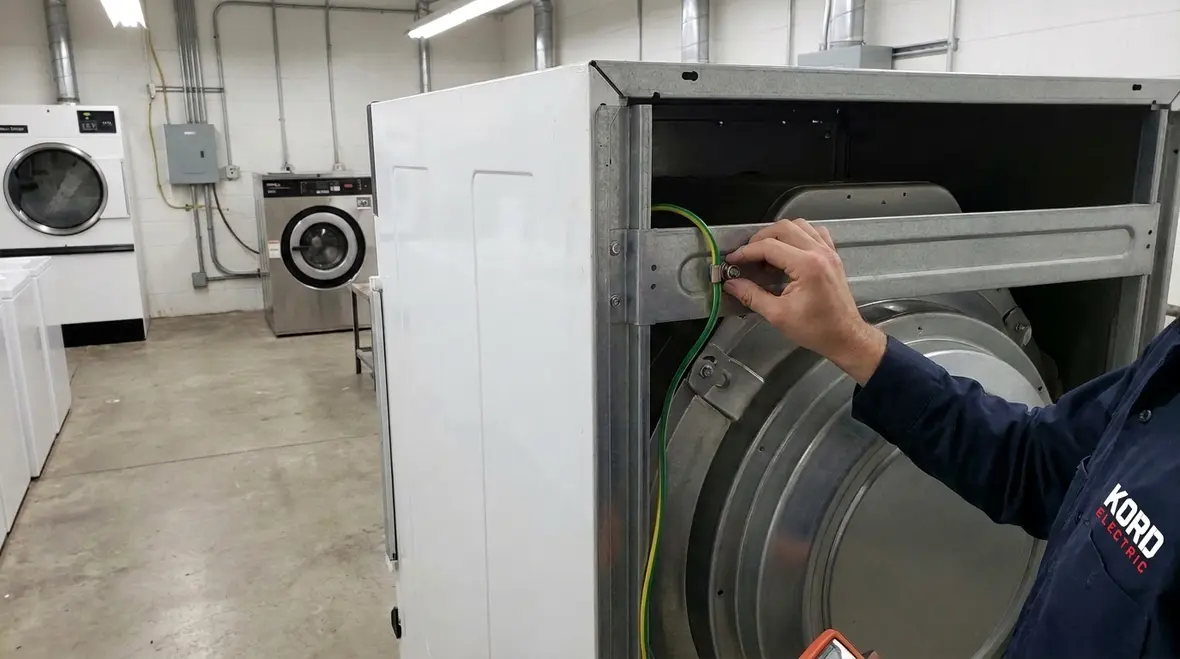
NEC Range Dryer Frame Grounding NFPA 70 for Commercial Buildings
NEC range dryer frame grounding: what NFPA 70 wants from commercial buildings
At Kord Electric, we see it every week in major property buildings and industrial facilities: someone installs or replaces a clothes dryer, the wiring gets finished, and everyone moves on like the job is done. Yet NFPA 70 Section 250.140 still expects something specific. It calls out NEC range dryer frame grounding for clothes dryer frames, and we make sure our customers do not treat that requirement like a suggestion. Our technicians explain the “why” in plain language, so operations teams and maintenance leaders can keep people safe, reduce nuisance issues, and stay aligned with the electrical code that governs their work.
Then again, electricity does not care if the install looks tidy. It only cares what you wired. So we do it the right way, from the frame down to the grounding path.
For facility leaders who want a deeper walk through the code backdrop, Kord Electric already breaks down NFPA 70 in resources like Understanding NFPA 70: The National Electrical Code Explained for 2026, then applies those principles in the field where real dryers, real panels, and real people meet.
Why Section 250.140 matters for clothes dryer frames

NFPA 70 is the National Electrical Code, and Section 250.140 sits inside the grounding and bonding world for a reason. In commercial and industrial spaces, clothes dryers face frequent use, vibration, moisture exposure, and sometimes less than perfect installation conditions. Even when a circuit works normally, metal frames can become energized if an insulation failure happens. That is when grounding and bonding stop a small electrical fault from turning into a shock event or a fire risk.
Our expert service staff often tells building managers this simple truth: grounding gives fault current a low resistance path, so protective devices clear the problem fast. If the dryer frame does not connect correctly, the frame can float at a dangerous potential. And if your staff touches that metal while standing on concrete, wet floors, or other conductive surfaces, you can get the kind of surprise no one wants. It is not a plot twist you can laugh off like a sitcom.
In the code books, you will see grounding and bonding described in precise terms. In the laundry room, you see the outcome: a dryer that either sends fault current home through a solid grounding path, or tries to send it through the first person who touches the frame. We make sure your installation backs the first option, every time.
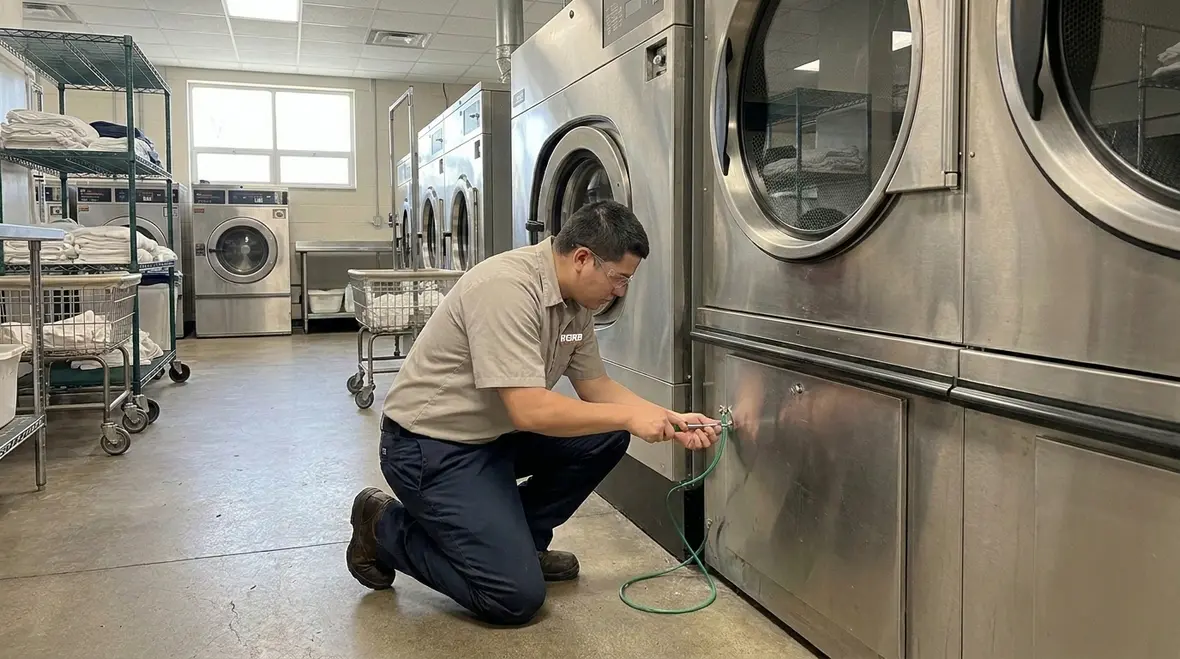
Grounding range and dryer frames under NFPA 70 in real buildings
NFPA 70 draws attention to equipment frames because frames can carry fault energy. In practice, when a clothes dryer is installed with metal parts, the metal frame needs an effective grounding connection. That connection supports the system when something goes wrong, and it also helps stabilize the electrical environment during normal operation.
To make this concrete, we look at the full installation, not just one wire. First, our technicians inspect the dryer location and the mounting. Then we verify the grounding conductor route and the connection points. After that, we confirm the wiring method supports bonding and continuity. Finally, we check the protective device pathway so the system trips if a fault happens.
In many major property buildings, multiple trades touch the dryer area, and tiny changes can break continuity. A replacement dryer, a modified outlet, a cable re-route, or a “quick” connection made during maintenance can all create risk. Therefore, our team documents what we find, what we correct, and what the building should maintain going forward.
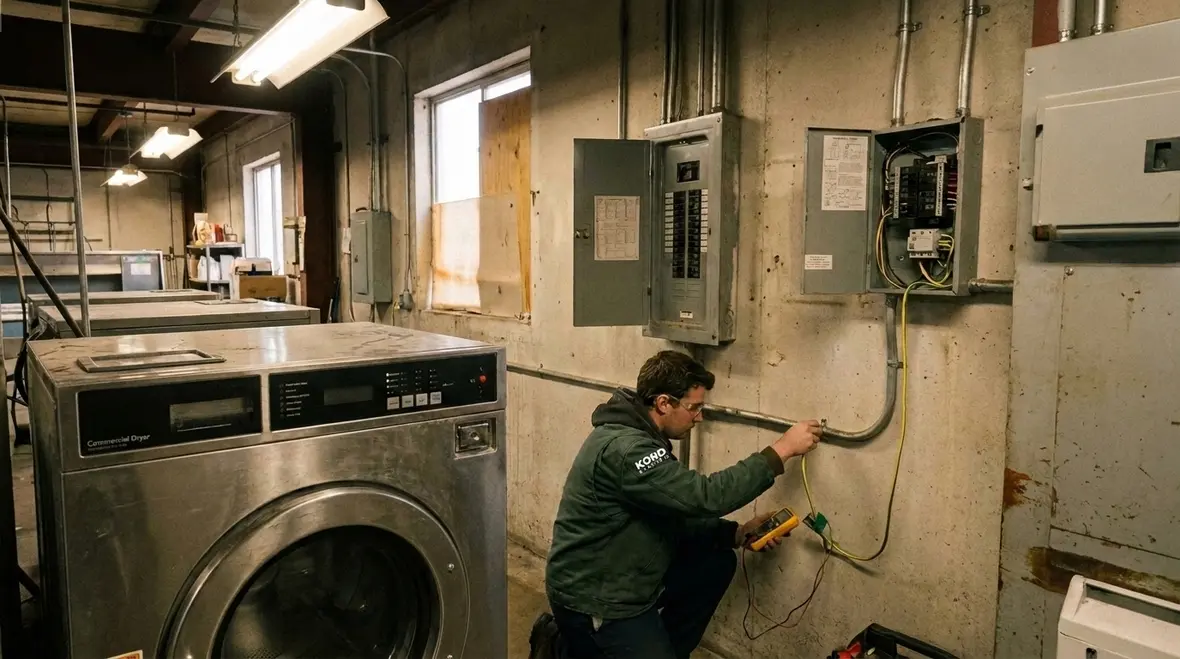
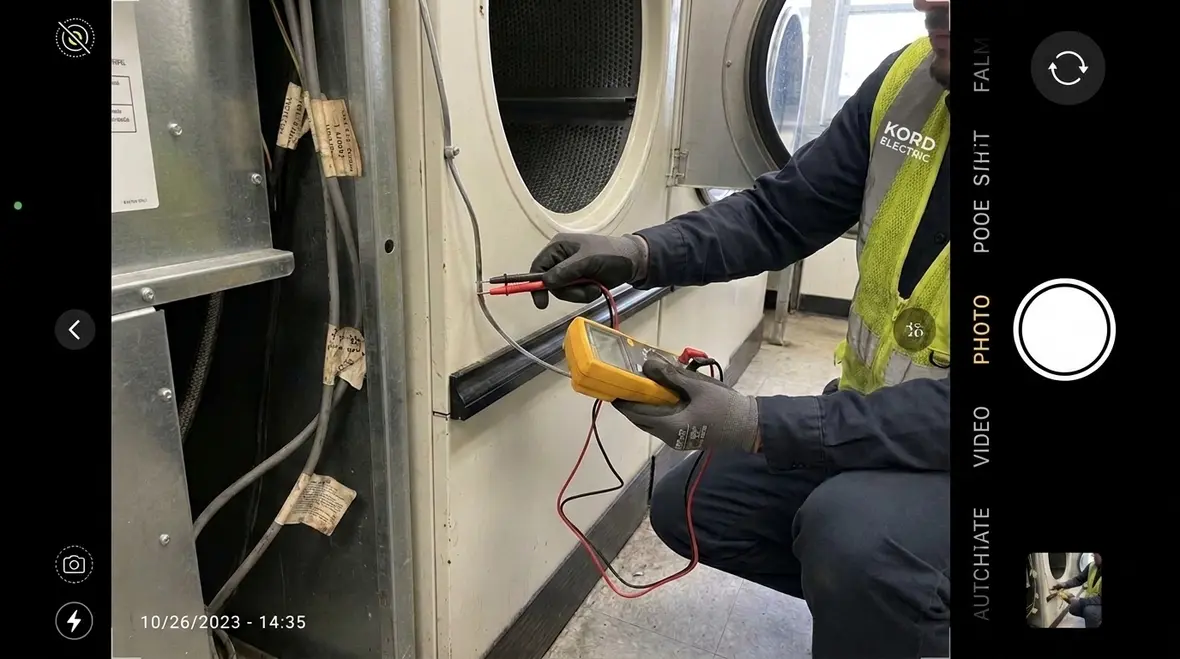
How we verify correct bonding and continuity on site
We do not rely on hope. We use measured checks and visual verification because code requirements only help when the field matches the paperwork.
Our field checks usually include:
- Visual confirmation that the frame bonding conductor connects to the correct grounding point and does not route through loose hardware
- Continuity verification to confirm the grounding path has low resistance and no hidden breaks
- Connection quality checks for proper termination, secure contact, and correct conductor size for the application
- Equipment interface review to ensure the dryer frame bonding does not depend on paint, corrosion, or surface contact
- Protection logic check to confirm the breaker or fuse clears a fault so the system does not “protect” by doing nothing
And yes, corrosion can be sneaky. It turns a solid connection into a flaky one over time, the same way dust turns a server room into a science experiment. That is why we treat grounding as a lifecycle item, not a one-time task.
Common installation mistakes we prevent in commercial and industrial facilities
Because Kord Electric serves commercial and industrial facilities and major property buildings, we focus on patterns we see across those sites. Many failures do not start during the first install. They start later, when equipment gets replaced, cabinets get adjusted, or service gets “streamlined.”
Here are the mistakes that most often cause trouble around dryer frames and their grounding paths:
- Skipping the frame connection during replacement, especially when a tech swaps equipment fast and assumes the old wiring is still correct
- Using a loose or painted contact point that looks connected but fails under load or after a vibration cycle
- Route changes that create accidental separation between the bonding path and the grounding conductor
- Improper termination where the conductor lands on the wrong terminal or misses the correct contact surface
- Neglecting maintenance so the frame connection degrades over time due to moisture or corrosion
Our technicians explain these risks to facility managers and maintenance leaders because the best fix is prevention. Also, it saves money. Nobody wins when the facility has to close a laundry operation because a protective device trips repeatedly. That is the electrical version of the coffee machine going down right before a big meeting.
Bonding meets the bigger NEC grounding plan
Grounding for dryer frames does not live in a vacuum. NFPA 70 grounding rules work together to keep faults controlled and predictable. Therefore, we consider the broader setup, including grounding electrodes, bonding conductors, and how other equipment in the laundry or process area ties into the system.
In major propertie buildings, you often see shared infrastructure. Multiple panels feed multiple loads, and different trades connect equipment over time. That is why Kord Electric coordinates grounding and bonding as part of a system view. We confirm the dryer frame connection supports the facility grounding strategy rather than fighting it.
When our expert service staff explains the NEC grounding plan, we keep the story simple. Faults create current. Current needs a path. The path needs integrity. And protective devices need the right conditions to clear the fault quickly. If any link breaks, the code requirement becomes a decorative line in a book. We do not build decorative safety.
For teams looking beyond a single appliance, articles like Commercial Electrical Wiring Safety Upgrades and broader planning guides on the Kord Electric blog connect dryer frame details to the larger NEC picture for modern commercial buildings.
Prevent future problems with maintenance and service discipline
Even when the initial install passes inspection, the real test arrives in months and years. Commercial and industrial environments run hard. Floors get wet. Cleaning crews bring water and chemicals into contact with metal frames. Facilities experience renovations, equipment moves, and occasional “temporary” work that somehow never becomes temporary.
For that reason, we recommend a practical maintenance approach. Our technicians can check dryer frame grounding during scheduled electrical inspections. We also look for signs of loose hardware, corrosion at connection points, and changes in wiring routes. If a dryer gets replaced, we treat it as a fresh starting point, not a reuse situation.
When you keep grounding intact, you help protect people, reduce nuisance trips, and improve reliability. And reliability matters because laundry stoppage turns into a chain reaction for tenants, staff, and operations. It is like pulling one link from a zipper and realizing the whole thing is going to snag.
That same discipline shows up in broader infrastructure work. When Kord Electric builds or modernizes commercial electrical systems, as in their guides on building electrical system design and modernization, the same grounding and bonding mindset that protects a single dryer frame also protects panels, feeders, and life safety systems across the building.
FAQ
Call Kord Electric for dryer frame grounding in major buildings
If your facility runs commercial laundry or you manage major property buildings, do not treat dryer frame grounding like a checkbox. Kord Electric brings expert service staff to verify grounding and continuity on site, explain the requirements clearly, and help you maintain code compliance over time. When installations change, we recheck the system so faults clear properly and people stay protected. Contact us to schedule an electrical inspection or a grounding service visit, and let us handle the part of the job electricity actually cares about.
For facilities across the region, that support extends beyond laundry rooms. Kord Electric’s dedicated Los Angeles County electrical services help commercial and industrial buildings align everyday work with NEC requirements, from NEC range dryer frame grounding to full scale distribution upgrades and code minded renovations.
When your next project touches electrical infrastructure, from a single dryer circuit to a full panelboard rebuild, bringing in a team that lives with NFPA 70 every day turns the process from a guessing game into a straightforward plan. That is the difference between hoping a fault clears and knowing the system is wired to make it happen.


