
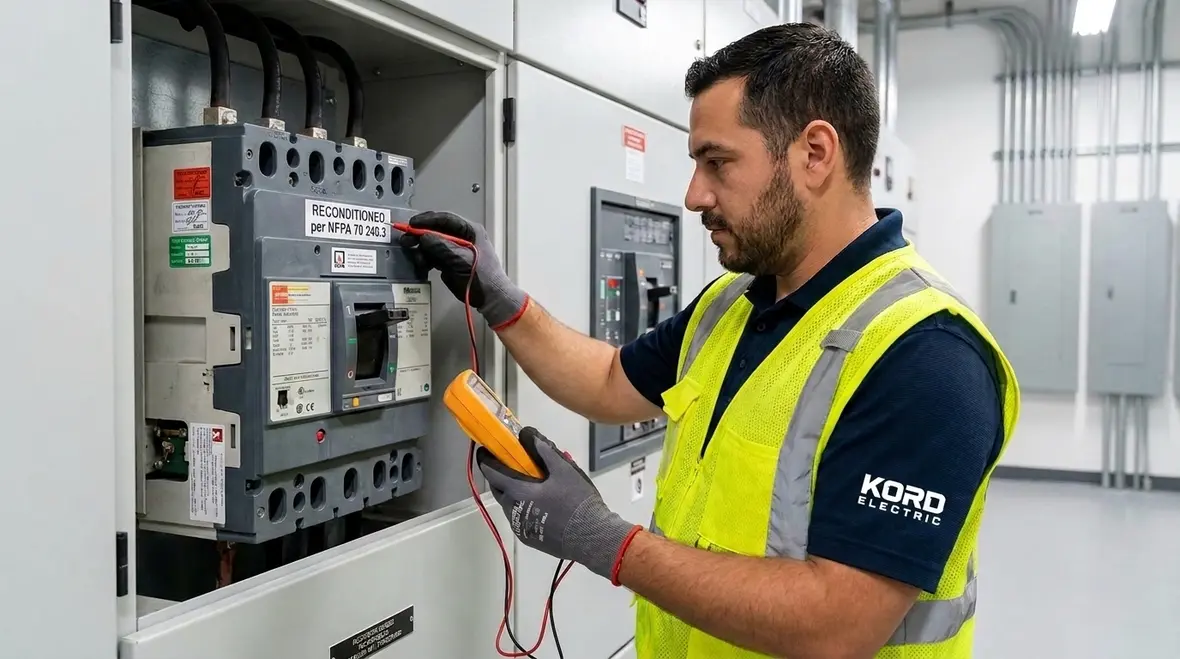
NEC Reconditioned Overcurrent Devices NFPA 70 240.3
Kord Electric focuses on keeping commercial and industrial electrical systems safe and dependable, and our clients often ask about whether certain equipment can be reused without cutting corners. In particular, we often discuss NEC reconditioned overcurrent equipment that may be allowed when it meets the rules laid out in NFPA 70 Section 240.3. Even when the electrical world feels like it runs on mystery and fine print, our technicians and expert service staff explain what the code permits in plain, work-ready terms. And yes, they also reassure people who worry that reconditioned parts are like taking a used toaster to a fine dining kitchen. In truth, when done correctly, it is more like a properly rebuilt engine: tested, documented, and ready for duty.
NFPA 70 240.3 Reconditioned Overcurrent Devices: What Code Allows
In Section 240.3, the NEC addresses when reconditioned overcurrent devices can be used after repair or refurbishment. We follow this section because it sets guardrails for safety and performance. At Kord Electric, our approach is practical. First, we verify the device type and how it will be used. Then, we confirm the reconditioning process and documentation. Finally, we make sure the device meets the requirements for installation and ratings in the electrical system.
Because overcurrent protection is a life safety and fire safety function, the code does not treat reconditioned equipment as “anything goes.” Instead, it places limits so the rebuilt device continues to operate as intended under fault conditions. Therefore, the permitting decision rests on more than “it looks fine.” It rests on testing, proper parts, and correct restoration of performance characteristics.
Our technicians explain it this way: if a protective device cannot reliably interrupt fault current, then the building may be exposed to damage, downtime, and risk. Consequently, the “allowed” part of 240.3 only applies when the device is reconditioned in a way that restores it to required standards and keeps its protective function intact.
How We Interpret “Reconditioned” in the Real World
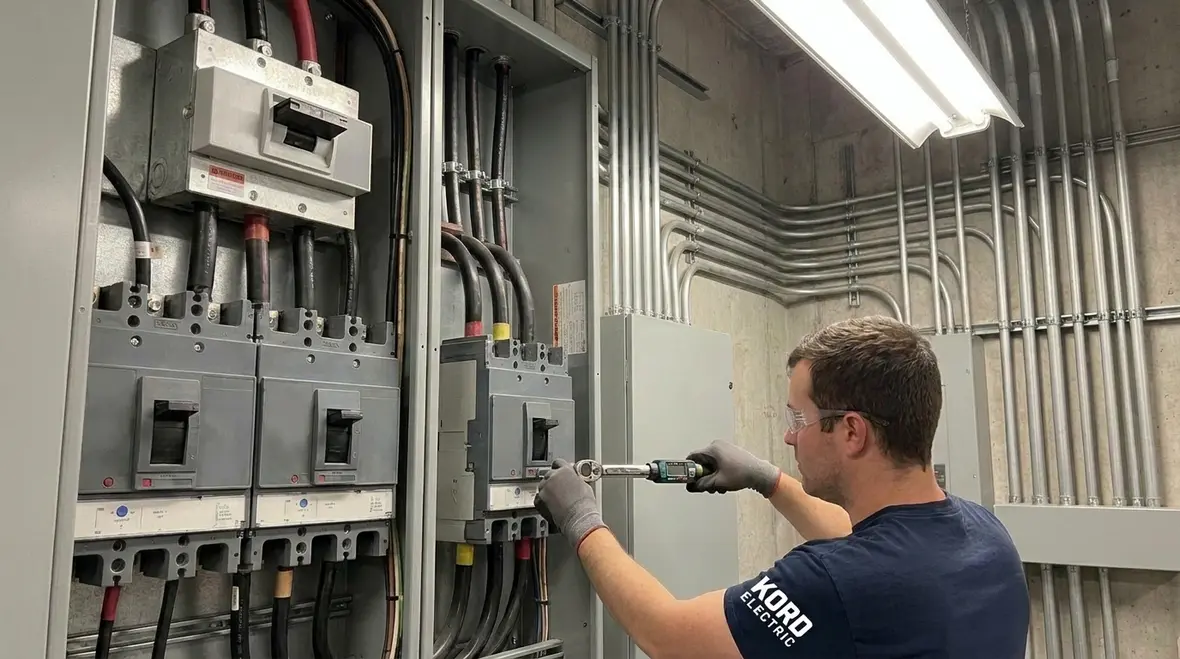
Many people hear “reconditioned” and imagine a quick wipe down and a sticker. However, for NEC reconditioned overcurrent equipment to make sense on a major property, it must receive proper service work, not cosmetic attention. In our field work, we pay close attention to what reconditioning includes, how it is done, and how it is verified.
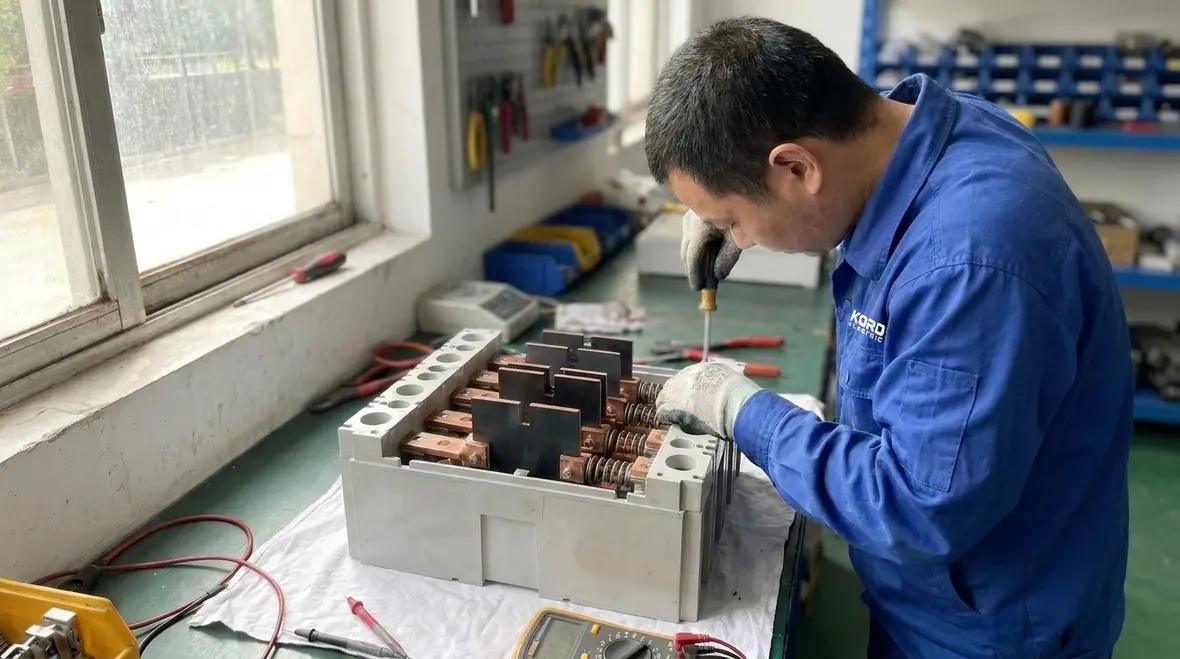
Typically, reconditioning should address the internal components that affect trip behavior, contact condition, insulation integrity, and mechanical operation. That means the device must be restored so it responds to fault current within the design intent. Additionally, it should not rely on guesswork. We expect documented checks and tests that show the device meets the performance needed for its rating and application.
Next, we evaluate compatibility. Overcurrent devices operate as part of a system that includes conductors, upstream and downstream protection, and coordination settings. Therefore, even a properly rebuilt device can fail to protect properly if it does not match the system design. Our expert service staff often helps clients avoid this mistake by reviewing the equipment schedule and protection plan before any device enters the job.
Then comes installation quality, which people overlook. Even if the device is reconditioned correctly, improper mounting, torque, wiring errors, or damaged insulation can create unsafe outcomes. So, we treat reconditioning and installation as a single safety task.
Testing, Labels, and Documentation That Stand Up to Scrutiny
When building owners and facility managers ask if we “can use it,” they also ask something smarter: how will it hold up when someone questions it? That question matters in commercial and industrial sites, where audits, insurance review, and safety inspections demand evidence. And frankly, nobody wants to explain their decisions using guesswork and hope, like it is a game show.
For NEC reconditioned overcurrent equipment, we recommend a clear paper trail. Labels should reflect accurate ratings and settings. Documentation should show what work was performed and what testing verified the device. If the device includes adjustable features, we confirm those features function properly and that final settings match the application.
Furthermore, we keep the process aligned with the intent of 240.3. The code focuses on whether the reconditioned device is brought back to a condition that can safely perform its protective function. Therefore, testing and records act like the bridge between the reconditioning work and the code’s safety goal.
Our approach also includes a system check. We compare the device’s intended function with the arc energy risk, fault duty level, and coordination scheme for the facility. Transitioning from “the device is rebuilt” to “the device protects correctly in this building” requires that extra step. We do it because it is the difference between passing paperwork and passing safety.
Coordination and Protection: Why the System Must Match the Device
In many large buildings, protection is a team sport. A breaker that trips too slowly can allow damage to spread. A device that trips too quickly can create nuisance shutdowns, which operators usually treat like a personal attack. Meanwhile, a mismatched rating can create serious fault clearing problems.
So, when we deal with NEC reconditioned overcurrent equipment, we do not treat it as a standalone replacement. Instead, we verify coordination with upstream and downstream devices. We check whether the rebuilt breaker or fuse device fits into the existing protective strategy for the site.
That includes reviewing time current curves when available, checking coordination settings, and confirming the device’s interruption rating matches the system fault levels. Then we review the installation details that affect performance, like contact integrity and proper electrical connections. If the facility has multiple panels and a layered protection plan, we align the reconditioned device to that plan.
Because many sites run 24 hours a day, outages carry a real cost. Therefore, we aim to prevent the two classic problems. First, we prevent failures caused by improper reconditioning. Second, we prevent coordination issues that lead to repeated trips and operational chaos. Our technicians handle this with methodical checks rather than quick fixes.
Common Mistakes We See on Commercial Jobs
Over time, we have noticed patterns. Some mistakes happen because teams move fast. Others happen because information travels through the office like a rumor. Either way, the results cost time and can increase risk. Here are the issues we help clients avoid, especially on major property buildings.
- Assuming appearance equals safety. A rebuilt device can look fine and still fail performance requirements if internal components or settings are not restored properly.
- Skipping documentation. Without records, it becomes hard to prove compliance with the reconditioning intent behind NFPA 70 240.3.
- Ignoring system coordination. A device can meet its own rating and still cause poor protection coordination in the overall electrical system.
- Overlooking installation details. Torque, wiring correctness, and insulation condition still matter, even after a strong reconditioning process.
- Using unsuitable devices for the application. Ratings and settings must match what the facility needs, not just what is available.
To be fair, electrical work already has enough complexity to keep even a superhero busy. But in practice, the safest approach stays simple: we verify reconditioning quality, we confirm compatibility, and we install with discipline.
How Kord Electric Supports Facilities With Expert Service
Kord Electric serves commercial and industrial facilities and major property buildings, and we do not treat this work like a one-time swap. Instead, we build a safety path from review to install to documentation. Our technicians and expert service staff explain the code requirements step by step, so owners and facility leaders understand what is permitted and why.
First, we assess the existing electrical system and the device role within it. Then, we confirm whether the proposed replacement fits the application, including protective function and system fault levels. Next, we coordinate with the client’s maintenance and safety requirements so the work aligns with uptime goals.
Finally, we support the documentation needs that often show up during inspections, compliance reviews, and insurance questions. Because when the process is clear, everyone relaxes. And nobody wants to be the person who says, “It should be fine,” like a character in a sitcom where consequences always land off-screen.
If you are managing a facility that cannot afford extended downtime, we can also help you plan the service window so you get reliable protection without dragging the project into long delays.
If you want to see how this fits into the broader electrical rulebook, you can also explore our guide on understanding NFPA 70 and the National Electrical Code for 2026, which gives more context on how NEC requirements shape real-world decisions.
FAQ
Needing Proof, Not Guesswork: Get a Code Aligned Plan
When your facility needs overcurrent protection that you can stand behind, Kord Electric helps you handle NFPA 70 Section 240.3 with clarity. Our technicians and expert service staff review the device, confirm compatibility, and support documentation so your team does not rely on guesswork. If you manage commercial and industrial sites or major property buildings, reach out to us before the next outage. We will help you choose the right path for NEC reconditioned overcurrent equipment and keep your system safe and ready for duty.
For projects that go beyond a single breaker or panel, you can also connect this work with our broader Los Angeles County electrical services for commercial and industrial facilities, so your protection strategy lines up with upgrades, maintenance, and emergency planning across the entire property.
Quick Reference: Dual Column for Field Use
| What we focus on | Why it matters |
| Verification of reconditioning work and testing | Supports safe protective function and aligns with the intent of NFPA 70 240.3 |
| Correct ratings, settings, and labels | Prevents mismatch with the electrical system design and coordination plan |
| System coordination and fault duty checks | Reduces nuisance trips and protects equipment and life safety |
| Installation discipline and connection quality | Eliminates unsafe wiring and mounting conditions that can undermine performance |
Putting NEC Reconditioned Overcurrent Equipment to Work Safely
When you bring NEC reconditioned overcurrent equipment into a facility, you are not just swapping metal and plastic. You are making a safety decision that must hold up under fault conditions, third-party reviews, and the daily pressure of real operations. That is why Kord Electric ties reconditioning quality, system coordination, and code alignment into one process instead of treating them as separate checkboxes.
Whether your next project involves a single reconditioned breaker or a broader review of panels, switchgear, and protection settings, you do not have to navigate NFPA 70 section 240.3 alone. Our technicians and expert service staff help you move from “we think this will work” to “we know this is ready,” with documentation to match. That way, when the next inspection, audit, or real-world fault arrives, your system is prepared to respond the way it was designed.
When you are ready to connect this work with a structured electrical plan for your building, our commercial and industrial team can help you integrate overcurrent protection with upgrades, preventive maintenance, and emergency readiness—so your system is not only compliant on paper, but resilient in practice.


