

NFPA 70 240.5 NEC Flexible Cord Overcurrent Protection
In commercial and industrial facilities, we do not get to treat a damaged cord like a “small issue.” We take NEC flexible cord overcurrent seriously, because a flexible cord can heat up, fail, and spark long before anyone notices the warning signs. Then, NFPA 70 Section 240.5 steps in and tells us, in plain electrical language, how to protect flexible cords, cables, and fixture wires from conditions that lead to overheating. As Kord Electric, we send experienced technicians onto real job sites, and we explain the “why” behind each requirement, not just the “what.” And yes, we have seen plenty of cords that look fine until you follow the code. Like a plot twist in a movie: it is always worse than it looks.
NFPA 70 Section 240.5: what it protects and why it matters
NFPA 70 Section 240.5 focuses on protecting flexible cords, cables, and fixture wires from physical damage and electrical hazards that can create a dangerous heat rise. In commercial and industrial spaces, cords often move, flex, get coiled, get routed through traffic paths, or rest near equipment that runs hot. Therefore, the code requirement is not about being cautious for no reason. It is about preventing an overheat condition caused by current, insulation breakdown, and improper installation.
To make this practical, our expert service staff at Kord Electric reviews how cords are actually used. Then we compare that real usage to the protection intent in Section 240.5. For example, a cord can be correctly rated but still become unsafe if it is pinched, repeatedly bent at one spot, or used in a way that limits cooling. Also, if the cord is part of a circuit with inadequate overcurrent protection, the cord becomes the weak link. That is where NEC flexible cord overcurrent risk moves from theory to job site reality.
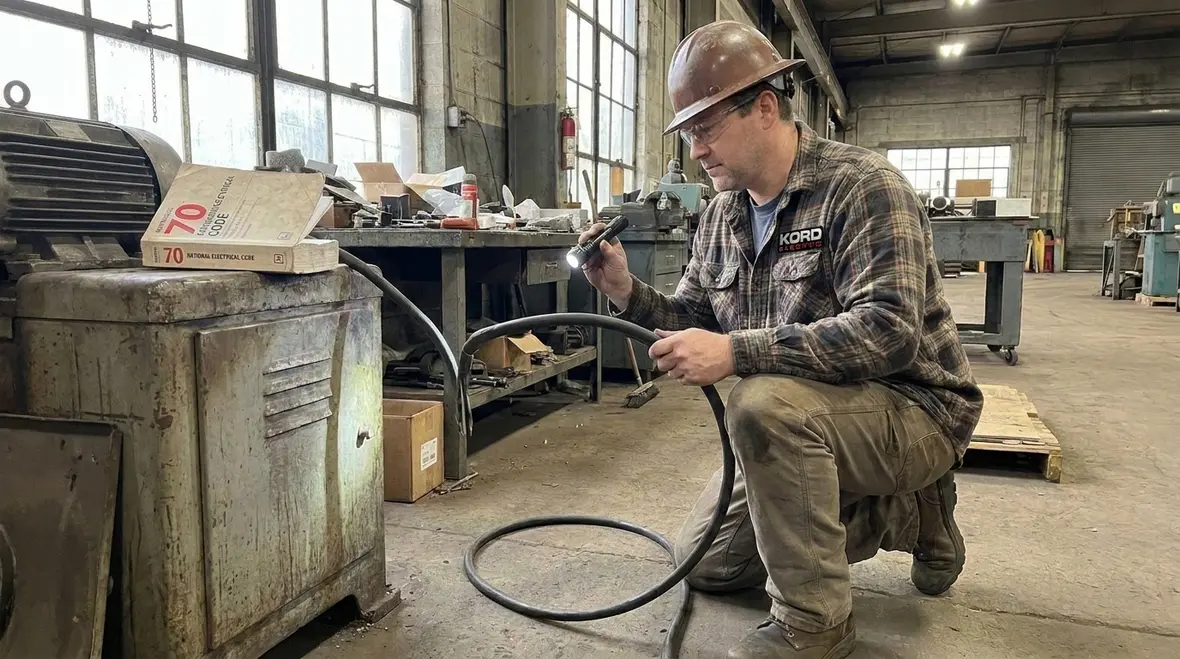
Overcurrent protection for flexible cords in real buildings
When people hear “overcurrent,” they think of a breaker that trips. However, in a flexible cord situation, the danger shows up in multiple ways. First, an overcurrent event can push current higher than the conductor and insulation can handle for too long. Next, the cord can heat along the length, especially where connections loosen or insulation ages. Finally, heat accelerates aging, which then makes the next event more likely.
In our experience with commercial and industrial facilities, technicians often discover one of three patterns. One, cords get used outside their intended load range. Two, users replace a cord with a “close enough” substitute without matching conductor rating. Three, the overcurrent protective device does not coordinate well with the cord length and rating. Even when the facility uses high-quality equipment, a single wrong cord routing or incorrect cord replacement can undermine safety.
Our team explains it like this: overcurrent protection must match the flexible cord’s design, the environment, and the way the cord gets moved. If the facility has a history of nuisance trips, we also dig deeper, because nuisance issues sometimes mask mis-sizing or bad connection points. In other words, do not just reset and move on. We inspect, we verify, and we document.
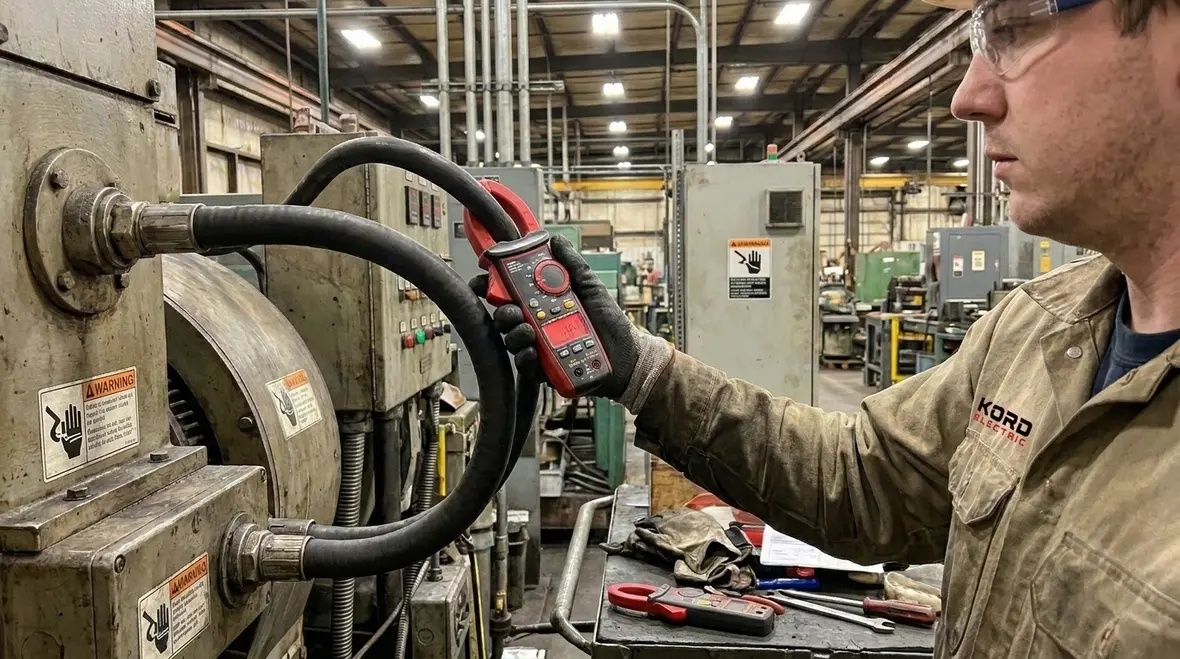
How 240.5 expects protection during handling, routing, and use
Section 240.5 does not treat flexible cords as “install and forget” items. Instead, it expects protection based on how cords behave in the field. We see that expectation show up through rules that limit mechanical stress and require protection where cords pass through areas that can damage them.
Here is what we commonly verify for commercial and industrial installations. We look at routing around doors, dock areas, and walkways. We check for places where forklifts, carts, or foot traffic can pinch or crush the cord. We also look for sharp edges where insulation can abrade. Then we confirm strain relief at ends, because loose terminations can generate heat even when the breaker never trips.
Also, we examine where cords lie during long operation. If cords sit under cooling vents, next to hot equipment, or in areas with oil, debris, or moisture, then insulation deterioration can happen faster. As a result, the effective safety margin shrinks. At Kord Electric, we do not treat these as “maintenance details.” We treat them as part of the electrical safety program for the facility.
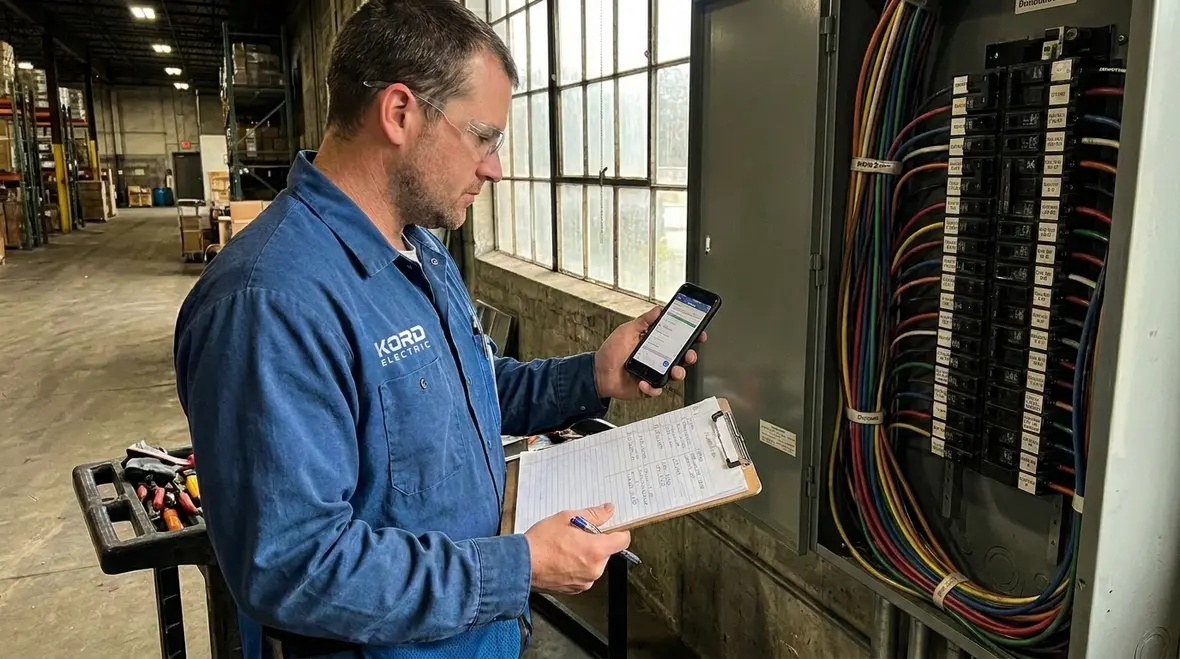
NEC flexible cord overcurrent: coordination steps our technicians use
Our expert service staff takes a methodical approach, because guessing creates risk and rework. First, we identify what the cord is powering and the duty cycle. Then we confirm the cord type and conductor size match that load. Next, we check the overcurrent device upstream and evaluate whether it coordinates with the cord’s safe operating limits.
After that, we inspect the physical installation details that influence NEC flexible cord overcurrent outcomes. We confirm that cords are not run through areas where they can be crushed. We ensure they are properly supported so strain does not transfer to connections. We also verify that the cord is not repeatedly bent at a single point, because that can damage conductors inside the jacket. If the facility uses cord sets for temporary power, we also examine time limits and replacement schedules.
Finally, we document what we found and what we corrected. In commercial and industrial settings, documentation matters because it supports audits, maintenance plans, and ongoing safety training. And yes, sometimes we have to explain to a well-meaning facility manager that a cord that “worked last year” is not a safety plan. The laws of electricity do not care about last year. They care about what the cord is doing today.
Common field mistakes that increase heat and risk
In the field, we often spot mistakes that seem minor at first but create a chain reaction. One of the most common issues involves cord substitution. People replace a cord with a different rating, jacket type, or length without updating protections or confirming compatibility. Then the facility unknowingly shifts the safety profile.
Another issue involves poor connection quality. Even a properly sized circuit can fail if plugs, connectors, or splices loosen over time due to vibration or repeated movement. Heat forms at weak points, and heat increases resistance, which increases current draw, which then fuels more heating. It is a feedback loop, like an endless group chat nobody asked to join.
We also see “temporary” cords used as long term solutions. Temporary cord routes get buried under mats or run through congested areas because it is convenient. However, convenience is not a code category. We encourage facilities to plan permanent routes and use approved protection methods for any flexible cord usage. When a cord must be used, we ensure it stays in safe paths, supported correctly, and replaced based on condition, not vibes.

Training and communication for facility teams
Electrical safety stays strong when people understand it. That is why Kord Electric trains and communicates with facility teams in a way that sticks. We explain the requirements around flexible cord protection in plain terms, then we show how our technicians spot issues during inspections. This approach helps electricians, maintenance leads, and operations managers recognize problems early.
We also set up practical checklists for facilities that want repeatable results. For example, teams should know what “mechanical damage risk” looks like on the floor and what to do when cords run near sharp edges or under traffic. Also, teams should know when to remove a cord from service immediately. That step matters because insulation failure can begin internally, even before outer damage becomes obvious.
And if a facility wants a deeper dive into the broader NEC approach, we point them toward the way we explain code concepts in our resources, including our Kord Electric blog article Understanding NFPA 70: The National Electrical Code Explained for 2026 and related NFPA 70 content we publish at both Kord Electric and Kordfire sites. The goal stays the same: make the code usable, not just readable. Websites can explain; our job sites prove it.
Smart compliance: how Kord Electric supports commercial and industrial buildings
Commercial and industrial facilities need more than a one time fix. They need a safety program that stays consistent across teams, shifts, and locations. Therefore, Kord Electric works to support facilities with inspections, corrective work, and clear explanations that help staff maintain safe practices.
When we approach flexible cord protection under NFPA 70 Section 240.5, we integrate the electrical side with the reality of the building. We consider how the facility uses power, how equipment moves, and how maintenance routes cables. Then we align those details with the code intent that protects flexible cords, cables, and fixture wires.
To support compliance and reduce downtime, we focus on what changes outcomes. That includes proper overcurrent coordination for NEC flexible cord overcurrent conditions, improved routing and protection, correct cord selection, and reliable terminations. Also, we keep communication direct so facility staff can act quickly. Because in a major property building, time matters and so does safety.
| What we inspect | Why it affects safety |
Cord rating, type, and conductor size |
It determines how the cord handles load without overheating |
Routing and mechanical protection under 240.5 |
It reduces damage that can harm insulation and conductors |
Upstream overcurrent protection coordination |
It prevents an overcurrent situation from heating the cord too much |
Connections, strain relief, and plug condition |
It prevents heat at terminations and keeps conductors stable |
For facilities that want broader system-level support, our team also connects flexible cord protection to design and maintenance strategies described in resources like our building power planning guides and regional services. For example, when flexible cord issues show up during broader system reviews, we can coordinate corrections alongside larger projects instead of treating each risk as a one-off surprise.
If your building is in or around Southern California, our Los Angeles County electrical services team can integrate NEC 240.5 cord protection checks into wider inspections, upgrades, and troubleshooting so code compliance and real-world reliability move together, not in separate lanes.
FAQ: flexible cords, 240.5, and overcurrent protection
Conclusion: let us strengthen your flexible cord safety program
If your facility uses flexible cords in workshops, docks, production areas, or maintenance operations, NFPA 70 Section 240.5 is not optional reading. It is a practical safety requirement. Kord Electric supports commercial and industrial buildings with inspections, corrections, and clear explanations that help your team prevent overheating and damage. Contact us for an on site review of your cord usage and overcurrent protection. We will help you reduce risk, protect equipment, and keep operations moving. Then you can stop treating electrical safety like a “later problem.”


