
NEC SEC Cables Securing Supporting: Kord Electric Guide
How we handle NEC SEC cables securing supporting on real projects
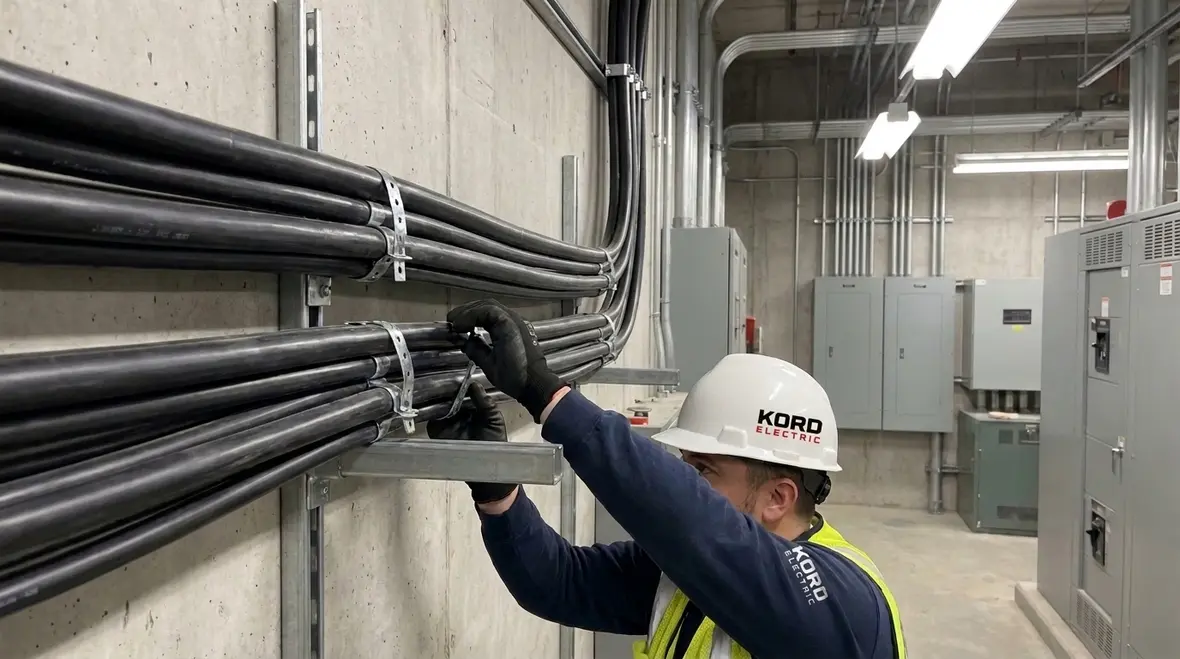
At Kord Electric, we treat NEC SEC cables securing supporting as more than a box to check. In the field, our teams support and secure SEC cables the right way so service runs stay safe, stay stable, and keep the electrical system doing what it is supposed to do. Then we document the approach clearly, because future maintenance should not feel like solving a mystery from a haunted warehouse.
In this article, our technicians and expert service staff explain how NFPA 70 Section 332.30 guides the securing and support rules for SEC cables under the NEC. We also connect the practical steps we use on commercial and industrial facilities and major property buildings, where downtime costs real money and “close enough” does not cut it.
What NFPA 70 Section 332.30 actually requires for SEC cables
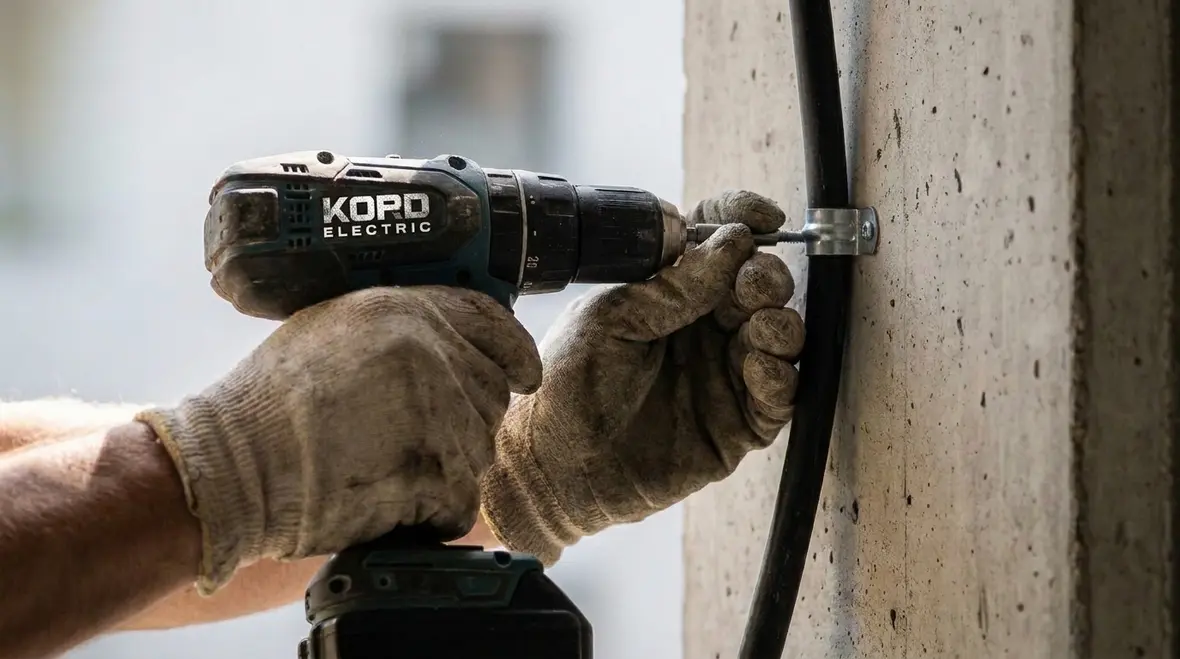
NFPA 70 sets the electrical safety standard in the United States, and Section 332.30 focuses on how SEC cables get secured and supported where they run. First, the code addresses mechanical protection and stability. Then it limits how cable can move, sag, or stress at terminations and along the route.
In plain terms, we make sure the cable does not behave like a loose extension cord draped across a break room. Instead, our crews apply support systems so the cable stays aligned with the building structure and the raceways, cabinets, and fittings that connect it.
Just like in building projects, the details matter. If support spacing, anchoring, or routing conflicts with the code intent, we correct it early. That is because a future failure rarely announces itself with a dramatic soundtrack. It usually shows up when operations are busy.
Where securing and support decisions become critical in commercial builds
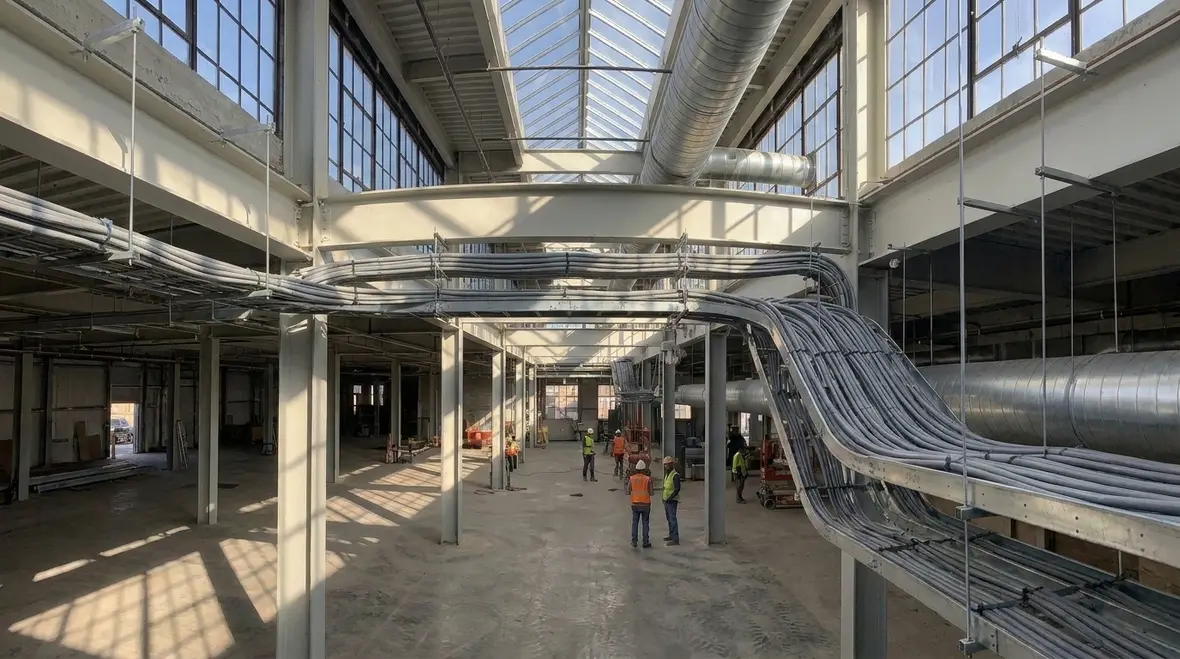
Commercial and industrial facilities do not share the same “easy mode” layout as a small residential job. Therefore, you often see long service runs, complex routing around HVAC, cable trays, structural steel, and frequent transitions between spaces.
As a result, our approach focuses on risk points. We watch for areas where cable can experience movement from vibration, thermal expansion, or foot traffic near mechanical rooms. We also pay close attention where cable enters enclosures, penetrates building surfaces, or changes direction. Each bend and transition can become a stress point if the cable lacks proper securing support.
At Kord Electric, our technicians build the support plan around how the job actually gets installed. Then, before we energize, we confirm the cable route stays within safe mechanical limits. If we spot something that will shift during construction, we correct it before it becomes a “future problem.” Those future problems often arrive with a punch list and a deadline, which is not fun for anyone.
How we secure SEC cables with proper support methods
When we talk about NEC SEC cables securing supporting, we mean more than adding a clip here and a strap there. We use a coordinated approach that follows the cable’s design and the installation environment. So we consider attachment points, spacing practices, allowable strain, and how the cable interacts with surfaces and pathways.
Our technicians typically evaluate the following categories during installation planning:
- Support location and spacing: We follow code intent so the cable stays secure between support points and avoids sagging that can stress connections.
- Connection and termination care: We make sure cable strain does not transfer to terminations, gear, or service equipment.
- Routing consistency: We align the route with the building pathway so support methods remain uniform and do not force the cable into awkward angles.
- Protection from physical damage: We reduce the chances of impact, abrasion, or accidental contact in maintenance areas.
Additionally, we coordinate with other trades. That way, cable supports do not get removed during rework, and pathways do not get blocked after approvals. In other words, we do not install a support system and then hope everyone else respects it. We verify.
Common mistakes we catch early, before inspections or failures
Even good teams can miss details when a job stays fast-paced. However, we see predictable patterns. For instance, installers sometimes treat support as optional when the cable “looks tight.” That assumption fails once the building cycles through temperature changes, vibration from equipment, or minor shifting during ongoing construction.
We also see issues when support points get spaced too far apart. Then, the cable can sag, especially over longer runs. Once sag occurs, terminations may experience stress. And if you have ever tried to fix a stressed termination after the finish work, you already know it is less fun than it sounds.
Another frequent issue involves routing and transition points. If a cable crosses into different environments without consistent securing methods, it can create a weak link. Our expert service staff makes sure the route includes appropriate support at those transitions, so the installation remains stable from origin to endpoint.
Finally, we watch for improper attachment practices. If support clips or fasteners do not hold securely, the “support” becomes a suggestion. We correct these early, and we document our findings so the client team understands what we changed and why.
How we document compliance for major property buildings and CIs
Commercial owners and facility managers want clear answers, not vague assurances. Therefore, we document the securing and support approach as part of our broader electrical compliance process. In many projects, that includes coordination with the NEC requirements and internal checklists used by our service professionals.
Our technicians explain what they did and how it aligns with NFPA 70 Section 332.30. Then we help facility stakeholders understand maintenance expectations. Because even when everything passes inspection, the system must remain safe and stable over time.
We also keep the focus where it belongs. Kord Electric serves commercial and industrial facilities and major property buildings. So our schedules, documentation style, and site safety practices match that level of complexity. We do not push generic residential thinking into business critical spaces. That is a quick way to create slow problems.
If your facility team wants to connect these NEC details to the bigger picture, you can also review Kord Electric’s guide Understanding NFPA 70: The National Electrical Code Explained for 2026, which breaks down how the rulebook shapes real project decisions across commercial and industrial properties.
Real-world coordination with other electrical and life safety systems
SEC cable routes often share spaces with other infrastructure. That means we plan for coordination with cable trays, conduit runs, and other electrical gear. Additionally, many facilities treat life safety systems as mission critical. So we consider how our SEC cable supports interact with pathways used by fire alarm cabling, signaling equipment, and other building systems.
For property teams, the goal is simple. Keep everything reliable, accessible, and safe. When we support SEC cables correctly, we reduce the chance of incidental damage during later work. Then, we help the facility keep operating without constant disruption.
And yes, we know pop culture has taught people to ignore the warning light and drive faster anyway. We do not do that. We prefer the boring reliability that keeps production moving and keeps inspections from turning into an all-day event.
FAQ: NFPA 70 Section 332.30 and SEC cable support basics
Need SEC cable support done right? Call Kord Electric
When you manage a commercial or industrial facility, you cannot afford rework, delays, or safety risks. Kord Electric brings expert service staff and skilled technicians to your site so we plan and install SEC cable securing and support in line with NFPA 70 Section 332.30. We explain the details clearly, document what we do, and help protect your operations long after the first inspection.
If your project involves broader upgrades, electrical modernization, or work across multiple buildings, our team can also support code strategy and long term planning. You can explore how we approach complex commercial and industrial work through our dedicated Los Angeles County electrical services, where we coordinate installation, documentation, and maintenance around your operating schedule.
Reach out to us to discuss your project needs and get a compliant installation plan that treats NEC SEC cables securing supporting as part of a bigger, safer electrical story for your facility.


