
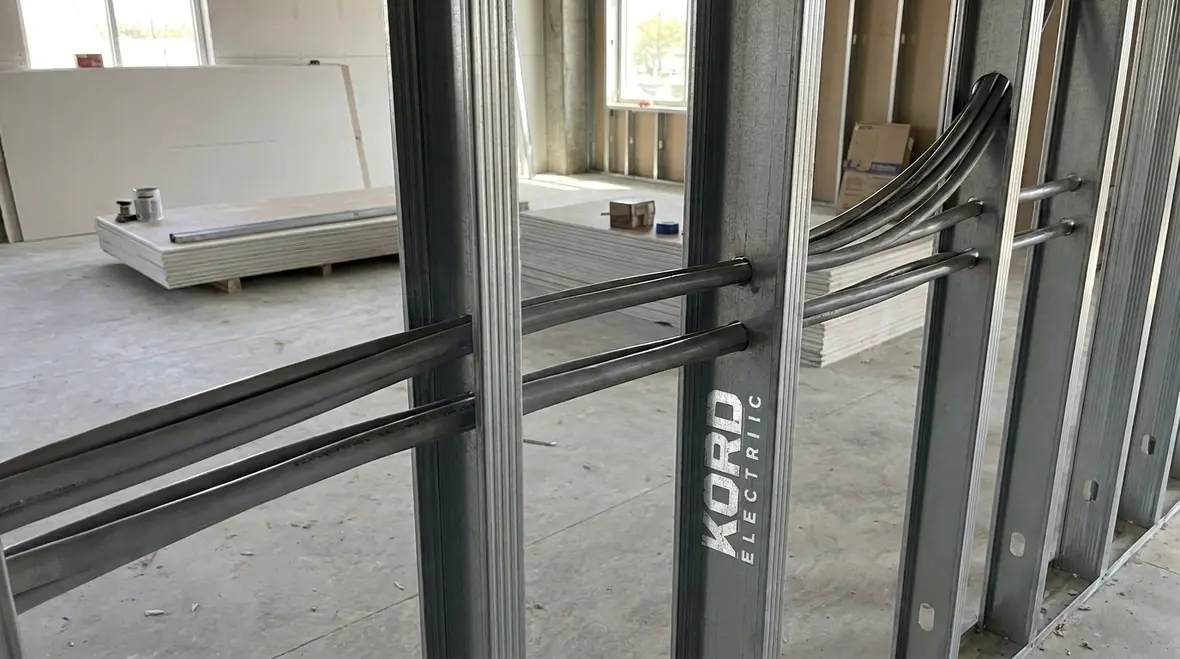
NFPA 70 Section 332.17 NEC SEC Cables Through Framing Members in Commercial Buildings
NFPA 70 Section 332.17 and SEC Cables Through Framing Members in Commercial Buildings
Kord Electric often sees facility managers who want a straight answer about how NEC SEC cables framing members must be handled. In this article, we focus on NFPA 70 Section 332.17 and how it governs the way certain cables move through building framing members. That sounds technical, and yes, it is. Yet we handle it every day with our expert service staff, and we explain it in plain language so your team can make solid decisions. After all, nobody wants electrical work that turns into a mystery novel where the twist is a code violation.
When the NEC sets rules for cable routing, it does not do it for fun. Instead, it aims to protect people, equipment, and the building itself. Additionally, it reduces the chance of damage during installation, maintenance, or future upgrades.
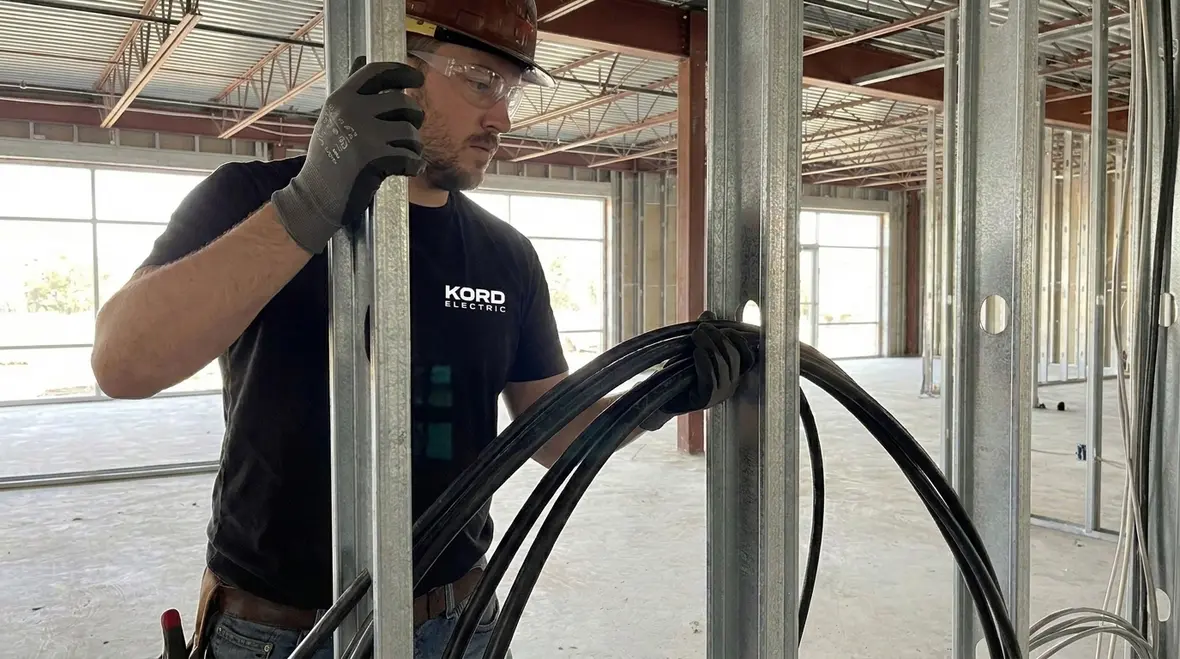
What Section 332.17 Tries to Prevent in Real Life
Section 332.17 addresses cable placement through framing members so the cable stays protected and the building stays safe. In practical terms, it reduces risks tied to:
- Damage from sharp edges when cables pass near cut metal or wood framing
- Wear and movement that can happen as structures settle or as crews install other systems
- Failing to maintain required separation or protection when routing changes during build out
- Fire spread if a cable route creates unsafe pathways or exposes vulnerable sections
Moreover, commercial and industrial facilities face frequent changes. For example, a distribution hall might add new panels, a warehouse might reconfigure racking, or a hospital wing might need temporary power during renovation. Therefore, the original routing details matter even after the first construction is done.
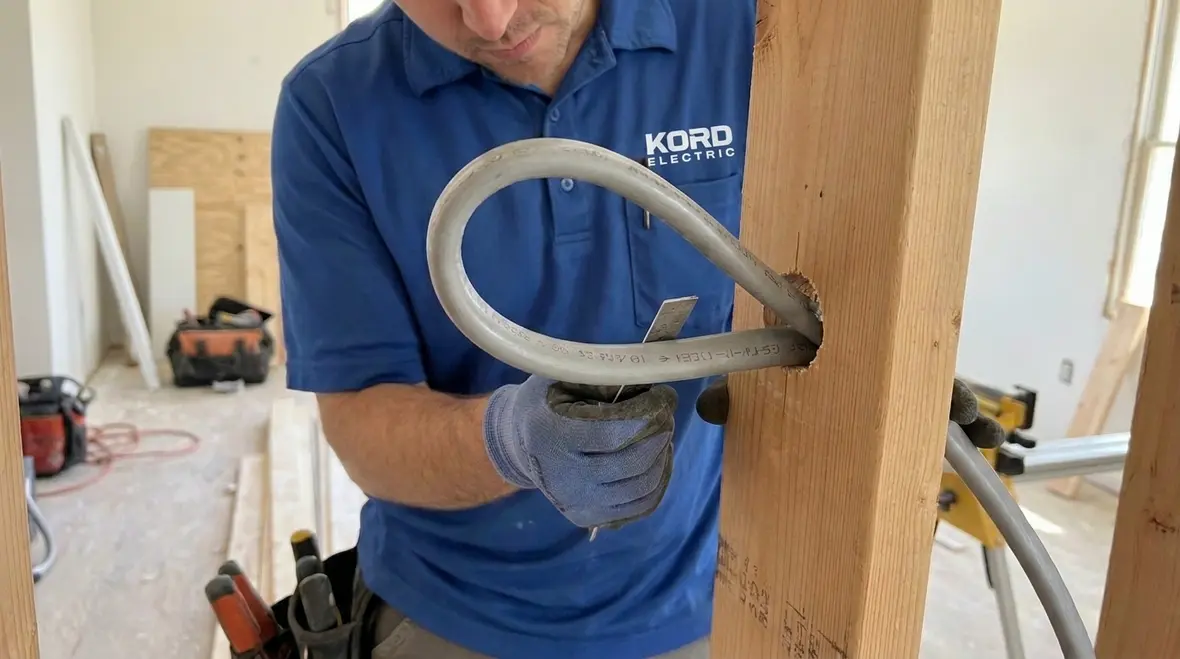
How this risk shows up during day-to-day operations
In real facilities, Section 332.17 is not just a design detail that disappears once walls close in. When equipment moves, ceilings get opened for access, or new conduits and cable trays get stacked into tight spaces, cable routes that once looked “fine” can become exposed to sharp corners, vibration, and accidental contact. That is where a good initial plan pays long term dividends.
For facility managers, that means treating cable routing through framing members as part of the building’s infrastructure strategy, not just an electrical rough-in task. When documentation clearly shows how NEC SEC cables framing members routing was protected, teams can make safer decisions during future changes instead of guessing where it is safe to cut, notch, or drill.
Where NEC SEC Cables Framing Members Rules Show Up During Installation
Our technicians explain this clearly: the code does not only care about the cable’s destination, it cares about what happens along the route. Consequently, when crews drill, notch, or route around framing, they can accidentally create conditions that the NEC tries to stop.
Typically, facilities run into Section 332.17 during tasks like these:
- Routing through studs, joists, beams, or other structural members
- Moving cables around mechanical equipment or duct banks
- Installing new feeders for lighting, HVAC, process loads, or life safety devices
- Retrofitting older buildings where framing was built before today’s best practices
Then comes the part that causes most delays: documentation and layout. Even when the work is “close enough,” inspectors may still want evidence that the install matches code intent. So we help teams plan early, mark routes, and coordinate with general contractors before holes get cut. In the end, that saves time and avoids the classic “we’ll fix it after inspection” strategy, which usually costs more than it promises.
Connecting Section 332.17 to broader NEC planning
Section 332.17 is one piece of a much larger NEC picture. When Kord Electric helps teams plan routing in commercial and industrial facilities, we tie those details back to foundation resources like Understanding NFPA 70: The National Electrical Code Explained for 2026, so decisions made at the stud or joist level align with the bigger code strategy for the site.
This is especially helpful when projects involve phased upgrades or major property campuses. Early routing choices must still make sense when added loads, new feeders, or emergency power systems come on line later. When crews treat Section 332.17 as part of that big-picture NEC plan, they avoid painting future projects into a corner with cable paths that are hard to protect or almost impossible to access.
How Protection, Bending, and Physical Access Interact
Section 332.17 does not exist alone. It works alongside other NEC expectations that deal with cable damage, installation practices, and protection. As a result, when we talk about NEC SEC cables framing members, we also look at how the cable behaves at the point of entry and exit.
Our expert service staff typically reviews these install details before we energize anything:
- Routing paths that avoid unnecessary contact with sharp framing edges
- Use of proper protection methods where the code requires it
- Maintaining safe clearances from other building systems that can create abrasion or heat issues
- Planning for future access so maintenance crews do not “work around” the installation later
Additionally, we coordinate cable routes with electrical, fire alarm, and communications planning. Even though different systems serve different functions, they all share the same building space. Therefore, the cable route you choose can make or break maintenance access, troubleshooting speed, and safety during service work.
In one facility we supported, a retrofit crew rerouted a cable around a beam without checking the installation conditions. Later, a vibration issue developed as equipment cycled. That might sound like a mechanical problem, but it started with cable exposure. So yes, cable routing choices can show up later like a pop quiz you did not study for.
Why bending radius and support matter near framing members
When cables pass through or near framing, it is easy for the bend radius to get tight in the name of “just making it fit.” Over time, that decision can contribute to insulation stress, conductor movement, or additional force against the edges of framing members. Good design treats bending radius as part of protection, not as a separate topic.
We also pay attention to how cables are supported on either side of the penetration. If a cable is allowed to hang with too much unsupported length, normal movement in the building can be transferred directly to the point where the cable contacts framing. By getting support and bending radius right, Section 332.17 compliance becomes a way to keep everyday physics on your side instead of quietly working against you.
Common Commercial and Industrial Mistakes We See
Every site has its own challenges, yet the same errors appear across warehouses, campuses, and industrial plants. We see them often enough that our technicians now use a quick checklist before the cable is closed in.
- Improper framing penetration: drilling or cutting without following the code related to how cables pass through structural members
- Skipping protection where it is needed: relying on “thicker insulation” as if insulation doubles as armor
- Ignoring future maintenance access: installing cable routes that force future crews to dismantle half the wall
- Changing routes mid build: field adjustments that do not get reviewed, documented, or rechecked
To be clear, these mistakes usually come from schedule pressure and miscommunication, not from bad intentions. Still, commercial buildings run on reliability. In major facilities, reliability means the electrical system must perform every day, not just at startup. Therefore, we encourage teams to slow down at the routing stage and speed up later by doing it right once.
How better planning prevents repeat issues
Many of the recurring problems we see with NEC SEC cables framing members do not show up because people ignored the code on purpose. They appear because nobody slowed down to map routes, confirm framing details, or coordinate with other trades. By building in quick checks before walls close, facilities stop paying for the same mistakes on project after project.
Our teams often reference broader planning resources from the Kord Electric blog when they help clients reset their approach. Whether it is a guide on how to read NFPA 70 or articles on data-driven design and emergency power, the message stays consistent: code compliance and reliability start with deliberate planning, not last-minute patching.
Planning and Compliance Workflow With Kord Electric
Our approach fits large propertie buildings and industrial facilities where multiple trades work at the same time. So we build compliance into the process, not into the last minute scramble.
Here is how we help teams manage Section 332.17 and related installation needs:
- Pre installation review: we review drawings, site constraints, and cable pathways
- Field verification: our technicians confirm framing conditions so routing matches real conditions, not just paper plans
- Coordination with trades: we align with mechanical and structural timelines so crews do not create conflicts
- Documentation support: we help capture details inspectors expect, so compliance looks clear and organized
- Commissioning checks: we verify safe install practices before energizing
Additionally, because code updates and local adoption can shift interpretations, we keep training and knowledge current. In North America we reference NFPA 70 expectations, and for fire and life safety coordination we also align with broader fire protection thinking. That is how Kord Electric supports safe systems across complex sites.
And look, we get it. People do not wake up excited to read code sections. Yet when you build for safety and uptime, the calm, deliberate work wins. Think of it like plumbing for electrons. You do not notice it until it fails, and when it does fail, you wish you had paid attention earlier.
For facility teams in Los Angeles County and across Southern California, this workflow connects directly to on-the-ground services. If you want help turning Section 332.17 requirements into real-world installations, you can see how our field and project support comes together in our Los Angeles County electrical services overview.
FAQ for Facility Teams
Final Word From Kord Electric
When your facility plans cable routes through framing members, we make compliance feel manageable. Kord Electric brings expert technicians, clear explanations, and careful field verification to commercial and industrial projects where safety and uptime matter. If you are building, renovating, or expanding a major propertie building, we can help you review layouts, confirm installation conditions, and reduce the risk of costly rework. Reach out to us today, and let us get your electrical system ready for the real world, not just the inspection report.
Related resources: You can also explore Kord Electric’s NEC overview and guidance at kordelectric.com, including articles such as What Is NFPA 70? Understanding the National Electrical Code, plus NFPA 70 related fire and code content at kordfire.com and kordfire.com.au. For additional fire and code context, some teams also reference materials from firepumps.org.


