
NEC Section 240.60 Standard Ampere Ratings for 2026
NEC Section 240.60: NEC standard ampere ratings for 2026 and beyond
In our work at Kord Electric, we often see confusion around NFPA 70 Section 240.60 and how it ties to the NEC standard ampere ratings explained for conductors and equipment. Within the first few pages of the National Electrical Code, we help others understand that these ratings are not random numbers. They set the baseline for what an electrical system can safely carry. Then, the real question becomes how installers, designers, and facility teams apply those ampere ratings to the exact circuits they are building or upgrading. Luckily, our technicians and expert service staff walk clients through the “why” as calmly as possible, even when someone says, “I just need it to work.” Yes, that is the goal, but code requires the method.
Why Section 240.60 controls safe conductor capacity

Third parties may treat ampere ratings like a label on a box, but we treat them like a safety rule written in plain numbers. Section 240.60 shapes the way the NEC frames conductor overcurrent protection and application, so the full system stays within the allowable limits. As a result, the ratings influence what size conductors you can use, and how that wiring pairs with breakers and disconnects.
When a conductor sits in an enclosure, behind insulation, or inside a crowded conduit run, heat builds up. Therefore, the code requires that the design and installation match the conditions. If anyone overshoots the expected load, the conductors do not “just handle it.” Instead, they heat beyond safe limits, and the system’s failure modes arrive early. Our expert service staff often says, with a light grin, that electricity does not care about your schedule, only your design.
How NEC standard ampere ratings explained show up in design
Design teams typically build from a structure: load calculation, equipment selection, conductor sizing, then device coordination. However, NEC standard ampere ratings explained means you do not jump straight to “the biggest breaker wins.” The code directs you to standard rating steps, which helps keep equipment matching consistent across projects and facilities.
As the system designer moves from loads to wiring, the ampere rating determines the “capacity lane” for conductors and protection. In practice, this impacts how you choose wire sizes for commercial and industrial facilities, such as data centers, warehouses, manufacturing sites, and large mixed use buildings. Also, it affects how main feeders and branch circuits get arranged so they stay properly protected throughout the distribution path.
Furthermore, we see how this matters during renovations. When a facility adds production lines, new HVAC units, or upgraded loading docks, the wiring story changes. Our team helps property managers avoid the trap of mixing new equipment into old distribution without verifying rating assumptions. That is how people end up with expensive surprises, and sometimes the kind of surprises that trip alarms at 2 a.m. Like clockwork, right?

If you want a deeper primer before diving into Section 240.60, you can pair this discussion with our broader National Electrical Code overview in Understanding NFPA 70: The National Electrical Code Explained for 2026, which walks through how code cycles shape real-world design decisions in commercial and industrial facilities.
What technicians verify during inspections and service work
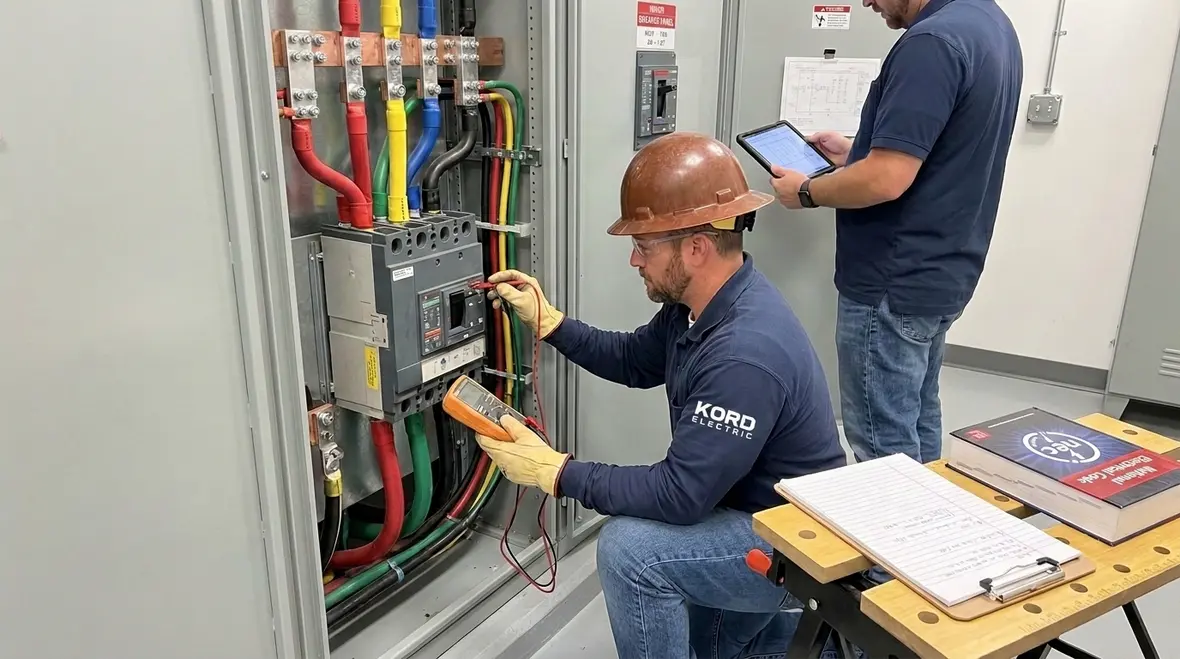
Our technicians do not stop at the drawing. They verify field conditions that affect ampacity and protection performance. For example, they check conductor routing, termination quality, enclosure fill, and the match between breaker ratings and conductor capability. In many cases, they also verify that installation practices follow the NEC intent, not just the literal parts list.
Meanwhile, facilities teams may focus on uptime. We get it. Yet the code exists so uptime does not become a gamble. Therefore, during service calls, our expert service staff often reviews the complete chain: upstream protection settings, downstream device selection, and conductor sizing. When one part of the chain does not align with the expected rating steps, the risk grows quietly.
Additionally, we help clients document the rationale for the design choices. That way, if another contractor touches the system later, the project history remains clear. A calm facility is a safe facility, and good documentation keeps everyone from repeating the same confusion.
Common mistakes in commercial and industrial applications
In major propertie buildings, mistakes tend to repeat because projects move fast and change often. One frequent issue involves assuming that a conductor can handle the “real load” even when the code application does not match. Another common problem involves protection mismatches, where the breaker or disconnect rating does not follow the conductor and termination constraints.
Also, some people oversimplify by treating ampere ratings as only a breaker size question. However, the conductor, insulation rating, temperature environment, and installation method all influence performance. When those details get ignored, the system can still “work” for a while. Then it fails in a way that engineers call predictable and facility managers call deeply annoying. We tend to prefer fewer of those moments.
Then there is the renovation trap. Existing circuits may have been installed to older practices or to an earlier design plan. When the building adds new loads, the original rating assumptions no longer fit. Therefore, we help clients re-check the distribution design so the NEC standard ampere ratings stay correctly applied to current equipment.
Staying current: NEC updates and NFPA 70 context
NFPA 70 and the NEC continue to evolve, especially for how modern systems operate in real buildings. Kord Electric follows guidance and educational resources that explain how these updates affect planning. For example, we point teams to our reference materials that cover the National Electrical Code for the current cycle and help connect the “rules on paper” to facility decisions. We also coordinate with service practices aligned with the broader guidance found through trade focused resources.
When a new edition or update arrives, facility teams often ask one simple thing: “Do we need to rip everything out?” Usually, the answer requires evaluation, not panic. Our approach is deliberate. We review the circuits in scope, identify where the application might shift, and then recommend changes only where they actually improve safety and compliance. That keeps budget and downtime under control.
And yes, our technicians occasionally have to explain the same concept twice to the same team. But it is better than an expensive “oops” in the field. Code education pays off.
For facilities planning broader upgrades tied to NEC changes, many of our commercial and industrial clients also review our practical guide on how to navigate the code book in How to Read NFPA 70: A Practical Guide to the National Electrical Code, then pair that with project-specific planning support.
Dual column checklist for planning next steps
| Planning step | What Kord Electric does for commercial and industrial facilities |
| Verify design basis | We review load calculations, distribution topology, and the required standard ampere rating steps for the circuits in scope. |
| Confirm conductor and protection match | Our technicians check conductor sizing, termination details, and breaker or disconnect pairing so the system stays aligned. |
| Account for installation conditions | We evaluate routing, conduit fill, enclosure conditions, and thermal environment so the ampacity assumptions remain valid. |
| Document and communicate | Our expert service staff provides clear notes for facility teams and future maintenance work. |
For facility leaders who want structured help turning this checklist into a full project plan, our team regularly supports assessments and upgrades through regional offerings like our Los Angeles County electrical services, where we align code interpretation, design, and field work under one coordinated approach.
FAQ: NFPA 70 Section 240.60 and ampere ratings
Conclusion: Get the code right before the system reminds you
When a commercial or industrial facility plans new electrical work, it deserves clear guidance, not guesswork. Kord Electric works with your team to connect NFPA 70 Section 240.60 requirements to real design choices, then we verify details in the field. That means safer systems, fewer surprises, and a smoother path to compliance. If you want help evaluating feeders, branch circuits, or upgrade impacts, contact us. We will review the scope, explain what we find, and move your project forward with confidence.


