
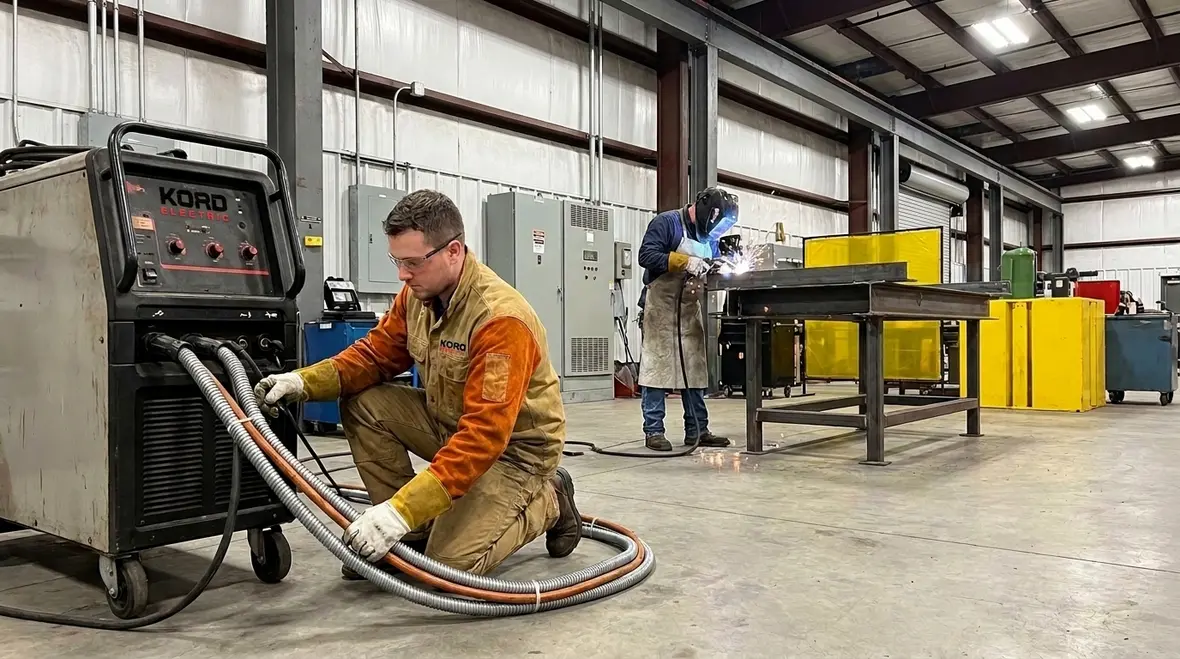
NEC Section 630.41 Welding Secondary Circuit Conductors
NEC Section 630.41 welding secondary circuit conductors: how commercial facilities handle them safely
In our work at Kord Electric, we treat NEC Section 630.41 welding secondary circuit conductors as more than code text. We see it as a clear path for safer connections around welding systems, especially where downtime costs real money and mistakes travel fast through busy buildings. Early on, we remind building teams that the welding secondary side carries specific risks, and the conductors must meet the rules that the NEC sets for their installation, protection, and routing. Then, as the job moves forward, our technicians explain each step in plain terms, because nobody should have to “guess” when electricity is involved.
And yes, we have heard the joke that electrical code is written in “future time.” Still, we help others catch up quickly, and we make sure the welding circuits you install today do not turn into tomorrow’s surprise.
NEC and the 2026 update: why the code matters on real projects
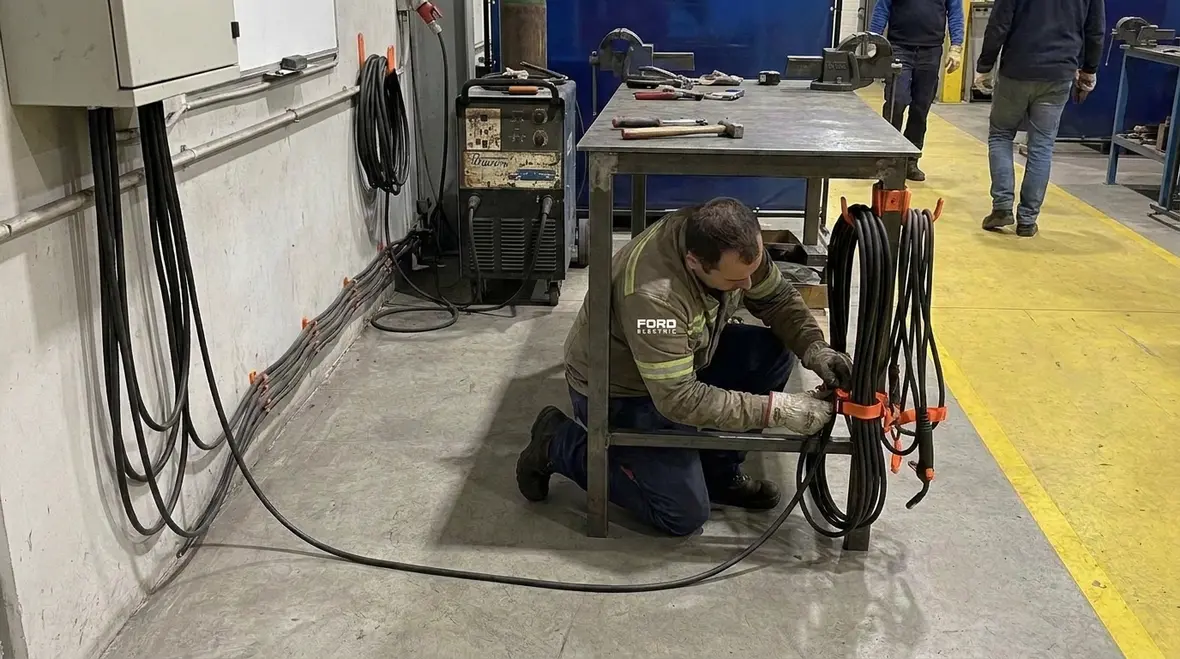
When our expert service staff talk about the NEC, they do not speak in buzzwords. They focus on outcomes. First, the NEC aims to reduce fire risk, shock risk, and equipment damage. Next, it gives designers, installers, and inspectors a shared set of expectations, so commercial and industrial facilities do not rely on memory or vendor promises. Finally, it supports consistent enforcement across jurisdictions.
That matters in a major property building where systems overlap. For example, welding equipment often sits near metal frameworks, other power distribution, and routine maintenance areas. As a result, small installation errors can create hot spots, nuisance faults, or conductor stress. So, we help teams align welding circuit practices with the National Electrical Code requirements that apply, including the NEC’s structured approach to conductor types, protection, and acceptable installation methods. For facilities that want a broader code backdrop, we often connect welding circuit decisions to resources like Understanding NFPA 70: The National Electrical Code Explained for 2026, so everyone shares the same rulebook when they plan changes.
In other words, the code does not “slow” you down. It protects your schedule by preventing rework after inspection.
What welding secondary circuits need: routing, protection, and setup
After we review project details, we focus on how welding secondary circuits get built on site. Then we map where the conductor goes, what it touches, and how it stays protected through normal work. Our technicians explain that welding setups can involve motion, heat exposure, and frequent handling of the equipment leads. Because of that, routing and protection matter as much as the conductor itself.
In practical terms, we verify that the welding secondary circuit conductors connect as the system expects, and we ensure they stay in locations that reduce physical damage. We also confirm that installation methods support safe operation, including the way the conductors are secured and kept away from sharp edges, pinch points, and areas where tools or debris can wear insulation over time.
Then comes the protection side. We do not treat conductor protection as a checkbox. We ask whether the setup can handle the expected conditions without overheating or degrading. If the welding circuit is part of a production workflow, we also consider how shift work affects cable strain and bend radius. In many facilities, “it looked fine yesterday” becomes “it failed during the morning rush” if routing ignores real daily movement.
Common installation mistakes we see at commercial sites
Even with good intentions, teams sometimes miss details on welding circuits. And when they do, the consequences show up in inspection comments, recurring faults, or expensive parts replacement. Our expert service staff often see patterns, so we warn clients early and we plan corrective steps before they become emergencies.
Some of the frequent issues include incorrect conductor routing around traffic areas, improper physical protection where equipment gets bumped, and cable strain that builds up slowly as welders move the leads during use. In addition, crews sometimes fail to secure conductors in a way that limits abrasion. As time passes, insulation damage can create leakage currents, faults, or higher resistance, which then leads to heat at connection points.
We also see mismatched expectations between electrical installation and equipment requirements. For example, others may install the electrical side with general rules, but welding gear expects specific conductor behavior on the secondary side. That mismatch can cause nuisance trips or unreliable output. So, we coordinate with project teams and equipment leads, and we document what we install so it lines up with both the NEC approach and the equipment design.
If you want a pop culture analogy, this is the difference between assembling a machine with the wrong manual and trying to “wing it” like a superhero. It might feel brave, but it does not end well when the cape catches on the cable tray.
Inspection readiness: documentation, testing, and clear handoff
Commercial and industrial facilities need more than “it works.” They need traceable proof. At Kord Electric, we build inspection readiness into our process from day one. Therefore, we keep clear notes, we label and document where needed, and we align installed wiring practices with the applicable NEC requirements, including those tied to welding secondary circuit conductors.
Our technicians also think ahead about what inspectors typically look for: safe routing, proper conductor installation, correct protection approaches, and alignment with the overall system design. Then, we confirm that the wiring matches the plan set and equipment expectations. After that, we help teams prepare for closeout by delivering clean handoff materials that other parties can review without reinterpreting our work.
When we test and verify, we do it in a way that supports both safety and operational stability. In practice, that means we check for the conditions that could lead to overheating, stress, or fault points. And we explain results in plain language so facility managers understand what was verified, what it means, and what ongoing checks should focus on.
Coordination with fire protection and industrial systems
Electrical work never exists alone in a major property building. There are fire alarms, suppression systems, emergency power, ventilation, and life safety controls. So we coordinate with the larger safety picture. Our approach stays practical: we look at how welding activity interacts with fire risk, how heat and sparks behave in the environment, and whether nearby systems need extra attention.
Where appropriate, we work alongside partners who understand fire protection planning and system design, including teams connected to kordfire.com.au and the broader Kord Fire effort. We also stay aware of fire safety guidance and related resources, including the kind of national safety context referenced by fire pump organizations such as firepumps.org. When electrical circuits involve welding, that coordination matters because welding can create ignition sources, and conductor conditions can influence heat generation inside enclosures.
As a result, we help facility owners and industrial operators reduce risk in a layered way. Electrical safety supports fire safety. That is the calm, authoritative truth: fewer fault points and better installation quality make the whole building behave more predictably when it matters.
How we train teams to maintain weld circuit safety over time
Installation sets the foundation, but maintenance keeps the foundation standing. Our technicians explain that welding circuits face wear from use. Therefore, we train facility teams on what to watch and how to respond early. We help others build a routine that supports safe operation without disrupting production schedules.
Maintenance focuses on conductor condition, physical protection integrity, connection quality, and routing that still protects the cable after months of movement and housekeeping activity. If a cable jacket shows wear, if a conductor gets pulled tight, or if securing points loosen, we recommend action before the problem spreads. We also encourage teams to keep clear records so future work does not guess what was changed last year.
And yes, we keep it simple. We do not ask operators to become electricians. We teach them enough to spot risk signs and to report them fast. That way, our team can handle corrections professionally, and the facility avoids “delay maintenance until inspection day,” which is a strategy that sounds tough but usually ends up expensive.
FAQ about NEC requirements for welding secondary circuits
Ready for welding circuit installs that pass scrutiny?
If you manage a commercial or industrial facility and you want welding electrical work done with confidence, Kord Electric is ready to help. Our technicians bring clear explanations, careful installation practices, and inspection focused documentation, so teams can move forward without last minute surprises. We coordinate with the broader building safety needs and support maintenance habits that keep circuits healthy over time.
For facilities planning broader upgrades or new construction, welding secondary circuits also tie into the larger electrical picture: panels, feeders, grounding, bonding, and overcurrent protection. Our team regularly helps clients connect these pieces using guides like NFPA 70: All About The National Electrical Code (NEC) from Kord Fire as well as our own NEC-focused resources. When the same team that understands your welding conductors also understands how AHJs interpret NFPA 70 across the rest of your system, inspections feel less like a cliffhanger and more like a planned milestone.
If your facility is in Southern California and you are looking for a partner who can integrate welding work with broader infrastructure needs, Kord Electric’s Los Angeles County electrical services support commercial properties that want welding circuits, distribution equipment, and life safety systems to move in the same safe direction. From code-driven design reviews to field-ready installation support, we help you line up NEC Section 630.41 welding secondary circuit conductors with the rest of your project so you do not have to choose between uptime and safety.
Contact us today to review your project and build a safer welding setup that runs the way it should, backed by NEC-aware planning, industrial-grade workmanship, and a service team that treats clear communication like another piece of safety gear.


