
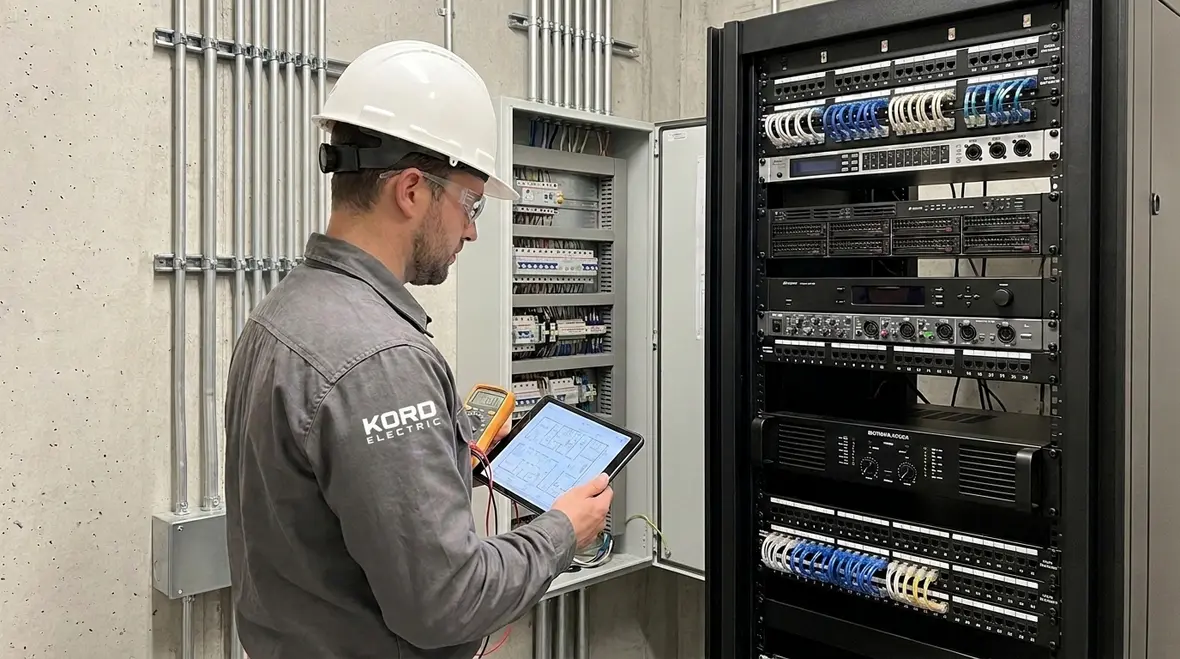
NEC Section 640.1 Audio Equipment Scope Guide
NEC Section 640.1 audio equipment scope sets the rules for certain audio systems, including how they connect, how they are installed, and how we verify the work meets code. At Kord Electric, we focus on commercial and industrial facilities and major property buildings, so we care about the parts of the NEC that affect real operations, real equipment, and real safety. And yes, we also care about keeping teams from playing “electrical telephone” with misinformation, because that game ends with a burned component and a very unhappy maintenance manager.
In this guide, we explain the NEC for 2026 and related updates in plain language. We also show how our technicians and expert service staff handle the details on site, from planning through inspection readiness, so your audio, signaling, and related systems stay dependable when people actually need them.
Why the National Electrical Code matters to commercial buildings
Commercial and industrial properties run on schedules, safety plans, and uptime targets. When electrical work follows the National Electrical Code, the risk drops, the documentation gets clearer, and the building operates the way it should. In addition, inspections become less of a surprise party and more like a checkmark on a plan you already approved.
We often hear the same concern from owners and facility leaders: “Do we really need to care about every code section?” Our expert service staff typically answers like this: you do not need to memorize the whole NEC, but you do need to understand the sections that touch your systems. For many buildings, that includes installation practices, conductor protection, proper use of devices, and how wiring methods support reliability.
Also, modern buildings do not just have power. They have communications, alarms, access control, and audio systems that spread guidance across spaces. Therefore, when the code references audio equipment and related wiring rules, we treat it as part of a broader life safety and building operations strategy, not as a small technical footnote.
How NEC updates for 2026 impact installation decisions
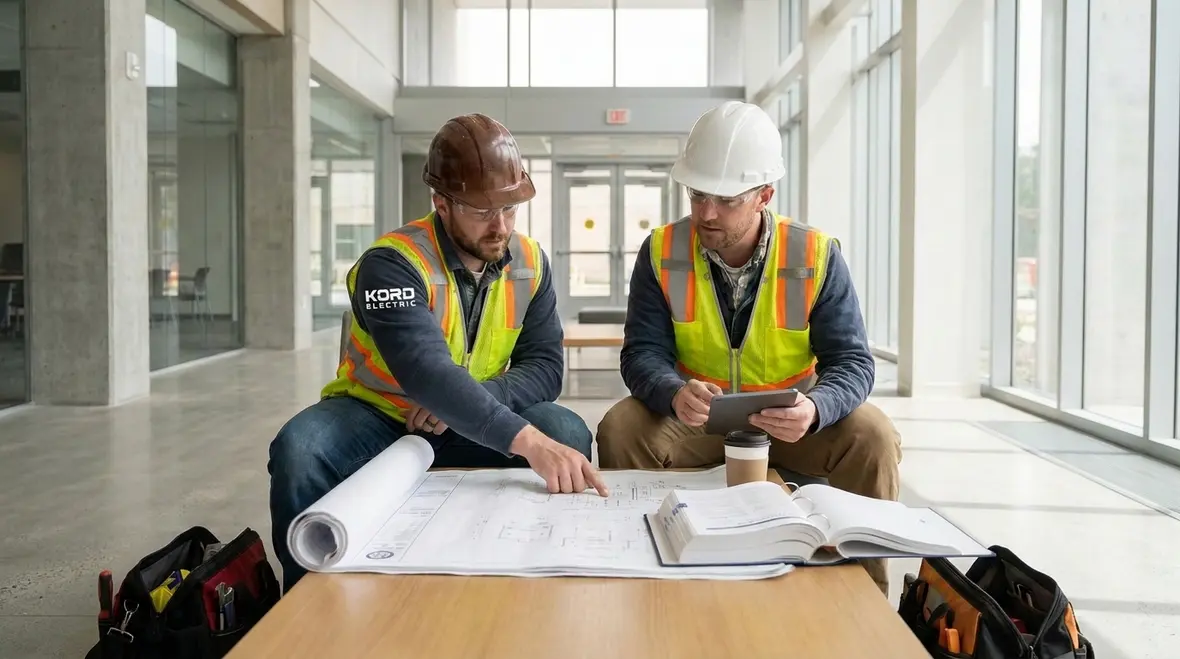
NEC updates usually do not rewrite the basics, but they do sharpen what inspectors look for and what engineers document. So, when Kord Electric plans work for commercial and industrial facilities, we treat each update as a change in how the work gets verified.
In practice, this means our technicians review job specifics early, then we align the design and installation steps with current code language. For example, changes can affect labeling needs, wiring method expectations, system integration details, and the way field teams confirm equipment compatibility.
When teams skip this review, the result is predictable. A contractor installs first, then someone realizes later that the system setup does not match the code intent. Next comes redesign, rework, and extra downtime. And nobody wants to explain to a tenant that the building’s announcements are delayed because a wire type or connection detail did not match requirements. Even Batman would hate that meeting.
As we work, we also coordinate with relevant specialists so electrical installs support the building’s fire and life safety approach. If your site also ties into fire alarm or emergency communications, our team helps keep the electrical side aligned with that wider system goal.
If your facility team wants more background on how the broader NEC structure influences these decisions, Kord Electric also shares code focused guidance in resources like Understanding NFPA 70: The National Electrical Code Explained for 2026, which gives owners and managers a plain language map of how the rulebook fits together for modern projects.
NEC Section 640.1 audio equipment scope: what it covers in plain terms
NEC Section 640.1 audio equipment scope addresses audio equipment installations and how those systems get integrated into the electrical framework of a building. In other words, it guides the electrical side of how audio devices operate safely and consistently. However, the “scope” does not mean we treat audio like a separate universe. We still connect the work to the overall electrical system design, grounding practices, wiring methods, and the documentation needed for inspection.
Our approach is practical. First, we verify the system’s purpose and the types of audio devices involved. Then we confirm the wiring, connection method, and installation layout match code intent. After that, our technicians label and document components in a way that helps future troubleshooting.
When people hear “audio equipment,” they may think it is only for background music. In real buildings, though, audio systems often handle paging, announcements, and emergency messaging. Therefore, code compliance helps protect both occupants and the building’s operations team.
At Kord Electric, we also apply the guidance from related NEC sections and how they intersect with wiring methods and device behavior. We look at the whole system chain: source equipment, power feed, device placement, and how the circuit design supports stable operation.
Wiring methods, labeling, and verification that inspectors expect
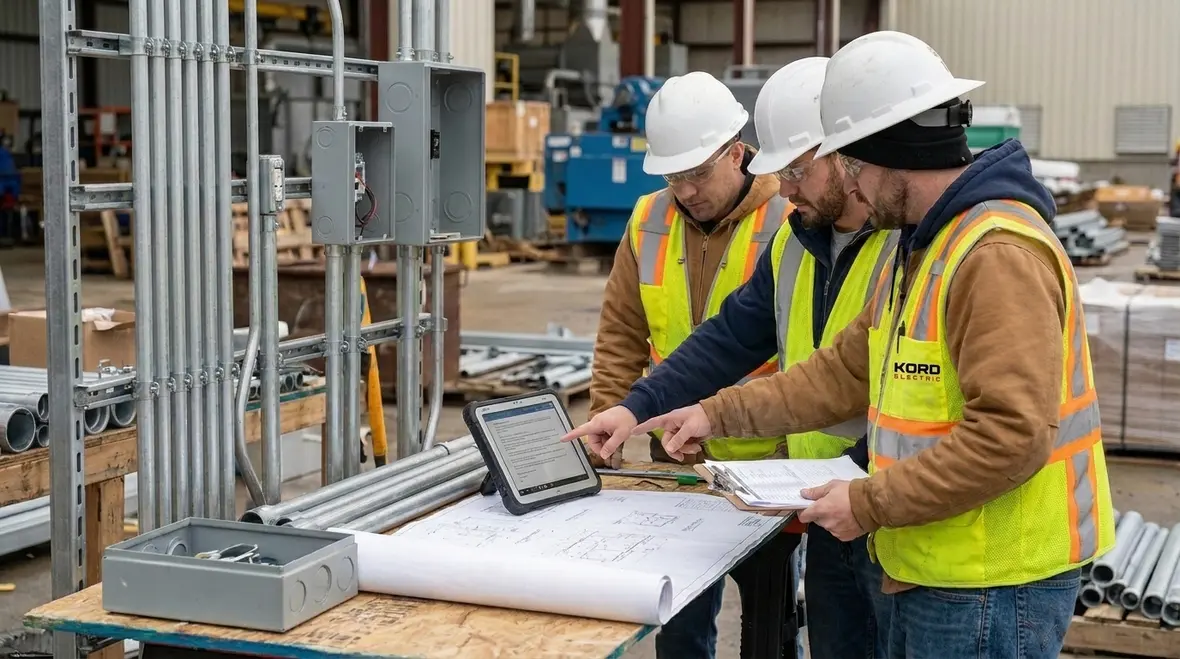
Even when the design looks correct on paper, inspectors focus on what gets installed. That is where our technicians earn their pay. They do not just “run wire.” They verify routing, support, protection, and termination quality. Moreover, they confirm that the installed system matches the plans used for approvals.
Here are the core steps we emphasize for commercial and industrial installations:
Wiring method fit: We align the wiring method with the environment and device needs, so the cable stays protected and the system stays reliable.
Proper termination: We ensure connections follow code expectations and manufacturer guidance, because a loose termination can turn into a nuisance fault later.
Grounding and bonding awareness: We confirm grounding and bonding details so audio and control equipment do not suffer from noise or unsafe conditions.
Labeling and identification: We label circuits and key components so facility teams can troubleshoot fast without guesswork.
Testing readiness: We plan for verification steps that support system commissioning and inspection sign off.
To keep it calm on site, we also walk facility staff through what we installed and what it means for operations. Then, if something changes later, the team has a reference point instead of a mystery box. In the field, that saves time, money, and a lot of “who did this last time” conversations.
How Kord Electric coordinates electrical work with fire and life safety systems
In many major property buildings, audio systems connect to a broader life safety plan. That means electrical installation quality influences the fire and emergency communication experience. We make this coordination a normal part of the work, not an optional add on.
We often collaborate across disciplines and refer to established industry guidance, including resources that explain the NEC and related life safety requirements. For example, teams may also review NFPA and fire protection system expectations through trusted organizations such as Fire Pumps or local fire education platforms like Kord Fire and Kord Fire Australia. Those resources help teams align electrical decisions with life safety goals and site realities.
When we install, we follow a sequence that reduces delays. First, we confirm electrical routing and power needs for equipment. Next, we coordinate with the rest of the system design so audio and signaling work together as intended. Finally, we document the electrical side clearly so commissioning teams can complete testing without confusion.
We also keep communication simple. If the facility team needs a quick explanation during the job, our expert service staff will provide it in plain language. That approach prevents small misunderstandings from growing into bigger schedule impacts. And yes, we still respect that everyone is busy. We just try to make sure “busy” does not mean “unprepared.”
Dual perspective: code, safety, and practical outcomes
To help you see the connection between code intent and on site results, we sometimes describe the work in two columns during planning meetings. Since you asked for a clear view, here is that same idea.
Code driven goals
Supports safe installation practices and inspection readiness
Improves reliability of audio and related electrical systems
Reduces rework by aligning field work with current NEC expectations
What our team does on site
Our technicians follow the design details, verify wiring methods, and document circuits for future checks.
We confirm terminations, grounding, and equipment compatibility so performance stays stable.
We plan early, coordinate trades, and perform verification steps before sign off.
We keep the tone business casual, but the workmanship stays strict. You cannot build calm, safe electrical systems with “close enough” connections. The building deserves better than that. Your facility team does too.
FAQ about NEC compliance for audio and electrical systems
Final steps for your next electrical plan
If you operate a commercial or industrial facility or manage a major property building, you cannot treat NEC compliance like a last minute task. Kord Electric helps you plan the electrical details, install with code intent in mind, and document the work so inspections go smoother. Our technicians and expert service staff explain the “why” behind the requirements, not just the steps. Contact us to review your audio equipment electrical scope and wiring plan, and we will help you move forward with clarity and confidence.
As you plan your next upgrade or renovation, consider how NEC Section 640.1 audio equipment scope fits with the rest of your distribution, life safety, and control systems. Our teams regularly support broader projects that include working space clearances, connection quality, and grounding enhancements, and we can align your audio work with those same standards. For facilities across Southern California, our Los Angeles County electrical services team can bundle audio system planning with wider commercial electrical support so your project stays consistent from end to end.
If your team wants to keep exploring how NEC rules connect across the building, feel free to pair this guide with other code focused resources from Kord Electric and Kord Fire. Together, they help transform the NEC from a dense book on the shelf into an everyday tool for safer, more reliable building operations.


