
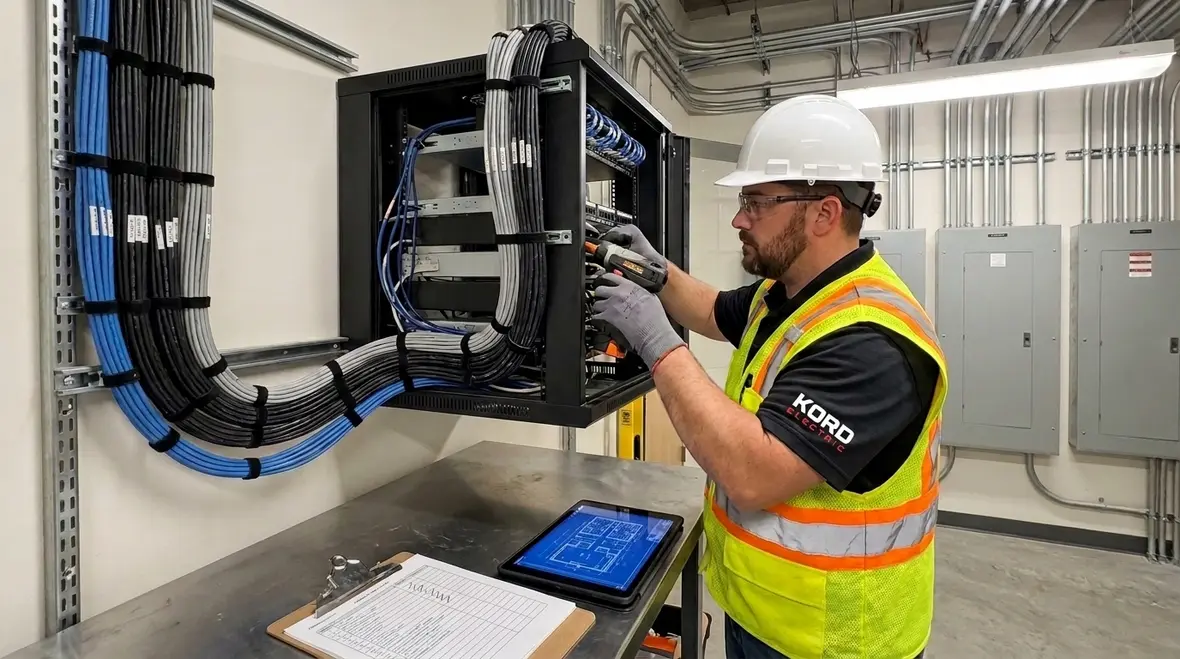
NEC Section 640.6 Audio Wiring Mechanical Workmanship by Kord Electric
In commercial and industrial buildings, audio and communications wiring work is not “just another cable job.” We build our approach around NEC Section 640.6 audio wiring mechanical workmanship during planning and installation, because details matter when people need clear, reliable announcements and signals. At Kord Electric, we do not treat this standard like fine print. Instead, we guide the job from design through closeout so the work stays solid, neat, and safe. Then, when our technicians explain what they are doing and why it matters, you feel the difference immediately. Think of it like this: the code does the heavy lifting, and we make sure your site delivers results without surprises later, even if inspections feel like a pop quiz you did not study for.
Because our focus stays on commercial and industrial facilities and major property buildings, we set clear expectations for how equipment gets mounted, routed, protected, and tested. And yes, we still laugh at a few workplace jokes, but our wiring never jokes back.
What NEC Section 640.6 requires for audio wiring
When teams install audio and related systems in the field, NEC Section 640.6 audio wiring mechanical workmanship pushes us toward better outcomes. The code language centers on the idea that installation must be done in a durable, workmanlike way that supports long term performance. To put it plainly, we cannot treat audio wiring like temporary scaffolding. We route it, secure it, and protect it so it stays reliable across building traffic, vibration, thermal shifts, and maintenance access.
Our expert service staff typically breaks the requirements into practical steps during planning meetings. First, we review where the wire will travel. Then, we confirm how it will be supported and how it will pass through building spaces. After that, we verify that the installation methods match the system design. Finally, we document the result so the work holds up under inspection and future troubleshooting.
Also, because sites often include long cable runs and multiple floors, we pay attention to how installers handle bend radius, strain relief, and secure terminations. If the cable looks tidy but the support is weak, the performance will not last. So, we install with care, and we check our own work like someone is going to blame us later. They usually do. We prefer to prevent that conversation before it starts.
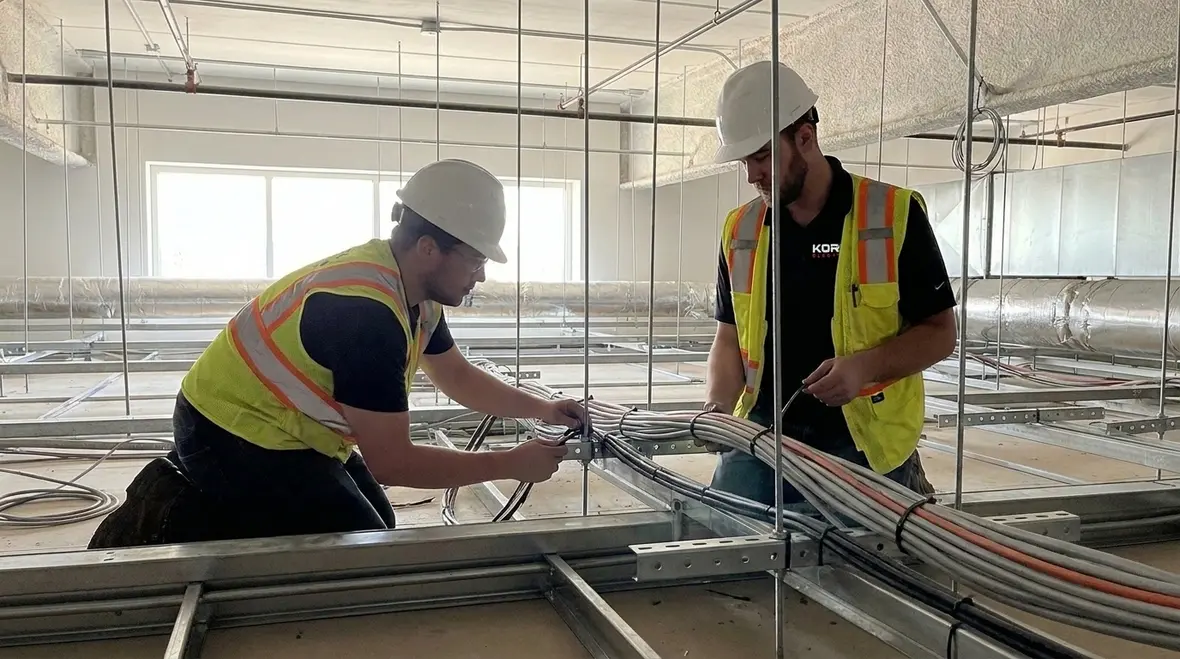
How we plan cable routes to support safe, lasting installations
Before a single cable gets pulled, we map the path and coordinate the route with the rest of the building systems. That includes power, fire life safety devices, HVAC pathways, and access requirements. When you manage commercial and industrial facilities, you cannot “just route it somewhere.” You must route it where it will stay safe and remain serviceable.
Our technicians work through route decisions in a logical sequence. We identify obstacles, we confirm available support points, and we plan transitions between spaces. Then, we choose mounting methods that reduce strain and keep the wiring from drifting. From there, we ensure protection where the environment gets rough. For example, areas that see physical contact, vibration, or frequent maintenance need more careful protection than quiet ceiling cavities.
In addition, we plan for how crews will test and identify the system later. That means labeling, documenting, and keeping separation where it belongs. As a result, when facilities teams need to trace a fault, they can do it quickly, instead of turning the building into an escape room.
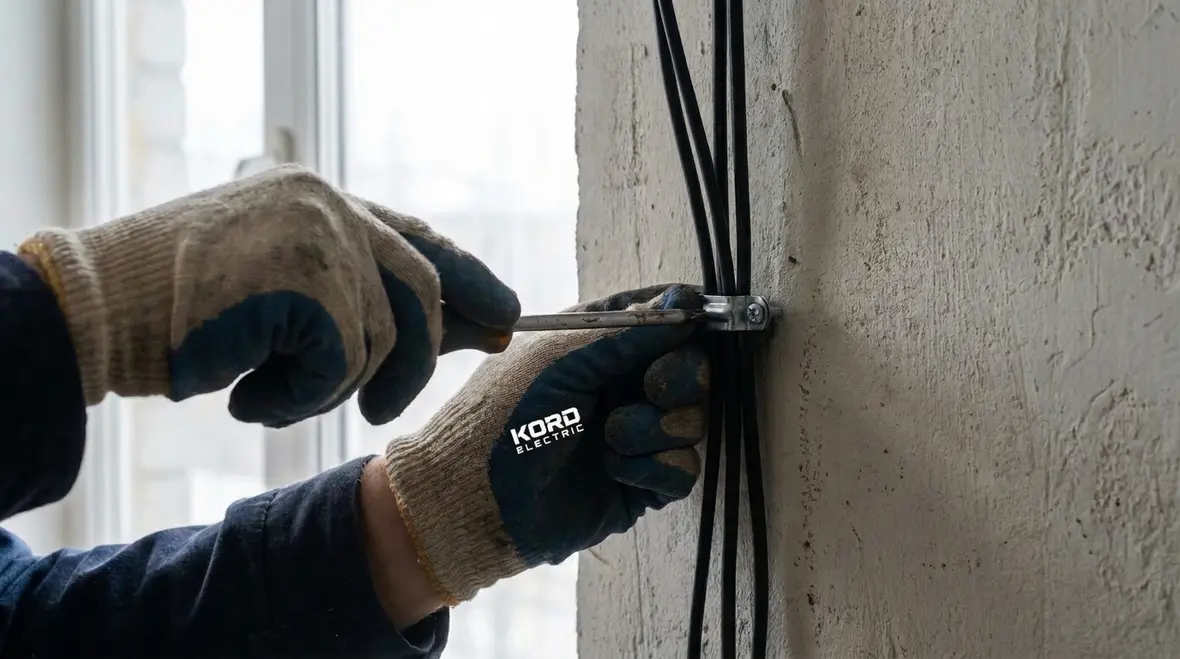
Supporting, securing, and protecting audio wiring in real job conditions
Field conditions rarely match the neat lines on a blueprint. Because of that, we focus on mechanical workmanship through the entire installation process. Our goal is to keep audio wiring properly supported and secured so it does not sag, chafe, or loosen over time.
Our expert team evaluates support spacing and fastening methods based on the cable type and environment. Then, we ensure the wiring stays aligned with the approved route. Where the cable may be exposed, we use methods that add protection without creating new hazards. This is also where we pay attention to strain relief at equipment terminations, because a connector that gets pulled even slightly can create intermittent failures that drive everyone crazy.
When people hear “audio wiring,” they sometimes assume the system is forgiving. It is not. Interference, poor grounding practices, damaged insulation, and loose terminations can produce noise, dropouts, or degraded intelligibility. Therefore, our technicians treat every connection as part of the end user experience. In a commercial setting, clear announcements are not entertainment. They are safety and operations.
For additional context on code intent and broader installation principles, we align with the guidance shared in our content ecosystem, including related NEC coverage from our partners at Kord Fire in resources like NFPA 70: All About The National Electrical Code (NEC) 2026, as well as the Kord Electric blog article Understanding NFPA 70: The National Electrical Code Explained for 2026. Together, these resources help connect day-to-day workmanship decisions to the bigger picture of code intent across major property buildings.
Inspection and documentation: how we prove workmanship
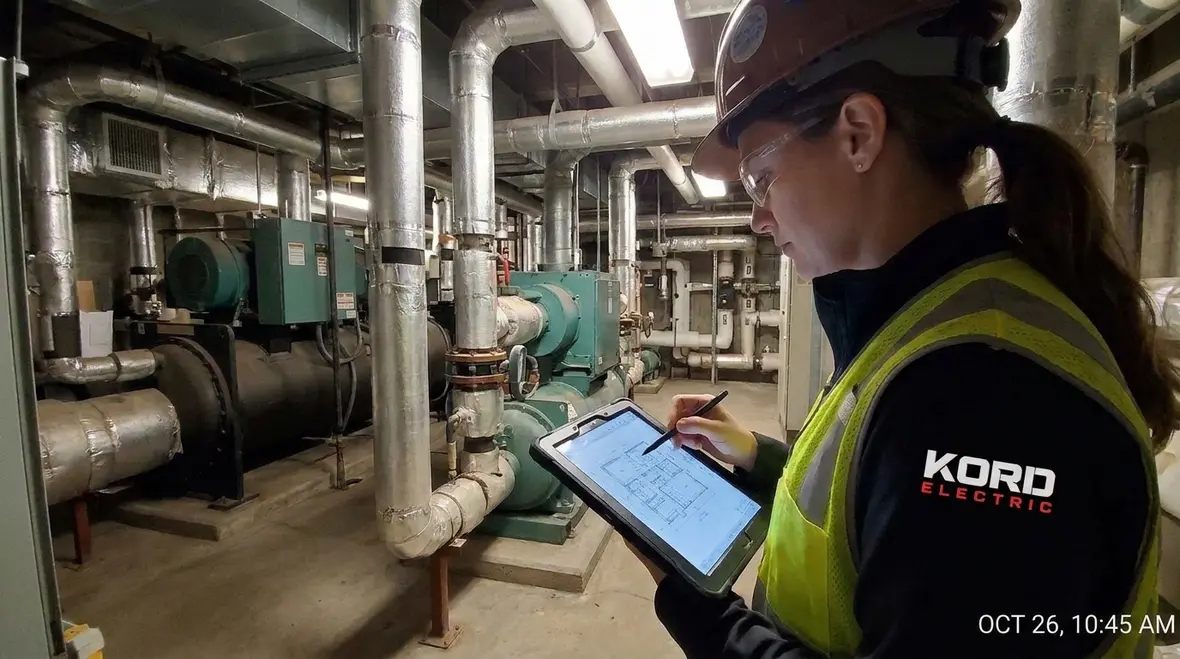
Workmanship shows up in the field, but it also shows up on paper. When we work on commercial and industrial projects, we keep documentation tight because you need a clear trail for inspections, commissioning, and future maintenance.
Our technicians do this in a few steady steps. First, we confirm that installed routing matches the design and submittals. Next, we verify that supports and terminations meet the mechanical workmanship expectations for the system. Then, we run the required testing and we record results. Finally, we compile the closeout materials in an organized set so the facility team is not searching through emails like they are hunting for a missing remote.
As we coordinate with inspectors and site leads, we also explain what we did in plain language. That is a key part of how we work. When facilities staff understand the why behind the installation methods, they can manage the system with confidence. They also ask better questions during troubleshooting, which saves time and reduces downtime.
Working within the NEC framework for major property buildings
Audio cabling often sits alongside other systems in a major property building. So, we treat it as part of an integrated infrastructure plan. While our focus remains on audio and related wiring methods, we also make sure the install does not conflict with other rules that govern commercial and industrial spaces.
Our team reviews relevant NEC concepts so the audio system plays well with the rest of the electrical environment. For example, we ensure proper separation from sources of interference when design calls for it. We also confirm correct equipment mounting and pathways where the building’s structure and system layout intersect.
If you want a deeper, code rooted discussion of how the NEC approaches wiring and installation practices, you can explore the broader NEC coverage shared in our educational materials, including the Kord Electric guide Understanding NFPA 70: The National Electrical Code Explained for 2026 and our sister company’s overview NFPA 70: All About The National Electrical Code (NEC) 2026. This helps stakeholders understand that standards exist to prevent the slow drift into “good enough,” which usually becomes “not good at all” months later.
And for anyone who thinks standards are only for inspectors, we would like to introduce you to future maintenance budgets. They tend to show up uninvited.
Practical commissioning steps for clear audio system performance
Once installation finishes, commissioning determines whether the system performs as intended. Our technicians run commissioning in a way that checks both electrical and functional performance. Then, we compare results against the design goals for coverage, clarity, and reliability.
During commissioning, we verify audio paths and confirm signal integrity across zones. We check for noise sources, verify correct routing and termination, and ensure equipment operates as expected under normal site loads. If a test reveals a problem, we do not guess. We isolate the issue through documented test data and revise the installation where needed.
Because we serve major commercial and industrial facilities, we also plan commissioning to reduce disruption. We coordinate with site operations so critical activities continue. In the end, this approach protects the user experience and supports safety responsibilities without dragging out the project.
For facilities that want their commissioning strategy to match their broader electrical safety roadmap, we often pair these projects with evaluations guided by resources such as our NEC-focused articles on scope and application requirements. That way, your audio system does not just sound good on day one; it also fits into a code-compliant, future-ready electrical plan for the building.
FAQ about audio wiring workmanship and NEC expectations
Connecting audio workmanship to broader NEC planning
NEC Section 640.6 audio wiring mechanical workmanship is one chapter in a much larger story about how electrical systems keep people safe and operations stable. When we plan audio routes, supports, and terminations, we also consider related NEC topics, such as wiring on buildings, equipment enclosure ratings, and how audio and communications circuits share space with other electrical systems in major property buildings.
That is why our technicians and expert service staff regularly reference Kord Electric resources on topics like NEC application requirements, wiring on buildings, and enclosure selection for demanding environments. By treating audio wiring as part of the overall NEC roadmap, we help facilities avoid conflicts, rework, and surprise findings during inspections. Instead of treating audio projects as one-off upgrades, we fold them into a broader plan for safe, reliable electrical infrastructure.
If your facility leadership wants to see how these pieces fit together across a portfolio of projects, our team can step through the broader NEC approach in the context of your electrical distribution, fire protection interfaces, and communications needs. That conversation helps everyone see why tight workmanship on a single audio circuit still matters for the building’s risk profile, downtime exposure, and long-term budget.
For organizations looking to align audio work with other upgrades in Los Angeles County and surrounding areas, our commercial and industrial Los Angeles County electrical services support end-to-end planning, installation, and commissioning. That means we can integrate NEC Section 640.6 workmanship requirements into broader electrical projects instead of treating them as a separate, disconnected task.
Conclusion and call to action
If your commercial or industrial facility needs audio wiring installed with strong workmanship and clear documentation, Kord Electric is ready to help. Our technicians work to the NEC intent, including NEC Section 640.6 audio wiring mechanical workmanship, and we explain each step in plain business language so your team knows what was done and why. From planning routes and supports to documenting test results and preparing for inspections, we treat mechanical workmanship as a daily practice, not a footnote.
Whether you are upgrading a single paging system, adding new zones to an existing campus, or coordinating audio infrastructure with a larger electrical project, we can help you align NEC requirements with real-world operations. Contact us to review your project scope, schedule planning, and commissioning needs. Let’s build an audio system that stays reliable long after the first inspection, and long after the honeymoon phase ends.
To explore more about how NEC shapes decisions across your facility, you can also review our in-depth guide Understanding NFPA 70: The National Electrical Code Explained for 2026, then connect with our team to translate that direction into practical, inspection-ready audio installations.


