
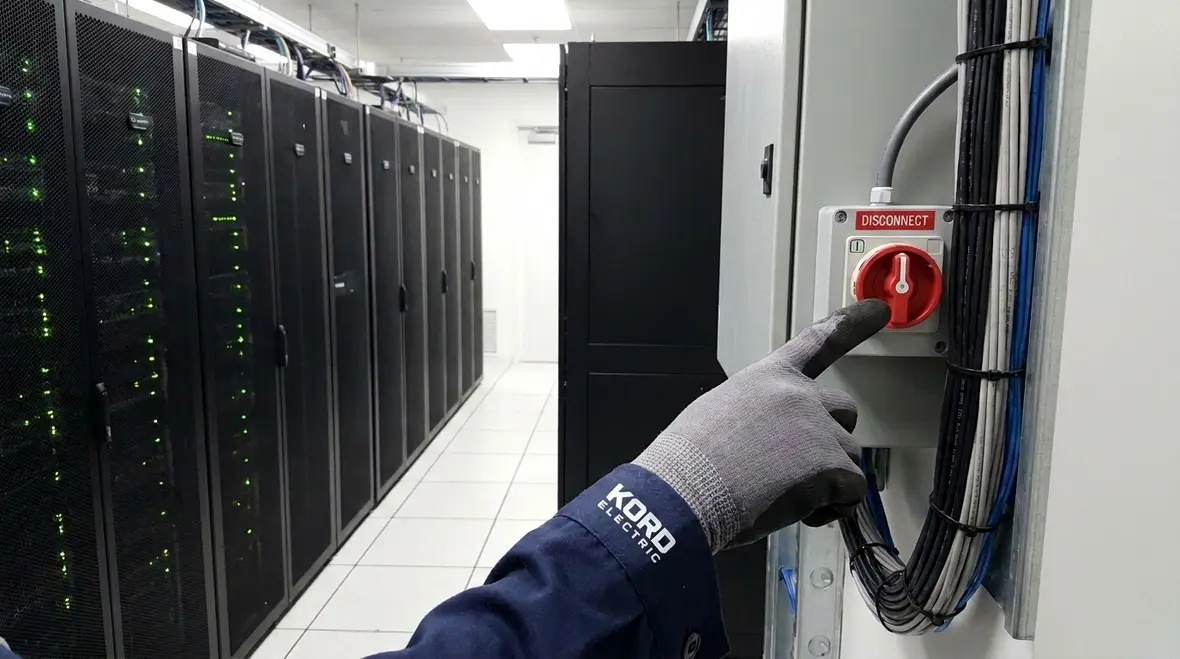
NEC Section 645.10 IT Equipment Disconnecting Means 2026
Understanding NEC Section 645.10 and IT Equipment Disconnecting Means for 2026
When a commercial or industrial site plans an electrical upgrade, safety comes first, and so does clarity. In our work at Kord Electric, we often see facility teams ask what NEC rules actually mean in the field. That is where NEC Section 645.10 IT equipment disconnecting means enters the conversation, and we explain it in plain terms before anyone wires a single terminal.
In simple words, these rules help define how disconnecting for IT equipment must work so technicians can shut power down safely, without guesswork. Because in the real world, “just pull the plug” stops being funny the moment it is the wrong circuit. So, we help owners and electrical contractors avoid confusion by translating the code into steps our technicians can verify on site.
What the NEC Code is really trying to prevent

The National Electrical Code exists to keep people safe and equipment reliable. However, even a solid facility design can fail when disconnecting methods do not match the intent of the standard. For IT rooms and spaces, the risks get sharper. Circuits may power sensitive electronics, network gear, cooling systems, and data paths that do not tolerate careless shutdowns.
Therefore, the NEC pushes for disconnecting means that let trained staff isolate power properly. And even when teams follow procedures, a bad disconnect location or unclear labeling can slow down response time during maintenance or emergencies.
We treat this as practical engineering, not paperwork. Our expert service staff and technicians review how facilities operate day to day, and then we confirm the disconnecting setup supports safe work. Think of it like fire drills: if the exit sign is wrong, the building can look perfect and still fail when it matters.
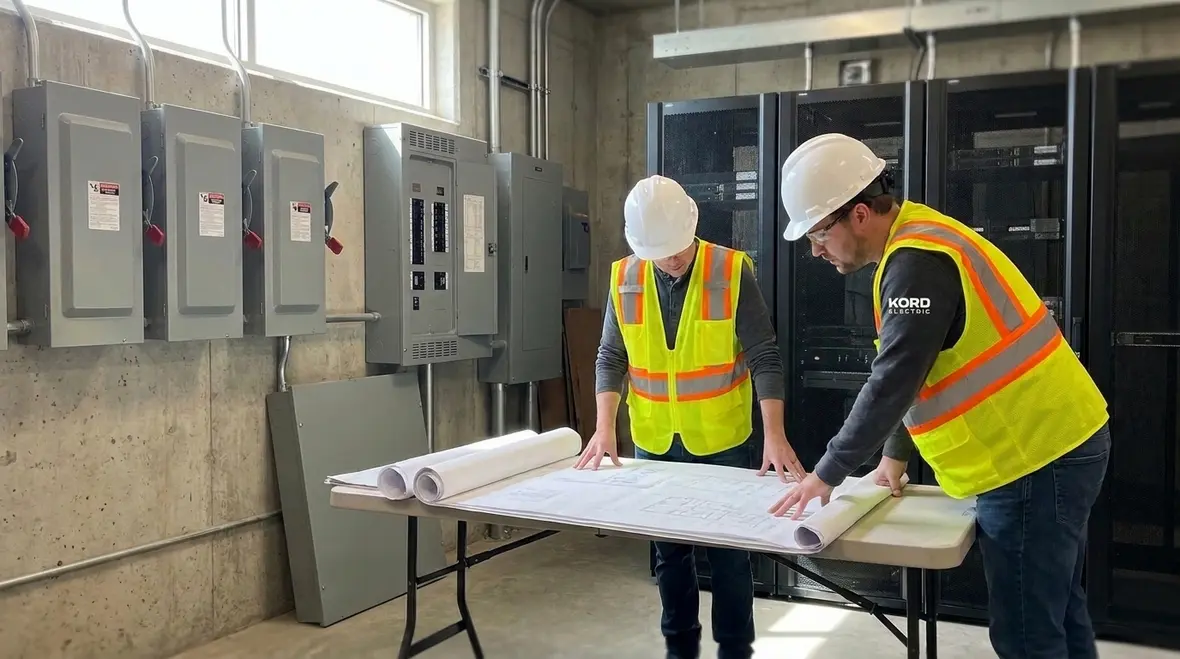
For teams who want a deeper backdrop on why the code is structured the way it is, resources like Understanding NFPA 70: The National Electrical Code Explained for 2026 help connect the broad NEC framework to specific requirements like the ones you see in IT equipment spaces.
How NEC Section 645.10 IT equipment disconnecting means must work in practice
Section 645 focuses on information technology equipment. When you reach NEC Section 645.10 IT equipment disconnecting means, the code speaks to the need for a disconnecting means that allows power to be interrupted for IT equipment circuits in a controlled way.
In our experience serving commercial and industrial facilities and major property buildings, the big questions are usually these: Who can operate it? How clearly is it identified? Does it isolate the right portion of the system? And does it support safe servicing without pulling down the entire building?
We guide our clients through design intent, then we verify the actual field layout. Our technicians explain what they see, and why it matters. For example, if the disconnect does not clearly serve the IT equipment, maintenance staff might take risky shortcuts, or they might shut down more than needed. Either way, the facility loses time, and the risk goes up. That is not a “small” problem; in IT spaces, it is an outage recipe.
Bridging the gap between drawings and real equipment
On paper, NEC language can look tidy. In a live building, equipment pockets, cable routes, and retrofit work shift the ideal into something more complicated. That is where practical interpretation matters. Kord Electric technicians match the one-line diagram, the panel schedules, and the locations of IT racks and cooling units so the disconnecting means still makes sense when someone is under time pressure.
Instead of leaving operators with a mystery switch, we help ensure the disconnect is labeled in plain terms that tie to real equipment: which racks, which power strips, which UPS feeds, which auxiliary systems. That clarity protects both uptime and safety.
Where disconnects get installed and how we help teams plan layouts
Even the best disconnecting means can fail when it is placed in the wrong location or paired with confusing circuit design. That is why we help property managers, electrical engineers, and general contractors plan where disconnects should land, how they should be labeled, and how technicians should access them during planned work and unplanned events.
When we walk through an electrical room or IT space, our expert service staff looks for practical issues first. We confirm the disconnect is reachable without obstruction. We check that the labeling matches the circuit purpose. We verify the disconnecting setup fits the workflow for shutdown and startup, especially when IT downtime affects operations across the building.
Then we align the design with the reality of modern facilities. Some buildings use distributed equipment, multiple racks, and modular power feeds. So, disconnecting means needs to make sense at the equipment level, not just on a one-line diagram. Our job is to connect the diagram to the device. And yes, we still see cases where the label says one thing, and the breaker does something else. That is like a GPS that says “turn left” while you are already left. It happens, but we fix it.
Planning for expansions and phased IT upgrades
Many IT spaces do not stay frozen after the first build-out. Servers change, network equipment evolves, and cooling strategies shift. We plan disconnect locations and circuit groupings with that change in mind so future phases can still meet the intent of NEC Section 645.10 without ripping out everything that came before.
That might mean reserving panel capacity and labeling conventions for future racks, or designing disconnecting means that can be extended logically as more equipment lands in the room. In other words, we keep the roadmap readable even after multiple upgrades.
Coordinating disconnects with safety rules for commercial and industrial sites
In large facilities, disconnecting methods do not exist in isolation. They connect with broader safety practices, coordination, and electrical design decisions. If your building uses backup systems, power monitoring, or multiple feeders, we make sure the disconnect setup works with those layers.
For instance, when IT spaces tie into building power systems, the disconnecting means needs to support safe work while still respecting how the building protects circuits. We also help teams think through maintenance. Who will operate the disconnect? What training does the staff have? How do we prevent accidental re-energization while work is ongoing?
Our technicians slow the process down in a good way. They take time to explain how isolation works, how to verify the correct equipment is de-energized, and how to keep shutdown procedures consistent. This matters for compliance and for day-to-day operations. Plus, consistent procedures reduce downtime. Downtime is expensive, and no one wants to explain a data center outage using the phrase “it was probably fine.”
When disconnecting means interacts with emergency power
Commercial and industrial facilities frequently pair IT loads with UPS systems, generators, or both. In those cases, NEC Section 645.10 IT equipment disconnecting means has to be considered alongside emergency and standby power rules. You want to avoid a scenario where the “safe” shutdown for maintenance accidentally defeats redundancy or leaves critical monitoring equipment off-line.
Kord Electric coordinates with design engineers to confirm how normal and emergency sources interact at the disconnect point. Then we verify field labeling and procedures so technicians know exactly what drops when a particular disconnect gets operated.
Common mistakes we spot during inspections and service calls
Across commercial and industrial facilities, we see a few recurring issues. They may look small, but they create big problems during maintenance or emergencies.
Unclear labeling that does not match the actual IT loads.
Disconnects that do not isolate the correct portion of the information technology equipment circuit.
Poor access that forces staff to improvise during shutdown.
Mismatch between design and field reality, where the one-line plan and the actual devices do not agree.
Overreaching shutdown steps, where teams shut off more than needed because the right disconnect is hard to identify.
So, we do more than “check a box.” We walk the circuits with our clients. Then we explain the issue and the fix in a way that facility teams can act on. Our approach stays business focused: reduce risk, shorten maintenance time, and support uptime.
Turning inspection findings into long-term improvements
When we catch a problem with disconnecting means, we do not just correct the single device and walk away. We look for the pattern that created it. Was it a rushed renovation? An unclear spec? A training gap? By solving the root cause, we help prevent the same NEC 645.10 disconnecting mistake from repeating in the next IT room down the hall.
Benefits of getting disconnecting means right for IT downtime and uptime
When NEC Section 645.10 IT equipment disconnecting means is followed closely, facilities get more than compliance. They get calmer maintenance days, faster response during faults, and more predictable IT operations. And that predictability matters as data, communications, and automation become the backbone of most commercial properties.
Furthermore, when disconnecting means is clear and correctly installed, trained technicians spend less time hunting for the right circuit and more time doing the job. That improves safety and protects equipment. It also reduces the pressure on the operations team, because the shutdown process is known and repeatable.
We also work with partners who support broader fire and electrical safety planning. For example, we reference industry resources like the NFPA guidance through sites such as kordelectric.com and kordfire.com, and we stay aligned with regional and safety-focused approaches found through resources like firepumps.org. When the electrical plan connects cleanly with the overall safety strategy, the building performs better under stress.
How disconnecting means supports long-range electrical strategy
IT disconnects may look like local hardware, but they sit inside a bigger strategy. When facilities invest in modern electrical systems, selective coordination, and condition-based maintenance, clear disconnecting points help technicians service equipment without dismantling the rest of the system.
That is one reason many owners pair upgrades in IT spaces with broader consulting on code-driven improvements. Just as you might review surge protection, grounding, or panel capacity, reviewing how NEC Section 645.10 is applied in your facility becomes part of that bigger reliability picture.
Regulatory context and how we keep projects aligned
Electrical codes evolve, and facility teams need practical support to keep upgrades on track. We focus on the needs of commercial and industrial facilities and major property buildings. That means we coordinate with licensed stakeholders, confirm site conditions, and document key steps so the project stays aligned with the current code cycle.
Our team also stays aware of how fire safety planning and electrical design interplay, especially in high value spaces like IT rooms and critical infrastructure zones. When clients ask about future planning for 2026 requirements, we help them build a path that supports the code intent, not just today’s checklist.
In addition, we communicate clearly with the people who actually run the building. Because a perfect design that no one understands turns into a problem later. Our technicians explain the “why” behind the setup, and that explanation helps operations teams make smarter decisions during service events.
For facilities across Los Angeles County and Southern California, this often includes planning around local enforcement practices, inspection timing, and parallel upgrades. When needed, we align IT disconnecting work with related improvements like panel modernization or targeted code upgrades, so buildings move toward safer, future-ready power instead of piecemeal fixes.
If your building is preparing for broader work, Kord Electric also provides Los Angeles County electrical services for commercial and industrial properties, helping project teams coordinate NEC compliance, IT room safety, and everyday reliability under one plan.
Quick FAQ for featured snippets
Below are fast answers your facilities team can use when they need to explain NEC IT disconnecting concepts to non-technical stakeholders.
Conclusion and call to action
If your facility serves a business that cannot afford avoidable downtime, we should help you get IT disconnecting means right the first time. Kord Electric supports commercial and industrial projects with expert technicians who verify field reality, explain the code intent clearly, and help reduce safety and maintenance confusion. If you are planning an upgrade or auditing an existing electrical layout, contact us for a site review. We will map the disconnecting setup to NEC requirements and help your team work with confidence.
Whether you manage a dense data environment or a modest server room that quietly runs the rest of the building, NEC Section 645.10 IT equipment disconnecting means is one of the tools that keeps people safe and operations calm. With the right partner, those rules turn into clear hardware, logical labels, and repeatable procedures instead of last-minute improvisation.
If you are evaluating broader electrical work beyond the IT room, Kord Electric’s commercial services across Los Angeles County and Southern California can help you align disconnecting means, panel upgrades, and code compliance in a single, coordinated plan so today’s fixes support tomorrow’s growth.


