
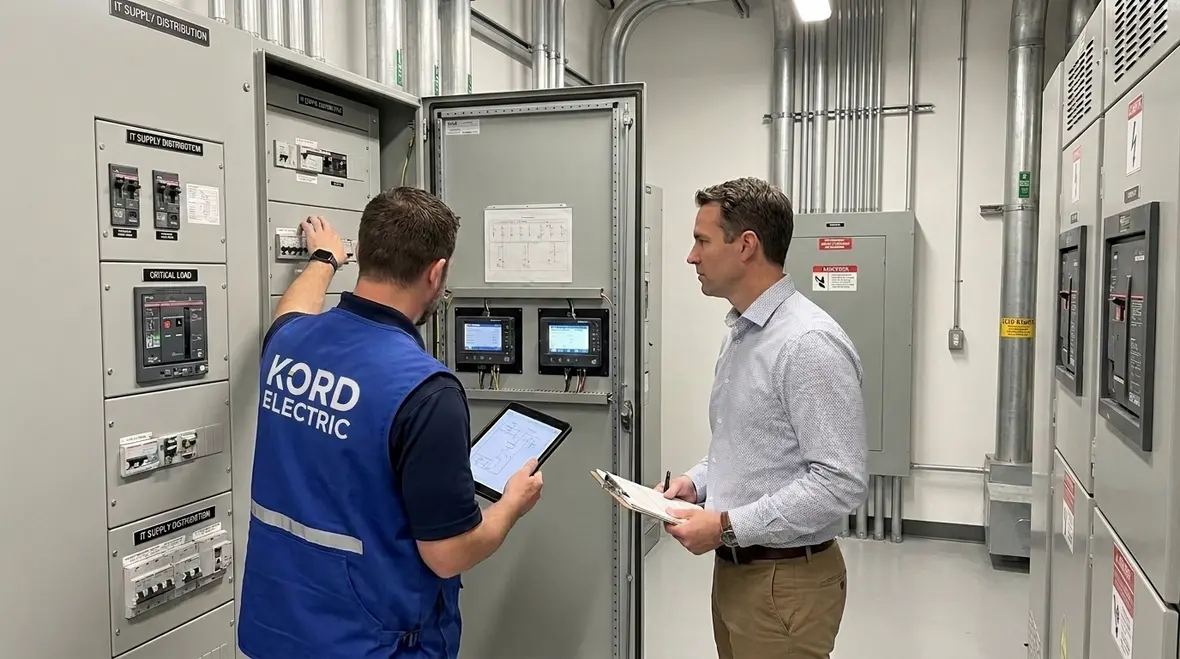
NFPA 70 Section 645.6 IT Supply Circuits Explained
NFPA 70 Section 645.6 IT supply circuits: what commercial facilities need to know
In commercial and industrial buildings, the electrical system must stay reliable even when life gets messy. That is why we focus on NFPA 70 Section 645.6 IT supply circuits early in our planning conversations, especially for spaces with critical loads. In plain terms, these provisions help govern how an IT power source can feed circuits while managing ground fault behavior in a way that supports continuity of power. And yes, we know “IT supply” sounds like something you order from a tech store. It is not. It is about keeping power steady for people who cannot afford outages.
Our technicians at Kord Electric explain these rules in a steady, human way, then we help our clients apply them in real projects. Instead of guesswork, we walk through the requirements, coordinate with designers and inspectors, and verify the outcomes during commissioning. That approach matters because codes only work when the field installation matches the intent.
What NFPA 70 requires for IT power sources and fault behavior
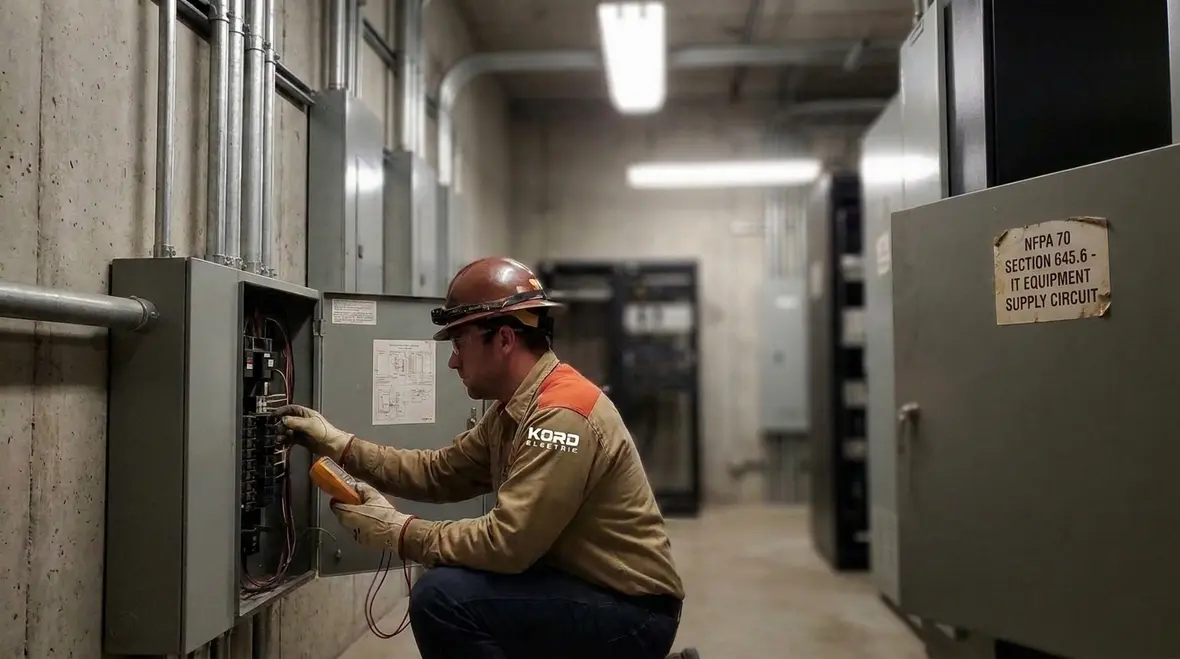
Under NFPA 70, an IT system uses a power source where the system is not directly grounded. However, the goal is not “no grounding ever.” Instead, the code governs how the system handles faults, so one problem does not instantly knock out everything. When a ground fault occurs, the system behavior guides how long the building can keep operating while trained staff respond.
Moreover, the rules push owners to think about detection, labeling, and how the facility will react. If a building runs hospitals, critical production lines, or data heavy operations, continuity matters, but so does response time. Therefore, we help our clients set up a process that does not rely on luck. We also make sure that the electrical room setup, labeling, and documentation match what the code expects.
At Kord Electric, our expert service staff explains it like this. The electrical system is like a calm driver in traffic. It does not erase every risk, but it keeps the car moving while you deal with the issue safely. If you wait until the vehicle is fully stopped, you lose time. And in business, time is money, even if someone tries to replace that with a spreadsheet on a Friday afternoon.
For facility leaders who want a broader foundation before they dive into the specifics of NFPA 70 Section 645.6 IT supply circuits, Kord Electric’s resource Understanding NFPA 70, the National Electrical Code Explained for 2026 helps connect these IT system concepts to the overall NEC framework commercial buildings follow.
How to design IT supply circuit layouts in real projects
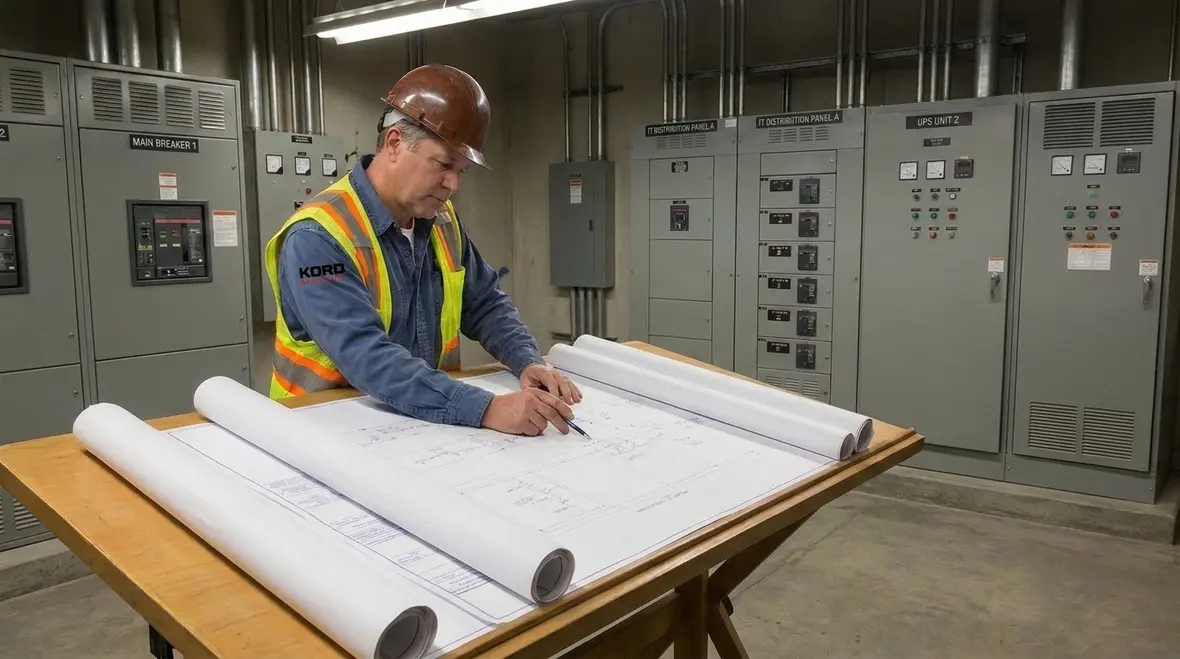
Once a facility team decides to use IT supply, design details determine whether the installation performs as intended. First, we look at how the circuits are arranged, where they begin and end, and what equipment they serve. Then, we confirm the protection and monitoring approach. Finally, we coordinate with the overall building power architecture so the IT system does not fight the rest of the electrical design.
Good layouts also help during maintenance. For instance, when someone needs to trace a circuit after a change, clear routing and consistent labeling reduce errors. In addition, well planned segregation can prevent troubleshooting from turning into a scavenger hunt where the prize is not a hidden gem, but a burnt component.
Our technicians guide clients through the practical checklist that supports code minded installation. That includes verifying that circuit connections support the intended fault strategy, and that equipment and enclosures support the system’s operating needs. If the project includes life safety loads or mission critical devices, we coordinate the power path so the building gets the performance it was sold.
For renovation or expansion work, this often overlaps with electrical code upgrade consulting, where IT supply circuits must coexist with existing feeders, panels, and grounding strategies instead of being designed on a blank slate.
Coordination with transformers, monitoring devices, and protective gear
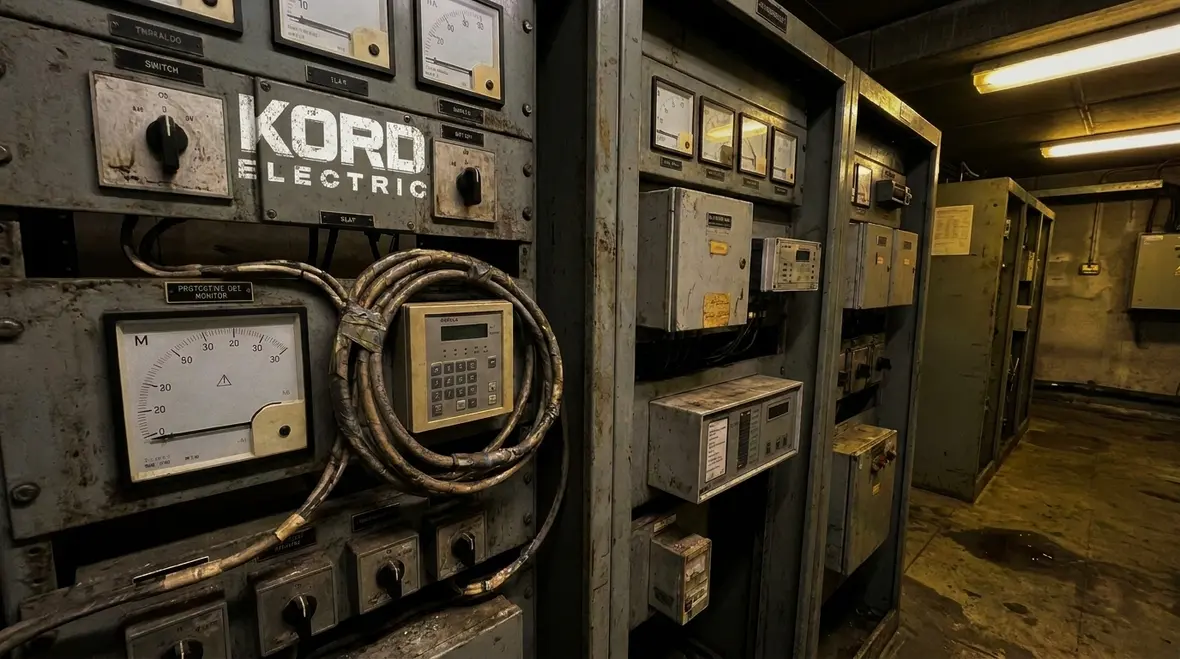
IT systems often involve components like transformers, and the details around those components matter. For example, the way the source is configured influences how ground faults behave and how the system signals an issue. Also, monitoring devices support early detection so the facility can respond before a minor issue becomes a major disruption.
Then we bring protective devices into the conversation. Even when an IT system aims to keep power available during a first fault, it still needs protective coordination. That includes proper overcurrent protection and selective behavior that limits damage and keeps sections manageable. In short, the design should avoid cascading failures.
We also keep an eye on how controls and alarms integrate with building systems. When a facility has staff on site who must act, the monitoring signals must be understandable and reliable. Our team at Kord Electric helps set expectations so the building does not treat alarms like background noise. If the alert system looks like a smoke alarm that never stops chirping, people eventually stop listening. That is human nature, not engineering.
In many facilities, this protection and monitoring strategy ties back to broader NEC planning covered in Kord Electric’s guides on topics like industrial surge protection and electrical connection quality, where stable operation and predictable fault behavior share the same design DNA.
Commissioning and testing steps that keep code intent on track
Design is only half the story. The other half happens during commissioning. At Kord Electric, we treat testing as a confirmation process, not a paperwork ritual. We verify that installed equipment matches the design documents, that labeling is correct, and that monitoring behavior works as expected.
We also check the system’s ground fault detection strategy and ensure it responds in the right way. Moreover, we coordinate test plans with the facility’s operating needs, since downtime can be expensive for commercial and industrial work. Therefore, we schedule testing windows, define what “success” means, and confirm that documentation reflects what the building can actually do.
During this stage, our technicians explain the results to facility teams. They help others understand what the numbers and readings mean, and they show the practical steps for reporting and response. When people understand the system, they can respond faster during real events. And that reduces the chance that a “small issue” becomes an all hands meeting.
For IT supply circuits governed by NFPA 70 Section 645.6 IT supply circuits, commissioning is also the moment when everyone confirms that alarms, fault indication, and response procedures match the written plan, instead of living only in design notes from six months ago.
Recordkeeping, labels, and staff readiness for ongoing operation
Even the best installation can fail to meet business needs if people cannot operate it. Codes and safe practices expect proper recordkeeping and identification so the facility knows what it installed, where it is, and how it should respond. We help clients build a clear system of labels and documentation that makes sense for day to day use.
In addition, we support staff readiness. Our expert service staff explains procedures in a calm, direct way. We show facility managers and maintenance teams how to interpret monitoring signals, what actions to take during a first fault, and who to call next. Then we align those steps with operational policies.
For large property buildings, this matters even more because multiple tenants or departments might interact with the same infrastructure. Therefore, Kord Electric helps ensure the IT supply circuits are not treated as mysterious equipment hidden behind locked doors. If the system stays legible, response time improves and confusion drops.
Many of the same habits show up in broader NEC topics too. Articles like Kord Electric’s coverage of NFPA 70 Section 90.4 enforcement and electrical safety training highlight how documentation, labeling, and staff awareness turn code language into practical, everyday safeguards.
NFPA 70 compliance for commercial and industrial buildings in practice
Compliance is not a single checkbox. It is a chain of choices that connect design, installation, testing, and ongoing maintenance. For major property buildings and commercial and industrial facilities, NFPA 70 expectations often intersect with life safety priorities, production requirements, and power quality needs.
Our experience also shows that code compliance improves when teams coordinate early. When designers, electricians, commissioning staff, and facility leadership share the same understanding, less time disappears into change orders and rework. In fact, we often see fewer surprises when the electrical scope includes a clear plan for monitoring and fault response.
We also align with industry resources that explain the NEC themes in a way that supports real decision making. For example, Kord Fire and the broader fire and life safety education ecosystem emphasize how proper code understanding supports safer outcomes. And while fire protection and electrical systems do not always share the same room, they share the same goal: keep people and operations protected.
If your building team wants a broader context for how NFPA 70 shapes different systems beyond IT supply circuits, Kord Fire’s piece on NFPA 70: All About the National Electrical Code (NEC) pairs well with Kord Electric’s own NEC blog series and helps connect electrical reliability to fire and life safety strategy.
Dual column quick reference
We verify during service |
What the facility gains |
Monitoring integration and correct alarm behavior |
Faster response and clearer fault awareness |
Correct installation details that match design intent |
Reliability that supports continuity of power |
Labeling, documentation, and handoff readiness |
Less confusion during maintenance and emergencies |
When NFPA 70 Section 645.6 IT supply circuits are part of the picture, this quick reference becomes a simple way to check whether your facility can detect faults quickly, keep critical circuits energized as allowed, and hand information to staff in a way they can actually use on a Tuesday afternoon when production is pushing the schedule.
For owners planning significant electrical upgrades or relocations, partnering with a team that understands both IT supply circuits and broader commercial infrastructure makes it easier to coordinate everything from panels and feeders to emergency power. That is where Kord Electric’s Los Angeles County electrical services offerings connect high level NEC strategy to the realities of local projects and inspections.
FAQ for NFPA 70 Section 645.6 IT supply circuits
Schedule a Kord Electric review for your next project
If your commercial or industrial facility plans to use IT supply circuits, we can help you get it right from design through commissioning. Kord Electric brings field based experience, clear explanations, and practical testing steps so the system performs the way NFPA 70 expects. Then we help your team keep it running with accurate records and staff ready procedures. Contact us to review your scope, identify risks early, and build confidence before the project breaks ground. We will make the code feel less like paperwork and more like a plan.
Whether you are upgrading an existing data heavy space, designing a new critical operations center, or simply want to understand how NFPA 70 Section 645.6 IT supply circuits fit into your broader electrical roadmap, a focused review with Kord Electric can save you from costly redesigns and unexpected inspection surprises later.
If you want to keep exploring how NFPA 70 shapes the rest of your system beyond IT supply, you can also browse the latest entries on the Kord Electric blog, where topics like AHJ enforcement, surge protection, and code upgrade planning connect directly to real projects and real facilities.
When you are ready to move from reading about the rules to putting them to work in your own building, our commercial electrical services team is ready to step in, translate the code, and help you make decisions that keep people safer and operations more predictable.


