
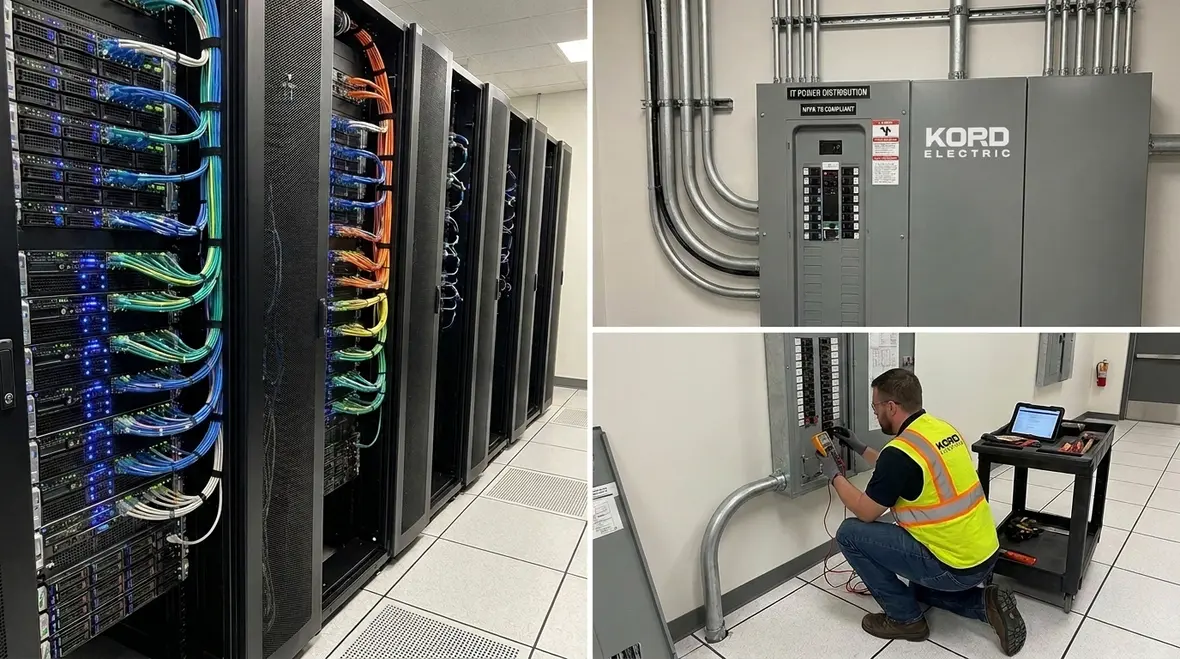
NFPA 70 Section 645.1 IT Equipment Scope for IT Power
Kord Electric understands that electrical compliance should feel steady, not mysterious. That is why we start with the NFPA 70 Section 645.1 IT equipment scope right away, especially when a facility relies on servers, storage, and network gear. In plain terms, we help customers follow rules that protect IT equipment and the systems that support it. That scope matters for commercial and industrial facilities, plus major property buildings where one outage can turn into a week of downtime and a lot of overtime for the team (yes, the one who “already fixed it” at 2 a.m.).
In this article, our expert service staff explains how the National Electrical Code connects to real installations, real inspections, and real maintenance. And yes, we will keep it clear enough that you can talk to your stakeholders without sounding like you brought a textbook to a business meeting.
What NFPA 70 Section 645.1 IT equipment scope means for your site
Our technicians work with facilities that run on uptime, and that is where the NFPA 70 Section 645.1 IT equipment scope becomes practical. This scope focuses on electrical systems connected to IT equipment, including the pathways that deliver power and the way protective measures handle risk.
So, when an engineer specifies power for IT gear, the work does not stop at “it turns on.” Instead, we must consider how the electrical system behaves under normal load, abnormal conditions, and maintenance activities. Therefore, we look at how circuits route, how connections are made, and what safeguards exist so that sensitive electronics stay protected.
To keep your project grounded, we treat this as a chain: upstream protection, distribution, wiring methods, grounding and bonding, and the final connection to IT equipment. If one link is sloppy, the whole chain weakens. And unlike a movie plot, electrical issues do not resolve themselves by the third act.
How the National Electrical Code shapes power distribution for IT
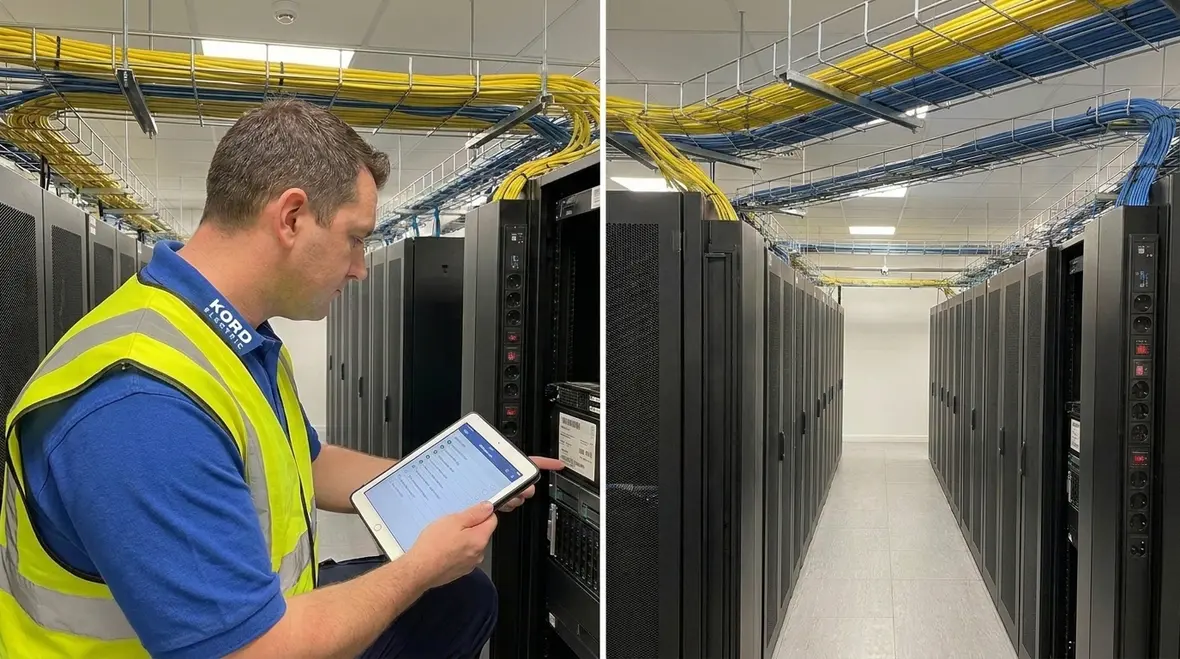
NFPA 70 does not just list rules. It builds a framework that guides how power gets delivered safely across a facility. For commercial and industrial sites, this framework supports coordinated protection, reduced fault impact, and safer servicing.
Our expert service staff often starts with the distribution model. Then we map how power feeds equipment rooms, data areas, and the supporting infrastructure. After that, we confirm that the wiring methods and overcurrent protection align with the code intent for safe operation and fault control.
In real terms, this means we verify that components work together. For example, breakers and protective devices should coordinate so that a fault does not spread farther than it needs to. Also, we confirm that conductors and equipment ratings match the load conditions expected for the IT environment.
When customers ask, “Why is this so detailed?” we answer calmly: because IT equipment is unforgiving. Power quality issues and poor protection can cause data loss, equipment stress, and repeated failures. And no one wants to explain to leadership that “the rack rebooted itself” on a holiday weekend.
For teams who like more background on how the NEC holds these ideas together, we often point them to broader guides such as Understanding NFPA 70: The National Electrical Code Explained for 2026 and related NFPA 70 explainers on the Kord Electric blog. Those resources give stakeholders a high-level view, while our project work focuses on specific panels, feeders, and IT rooms that keep your site online.
Connecting NFPA 70 logic to IT-heavy facilities
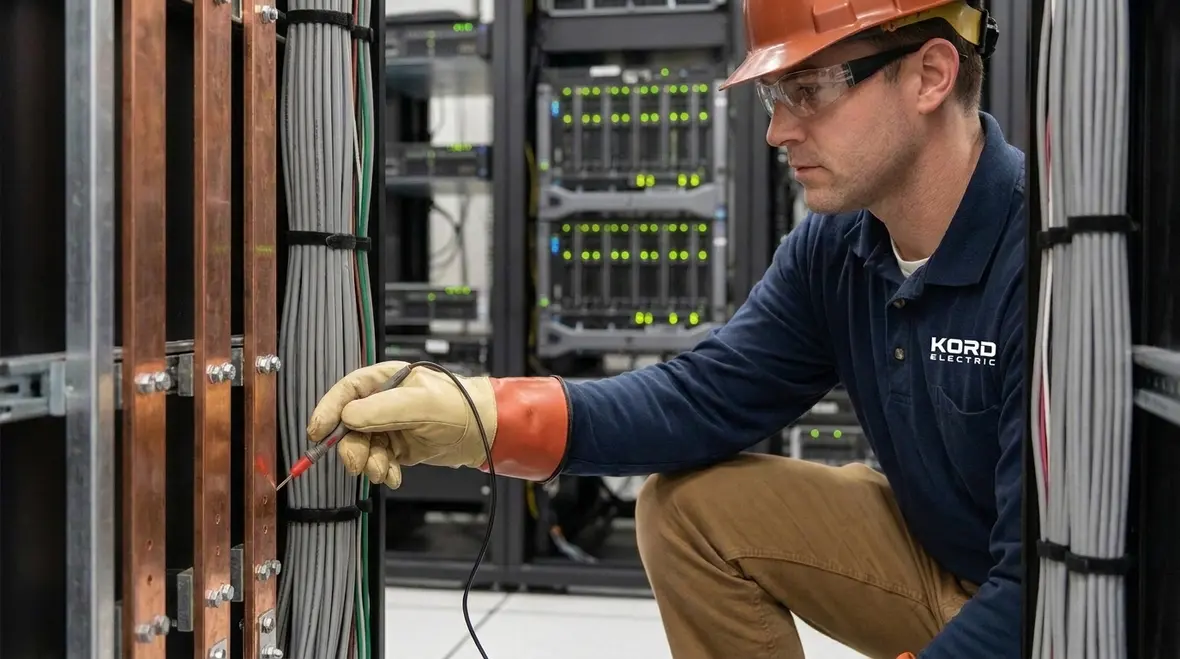
In facilities with heavy IT footprints, power distribution design shapes everything from cooling strategies to how quickly you can isolate a faulted rack. When we apply NFPA 70 logic, we think in layers: service entrances and switchgear, panels and subpanels, distribution to IT spaces, and then branch circuits feeding individual racks, PDUs, and support systems.
That layered view helps facility teams understand why one breaker setting or conductor choice can ripple into uptime conversations. It also supports better coordination with mechanical, fire protection, and operations teams who share responsibility for keeping the building steady.
NFPA 70 wiring methods and grounding for sensitive equipment areas
Once we focus on IT zones, grounding and wiring method decisions become critical. Our technicians treat this as more than compliance. We treat it as a reliability plan.
First, we check how wiring routes through the facility. Then we confirm that the wiring methods support safe installation, physical protection where needed, and proper termination practices. Next, we review grounding and bonding to keep electrical paths controlled and predictable.
Why does this matter? Because sensitive electronics rely on stable reference points. If grounding is incomplete or incorrectly connected, fault currents and noise behavior can change in ways that create unstable conditions. Therefore, we follow the code logic and we document key decisions so the facility team can maintain the system long after we leave the site.
We also consider how facilities operate over time. Buildings get renovated, racks move, and circuits get repurposed. As a result, we design with maintenance in mind, so service staff can work without guessing which circuit feeds what. That reduces downtime and lowers risk during changes.
Grounding, bonding, and IT noise behavior
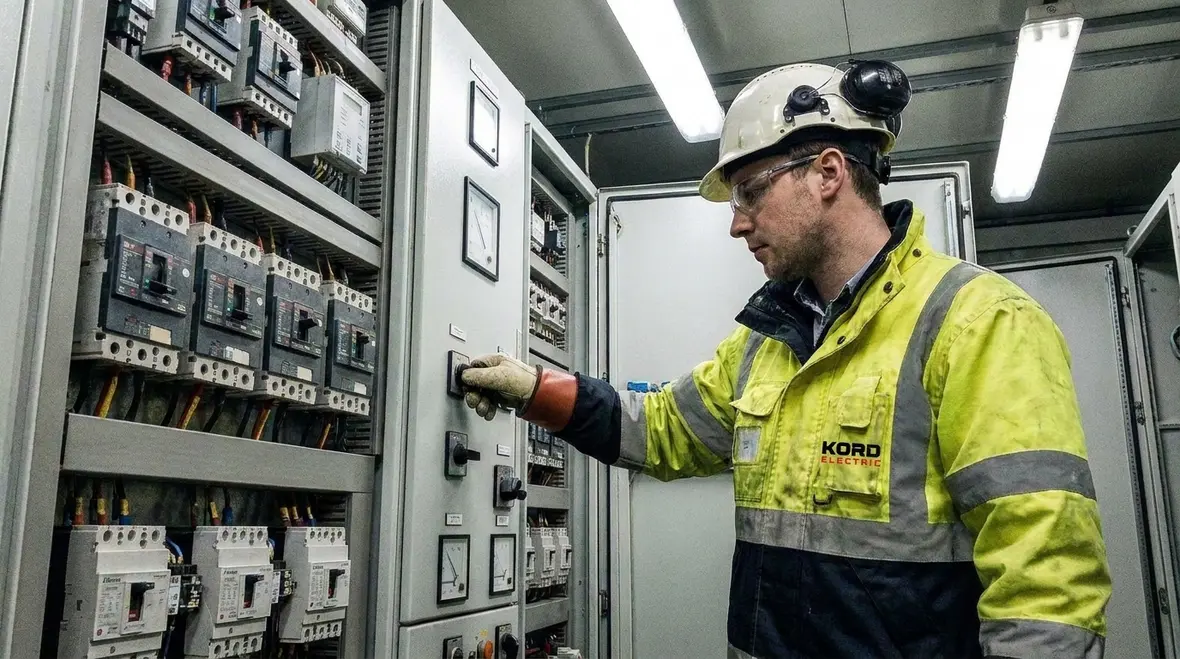
In IT environments, grounding and bonding are as much about noise control as they are about fault clearing. Poorly planned bonding can create loops, stray currents, or unpredictable reference points that show up as intermittent equipment glitches and random reboots.
Our team reviews how racks, cable trays, equipment enclosures, and building steel connect back to the grounding system. We verify that the approach stays aligned with NFPA 70 expectations while supporting predictable IT performance. That might sound abstract, but in practice it looks like fewer unexplained “ghost problems” and more time spent on productive work instead of hunting down electrical noise.
NFPA 70 overcurrent protection and fault control in business buildings
Overcurrent protection often sounds like a basic topic until a fault occurs. Then it becomes the difference between a quick repair and a widespread problem.
In commercial and industrial facilities, we coordinate protection so that faults stay local. That means selecting devices that match the conductor and load requirements, then confirming that protective behavior supports safe shutdown. If a fault happens, the system should clear in a way that limits damage to IT equipment and keeps essential operations running when possible.
Our team also checks labeling and panel organization. This may not sound exciting, but it saves hours when maintenance happens. And in the real world, time is money, especially when your data center team is already on the clock.
So, we approach protection like a system, not like separate parts. Then we verify that the code requirements align with the facility’s electrical one line, equipment schedules, and planned expansions.
Why selective coordination matters for IT uptime
Selective coordination makes sure the right device trips first. In an IT-heavy building, that can be the difference between losing one rack and dropping an entire floor. We confirm that upstream devices, branch breakers, and protective relays work together instead of competing during a fault.
This approach lines up with broader NEC concepts discussed in Kord Electric’s code education resources and in NFPA 70 explainers such as the Kord Fire article NFPA 70: All About The National Electrical Code (NEC). While those guides cover the big picture, our project work focuses on the specific coordination curves, device settings, and panel arrangements that keep operations moving.
Common compliance mistakes we see in commercial electrical upgrades
We have seen patterns across major property buildings, and we share them because prevention beats panic. Here are mistakes that show up during upgrades and new installs, especially around IT-related power systems.
1) Treating IT power like general power
Many teams install wiring and protection the way they would for office loads. However, IT equipment needs a more careful approach in how circuits are handled and how protective design supports reliable operation.
2) Skipping documentation during commissioning
When customers cannot quickly identify circuit paths and connection points, maintenance becomes slow. Additionally, poor documentation turns small issues into larger outages.
3) Overlooking coordination between panels and downstream devices
If protective devices do not coordinate, a fault may shut down more than necessary. Therefore, we confirm settings, ratings, and behavior under fault scenarios.
4) Grounding work done “good enough”
Grounding that does not meet requirements increases risk. Also, it can create noise and unstable conditions that stress equipment.
Our technicians avoid these issues by reviewing designs before work starts and by testing and verifying during commissioning. Then we hand over clear records, so your facility team has a clean path for future work.
Linking IT power work to maintenance and inspections
IT power decisions do not live in isolation. They influence future inspections, maintenance windows, and how upgrades are sequenced. That is why we combine our NFPA 70 project work with guidance shaped by Kord Electric’s preventive maintenance content, including resources like the Electrical Preventive Maintenance Schedule guide and NFPA 70B-oriented switchgear discussions. When the electrical system is built with maintenance in mind, IT power upgrades stop feeling like a gamble.
Commissioning, testing, and ongoing maintenance plans for major properties
After installation, the job does not stop. We help customers finish with commissioning and verification that supports safe operation and future service.
Our service staff typically confirms key electrical conditions through appropriate testing methods, reviews labeling, and checks that connections meet design intent. Then we validate that protective devices respond as expected for the installed configuration. This step matters even more in environments with continuous operations, where downtime costs more than the labor to do it right the first time.
We also advise customers on ongoing maintenance. Facilities change, and equipment gets added. Therefore, we build maintenance thinking into the plan from the start: what gets inspected, what gets verified, and how teams should handle changes without breaking compliance.
In the background, we also keep pace with how code and related guidance get interpreted over time. We reference industry resources, including guidance discussed in our related platforms at Kord Fire and Kord Fire Australia, and we align with the fire and safety mindset described by specialized organizations like FirePumps. When electrical and life safety thinking work together, facilities run safer.
Bridging NFPA 70 and IT-focused service agreements
For many properties, the right answer is a structured service agreement that blends IT priorities with NFPA 70 obligations. That can include periodic testing, labeling updates, review of new IT loads, and alignment with local inspection cycles. We help teams build those agreements around risk, not just around how many panels exist on paper.
NFPA 70 and safety culture: less stress, more uptime
Safety culture is not a poster on a wall. It is how your facility responds when something goes wrong. When our team designs and verifies IT power systems under the NFPA 70 Section 645.1 IT equipment scope approach, we help your organization reduce avoidable surprises.
That means clear procedures, smart labeling, and systems that behave predictably. It also means training the people who touch the equipment, so they understand what they can change, what needs review, and what must stay within the designed limits.
And if you are wondering whether this is overkill, consider this: a data outage is like a sitcom misunderstanding. Everyone thinks it is small, until the third scene where the CEO asks why the servers are down. Our goal is to prevent that storyline before it starts.
At Kord Electric, we focus on commercial and industrial facilities and major property buildings. We do not chase small jobs for the sake of volume. Instead, we build reliability into the electrical infrastructure where it matters most, and we support our customers with expert service staff who explain things in plain language.
When an electrical contractor understands NFPA 70 and IT power together, conversations with stakeholders get easier. Facility managers can explain why a shutdown window is non-negotiable, why certain loads sit on specific panels, and why documentation needs to be more than a sketch in a notebook. That clarity reduces friction and helps safety culture show up in real decisions, not just in meeting notes.
FAQ
Need a code-aligned plan for IT power in your facility?
If your commercial or industrial property depends on IT uptime, we can help you design, upgrade, commission, and maintain electrical systems with clarity and confidence. Our technicians and expert service staff explain decisions in business-friendly terms, then verify the work so your facility stays safer and steadier. Contact Kord Electric to review your electrical scope, discuss how NFPA 70 requirements apply to your IT equipment environment, and build a plan your team can trust.
For owners and managers across Southern California, this often starts with a structured review of existing panels, IT loads, and documentation, then grows into a targeted action list. When needed, we connect that roadmap to broader support such as our Los Angeles County electrical services offerings, so your facility can move from “we think it is compliant” to a clear, code-aligned plan you can stand behind in front of stakeholders, insurers, and inspectors.
If your team prefers to read more before scheduling a visit, you can explore related Kord Electric blog posts on NFPA 70 topics, switchgear, terminal identification, and preventive maintenance. Those resources pair well with a site-specific assessment, giving you both the big-picture NEC context and the practical steps for your own building.


