
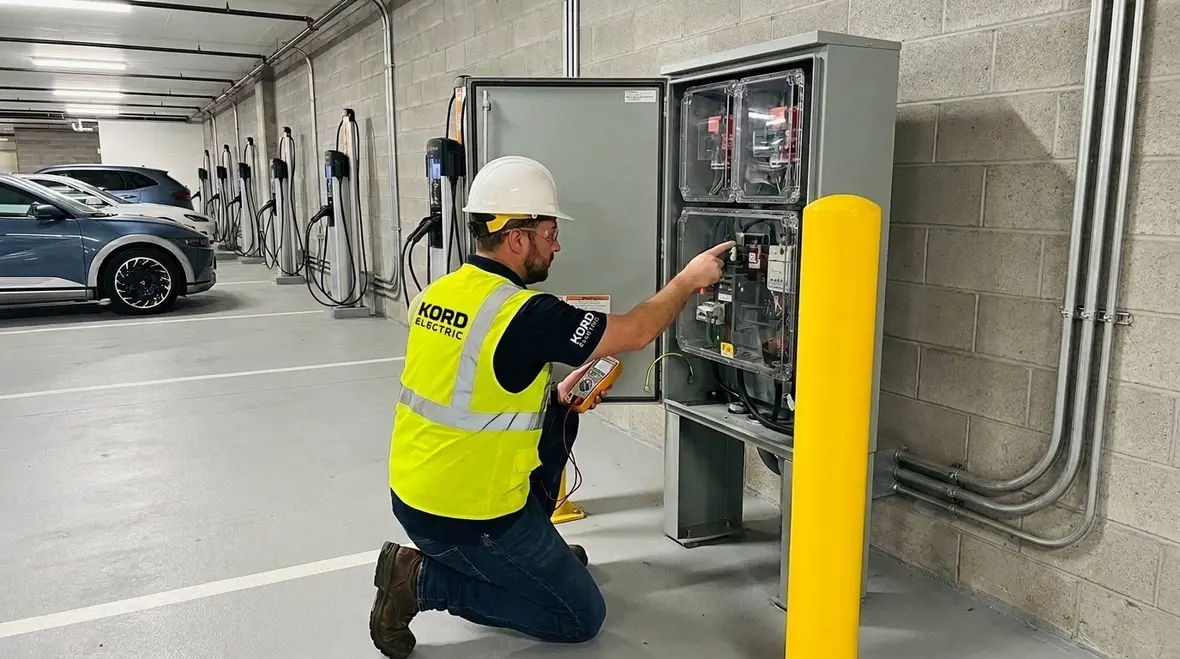
NEC Section 650.10 EV Accidental Contact Protection
At Kord Electric, we build safer electrical systems for commercial and industrial facilities and major property buildings. And we do it with a calm confidence, because when it comes to electric vehicle charging, people don’t just need power. They need NEC Section 650.10 EV accidental contact protection done right. In plain terms, this rule helps limit the chance that a person or object can make unintended contact with live parts during normal use, maintenance, or mishaps. Yes, mishaps happen. Gravity works overtime, and humans… well, we keep our technicians humble. Still, we follow the NEC closely and we explain the “why” in steady, clear language so your site stays compliant and your risk stays controlled.
In this guide, our trained service staff and technicians walk you through how NEC requirements shape EV charging design, inspections, and ongoing safety. We reference the National Electrical Code and the industry approach that supports it, including guidance that aligns with the way NEC is discussed by our teams at Kord Electric and Kord Fire resources, including the broader code explanations in our article on understanding NFPA 70, the National Electrical Code explained for 2026.
How NEC Section 650.10 supports safer EV charging layouts
NEC Section 650.10 EV accidental contact protection matters because EV charging equipment sits in real-world locations, not in a lab. Therefore, code requirements aim to prevent unintended contact with energized components. In our experience servicing major properties, the most common problems come from poor physical layout, weak barriers, or access paths that make it too easy for tools, vehicles, or people to reach where they should not.
To keep things clear, we focus on three safety outcomes. First, the design should limit direct reach to energized parts. Second, protective measures should work even when someone bumps, drops, or misuses equipment. Third, maintenance access should still maintain protection, because “we will be careful” is not a safety plan, it is a hope plan.
Our technicians also look at how the equipment will behave under site conditions. For instance, if mounting height or cable routing makes live conductors accessible during a routine inspection, then the installation needs adjustment. Likewise, if a parking layout or pedestrian route forces people to stand close to exposed components, the system needs redesign or added shielding. We explain these details because it is easier to prevent a gap in compliance than to argue about it later.
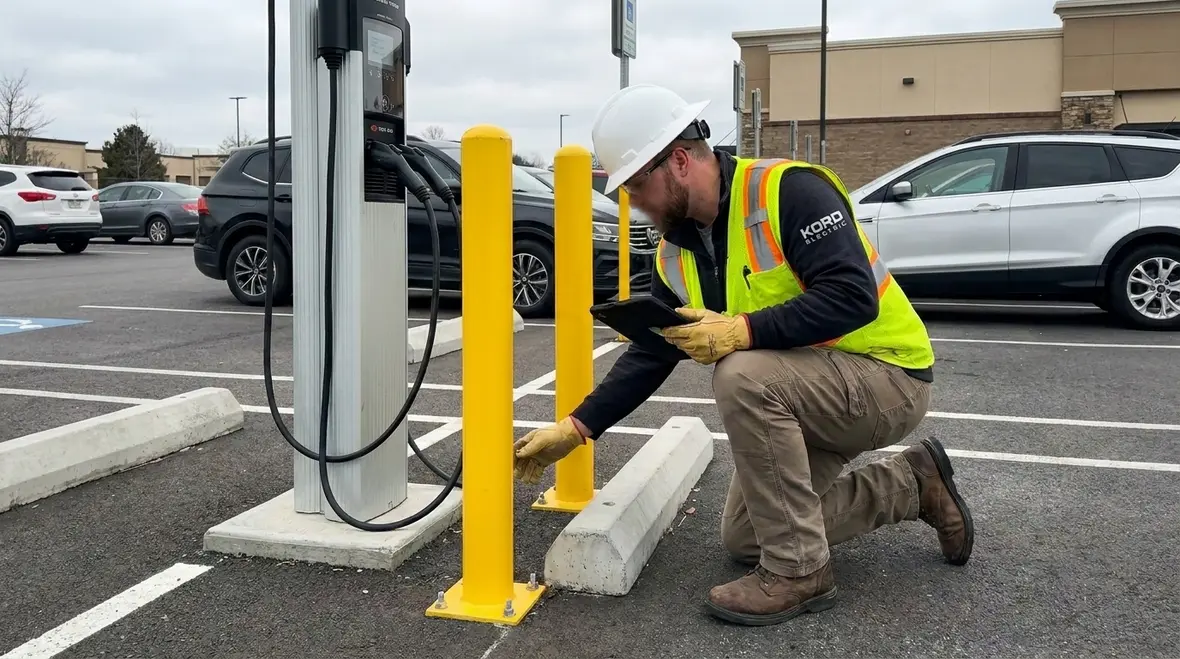
What our technicians check during plan review and installation
When we support commercial and industrial EV charging projects, we start before a single conduit hits the floor. Then we confirm the design supports accidental contact protection from multiple angles. After all, safety is not a single checkbox. It is how the whole system behaves together.
Our team typically checks these items during review and build-out:
- Physical barriers and guards: We verify the protection prevents reach to live parts while keeping service access safe.
- Mounting and enclosure design: We confirm equipment is installed so energized sections remain covered under normal conditions.
- Cable routing and strain relief: We make sure cables do not hang loose or create exposure points.
- Location relative to traffic and pedestrians: We coordinate with site plans so charging bays do not invite accidental contact.
- Conduit and cover integrity: We check that protection remains intact during installation and later maintenance.
Meanwhile, we make sure the installation matches the intended use of the property. A distribution building, a university facility, or a multi-tenant office campus each behaves differently. Therefore, we treat each site like it is unique, because it is. And yes, we know some people want a one-size-fits-all solution. That is like using one umbrella for every weather system. It sounds efficient until your shoes get soaked.

Understanding the 2026 NEC direction for EV charging safety
Many facilities ask us what changes matter most as the NEC continues to evolve. In practice, the direction remains consistent: improve safety, reduce exposure risks, and clarify expectations so installations perform under real use. While facilities may not read every code cycle cover to cover, they still feel the impact during inspections, tenant fit-outs, and upgrade projects.
Our service staff explains the bigger picture like this. First, the NEC aims to reduce shock and fire risk through better protection of conductors and energized parts. Second, it strengthens the link between equipment placement and safety outcomes. Third, it pushes designers and installers toward clearer documentation so field work matches the approved intent.
Because this affects commercial and industrial property schedules, we help teams align procurement, installation timing, and commissioning tasks. If your charging stations need to open by a certain date, we plan the safety work so compliance does not show up as a last-minute surprise. We coordinate testing and verify that protective measures support the NEC Section 650.10 EV accidental contact protection goal without slowing operations.
For additional context on how fire and electrical specialists discuss NEC safety principles, our resources across Kord Electric and Kord Fire align with the same outcome: protect people, protect assets, and keep systems reliable for the long haul. If your project touches fire protection planning, we also collaborate with relevant experts, because electrical safety and fire safety rarely stay in separate rooms.
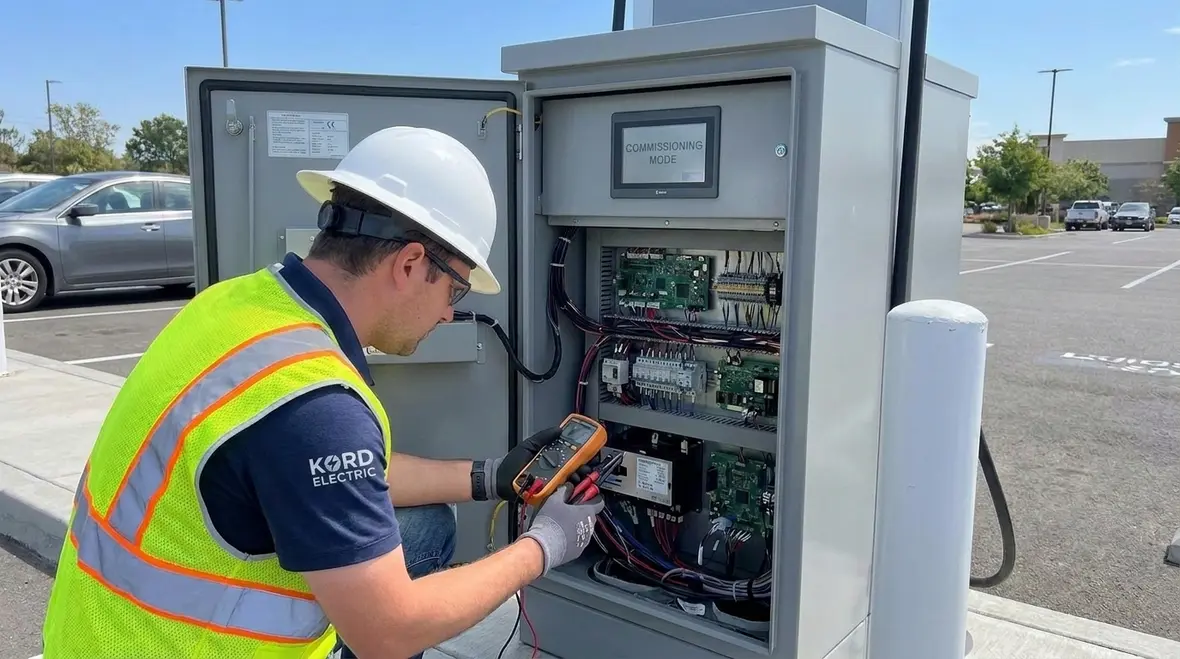
How accidental contact protection connects to commissioning and inspections
Once the equipment is installed, you still cannot treat safety as finished. Instead, you confirm performance through commissioning steps and practical inspection checks. In our world, commissioning means you verify what the code expects and what the site requires.
We recommend facilities treat EV charging installations like any other safety-critical electrical system. Therefore, we schedule walkthroughs that include equipment condition checks, cover verification, and access review. We also confirm labeling and operational behavior, because confusion invites mistakes.
During inspections, our technicians look for the kind of issues that inspection teams often catch:
- Exposed energized parts due to improper enclosure or missing guards
- Access paths that allow a person to reach protected components
- Improper spacing around equipment that changes after final site finishes
- Damage from rough installation, transport, or later construction work
- Maintenance access that compromises protection
Transition matters here. Even if the installation passed earlier checks, later changes can alter the “normal condition” that protection relies on. A new barrier, a fresh landscaping edge, or a revised pedestrian route can shift the safety math. So we help keep the system safe across the life of the project, not just on day one.
Common site mistakes we help major properties avoid
Commercial and industrial facilities face pressure from multiple teams: facilities management, contractors, leasing groups, and sometimes vendors who move fast and explain slowly. That is where safety can get lost. So we step in to prevent the usual slip-ups.
Here are some mistakes we see often, and how we address them:
- Charging bays installed too close to pedestrian access: We adjust layouts, add barriers, or reroute components to reduce reach risk.
- Cables routed without secure protection: We inspect strain relief and conduit paths to prevent exposure during wear or maintenance.
- Guards treated as optional accessories: We treat them as part of the safety function, not decoration.
- Equipment swapped late in the project: We verify new equipment still meets the accidental contact protection needs.
- Maintenance procedures that ignore access limits: We align instructions and access steps with protection requirements.
And here is the pop-culture truth: a lot of people approach electrical safety like a superhero movie. In those stories, the hero lands cleanly and everything works out. In real life, tools slip, covers loosen, and a ladder ends up exactly where it should not. That is why we design with accidental contact protection and practical site behavior in mind.
Best practices for facility managers and ES teams
Facility leadership often needs straightforward guidance they can use immediately. So we recommend a simple operating rhythm for EV charging safety across large properties. If you follow it, you reduce the chances that a small issue turns into a compliance headache.
We advise you to:
- Maintain clear access boundaries: Keep walkways and work zones separated from energized areas.
- Document equipment locations and protective features: So future work does not undo safety steps.
- Train your team on safe maintenance access: Our technicians explain how to inspect without compromising protection.
- Schedule periodic safety checks: We align checks with site activity so changes do not slip through.
- Coordinate electrical and fire safety thinking: If your site includes fire protection planning, do not let the teams operate in silos.
In short, we help your facility teams keep the charging system safe over time. We also support you with the kind of clear explanation that helps contractors and internal staff understand what matters and why. When people know the purpose, they follow the rules. And when they follow the rules, everyone sleeps better.
FAQ
Request a safer EV charging rollout with Kord Electric
If your commercial or industrial facility plans EV charging upgrades, we can help you meet safety expectations with steady, code-aligned installation and commissioning. Our technicians and expert service staff explain the requirements clearly, then we verify the details in the real world, where access paths, maintenance habits, and site conditions matter. Reach out to Kord Electric for plan review, installation support, and safety-focused inspections. Let us help your chargers perform reliably, while your compliance stays calm and solid.
For facilities across Southern California, you can also explore how our Los Angeles County electrical services support EV charging infrastructure, preventive maintenance, and broader NFPA 70 implementation across large commercial and industrial properties.
If you would like a deeper code backdrop while planning your EV projects, we recommend pairing this guide with our broader NEC discussions, including our Kord Fire resource on NFPA 70: All About the National Electrical Code (NEC) and our Kord Electric article on understanding NFPA 70 for 2026 planning, so your EV charging decisions stay anchored to the full NEC framework.


