
NEC Section 660.3 Reconditioned Discharge Lighting Compliance
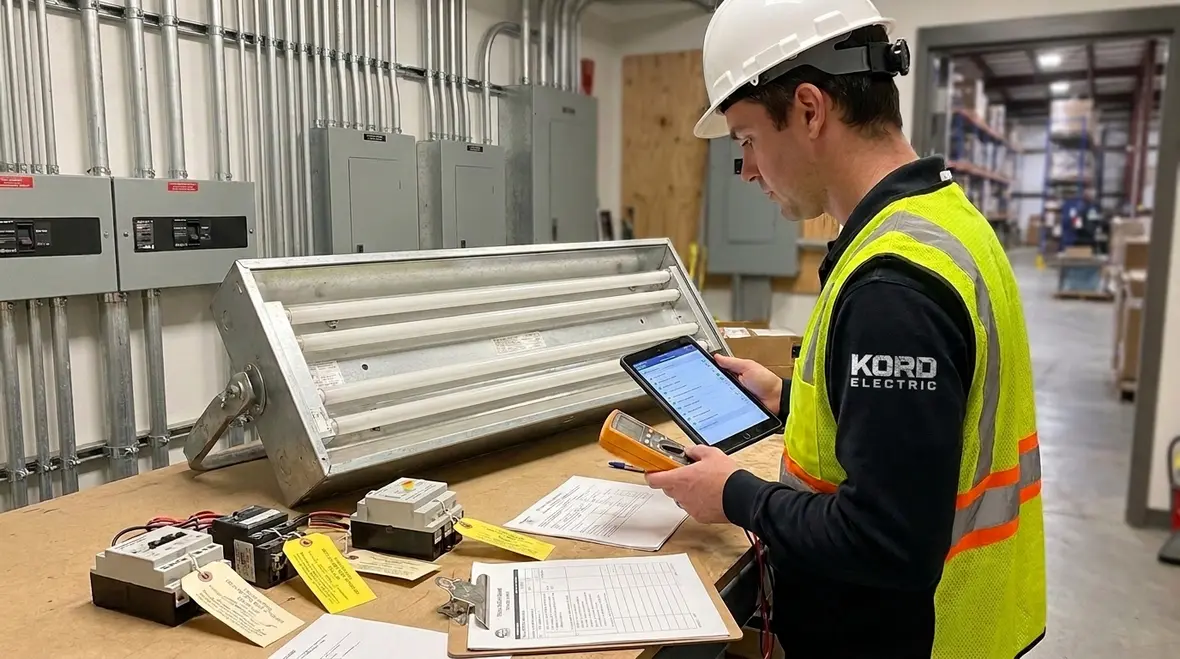
NEC Section 660.3 reconditioned discharge lighting is one of those rules that sounds like it belongs in a museum exhibit, until you have to meet it on real projects. In the first stages of a compliance plan, we at Kord Electric focus on how this standard applies to commercial and industrial facilities, and we explain what it means in plain language. Meanwhile, our technicians and expert service staff review the details with care, because the goal is not just to pass inspection. The goal is to reduce risk, protect people, and keep operations running. And yes, we still find it funny that lighting codes can feel like paperwork in slow motion. Still, if you want a system that works during emergencies, you want this paperwork done right.
Why NEC updates matter to real buildings
When the National Electrical Code gets updated, it changes how designers, installers, inspectors, and owners make decisions. As a result, many facility teams feel the shift first when procurement slows down, documentation gets heavier, or field tests take longer. However, the updates are not meant to create headaches. They aim to reflect field experience, better safety data, and clearer requirements.
At Kord Electric, we serve commercial and industrial sites and major property buildings, which means we handle complex electrical systems with real uptime needs. Therefore, our approach stays steady: we build compliance into design review, installation planning, and final verification. We also make sure our staff explains the “why” behind the rules, not just the “what.” That way, others on the team understand the practical impacts on labeling, maintenance, and testing.
For teams following the latest guidance, it helps to remember that code adoption timelines vary. Additionally, some areas enforce local amendments. That is why our technicians treat compliance as a process, not a single event.
NEC Section 660.3 reconditioned discharge lighting: the core idea
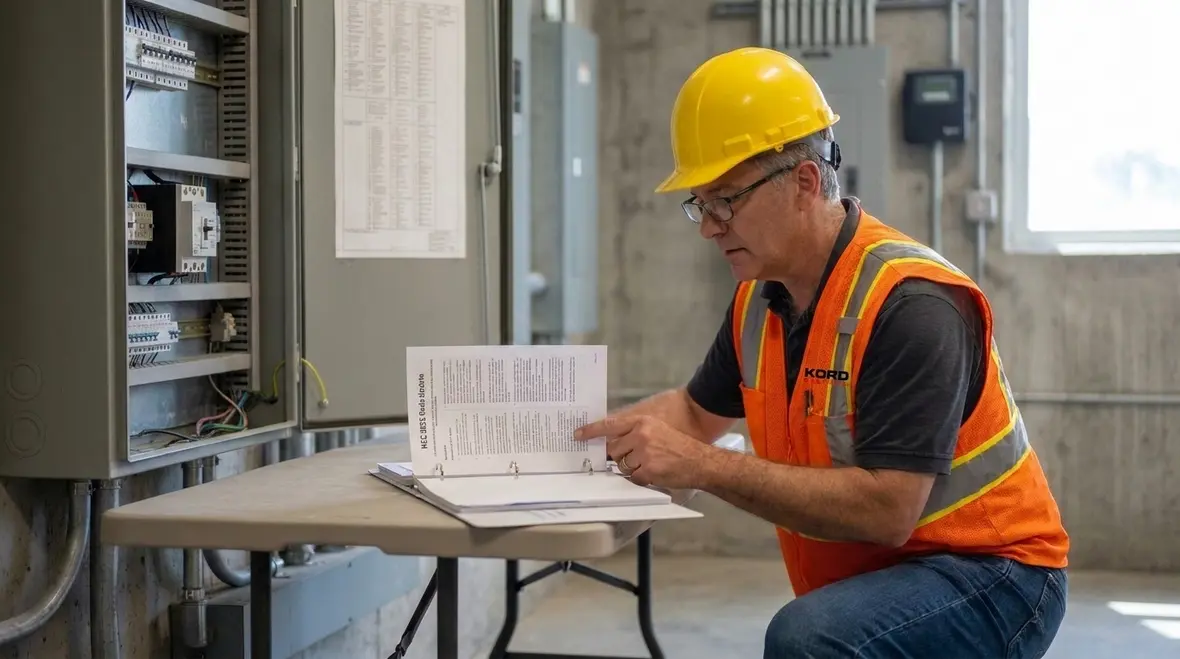
NEC Section 660.3 reconditioned discharge lighting focuses on when and how discharge lamps or components can be reused after reconditioning. Put simply, the code aims to ensure that what comes back into a building still meets safety and performance expectations. So, we do not treat reconditioned items as a shortcut. We treat them like equipment that must be proven safe before it returns to service.
In practice, this requirement affects documentation, inspection records, and the way equipment is accepted on site. Moreover, it influences how owners plan maintenance and replacement cycles. If a facility uses reconditioned discharge lighting, then our team helps them create a workflow for verifying suitability and tracking status over time.
In addition, our expert service staff often hears a common misunderstanding: “If it looks fine, it is fine.” Unfortunately, electrical safety does not work like that, and neither does emergency operation. We explain this clearly during walkdowns, because a system that fails during an emergency is not just a repair issue. It becomes a safety and liability issue.
How our team verifies compliance without disrupting operations

Commercial and industrial facilities cannot always shut down for long periods. Therefore, we plan verification in a way that protects operations and keeps the electrical schedule realistic. First, our technicians gather the existing documentation, including model details, maintenance history, and any prior reconditioning records. Next, we compare that information against the applicable NEC language and project requirements.
Then we move into field verification. We check labeling, installation conditions, compatibility, and placement where applicable. After that, we test and confirm performance where the system design supports verification. Finally, we document outcomes so the facility team can maintain records with confidence.
We also coordinate with the right trade partners, because compliance rarely lives in a single crew. For example, if a facility uses reconditioned discharge lighting components in a way that interfaces with emergency systems, then correct coordination matters. Otherwise, someone might install components that technically “fit,” yet still fail acceptance checks due to requirements that came from the code. And nobody wants to chase that kind of issue on the last day of a shutdown. That is how costly delays happen.
What documentation and acceptance look like in the field
Once a facility decides to use reconditioned discharge lighting, documentation becomes the backbone of acceptance. In other words, we cannot rely on verbal assurances. We need proof that the items were reconditioned using the right process and meet required conditions.
At Kord Electric, we build a documentation checklist that aligns with the project scope and how the building operates. This often includes component identification, reconditioning traceability, installation records, and maintenance logs. We then help facility managers and property teams organize these records so they can be found quickly during inspections.
In addition, our technicians train internal staff when needed, especially when a building team handles recurring maintenance. We do this because records that do not get updated soon enough become outdated fast, and codes do not care that a schedule got busy. (Codes are patient, but inspectors usually are not.)
We also discuss how ongoing maintenance ties into the reconditioned approach. If you reintroduce equipment into emergency-related areas, you need steady attention. That means inspection intervals, replacement triggers, and verification that the lighting remains suitable for its life safety role.
Design and planning for commercial safety
Electrical safety improves when design decisions respect the full lifecycle. Therefore, we start early with planning, so the facility team understands how reconditioned discharge lighting fits into the broader system. We consider device compatibility, placement, wiring practices, and the required operation under emergency conditions.
Then we help teams avoid common planning mistakes, such as assuming that equipment reconditioning automatically equals acceptance. Instead, the code expects a disciplined method for bringing reconditioned parts back into use. Our staff explains the sequence, so the project can move forward with fewer surprises.
We also focus on long-term maintainability. When a facility plans for future checks, it reduces the chances of last-minute changes. And because we serve major property buildings, we understand that long-term plans need to work across multiple tenants, contractors, and maintenance schedules.
For those who want deeper background on the NEC and the broader topic of safety compliance, resources such as the explanations shared in Understanding NFPA 70: The National Electrical Code Explained for 2026 on the Kord Electric blog and the additional NEC overviews we reference from Kord Fire’s NFPA 70: All About The National Electrical Code (NEC) can provide helpful context. Still, every site differs, so we always translate code concepts into job-specific steps.
Common mistakes we see during audits
Even with good intentions, teams sometimes miss details when they manage fast-moving maintenance cycles. Below are issues we commonly see, along with how we correct them during commercial and industrial projects.
- Missing traceability: A facility has equipment on site, but lacks reconditioning records that support safe acceptance.
- Unclear component identification: The parts match roughly, yet labeling or identification does not match what documentation shows.
- Assuming “looks right” equals “code-ready”: Visual condition does not confirm performance or suitability.
- Delayed updates to maintenance logs: Records lag behind reality, which becomes a problem during inspection windows.
- Poor coordination with life safety systems: Emergency-related placement and interaction require careful planning, not guesswork.
Our technicians address these issues by using a repeatable process. First, we review what exists. Next, we compare it to what the facility needs for compliance and safe operation. Then we recommend corrective steps that minimize disruption. Finally, we help document the result so the facility team can move forward with confidence.
And yes, sometimes we catch the same mistake three times in the same month. At that point, it stops being a mistake and becomes a strategy. We do not recommend that strategy.
FAQ: NEC compliance for reconditioned discharge lighting
How NEC Section 660.3 connects with broader NEC planning
NEC Section 660.3 reconditioned discharge lighting does not live on an island. It links directly to how facilities plan conductor sizing, overcurrent protection, equipment examination, and system scope. At Kord Electric, we routinely connect this section to other NEC guidance so facility leaders see the whole picture instead of isolated rules.
For example, when we review reconditioned discharge lighting that ties into emergency feeders or branch circuits, we look at how minimum ratings in sections like feeder sizing and overcurrent protection interact with the lighting load profile. We also confirm that examination practices around equipment safety follow the same disciplined approach described in our NEC education resources. That way, a decision about one component does not quietly undermine the resilience of the entire system.
Because electrical and fire protection systems work together, we often pair NEC Section 660.3 planning with the perspectives shared on our fire partner resources at Kord Fire. When discharge lighting supports egress, fire pump rooms, or alarm visibility, the NEC requirements you follow for reconditioned equipment play directly into life safety performance. Connecting those dots early keeps your team from treating “lighting” like a simple commodity when it is actually part of your emergency strategy.
If your facility is located in Los Angeles County or the surrounding region and you want support that treats NEC Section 660.3 reconditioned discharge lighting as part of a complete electrical safety plan, you can review our Los Angeles County electrical services overview. It explains how our technicians and expert service staff coordinate design, upgrades, and verification so commercial and industrial properties keep their systems ready for real-world conditions and inspections.
Final word and a clear next step
At Kord Electric, we help commercial and industrial facility teams handle NEC requirements with discipline and calm. When reconditioned discharge lighting is part of your plan, we guide you through verification, documentation, and field acceptance so your systems stay safe when it matters most. If you want a clear path forward, our technicians and expert service staff can review your current setup and help you build a compliant process for today and the next inspection cycle. Contact us to schedule a compliance-focused assessment.


