
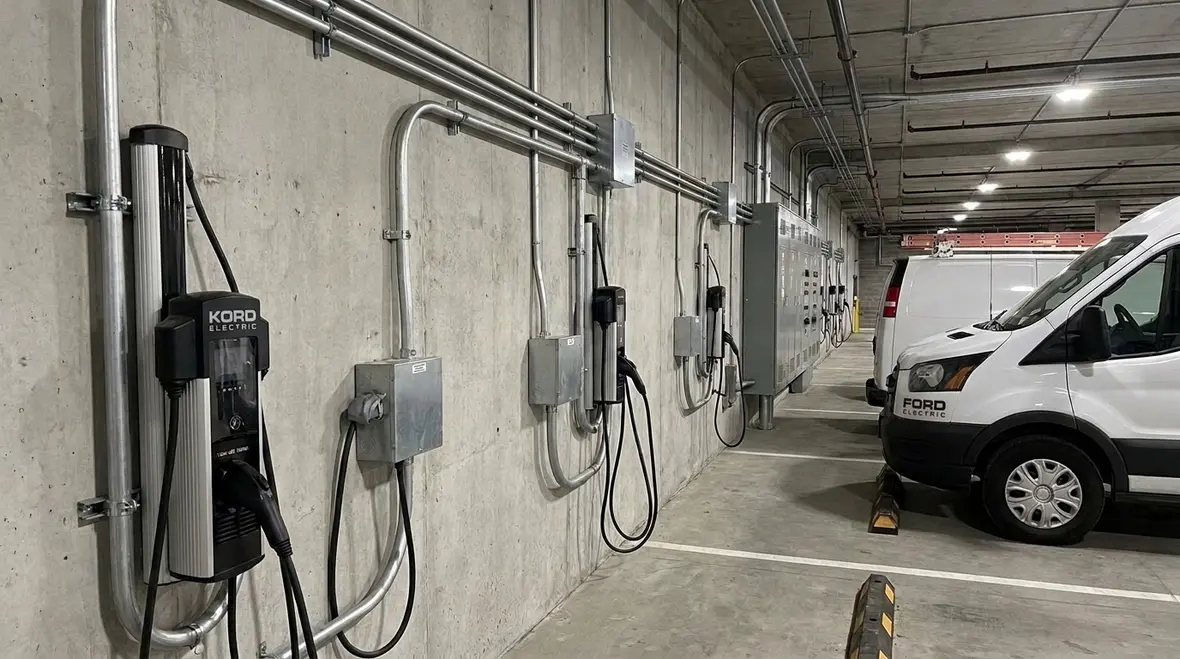
NEC Section 650.4 EV Charging Guide for Compliance
NEC Section 650.4 EV charging sits at the heart of how commercial and industrial sites keep up with modern power needs, and we see it every day as we plan upgrades with owners, facility managers, and electrical contractors. In the same way, the broader NEC sets the rules for safe wiring and equipment, so decisions do not turn into guesswork. Now, when a site needs to add, expand, or replace EV charging, the code guides what gets installed, how it gets protected, and how it gets inspected. And yes, we know: reading electrical rules can feel like watching paint dry. But we do it so your team does not have to. In this guide, we explain what the National Electrical Code requires, what it means for EV charging, and how our technicians keep projects safe, clear, and compliant for major property buildings.
What the NEC really does for facility safety
The National Electrical Code is not just a list of “do nots.” It is a practical framework that helps prevent shock, fire, and equipment failures before they start. For commercial and industrial facilities, that matters because systems run longer hours, serve higher loads, and connect many different types of equipment. At Kord Electric, we focus on the real-world side of compliance. First, we translate the code language into install-ready requirements. Then, we verify the plan with testing and field checks. Finally, we document the work so stakeholders can sign off with confidence.
In plain terms, NEC rules reduce risk by setting minimum requirements for wiring methods, overcurrent protection, grounding, and more. Therefore, when we design or upgrade electrical systems for warehouses, offices, manufacturing sites, hospitals, schools, and large multi tenant buildings, we treat the NEC like a map. Without it, you might still arrive, but you would not like the route, and you would probably stop to ask strangers for directions. Our technicians prefer fewer detours.
How NEC updates for 2026 affect EV charging plans
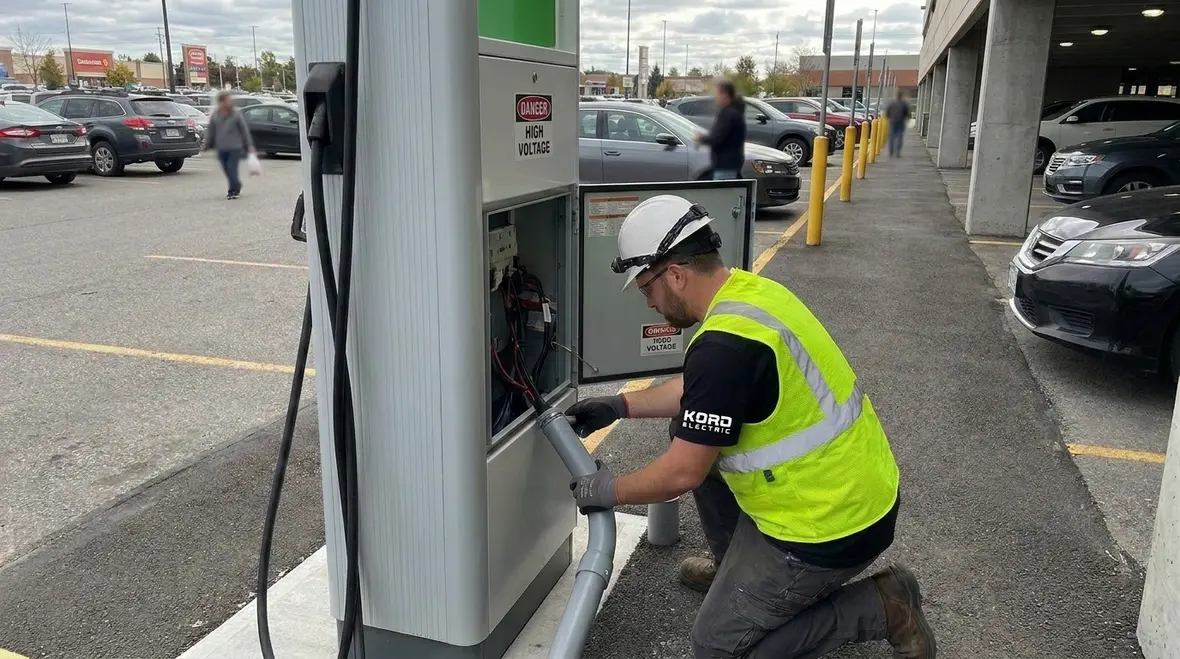
Code updates do not just shuffle wording. They often refine how engineers and electricians design for new materials, new products, and new safety lessons. As we review upcoming requirements for 2026, we pay attention to how EV charging must integrate into existing site infrastructure, and how protection strategies should reflect modern operating conditions. When we plan NEC Section 650.4 EV charging tasks, we make room for what the site needs now, and what it will likely need soon. That approach helps you avoid costly redesigns later.
More specifically, we look at how chargers connect to electrical distribution, how conductors and raceways get sized and protected, and how fault conditions are handled. Also, we consider how the site’s grounding and bonding practices support safe operation. Most importantly, we align the design with inspection expectations so the project stays on track. Because nothing slows a construction schedule like a surprise compliance issue from a last minute review.
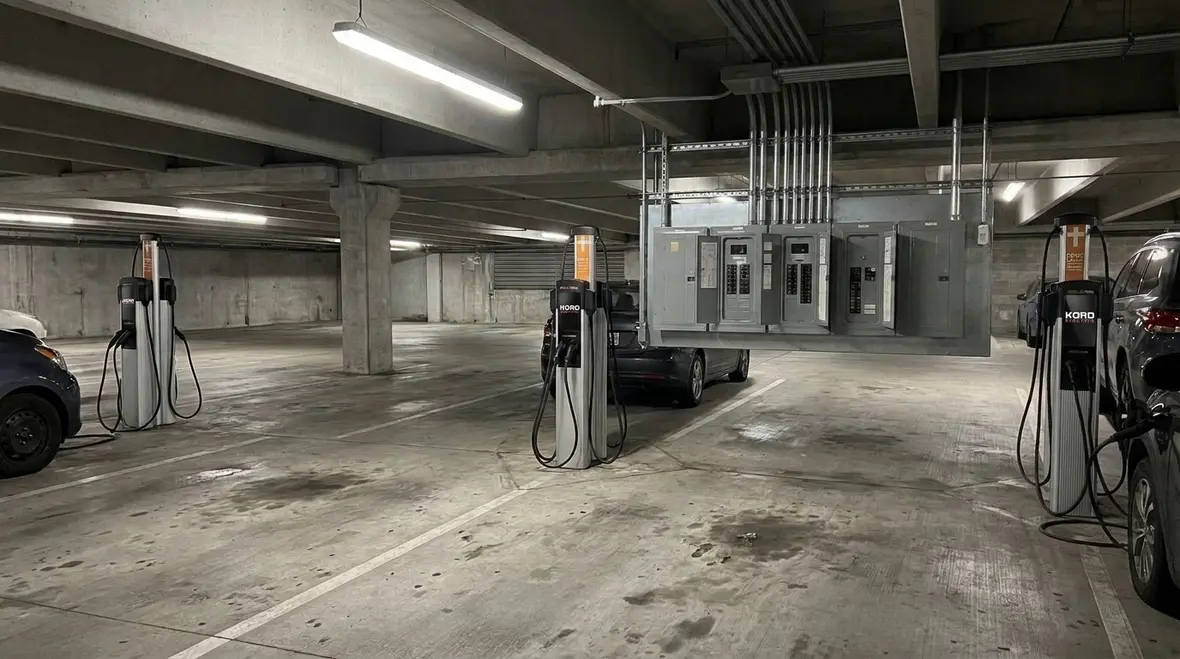
NEC Section 650.4 EV charging: what it demands in practice
NEC Section 650.4 EV charging establishes key requirements that govern how EV supply equipment gets installed and protected. Since our team works only on commercial and industrial facilities and major property buildings, we treat these requirements as part of a complete site power plan, not as a standalone “charger add on.” We also explain details in a way that building teams can use.
Here is what we typically address when we apply the section on a project. First, we confirm the charging equipment and its connection method align with the code’s conditions for safe operation. Next, we verify protective measures, including how overcurrent and fault protection should work for the charger circuits. Then, we check installation details such as conductor routing and protection against physical damage where required. Additionally, we review labeling and identification practices so maintenance teams can service equipment efficiently.
Our expert service staff often says the same thing during walkthroughs. People do not mind rules as long as the rules make sense. So we show the “why,” not only the “what.” For example, if protection is not sized and arranged correctly, a fault may not clear safely. In other words, the system might keep running at exactly the wrong time. And that is when fire risk turns from “unlikely” to “sadly possible.”
Designing EV charging into commercial power distribution
Installing EV charging in a major property building is rarely a simple plug in task. Instead, it affects feeders, panel capacity, load management, and sometimes service upgrades. Therefore, our approach starts with load analysis. We evaluate the site’s existing electrical demand, then we estimate the charging loads under realistic usage patterns. After that, we map how chargers connect to distribution gear and where protective devices should go.
Also, we look at the physical layout. Parking garages, loading docks, and outdoor equipment areas often face higher mechanical stress from vehicles, vibration, and weather. So we recommend installation methods that protect cables and components. We also coordinate with other trades so conduits, mounting, and equipment clearances work in the real world, not only on a drawing.
In some cases, we help teams plan a staged rollout, where only part of the charging capacity installs now, and the electrical infrastructure supports expansion later. That way, you do not pay for a full rebuild when the next phase arrives. Think of it like building a solid foundation for a movie sequel. You could do it later, but doing it now prevents awkward plot holes.
How we verify compliance using testing, documentation, and field checks
Code compliance does not end at the design stage. It must show up in the field. At Kord Electric, our technicians follow a structured process that supports inspections and long term reliability. First, we confirm installed materials match the approved plan. Then, we verify terminations, conductor routing, and protective device settings. After that, we run tests that reflect safe operation under expected conditions.
We also document the work clearly. Facility managers want traceable records. Therefore, we provide documentation that helps others maintain equipment without guessing. That includes labeling, as built notes, and relevant test results. When needed, we explain what was tested and why it matters.
To keep the process calm, we communicate early. We share what the inspector usually looks for and we address likely questions before the final walkthrough. And yes, inspectors have a sense of humor sometimes, but they also have deadlines. We respect both.
Common mistakes we prevent for large buildings
Even with a good design, projects can fail at execution. We see the same problems repeat, especially on busy sites where multiple contractors work at once. To protect commercial and industrial customers, we focus on prevention.
Here are the mistakes we often help teams avoid. First, we see undersized conductors or mismatched protective device ratings that do not align with the charger circuit design. Next, teams sometimes neglect grounding and bonding details, which can affect safe clearing during fault conditions. Also, some installations route cables through locations where physical damage can occur. Finally, poor labeling and unclear documentation can slow maintenance and lead to incorrect assumptions during troubleshooting.
As a result, our field checks catch these issues early. We use our experience with NEC based planning and real site constraints. And if something needs a change, we explain it in plain language, so the decision stays fast and professional.
If you are also exploring related fire code guidance for property safety, we connect with the broader safety ecosystem that includes resources from our partners and trusted educational sources, including fire focused organizations like Firepumps and fire code content providers such as Kord Fire. This helps our teams keep the full picture in mind, not just one section of one code book. Codes work together, like a good team at a sports bar. Everyone plays their part, and nobody fumbles the ball.
Industry resources and how we stay current
Staying current matters because standards evolve. We keep our staff informed through reputable industry resources, including NEC focused explainers published by our teams and related organizations. For example, our content and reference materials from Kord Fire and Kord Fire Australia help us clarify how the National Electrical Code applies to real installations. We also review updated guidance and interpretations that affect practical design and inspection expectations.
Additionally, we use a “read, map, build” workflow. First, we interpret the relevant requirements. Then, we map them to design steps for chargers and distribution. Finally, we build execution plans that our technicians can follow without confusion. That is how we avoid delays caused by misreading a detail that seems small. In electrical work, small details can become big outcomes.
If your facilities team wants more background on how the broader National Electrical Code shapes EV projects, you can also explore our companion guide Understanding NFPA 70: The National Electrical Code Explained for 2026, which connects high level NEC direction to practical decisions about distribution, protection, and long term upgrade planning.
FAQ
Ready to plan compliant EV charging for your facility?
If your organization runs a commercial or industrial facility or manages a major property building, we can help you plan EV charging that matches NEC requirements and stays inspection ready. Our technicians explain the steps, coordinate the details, and verify the work with field checks and testing. Then, we document everything so maintenance stays simple. Contact Kord Electric to start a site review and build a charging plan that performs safely, scales smoothly, and avoids last minute surprises.
If your facility is located in Southern California, our dedicated Los Angeles County electrical services team can also integrate NEC Section 650.4 EV charging into broader upgrade work, including distribution changes, panel adjustments, and coordination with life safety and backup power systems.
For teams that want to see how EV charging fits alongside other NEC driven upgrades, you can pair this guide with our broader National Electrical Code resource on 2026 direction, and with related safety content from Kord Fire and educational partners like Firepumps. That way, your EV charging plan does not just pass an inspection once. It becomes part of a long term electrical safety and reliability strategy for your entire property.


