
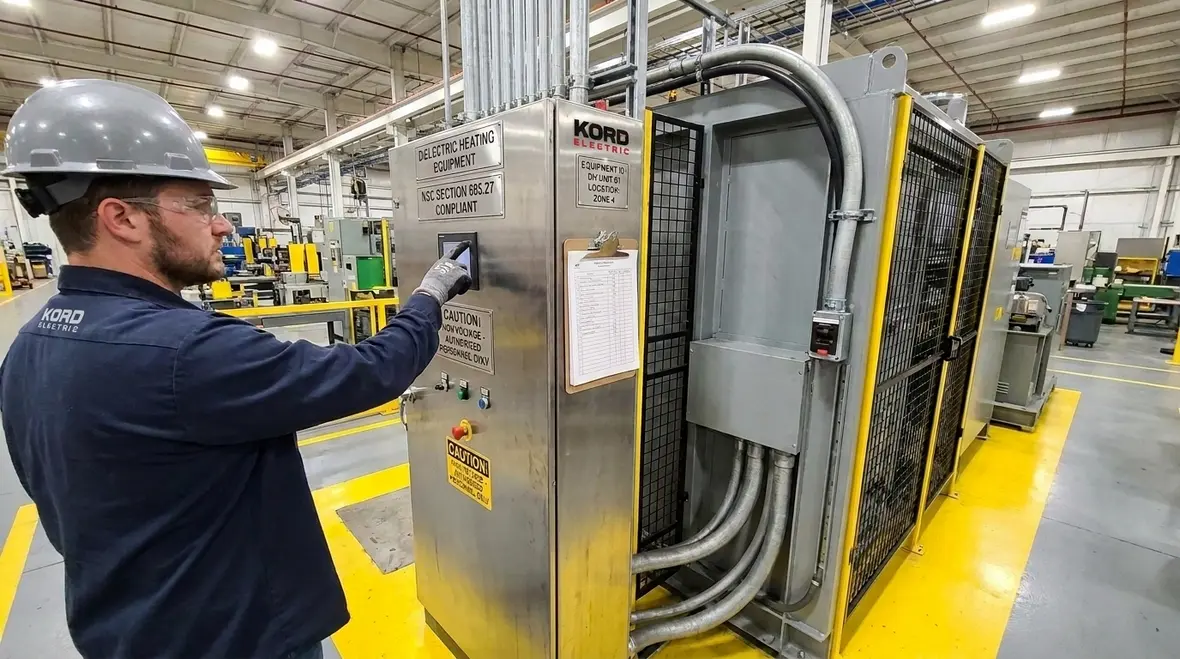
NEC Section 665.27 Dielectric Heating Marking Rules Explained
NEC Section 665.27 marking rules for dielectric heating explained
In the first hundred to one hundred fifty words, we need to say this clearly: NEC Section 665.27 dielectric heating marking rules require proper identification for dielectric heating equipment so workers and inspectors can recognize the equipment type, location, and relevant warnings. At Kord Electric, we treat that marking like a sign on a highway, not like a decorative sticker. And yes, we have seen what happens when markings get lost, faded, or replaced with something that looks “close enough.” It never is.
For commercial and industrial facilities, and major property buildings, these details matter because the stakes are higher, the systems are more complex, and the inspection trail needs to stay clean. Our technicians and expert service staff walk teams through the “why,” then back it with correct implementation, so the building stays safer and operations keep moving.
What the National Electrical Code requires for dielectric heating in industrial settings
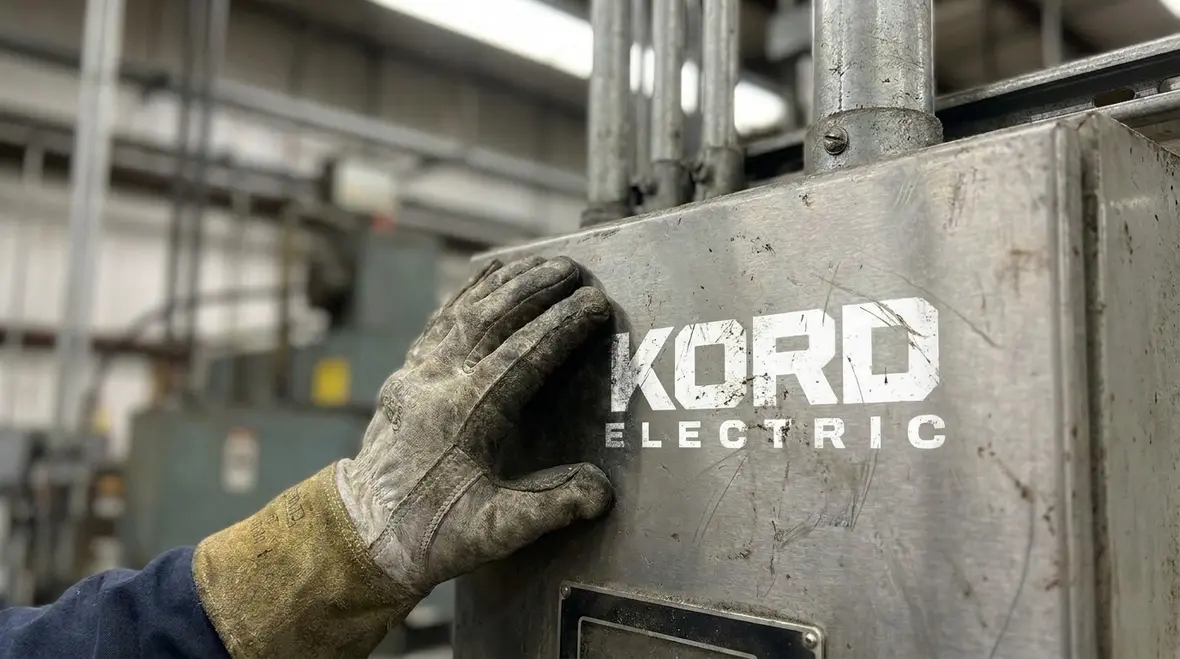
To understand what the NEC expects, we start with the basic reality: dielectric heating uses electric fields to generate heat inside materials. Therefore, the equipment behaves differently than typical resistance heaters, and it often sits inside systems that need clear boundaries, controls, and documentation.
As a result, the NEC organizes rules so that designers, installers, and maintenance teams do not guess. Instead, they follow labeled equipment, specified installation methods, and consistent marking so that the site remains understandable during day to day work and during inspections.
In commercial and industrial facilities, dielectric heating equipment can be part of processes tied to production, fabrication, drying, or specialized material handling. Consequently, electrical work affects uptime. If something is labeled poorly, troubleshooting becomes slower, lockout and tagout gets messier, and downtime grows legs and walks away without paying rent.
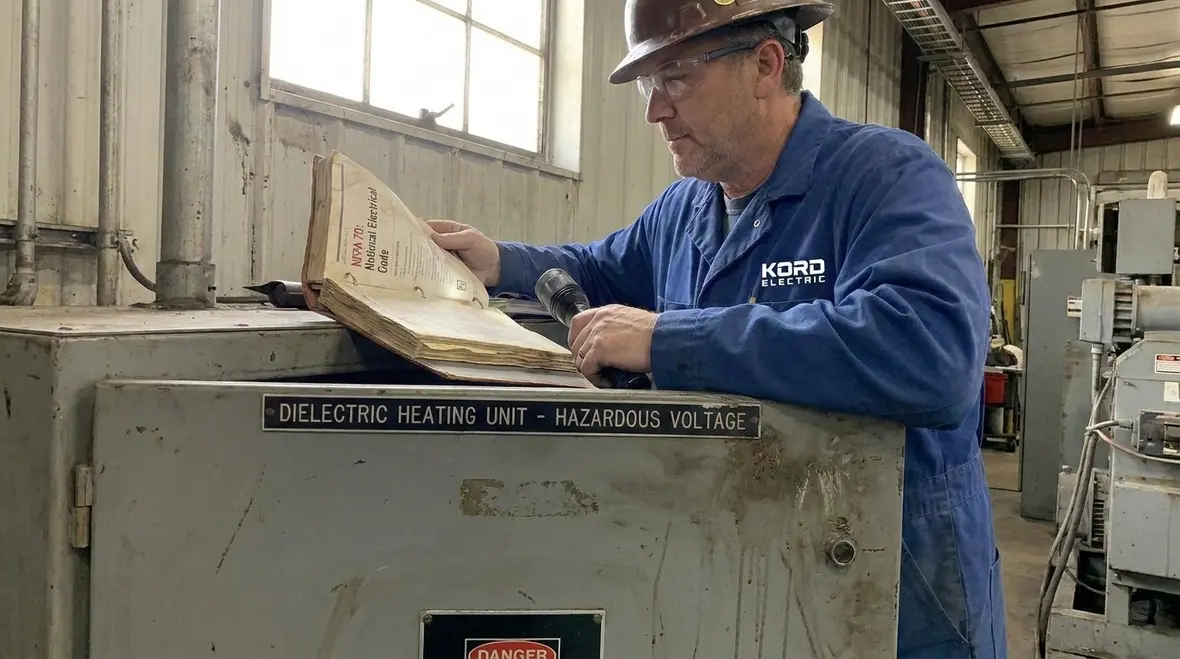
How Kord Electric’s electricians read the rules, step by step
We do not just cite sections and move on. Our technicians and expert service staff interpret the requirements for real buildings. So when we review a plan or visit a site, we ask how the equipment will be installed, how personnel will access it, and how the marking will stay visible over time.
First, we confirm the equipment category and heating method. Next, we check where the dielectric heating unit sits in relation to working space and protective device locations. Then, we look at identification and warning needs so they match the function of the system. After that, we verify that the marking and labeling approach supports safe operation and clear inspection history.
Finally, we document what we found and what we installed. That matters because in commercial and industrial environments, teams rotate, vendors change, and records must stay readable. If the file is vague, people do not follow it. And if people do not follow it, the building becomes a mystery novel where nobody knows the ending.
Because dielectric heating systems often live alongside other sensitive loads, we frequently coordinate our interpretation of NEC Section 665.27 dielectric heating marking rules with broader facility planning. That might include emergency power design, electrical safety checklists for new construction, or data center power redundancy strategies that Kord Electric has outlined in other resources. When the same disciplined mindset shows up in each project, the marking rules become one more tool in a larger safety and reliability toolbox, not an isolated chore that someone rushes at the end.
Marking, labeling, and inspection readiness for 665.27 dielectric heating
Now we connect the marking requirement to outcomes. Marking under NEC Section 665.27 dielectric heating marking rules supports inspection readiness by giving authority figures and trained workers a faster path to confirming the equipment identity and conditions. Moreover, good marking reduces the chance that someone treats dielectric heating like another “standard” load, which can lead to unsafe assumptions.
In practical terms, we focus on visibility, durability, and placement. Labels should remain legible in the environments where they operate. Also, marking must align with what the equipment actually is, not what someone remembers it to be.
At Kord Electric, we also align electrical markings with site procedures. Therefore, the electrician label matches what maintenance crews look for during routine checks. When that alignment happens, troubleshooting gets calmer, faster, and more accurate.
And yes, there is a human side. We have watched someone scan a panel, shrug, and move on because a label was too vague to matter. Then later, the same person spends an hour correcting a problem that could have been avoided in five minutes. Label clarity saves time. Time is the only currency nobody in a factory can print on demand.
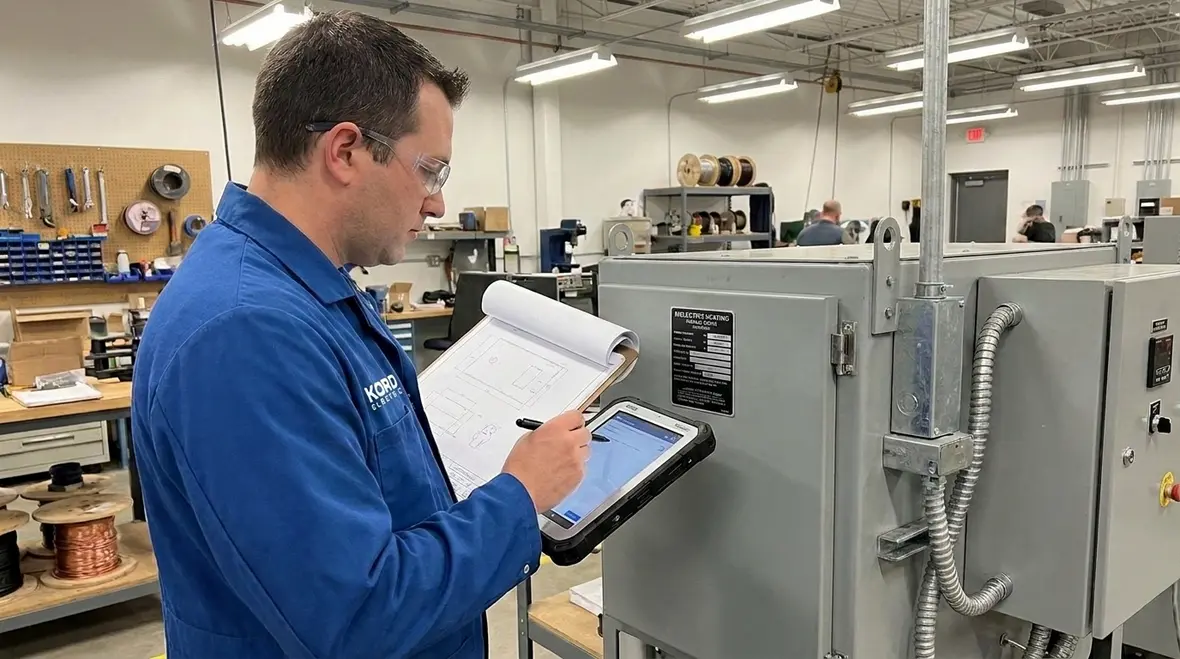
Design and installation choices that keep dielectric heating systems safe
Electrical safety does not come from one rule alone. It comes from the full chain: proper design, correct installation, correct protective measures, and steady maintenance. For dielectric heating setups, we help teams think about system behavior, not just wiring diagrams.
So we review how circuit routing supports safe separation, how terminations and conductors stay protected, and how disconnect and control arrangements fit the equipment. In addition, we confirm that grounding and bonding meet the needed intent, because electrical heat systems still require disciplined control of electrical pathways.
Next, we consider labeling continuity. Even if the original marking met the standard, future service activities can damage labels. Therefore, our approach includes planning how labels will be preserved during normal access and during maintenance tasks.
We also coordinate with other trades where needed, since commercial and industrial facilities often involve multiple contractors. When coordination fails, electrical systems do not work in isolation. They live alongside HVAC, process lines, control cabinets, and structural changes. Thus, our technicians help keep the electrical scope clear and consistent.
When we map these choices, we often connect them back to broader NEC planning, especially for facilities preparing for upcoming code cycles. For teams who want a deeper dive into how NFPA 70 operates as the rulebook behind these decisions, Kord Electric’s resource on Understanding NFPA 70: The National Electrical Code Explained for 2026 gives additional context that makes dielectric heating marking rules easier to place in the bigger safety picture.
Common compliance pitfalls we help commercial teams avoid
We see the same patterns across major property buildings and industrial sites. First, teams treat labeling as an afterthought. Then, after the installation, someone adds stickers that do not match the final equipment or do not survive the environment.
Second, some crews assume “similar equipment” can share the same identification. However, dielectric heating equipment can differ in how it operates and how it must be handled. As a result, the marking must reflect the correct equipment, so the right people can make the right decisions.
Third, sites sometimes lack clear inspection documentation. Therefore, even if the wiring work meets the intent, the inspection path slows down. Our expert service staff helps keep records and labeling organized, which means inspections proceed with fewer surprises.
And finally, we deal with the reality of change. Over time, buildings get renovated. Equipment gets replaced. So we help teams update labeling and electrical documentation, so the building stays accurate long after the original install date.
When we support commercial and industrial clients, we also pay attention to how these pitfalls connect with other electrical risk areas such as surge protection, redundant power, and lighting controls. For instance, a project team might upgrade panels for data center redundancy or install smart commercial lighting controls across a campus. If the dielectric heating systems live in the same distribution path, sloppy labeling around Section 665.27 can drag down the clarity of otherwise solid upgrades. That is why we apply the same disciplined documentation and inspection mindset across every affected system, not just the one that sparked the latest work order.
What other NEC and code references mean for your dielectric heating systems
Many building teams ask us how NEC guidance connects across sources and related code discussions. We point them toward authoritative education and practical code summaries, and we connect those ideas to how we implement them on site.
For example, the NEC framework includes rules for how electrical systems should be identified, protected, and installed in ways that support safe use. Also, organizations that publish code overviews help teams understand the intent behind the rules, which makes field implementation more consistent.
We also make sure teams understand local and national practices. For instance, at times our customers review information linked to broader NEC explanations and operational guidance. Then, we translate that into site specific actions: what needs marking, where it should sit, and how it should remain readable. That translation matters because code intent without installation discipline turns into paperwork with no protection value.
For deeper background, many teams review educational resources like those published by Kord Fire on NEC topics and other industry references, and then we apply the principles directly to the electrical work Kord Electric performs for commercial and industrial facilities. In the end, the building needs functioning, compliant equipment. Not a stack of PDFs that nobody can interpret during a shutdown.
As those systems evolve, facilities often discover that they need broader help beyond a single code section. When you begin planning upgrades such as emergency power, lighting controls, or surge protection, our team can align your dielectric heating marking strategy with a larger Los Angeles County commercial electrical service plan so your documentation and labeling stay consistent across the entire site instead of splintering by project.
FAQ
Conclusion and next step
If you run a commercial or industrial facility, dielectric heating systems deserve more than “good enough” labeling. We at Kord Electric help your team meet NEC Section 665.27 dielectric heating marking rules with clear markings, correct installation practices, and inspection ready documentation. Then our expert service staff supports ongoing maintenance updates so the site stays accurate over time. If you want a practical review for your building, contact us today and we will set up a focused assessment. Let’s keep your electrical systems safe, clear, and running.
If you are also planning broader upgrades tied to NFPA 70, such as emergency power, data center redundancy, or smart lighting, our team can connect those projects with your dielectric heating compliance plan so your electrical system tells one consistent safety story across every panel and process line.


