
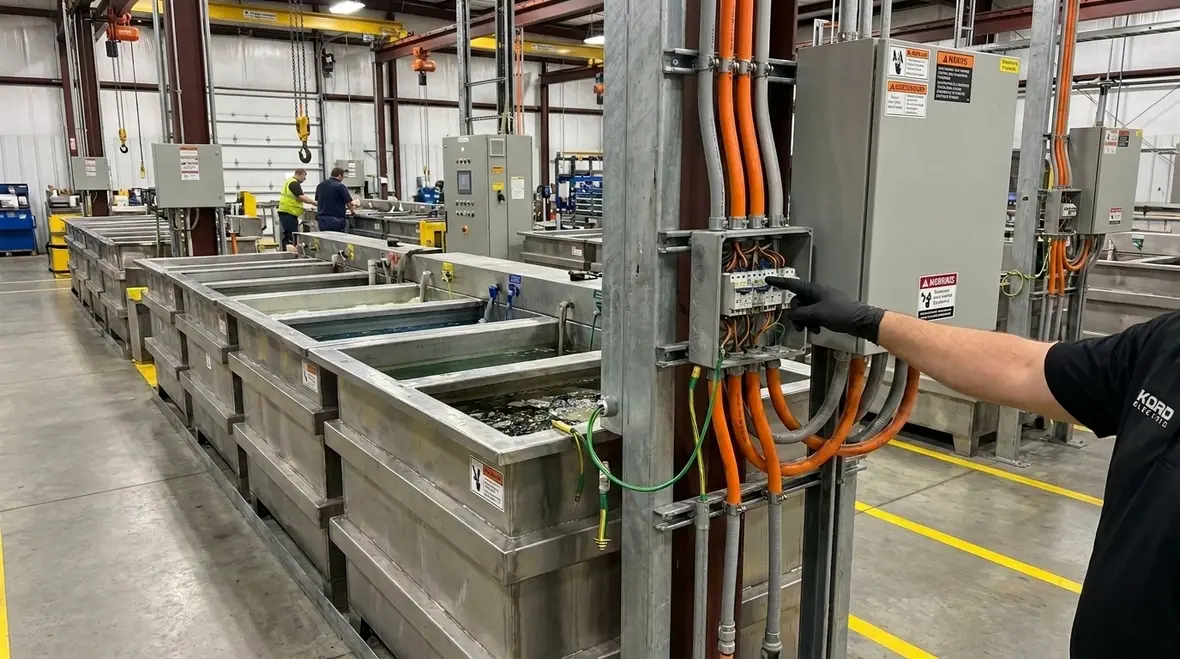
NEC Section 668.4 Electroplating Requirements for Industry
NEC Section 668.4 and why it matters for commercial and industrial sites
When a facility follows the right rules for electrical wiring and equipment, it does more than keep inspectors happy. It protects people, production, and downtime budgets. In particular, NEC Section 668.4 electroplating drives key safety decisions in areas where metal finishing processes put unique demands on the electrical system. However, that one clause never lives alone. It sits inside the broader National Electrical Code that guides everything from grounding and bonding to wiring methods, equipment ratings, and protection.
At Kord Electric, our technicians and expert service staff explain these requirements in plain language before they ever touch a panel. And we do it because misunderstandings can turn into expensive delays. To be clear, we do not provide residential guidance. We focus on commercial and industrial facilities and major property buildings, where the electrical system must perform, not just pass. So we walk through what the code expects and how we apply it in real installations. Think of it like reading the user manual for a machine that costs more than your entire couch.
How the NEC organizes the rules you will actually use
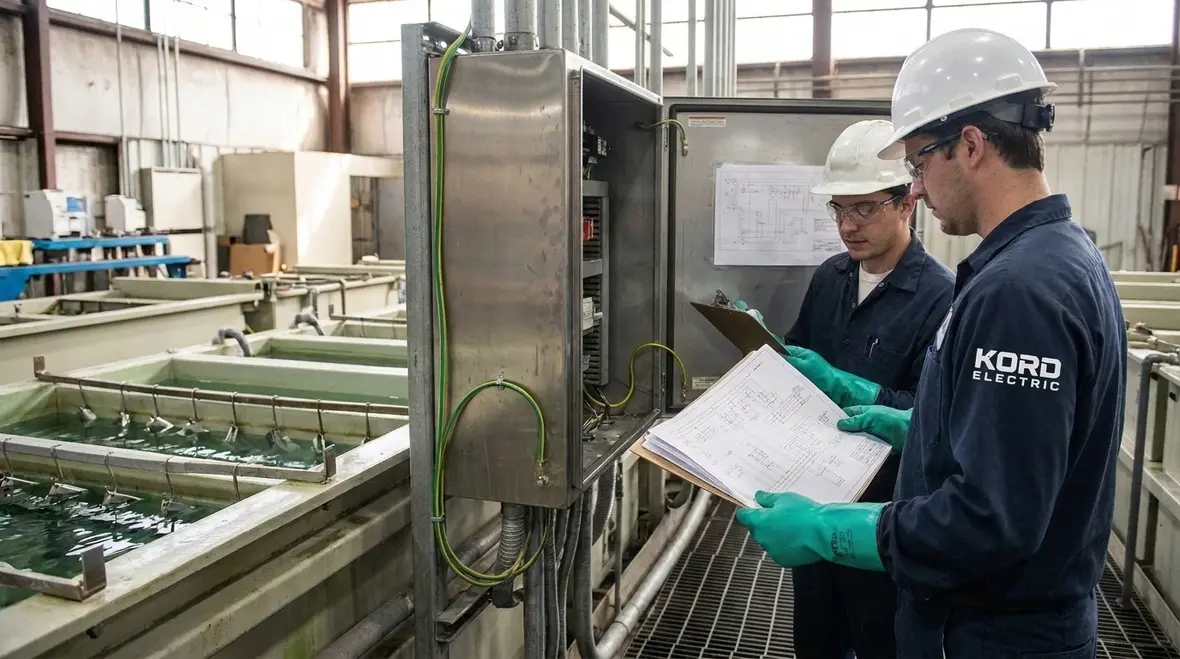
Most people hear “NEC” and imagine a huge book with endless pages. Yet the Code works like a map. It separates occupancies, processes, locations, and equipment methods into sections that help you find the right rules fast. Then it pairs those rules with practical requirements such as wiring methods, system integrity, and protection for fault conditions. In other words, the NEC does not just say “be safe.” It tells you how to build safety into the design.
From there, NEC Section 668.4 electroplating connects directly to electroplating and related metal finishing environments. These areas often have wet processes, chemical exposure, and equipment layouts that change how you route cables, place devices, and handle bonding. Consequently, your electrical design must match the real environment, not the neat drawings. Our teams at Kord Electric typically start by reviewing process requirements, electrical one line diagrams, and existing conditions. Next, we compare that to the NEC structure so we can implement the right rules instead of relying on guesswork. And yes, guesswork is a hobby we do not support.
NEC requirements for electroplating: environment, equipment, and wiring integrity
Electroplating areas can be demanding. They often include conductive solutions, possible splashes, corrosive vapors, and equipment that runs in cycles. As a result, the electrical system must handle both normal operation and abnormal conditions without creating hazards. Under the Code, designers and electricians must pay attention to how electrical equipment withstands moisture, how conductors remain protected, and how bonding supports safe fault clearing.
In practice, our technicians look at the full chain. We inspect how conductors enter enclosures. We check how devices get mounted and sealed. We verify that the system provides a reliable path for fault current when something goes wrong. Then we check that wiring methods and equipment suitability align with the electroplating location. We also coordinate with other trades because electroplating areas often include plumbing, ventilation, and process equipment that can affect electrical layout.
Additionally, we verify that labeling, identification, and documentation match what the equipment actually does in the field. This matters in commercial and industrial settings because operations teams must understand how to shut down safely. Then when maintenance arrives, they can trace circuits without playing electrical “Where’s Waldo?” It is a simple goal: reduce downtime and protect people.
Grounding and bonding decisions that keep fault clearing predictable
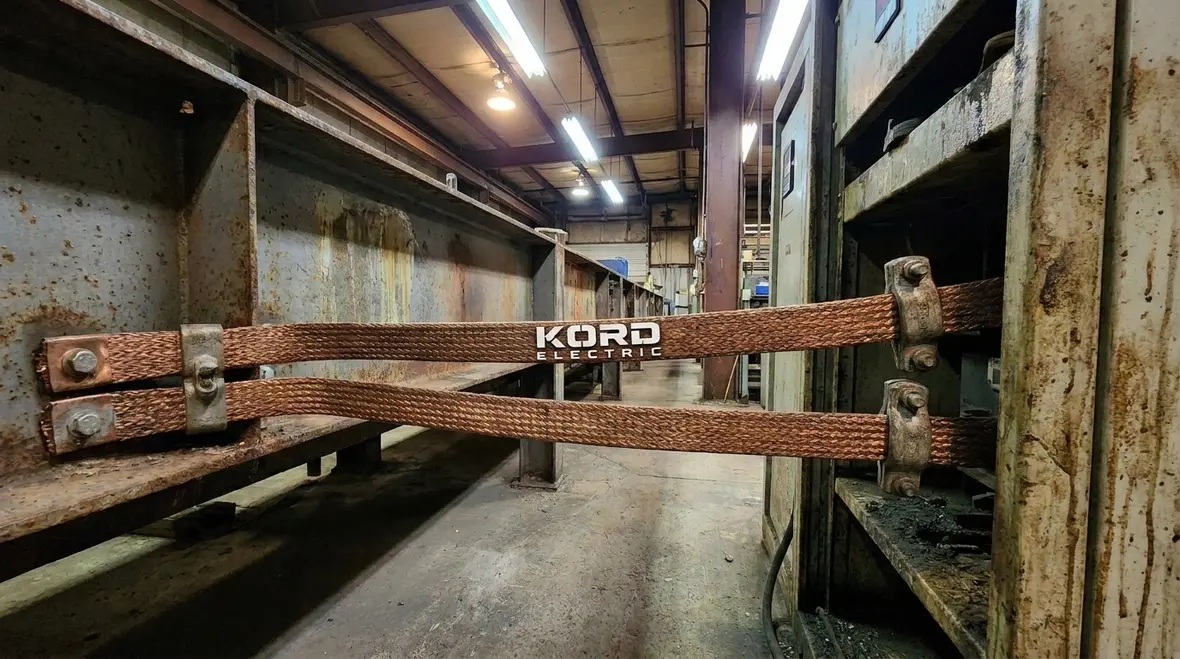
If you want the electrical system to behave during a fault, you need grounding and bonding that does not drift away from the design. The NEC emphasizes system integrity because it expects conductive paths to remain reliable over time. In electroplating and metal finishing settings, corrosion and chemical exposure can threaten connections if installers treat them like “good enough.” We treat them like critical infrastructure, because they are.
At Kord Electric, our expert service staff explains grounding and bonding as a chain of responsibilities. First, we ensure bonding connects the right conductive parts together so that voltage gradients do not create unsafe conditions. Next, we confirm grounding supports protective device operation so circuit breakers and fuses clear faults in a predictable time frame. Then we check that materials and connections resist the local environment. After that, we verify continuity and document results so your maintenance team can verify future changes.
Moreover, we pay close attention to metal structures, piping, and equipment frames that exist near electroplating operations. These items can become part of the bonding network, and if someone skips a connection, the results can be dangerous and hard to troubleshoot. So we handle this with deliberate testing and clear reporting, because “mystery faults” do not impress anyone, especially the people who run production.
Protection, ventilation zones, and equipment ratings in real projects
Electrical safety in industrial buildings does not stop at wiring. Equipment ratings, enclosure integrity, and installation conditions matter just as much. Therefore, when our team supports a facility, we examine how the process creates heat, moisture, and chemical exposure. We then match equipment to that environment and verify installation practices.
In electroplating spaces, ventilation and air movement can shift where moisture settles. It can also influence how quickly corrosive residues form around terminals. Consequently, we plan cable routing, seal points, and enclosure placement carefully. We also coordinate with facility operations so we schedule work without disrupting production cycles longer than necessary.
As we do this, we keep the focus on commercial and industrial facilities, including major property buildings with multiple tenants or shared electrical spaces. In these environments, one weak installation detail can impact more than one department. For that reason, we verify protective devices and settings, confirm coordination requirements where needed, and ensure labeling supports fast troubleshooting. It is boring in the best way. Boring is what keeps you from calling us at 2 a.m. like a movie character who ignores the obvious warning signs.
How we apply NEC guidance during design reviews and field service
Understanding the rules matters, but applying them correctly is the real work. Kord Electric works with facility managers, engineering teams, and project stakeholders to translate NEC guidance into buildable requirements. We do this through design reviews, preconstruction planning, and field service that checks the details people usually miss.
First, our technicians review available documentation such as one line diagrams, panel schedules, and equipment submittals. Then we walk through the electroplating layout with stakeholders to identify where moisture, chemical exposure, and cable runs create risk. After that, we create a checklist approach for installation verification. That checklist often includes enclosure condition, cable protection methods, termination quality, bonding continuity, and correct device suitability.
Next, we test and verify. If a system relies on grounding and bonding, we confirm it. If protective devices must clear faults, we verify the system behavior. And if something does not match the plan, we correct it before it becomes a problem later. Finally, we produce clear documentation. Facility teams deserve reports they can use, not vague notes that feel like they were written in a hurry during a power outage.
Common compliance gaps we see in industrial electrical systems
Even when teams try to do the right thing, common errors show up across commercial and industrial projects. We see issues that fall into three categories: installation detail gaps, documentation gaps, and equipment suitability gaps.
Installation detail gaps often include incomplete bonding, improper sealing at penetrations, or wiring methods that do not match the location conditions. Documentation gaps include missing circuit identification, unclear labeling, or missing test results. Equipment suitability gaps include enclosures that do not resist the local environment or devices used in ways that do not align with their ratings.
To prevent these issues, we approach each job with a deliberate sequence. We verify what the code expects for the electroplating location. Then we confirm that installation methods match those expectations. After that, we validate with testing and inspections. And, whenever possible, we train facility personnel on what to monitor. Because if your team knows what “healthy” looks like, they can catch problems earlier.
If your facility uses a broader set of electrical safety references, it also helps to compare the NEC approach with practical electrical and fire safety perspectives. Our related resources align with the same goal: safer systems designed for real-world industrial use. For example, Kord Fire materials often discuss how electrical safety connects to broader fire protection planning, and organizations like firepumps.org also emphasize system readiness in life safety contexts.
Resources and cross guidance for NEC and industrial safety
We stay current by reviewing official updates and practical interpretations from credible sources. If you want more background on the National Electrical Code and modern planning, you can review materials such as:
- Understanding NFPA 70: the National Electrical Code Explained for 2026
- NFPA 70: All About the National Electrical Code (NEC)
- Kord Fire for related electrical and safety discussions
- Firepump related safety readiness information
In addition, when clients want guidance on how projects connect to fire safety planning and electrical system readiness, we help them build a unified plan. We do not run in circles; we connect the dots between electrical installations and the facility safety goals leadership cares about.
For facilities planning more substantial upgrades or new industrial projects, it can also be useful to look at broader planning discussions like Kord Electric’s guidance on building electrical system design and Los Angeles commercial electrical compliance. Those resources show how NEC requirements, including NEC Section 668.4 electroplating and other process-specific rules, fit into the bigger picture of capacity, protection, and long-term maintenance across complex properties.
Final word from Kord Electric: build it right, keep it running
At Kord Electric, our technicians and expert service staff do not just interpret NEC rules. We apply them with testing, documentation, and clear explanations for facility teams that need answers they can trust. If you manage an electroplating area or a major commercial industrial building, we can help review your design, validate installation details, and support safe operations. Contact us today to schedule an assessment and turn compliance into confidence. Let’s get your electrical system dependable enough to outlast the next shutdown window.
When your projects extend beyond a single area or you operate multiple facilities, it can also help to connect this work with broader regional support. Kord Electric’s dedicated Los Angeles County electrical services give commercial and industrial teams a single point of contact for inspections, upgrades, emergency work, and long-term maintenance programs that respect NEC requirements, including process-specific needs under NEC Section 668.4 electroplating and other articles that govern how real buildings stay powered safely.


