
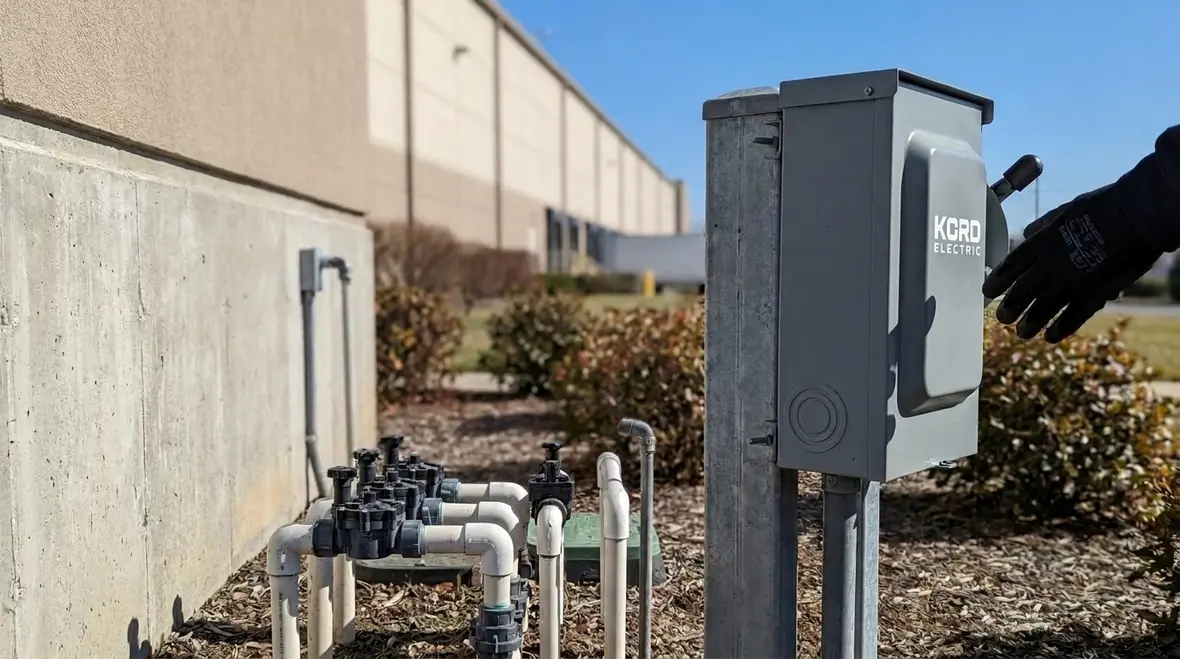
NEC Section 675.8 Irrigation Disconnecting Means Explained
NEC Section 675.8 irrigation disconnecting means may sound like a code citation from a sci fi movie, but it is simply a safety rule that affects how irrigation systems are shut off. In the first hundred and fifty words, we make the point clearly: these disconnecting means help prevent unexpected startup and reduce risk during service, inspection, and emergencies. At Kord Electric, we focus on commercial and industrial facilities and major property buildings, so we design and service electrical systems with real uptime in mind. Additionally, our technicians and expert service staff explain the “why” behind the rules, not just the “what,” because nothing slows a project like guessing. And yes, we have heard the joke about the breaker that “mysteriously” stayed on. Usually, it is not mysterious. It is just missing a proper disconnecting setup.
To answer this topic properly, we connect the NEC requirements to how you build, label, test, and maintain irrigation power in the real world. We also reference the broader NEC intent discussed by our team across Kord Electric and our fire and pump partners, because electrical safety and fire life safety planning often share the same jobsite constraints. So, let us move step by step.
How NEC Section 675.8 irrigation disconnecting means protects crews and assets
NEC rules aim to reduce shock, prevent fire, and make equipment safer to work on. NEC Section 675.8 irrigation disconnecting means supports that goal by ensuring irrigation control circuits can be isolated in a predictable way. That matters because irrigation systems sit outdoors, run on schedules, and often tie into control wiring that can surprise workers. Meanwhile, commercial and industrial sites typically have strict access windows, permit rules, and coordinated maintenance. Therefore, a reliable disconnecting means is not only a code requirement. It is an operational tool.
Our technicians treat the disconnecting means like the “stop button” for the job. If a tech needs to troubleshoot a valve controller, replace an actuator, or inspect conductors in the field, the ability to de-energize the irrigation system without guessing reduces risk. Also, it helps prevent damage to equipment caused by live components during maintenance. In short, the rule supports both safety and productivity.
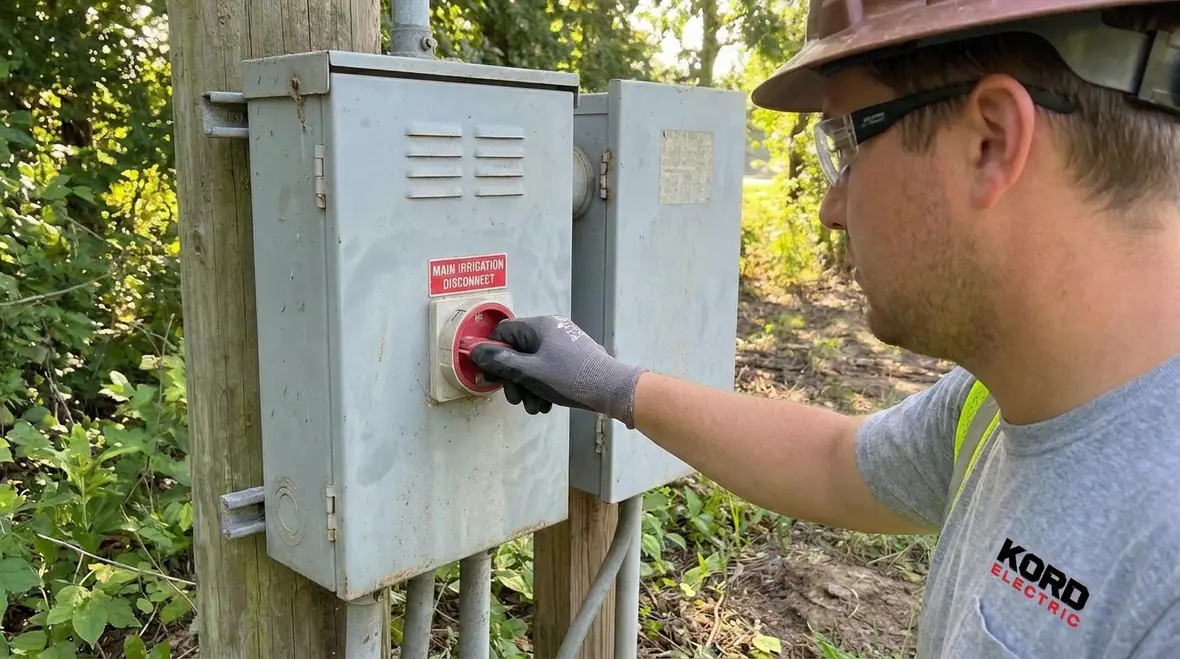
Where irrigation disconnects fit into a site wide electrical plan
In large facilities, irrigation rarely stands alone. It connects into panels, dedicated circuits, or control systems that share pathways with other loads. Even when irrigation loads are separate, crews still work within the same electrical rooms, pathways, and lockout routines. As a result, we plan disconnecting means alongside the building’s broader power distribution approach.
During our consults, we map out how irrigation interfaces with the electrical system. Then we confirm the shutdown point matches the actual equipment that must be isolated. If the disconnecting means does not align with the control wiring in the field, the “disconnect” can become a false sense of security. And that is when incidents happen, not in training videos.
Transitioning from planning to install, we also consider labeling and physical accessibility. Workers need to identify the disconnect quickly, especially under time pressure. In commercial and industrial buildings, that pressure shows up during after-hours repairs, tenant events, or weather related damage. Consequently, we ensure the irrigation disconnecting means supports quick isolation without unnecessary steps.
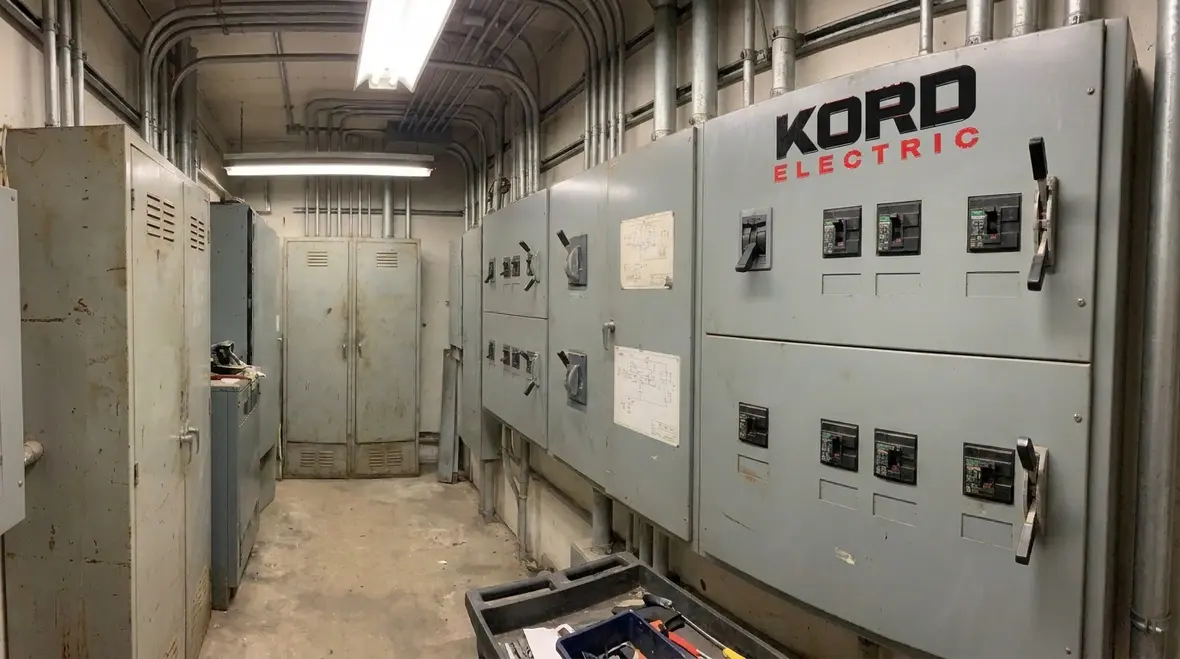
Best practices for installing and maintaining irrigation disconnects
Once the electrical path is defined, installation details decide whether the disconnect performs as intended. Our expert service staff focuses on consistent execution, because small differences can cause big delays later.
- Clear identification and labeling: We label disconnects so that maintenance teams can confirm the correct device at a glance.
- Consistent access: We ensure the disconnecting means remains reachable without moving hazards or temporary equipment.
- Proper lockout capability: We help you set up lockout practices that match how your site handles controlled work.
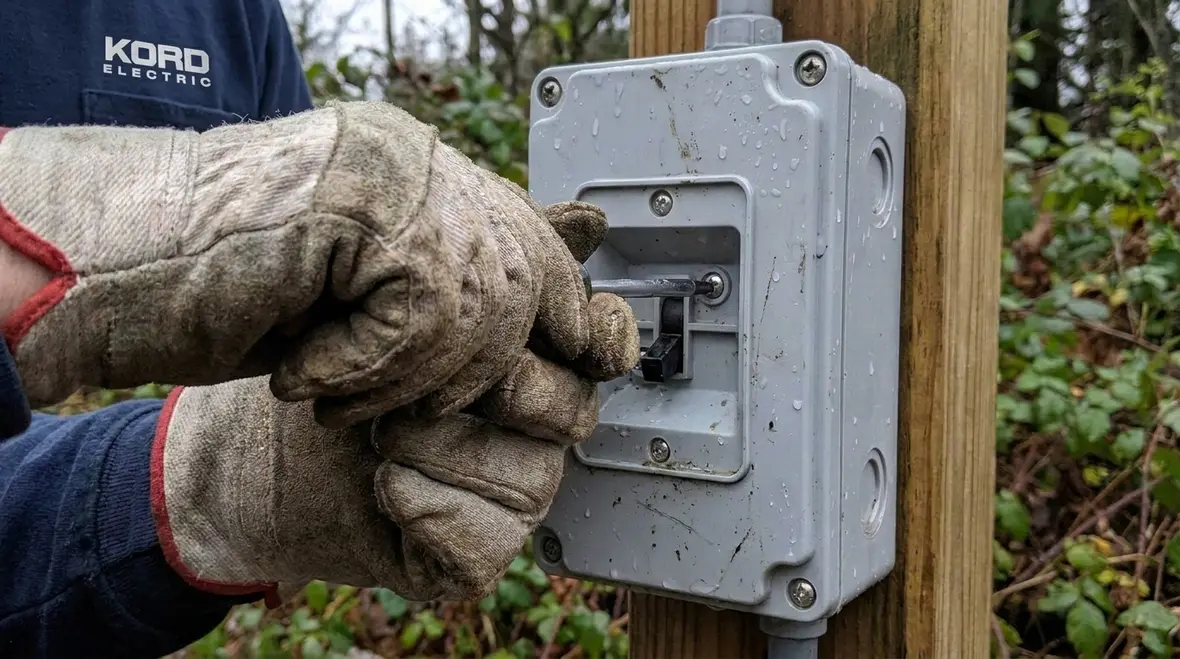
- Weather and corrosion protection: We account for outdoor conditions around irrigation gear and nearby enclosures.
- Verification after service: After any troubleshooting or replacement work, we confirm the system returns to safe operation in the planned way.
For many sites, maintenance cycles repeat. That means the disconnecting means must survive regular access, not just pass an initial inspection. Also, we recommend periodic checks because labels fade, switches wear, and enclosures accumulate moisture. Our job is to keep those issues from turning into “why is this circuit energized” moments, the kind that nobody enjoys except maybe a sitcom writer.
Common mistakes we see on major property buildings
When irrigation systems get added over time, the electrical design can become patchwork. Then teams struggle with disconnect coordination across tenants, property managers, and contractors. We see a few recurring mistakes that place sites at risk.
First, some installations use a disconnect that does not effectively isolate the irrigation equipment that workers must service. Next, some sites rely on ambiguous signage, where a label describes a “pump room” instead of the exact irrigation circuits. Additionally, others place disconnects in areas that require awkward access, like through temporary barricades or obstructed pathways.
Finally, we often find that the disconnect exists on paper but not in practice. For example, a control system may start irrigation based on automation even when field controllers are handled. In that scenario, the disconnecting means must match the actual control source, not only the local equipment. Our technicians explain this clearly by tracing circuits and verifying operation with safe procedures.
If you want the short version, here it is: the disconnect must be real, reachable, correct, and usable during maintenance. Everything else is just a fancy way of inviting trouble.
How we support compliance across NEC and site safety routines
Commercial compliance is not just about passing inspections. It is about building a repeatable safety routine for your electricians, maintenance teams, and approved contractors. Because of that, we connect NEC expectations with the way sites manage work.
Our approach aligns with the broader view of NEC topics discussed in our related resources, including the National Electrical Code coverage and how safety concepts apply in practical scenarios. For example, facility teams who want a code-level primer can explore our companion guide on understanding NFPA 70 for 2026, then apply those concepts to irrigation systems and other outdoor loads that share the same infrastructure.
We also consider coordination with fire and life safety needs. When fire pumps, alarm devices, or emergency systems connect nearby, electrical planning becomes a shared task across teams. For major properties, this coordination helps prevent scheduling conflicts and improves the quality of installation documentation.
Therefore, we document disconnect locations, circuit IDs, and maintenance notes. We train or brief relevant staff when needed, so they understand how to isolate irrigation safely. And we keep the tone simple. Our expert service staff does not deliver code as a mystery. We explain it like a guide, then we implement it like a team that has done this before.
Dual column checklist for a faster irrigation disconnect review
To speed up field verification, we use a practical review format that our technicians can follow quickly. It also helps property teams make decisions without endless back and forth. Below is a dual column checklist we commonly use on commercial and industrial sites:
|
Check on site
|
Confirm in records
|
This review format reduces time on site and helps avoid the “we thought it was the other disconnect” problem. Also, it improves continuity when multiple contractors rotate through a property.
FAQ
Final word from Kord Electric
NEC Section 675.8 irrigation disconnecting means is a safety and reliability requirement, not just a line in a handbook. At Kord Electric, we serve commercial and industrial facilities and major property buildings, and we help you install, verify, and maintain irrigation disconnecting setups that crews can use confidently. If you want us to review your irrigation disconnect locations, labeling, and circuit alignment, contact us. We will schedule a practical site assessment, explain what we find, and help you move forward with clear, compliant next steps.
For facility leaders planning broader electrical improvements, our team can also coordinate irrigation disconnect work with larger upgrades, from panel changes to surge protection and emergency power improvements. When you are evaluating options for your campus or portfolio, you can explore our dedicated Los Angeles County electrical services to see how code minded design, installation, and maintenance support safer operations across every system that shares your distribution backbone.
If your next irrigation or site upgrade needs a code focused partner who understands how NEC Section 675.8 irrigation disconnecting means fits alongside the rest of NFPA 70, we are ready to help you plan it, build it, and keep it performing through every season.


