
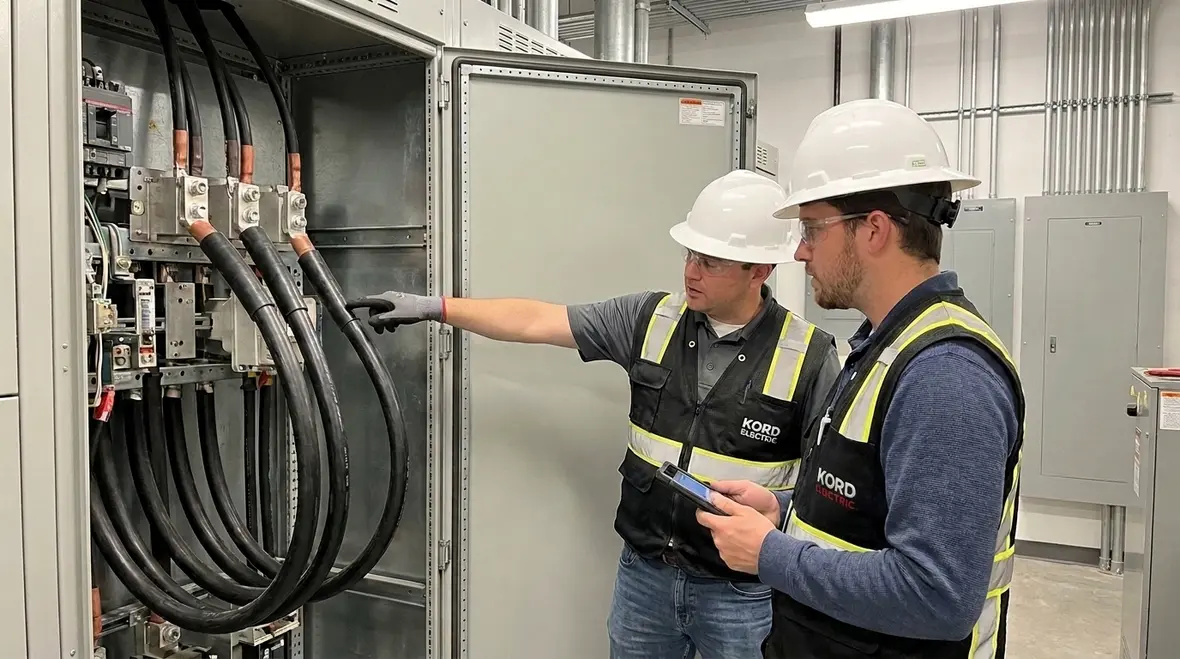
NEC Service Entrance Insulation 2 kV NFPA 70 268.41
At Kord Electric, we work with commercial and industrial facilities where one small electrical mistake can turn into a very large bill. So when people ask about NEC service entrance insulation 2 kV, we treat it like a serious topic, because it is. We also explain it in plain terms, the way our technicians do when they walk a site and point to the exact parts that matter. In this article, we break down NFPA 70 Section 268.41, focusing on high voltage service entrance conductors, and how proper insulation choices protect people, property, and uptime. And yes, we will keep it engaging, because even electrical compliance deserves better than a lecture in a windowless room.
What NFPA 70 Section 268.41 means for high voltage service entrances
NFPA 70 is the National Electrical Code, and Section 268.41 addresses insulation for conductors used at high voltage service entrance locations. In practice, we read it as: insulation has to match the electrical environment and the voltage stress it will face. Consequently, the insulation material, rating, and application determine how safely the conductors handle normal operation and abnormal conditions.
Others sometimes skim the wording and assume “insulation is insulation.” However, that mindset is how problems start. We, and our expert service staff, show teams the difference between a conductor that merely works and one that meets the required insulation expectations for the service entrance setup. That difference matters on commercial switchgear feeds, large building service equipment, and major property buildings where the service entrance acts as the gateway to the entire electrical system.
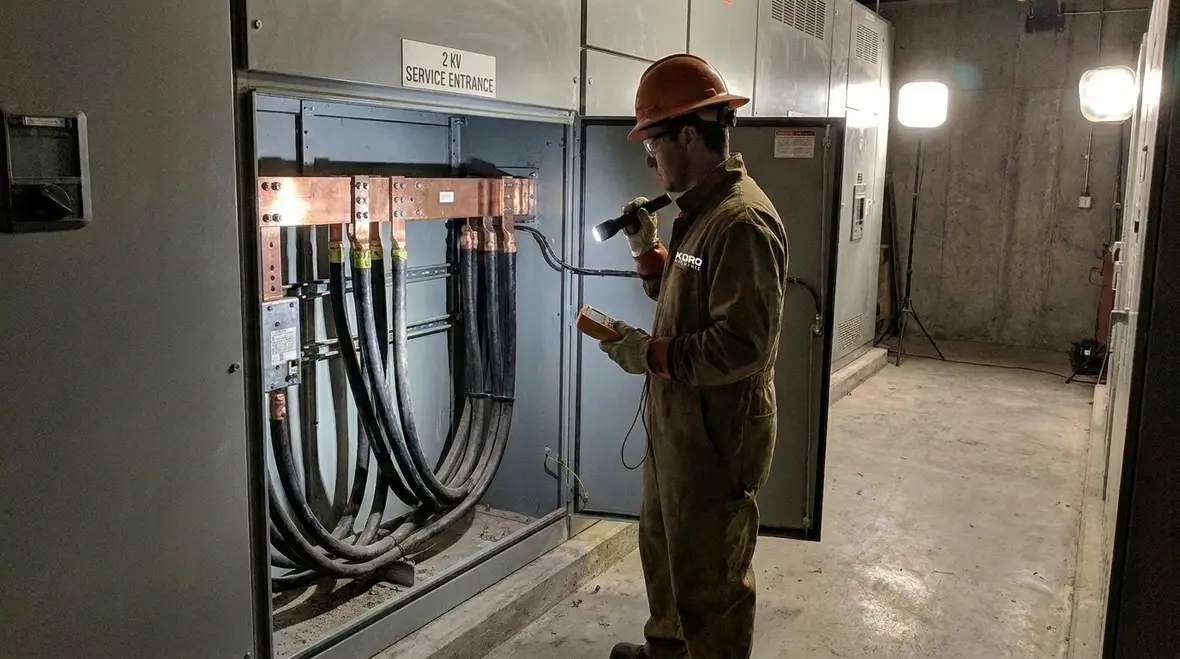
If you want a broader grounding in how the NEC frames these kinds of requirements, you can pair this article with our code overview resource Understanding NFPA 70: The National Electrical Code Explained for 2026, which connects high level structure to the day to day decisions facilities make about conductors, insulation, and protection.
How 2 kV insulation fits real site conditions
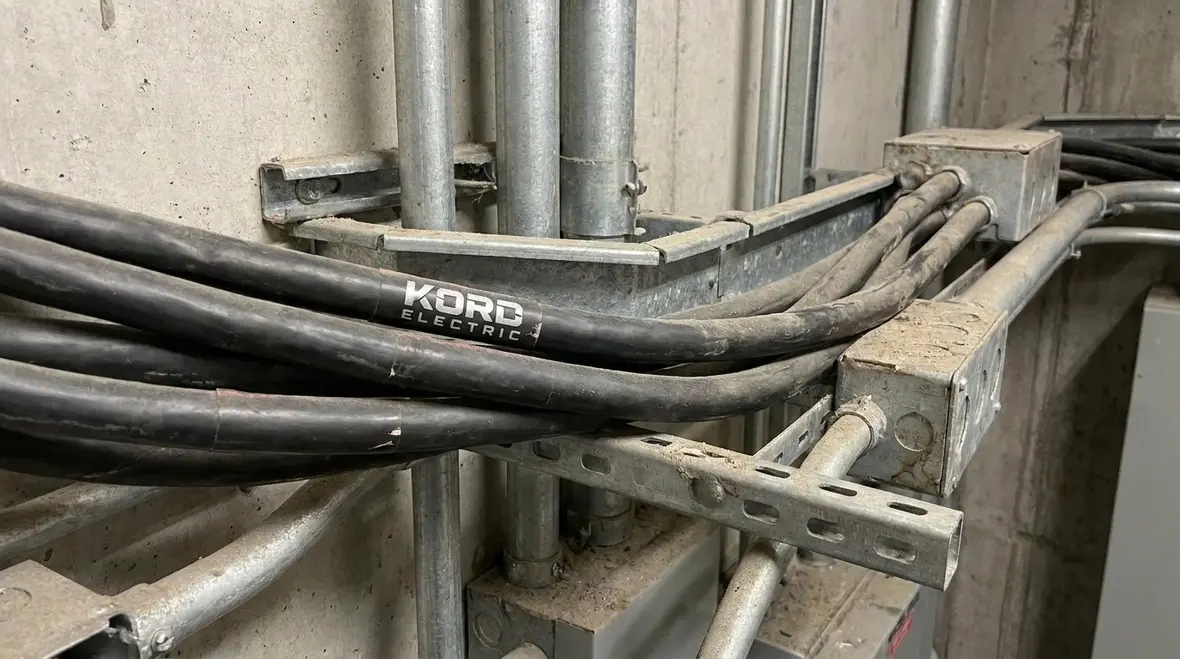
When a project calls for NEC service entrance insulation 2 kV, we treat it as a requirement tied to how the system will perform under load, during switching, and during other electrical events. For commercial and industrial sites, conductors often run through pathways exposed to heat cycles, mechanical handling, vibration, and nearby equipment that can create electrical stress.
Furthermore, higher voltage service conductors can face conditions like elevated temperatures, transient overvoltage, and long-term aging of insulation. Even when everything seems fine today, insulation can degrade faster when the installation method, routing, terminations, or temperature environment do not align with the rated assumptions. Therefore, we do not only verify the stated voltage rating on paper. We verify the installation details too.
And because we are practical people, we also mention that the “most common failure” is not always the insulation itself. It can be a sloppy termination, an overlooked damage point, or a component choice that does not belong on that voltage class. In other words, insulation performs best when the whole installation plays nice, like a team that actually practices together instead of showing up for game day without a plan.
Key insulation performance points we check on commercial builds
Our technicians typically focus on performance points that directly connect the code language to what gets built. Then, we connect those checks to the paperwork and documentation needed for compliance at commercial and industrial facilities. Below are the items we watch most closely.
- Insulation rating versus expected system voltage stress: we confirm that the insulation class and rating align with the service entrance conditions, including normal operating voltage and realistic stress factors
- Temperature environment: we evaluate ambient temperature, conductor temperature rise, and installation location so insulation aging stays within expectations
- Mechanical protection and routing: we check support spacing, pathway type, bending limits, and protection from abrasion, especially where cables pass through structures or near equipment
- Termination and connection compatibility: we confirm that terminations and splices do not create hotspots or stress points that insulation cannot handle
- Integrity over time: we look for installation methods that reduce cracking, moisture intrusion, or damage during maintenance
At Kord Electric, we explain these checks in a calm, step by step way. Our staff does not talk like a textbook. We talk like people who have seen what happens when someone “assumes it will be fine.” And frankly, assumptions are great for guessing the ending of a movie, but terrible for service entrance design.
Common mistakes that violate the intent of Section 268.41
Even when teams mean well, installations can drift away from the intent of NFPA 70. So we tell clients where drift usually happens, especially on larger propertie buildings where multiple trades touch the same run. When coordination slips, insulation and conductor selection can get mismatched or improperly installed.
Here are some trouble spots we routinely see, and we address them early so the schedule does not pay the price later.
- Using the wrong insulation class for the service entrance voltage category: a “close enough” conductor often fails inspections or creates safety risk
- Skipping verification after design changes: if a design update changes voltage level, equipment, or routing, the insulation requirement can change too
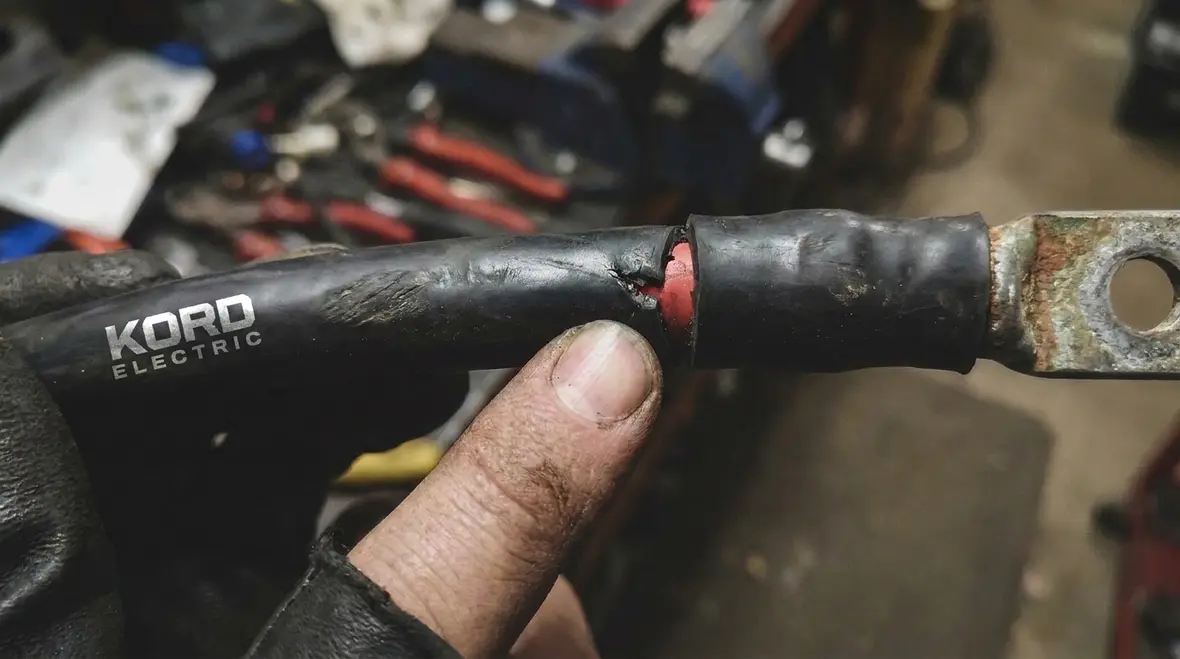
- Damage during installation: cuts, nicks, or abrasion points can compromise insulation strength and long term performance
- Improper support or bend practices: tension or excessive bending can stress the insulation in a way that looks fine at first but degrades faster
- Mismatch at terminations: if connectors, lugs, or splices do not match conductor insulation and system expectations, stress concentrates where insulation should not
We also remind teams that code compliance is not only about passing an inspection. It is about building something that keeps running when the facility is busy, the lights are on, and operations do not stop while you wait for a fix. If you want a pop culture analogy, compliance is like the seatbelt. You do not notice it until the day you do.
Working with NEC rules on service entrance insulation and documentation
Commercial and industrial facilities often need clean documentation because they undergo audits, maintenance planning, and periodic evaluations. Therefore, we help teams connect the insulation requirement to practical proof. We do this by reviewing the conductor specifications, installation notes, and equipment selections that relate to high voltage service entrance conductors.
Then we explain what inspectors usually want to see, and we make it easier for the project team to respond. In many cases, the best path is to build a clear chain: design intent, conductor selection, installation method, and verification steps.
Meanwhile, it helps to understand how the broader NEC structure supports these detailed rules. For example, people often read the NEC like it is a pile of disconnected rules. Yet, it actually works like a system. One section sets the expectations for insulation, and other parts shape installation practices, conductor protection, and how equipment interfaces. That is why our approach stays consistent from planning to field checks.
We also encourage clients to review trusted code explanations and local compliance guidance. If you want additional context on how the NEC gets used in the field, you can explore resources from Kordfire and other code focused materials online, including discussions about the National Electrical Code and related compliance topics at kordfire.com and kordfire.com.au. For facilities that need dependable fire and electrical coordination thinking, platforms like firepumps.org can also help teams connect how electrical safety and system readiness support broader life safety goals.
How Kord Electric helps facilities implement compliant high voltage insulation
Because we focus on commercial and industrial facilities and major property buildings, we treat service entrance work like a business-critical project, not a side task. Our technicians and expert service staff start by learning the facility’s electrical layout, then we confirm insulation requirements that match the service entrance conductor duty. After that, we coordinate with the build team so insulation selection, installation methods, and termination practices stay aligned.
Additionally, we explain our findings clearly. We do not hide behind jargon, even when code language gets dense. Instead, our team translates the requirement into what you can see: where conductors run, what protection they need, how terminations should be handled, and how to reduce stress points that harm insulation.
And when people ask, “Is this really necessary?” we answer with professionalism and a little humor. We usually say the right approach prevents the kind of failure that costs more than a weekend trip you cannot afford. Then we get back to the work.
For facilities that want this kind of thinking applied across their broader electrical infrastructure, including high voltage feeds, panel work, and distribution upgrades, our Los Angeles County electrical services team supports everything from initial assessment to detailed NEC-driven implementation.
FAQ
Final word from Kord Electric
If your facility runs high voltage at the service entrance, we recommend you treat insulation requirements like a core safety feature, not a box to check. Kord Electric brings expert service staff, clear explanations, and field focused verification to commercial and industrial projects and major property buildings. If you want help confirming NEC service entrance insulation expectations aligned with NFPA 70 Section 268.41, including how NEC service entrance insulation 2 kV choices affect long term reliability, contact us. We will review your setup, explain what matters, and help you move forward with confidence.


