
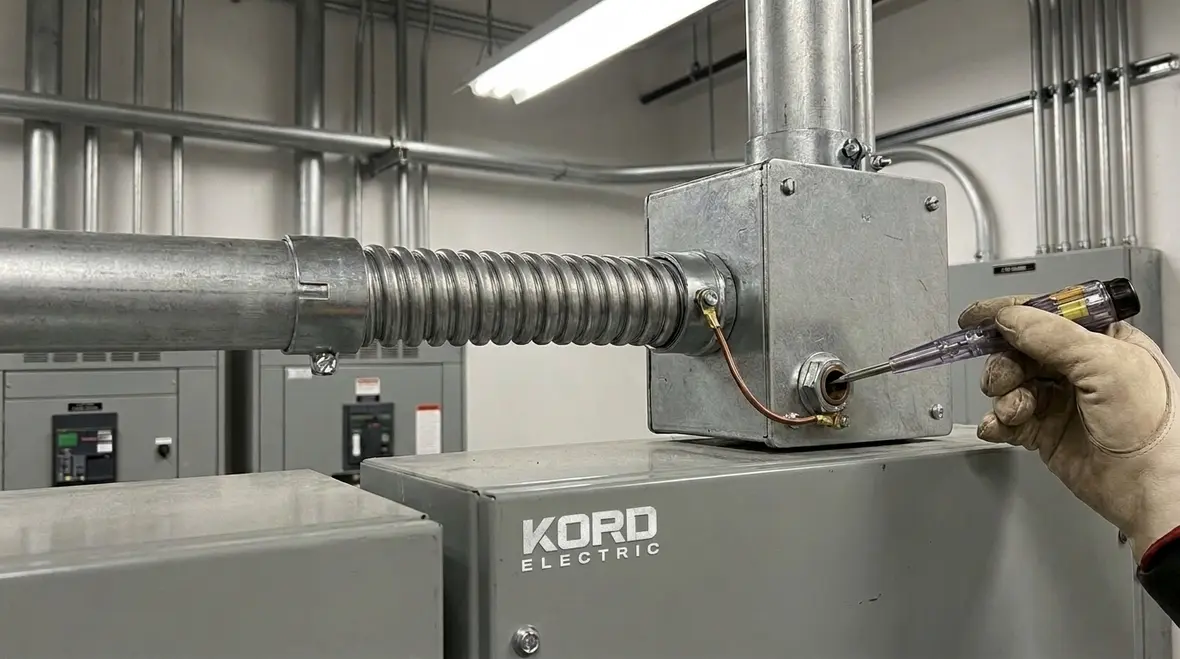
NEC short raceway grounding 2 kV guidance for C&I facilities
NEC guidance for NEC short raceway grounding 2 kV in commercial systems
When crews design and maintain medium voltage wiring in commercial and industrial buildings, they need rules they can trust. We often start with NEC short raceway grounding 2 kV, because Section 270.132 helps define how certain short raceway and armor sections should be grounded when equipment operates at 2 kV class. Now, the code can feel like it was written by someone who never had to troubleshoot a real conduit run at 6 a.m. But the work does not happen on paper. It happens in real rooms, with real timelines, and that is why Kord Electric focuses on clear, practical compliance for major property buildings and C&I facilities.
In this article, the team explains what NFPA 70 Section 270.132 is trying to accomplish, how it affects real installations, and how technicians and expert service staff help teams apply it without guesswork. Third person perspective, calm delivery, and straight answers included.
Why Section 270.132 exists for 2 kV raceways
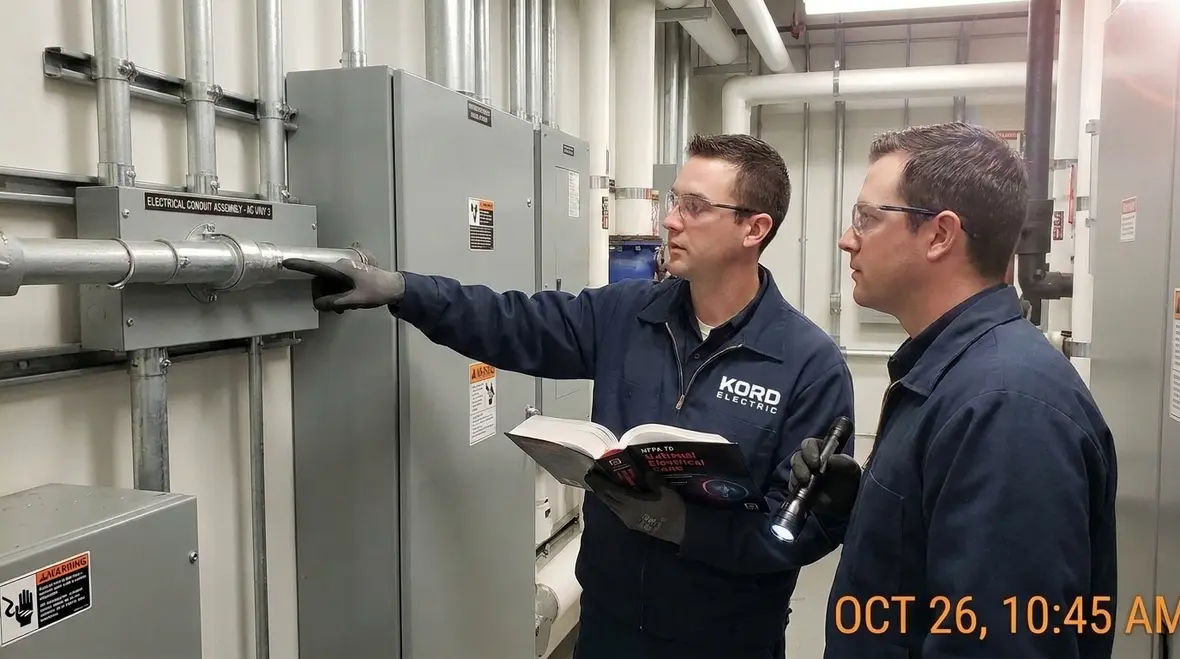
NFPA 70 Section 270.132 addresses a specific problem that shows up in the field. Some raceway runs are short. Some armor sections are short. And short parts still need proper grounding and bonding so fault current and stray energy do not create unsafe conditions. In other words, the code recognizes that “it’s only a little section” does not mean “it’s electrically harmless.”
So, while many people think grounding rules only matter for long conduit runs, Section 270.132 treats short sections with the same seriousness. NEC short raceway grounding 2 kV guidance aims to maintain a reliable conductive path, limit shock risk, and support overcurrent protective device operation during ground faults.
At Kord Electric, the team sees the consequences of missing or weak bonding every year in commercial and industrial environments. A small omission can lead to nuisance alarms, intermittent ground indications, or damaged equipment. And once a major property building loses confidence in its protection system, troubleshooting becomes a full-time job. Nobody wants that job.
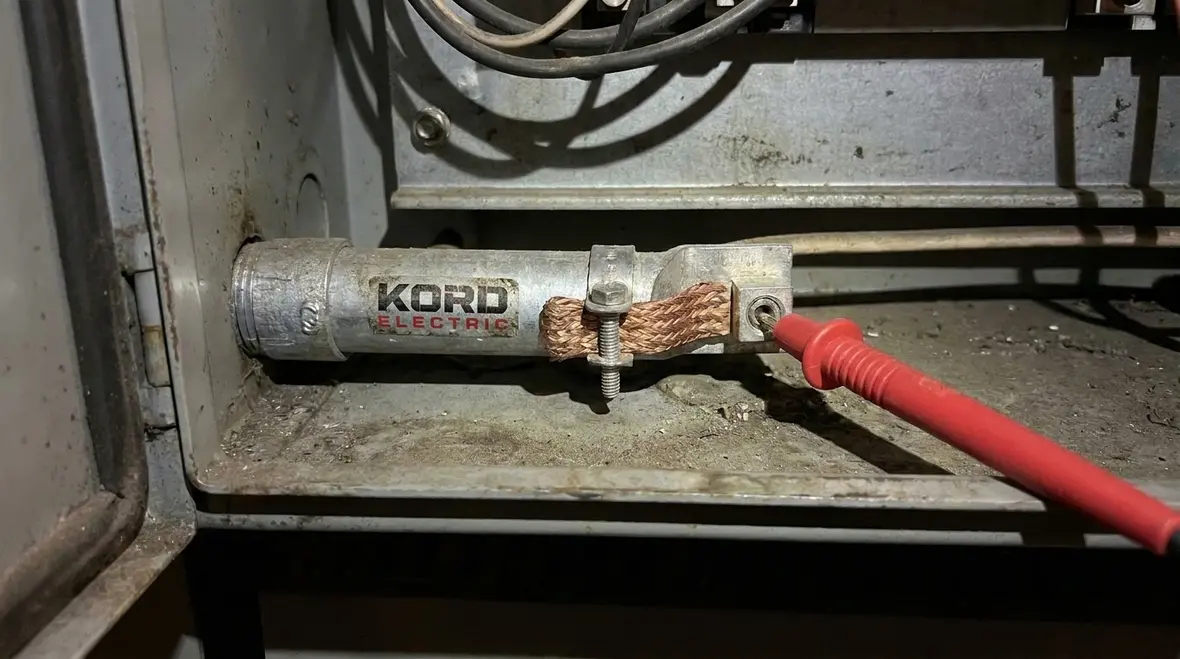
Because 2 kV class systems often sit near critical loads, the stakes stay high. That is why this guidance fits naturally alongside broader resources like Understanding NFPA 70: The National Electrical Code Explained for 2026, which helps commercial and industrial teams see how individual sections connect to the overall NEC strategy.
How Kord Electric technicians interpret the intent behind 270.132
Technicians at Kord Electric do not treat Section 270.132 like a scavenger hunt. Instead, they translate the code intent into installation steps that match how systems actually get built. First, they verify what the “short” condition means in the given design context, then they confirm what metal parts exist, including raceway and armor, and finally they determine the correct bonding method for that exact segment.
Because field conditions vary, the method stays both careful and practical. Additionally, expert service staff explains the reasoning to facility teams, so the process does not stop after the paperwork gets signed. The goal is not just a passed inspection. It is a system that behaves the same way on a busy Tuesday as it does on test day.
To keep it grounded, the team focuses on three outcomes. That is, it builds continuity, it reduces touch voltage risk, and it supports fault clearing. When bonding and grounding match the rule, the system behaves predictably. When they do not, the building may act like it has a personality disorder. One day everything works. The next day, a ground fault comes out of nowhere, like a pop-up ad at the worst time.
What grounding continuity looks like in the real world
In commercial and industrial installations, raceways and armor often connect different equipment zones: switchgear lineups, transformers, motor control centers, and feeder terminations. Therefore, bonding is not a “nice to have.” It is a functional part of the protective system.
Section 270.132 focuses on the specific bonding requirements for short raceway and armor sections at 2 kV. These segments may exist where someone used a brief transition, a tight routing, or a compact enclosure. Even though the run seems small, the electrical path still needs continuity.
Crews check for these common field realities. First, they look at material types, including metallic raceways and metallic armor. Next, they verify how sections connect at joints and fittings. Then, they confirm that bonding connections provide a reliable, low impedance path rather than relying on paint, oxide, or loose mechanical contact.
Also, they make sure the grounding strategy supports safe fault current behavior. In plain terms, during a ground fault the system needs a path that lets protective devices operate correctly, so the fault clears instead of lingering like an annoying song stuck in a head.
Common design and installation mistakes teams can avoid
Even strong projects can miss the practical details. For major property buildings and C&I facilities, recurring patterns can slip through design review or during rush installations.
- Relying on mechanical contact alone: Some teams assume the fit at a coupling or connector equals bonding. In reality, surfaces, coatings, and tolerances can break continuity.
- Skipping bonding at short transitions: A short raceway segment feels “too small to matter,” yet it still sits in the system’s fault clearing path.
- Using the wrong bonding method: Bonding techniques must match the condition and the construction. The code provides structure for this, and the field must follow it.
- Overlooking armor continuity: Armor sections can behave differently than simple raceway lengths. Teams should treat armor as part of the conductive path, not as a decorative layer.
Then there is the documentation gap. In many cases, construction teams do the work but do not record it in a way that facility staff can understand later. Because of that, maintenance crews lose time verifying what already exists. The Kord Electric approach includes clear communication, and expert service staff helps translate what was installed into a form that is useful during inspections and troubleshooting.
Inspection, testing, and how compliance gets explained on site
After installation, commercial and industrial operators need assurance, not ambiguity. Therefore, Kord Electric supports inspections with details that help teams verify grounding continuity and bonding integrity. While testing methods depend on system design and site requirements, the goal stays consistent: confirm that the conductive path works as intended and that the system can protect people and equipment.
During service visits, technicians also explain the “why” behind Section 270.132. That matters because facilities do not just want a checklist. They want understanding. When the team walks a client through the logic, the conversation becomes calmer. Suddenly, code language stops sounding like a legal contract and starts sounding like a safety plan.
And yes, sometimes they use a joke. When someone hears “short raceway,” they picture something harmless. The reminder is simple: the building does not care about feelings. The electrons do their own math. If the bonding path is weak, the system finds the weak point, like a bad coffee shop finds your loyalty card every time you try to forget.
Commercial and industrial applications where this matters most
Major property buildings rely on dependable medium voltage and power distribution. As a result, the grounding strategy must fit the environment and the equipment layout. Section 270.132 becomes especially important in settings where short transitions happen frequently, such as equipment rooms with tight clearances, renovations where routing changes quickly, and upgrade projects that add new feeders or relocate control gear.
In those projects, teams often connect new sections to existing infrastructure. That introduces the risk of mismatched grounding details across old and new work. Because facility owners need stable performance, the bonding approach must remain consistent and code-aligned.
At Kord Electric, the focus stays on commercial and industrial facilities and major property buildings. Crews build grounded, compliant systems that support long-term operation, not quick fixes that fall apart under real use. For many sites, that work fits alongside broader NEC grounding strategy, including concepts covered in resources like NEC grounding and bonding basics for safe NFPA 70 and related Kord Fire perspectives on NFPA 70 for 2026.
FAQ: NFPA 70 Section 270.132 and 2 kV grounding
Schedule expert support from Kord Electric
When a project touches medium voltage raceway grounding, safety and reliability hinge on details. Kord Electric helps commercial and industrial facilities apply NFPA 70 Section 270.132 with clarity, field-ready steps, and documented results. Technicians and expert service staff explain what the code means and how to build it correctly, so facility teams can maintain confidence over time.
If an inspection, upgrade, or service issue raises questions, reaching out early helps keep projects calmer and more predictable. From evaluating NEC short raceway grounding 2 kV segments to coordinating broader NEC application under the 2026 direction, the team supports C&I facilities across planning, installation, testing, and long-term maintenance.
For facility leaders who need ongoing electrical support across a region, Kord Electric also delivers comprehensive Los Angeles County electrical services for major property buildings and complex commercial operations, aligning field work with NEC expectations and inspection realities.
When it is time to review short raceway grounding, armor bonding, or any other part of the 2 kV protective path, a conversation with the Kord Electric team can turn dense code sections into straightforward project decisions that keep people, equipment, and operations protected.


