
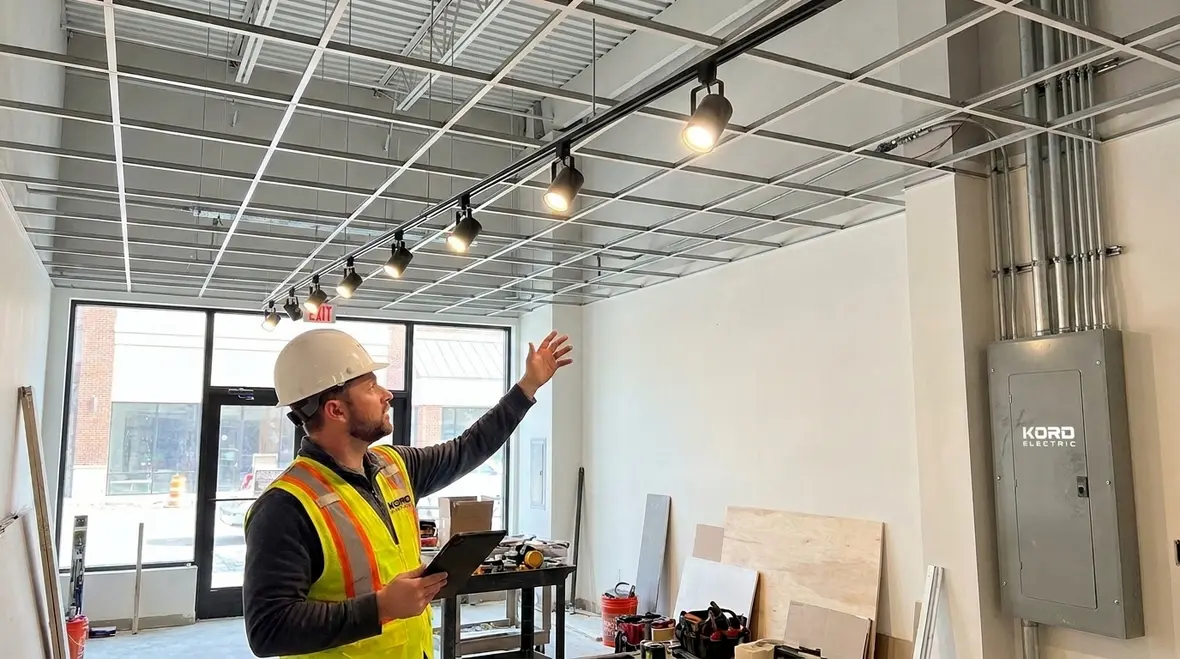
NEC Show Window Track Lighting Loads and Demand Compliance
In commercial and industrial buildings, NEC show window track lighting loads can quietly turn into a big electrical bill if nobody accounts for them early. That is why, in the first planning meeting, we tell owners and facility managers to treat these fixtures like real electrical equipment, not like decorative afterthoughts. NFPA 70 Section 120.46, which covers show window and track lighting loads, gives the structure, the method, and the logic. Meanwhile, our expert service staff at Kord Electric walks the site, reviews layouts, and explains what the code expects in plain language.
And yes, we have heard the joke that “track lighting just slides along for free.” It does not. It slides along because it has wiring, load calculations, and inspection requirements. Then it cashes the bill at the end. Let’s do this the right way.
What NFPA 70 Section 120.46 requires for show window and track lighting loads
NFPA 70, also known as the NEC, sets rules for electrical installations in buildings. Section 120.46 focuses on show windows and track lighting loads, including how to handle the electrical demand when a building uses those systems. To comply, we and our technicians apply the rule set to the connected load, then translate it into a demand basis that fits how the system performs in real life.
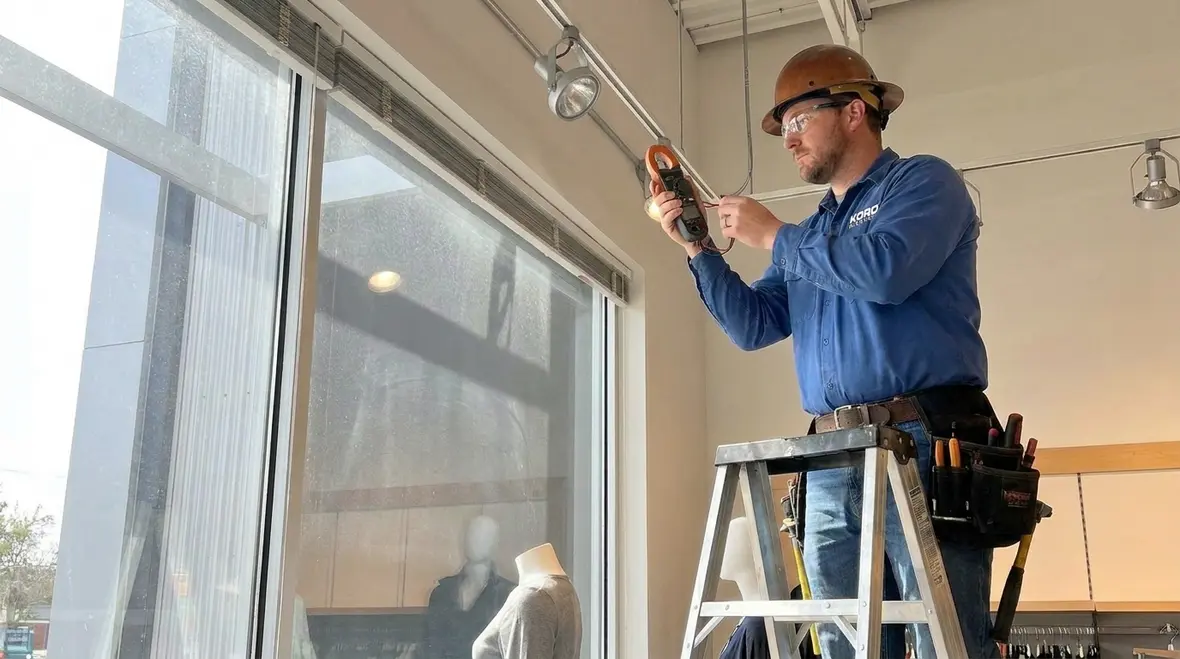
At the jobsite, we do not just quote the section. We explain it. First, our team identifies what counts as a show window or track lighting setup. Next, we confirm the conductor routing and the overcurrent protection scheme. Finally, we check how the fixture load connects into the rest of the lighting circuits serving the commercial area.
Because the code aims to prevent both under sizing and over engineering, it also helps protect equipment and reduce nuisance issues. In other words, the section tries to keep the system from acting like a dramatic stage actor who insists on a spotlight even when the script says otherwise.
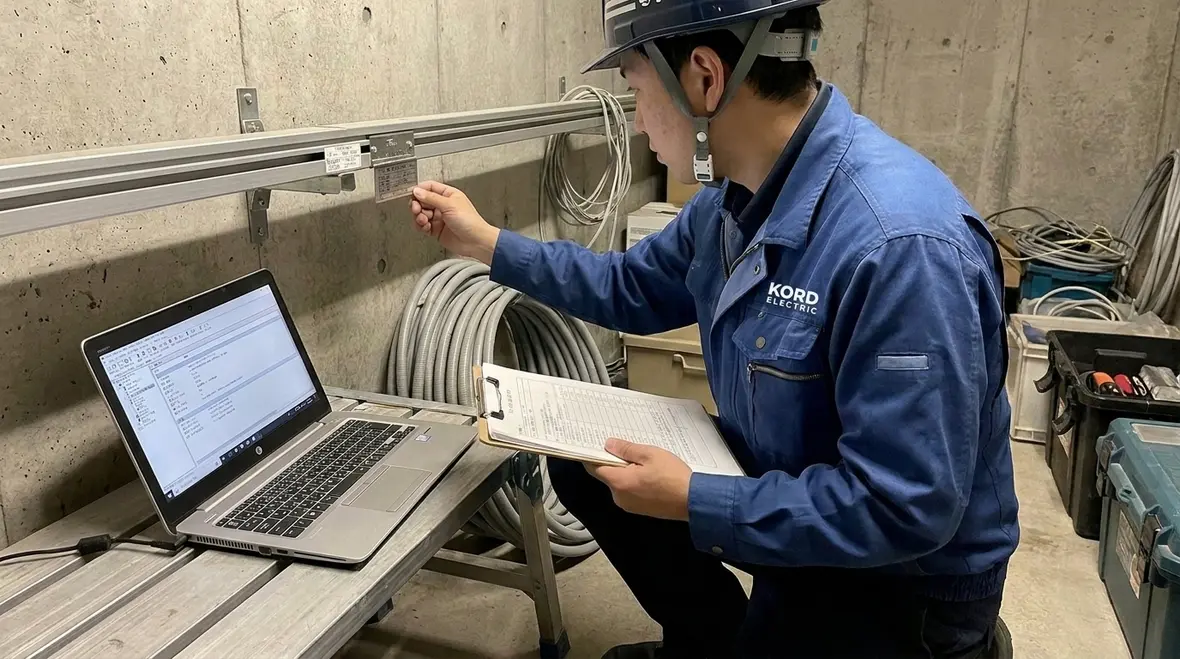
How we identify the actual load in a commercial space
Before anyone asks, “How much power do we need,” we answer a more useful question first. “What are we actually installing, and how does it behave when it is running?” That is the part our expert service staff emphasizes for Kord Electric’s commercial and industrial clients.
To do this well, we start with fixture nameplate data, track system ratings, transformer requirements if low voltage is involved, and any special control modules. Then we look at whether the track includes multiple branches, dimming modules, or power supplies that change output patterns.
After that, we examine how the show window and track lighting sits within the larger distribution plan. For example, a facility might have nearby receptacles, display signage, or other specialized loads that share the same panel. Therefore, even if the track system looks small on paper, it can still affect panel loading, coordination, and voltage drop on longer runs.
Once we have the details, we document them in a load worksheet format that matches the NEC approach. Then, we can confidently show how Section 120.46 applies to the scenario instead of guessing.
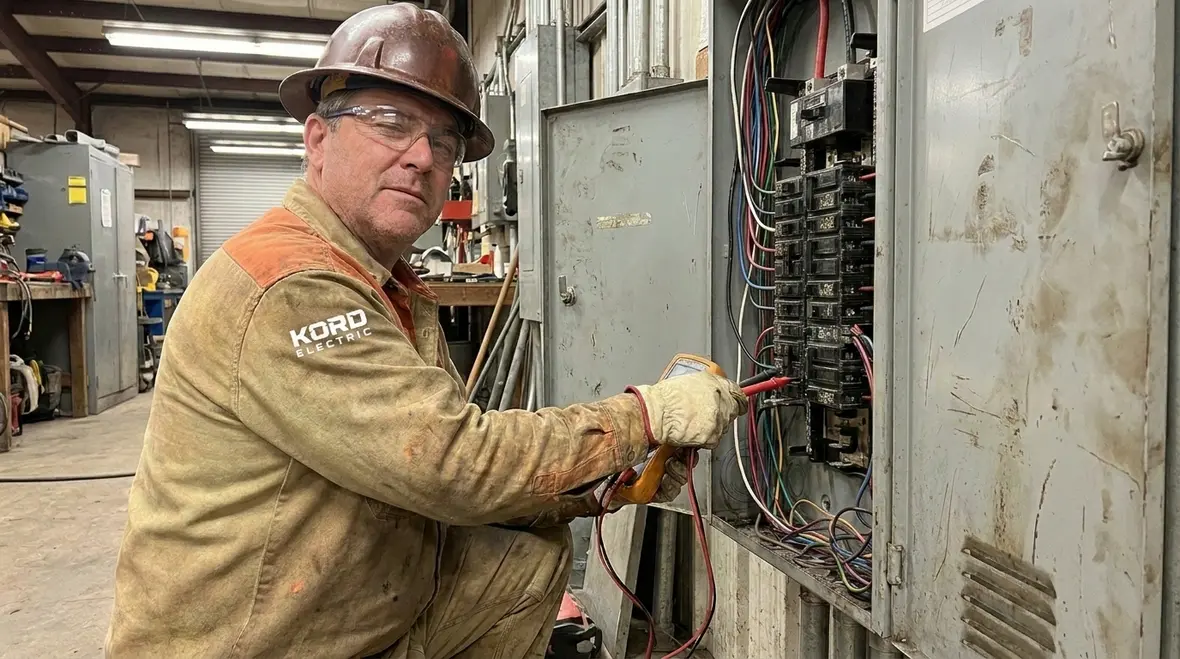
Demand calculations that keep panels stable during real operations
In large facilities, electrical demand does not follow ideal textbook schedules. People turn lights on and off. Managers run peak hours. Merchandisers swap displays. As a result, the connected lighting load rarely stays static.
So, when we apply NEC show window track lighting loads and its related rules, we focus on the demand side, not only the nameplate side. Put simply, we and our technicians determine how much load the system imposes on conductors, overcurrent protection, and panelboards under the conditions the code accounts for.
Then we coordinate with the rest of the lighting design. If the project uses emergency lighting circuits, occupancy controls, or lighting panel schedules that already include demand adjustments, we align the track lighting calculations with those decisions. That alignment matters because a mismatch can cause upstream breaker trips or make inspections fail for avoidable reasons.
We also pay attention to practical realities. For example, a show window system may include lighting elements that differ in duty cycle from standard ceiling fixtures. Likewise, track heads can include different lumen packages, and field changes can alter the connected load after the original design. Therefore, our load approach anticipates changes that facilities face during tenant buildouts or remodels.
And if someone says, “We will just add it later,” our team politely reminds them that later often becomes “during inspection, under pressure.” Nobody wants that scene. It is like getting dressed for a gala in the parking lot.
Install details that affect compliance and inspection outcomes
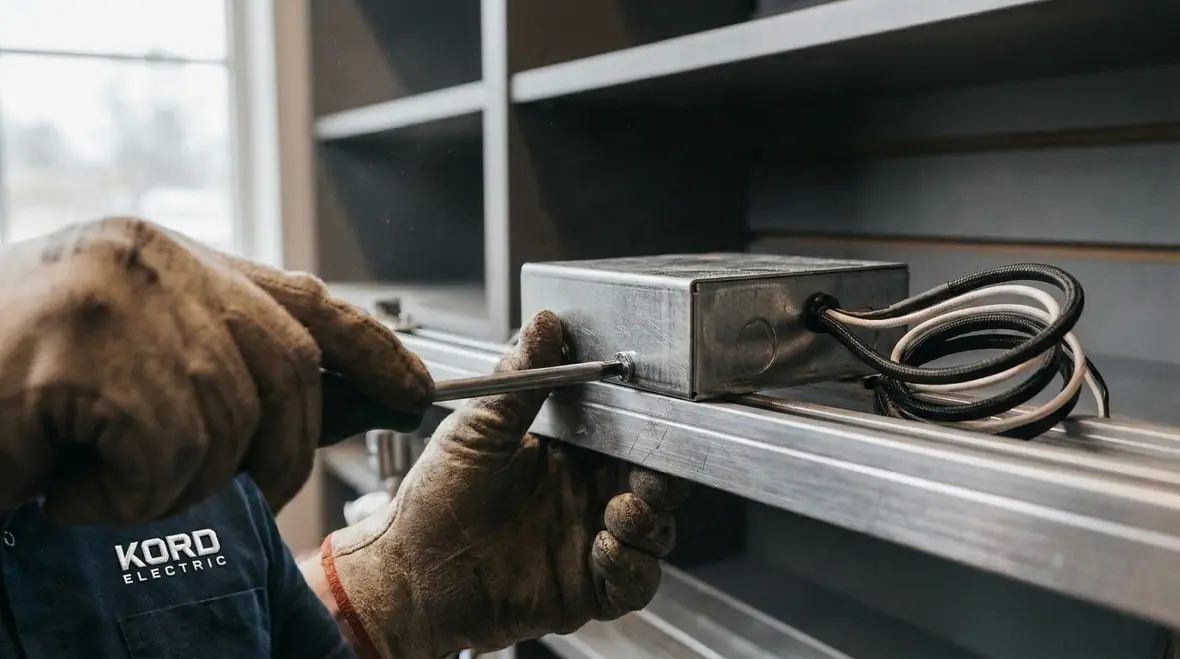
Even when the load math is right, real inspections can still fail due to installation details. That is why Kord Electric treats this as a full electrical compliance topic, not only an engineering worksheet exercise.
Our expert service staff checks the track system’s components and verifies that the wiring method matches the product listings and the NEC requirements for that installation environment. Then we review segmentation, junction requirements, conductor sizing, and termination practices. We also confirm that the lighting circuits connect to the correct panel spaces and that the overcurrent protection supports the expected load.
We also consider controls. Track lighting in commercial facilities often ties into dimming systems, timers, photocells, or switching networks. When those systems modify operating patterns, our team verifies that the control layout still supports the calculated demand and does not create an unplanned continuous load scenario.
Additionally, we look at routing paths and protection from physical damage, especially in display areas where carts, cleaning equipment, and customer traffic create real-world risks.
In short, we align the electrical design with what the building will actually do. That makes inspections calmer, and it keeps operations steadier.
Where mistakes happen and how we help prevent them
In the field, certain mistakes show up repeatedly across commercial and industrial projects. We address them early because our clients want fewer surprises, not more.
One common issue involves underestimating how show window and track systems connect into the panel schedule. When estimators treat track lighting like a small add-on, they sometimes skip coordination with existing lighting circuits and related controls. Therefore, the panel loading may exceed the design intent during peak operation.
Another frequent problem involves mixing calculation methods. Some designers apply general lighting demand assumptions, then apply track-specific assumptions inconsistently. That inconsistency can lead to inspection notes or require costly redesign.
Also, facilities sometimes add track heads, change transformers, or increase output during a remodel without updating the electrical calculations. When that happens, the installed condition no longer matches the approved design. Our technicians help prevent this by documenting what got installed and what assumptions were used.
Finally, contractors sometimes overlook conductor sizing and termination quality, especially where track systems use flexible components and frequent connection points. We make sure termination practices meet the NEC intent and the product listing requirements.
If you want the professional version of “no drama,” Kord Electric delivers it by planning carefully, documenting the final condition, and explaining every step in a way people can actually remember. Not everyone retains code references after lunch.
Working with Kord Electric on NEC compliance for major properties
Kord Electric serves commercial and industrial facilities and major property buildings. We focus on projects where the electrical plan must perform under real operational pressure. So, we coordinate early with owners, electrical engineers, and contractors to keep the design aligned with NFPA 70 and the inspection standard.
We also stay active in fire and safety conversations through our related resources at Kord Fire and broader industry support sites. While those resources cover larger code and safety topics, the takeaway stays the same: compliance is a system, not a single line item. To explore more about the NEC context, our team points customers to our educational materials, including the discussions found at kordelectric.com and kordfire.com, along with deep dives such as Understanding NFPA 70, the National Electrical Code, Explained for 2026 and related NEC resources.
When a facility wants clear answers, our approach is simple. We review the design intent, verify the install details, and then help the team understand how the demand logic applies to the specific show window and track lighting setup. As a result, the final documentation supports both engineering review and field inspection.
In the end, our goal is straightforward: keep your electrical system safe, stable, and ready for daily operations. And if you need a calm explanation for a complicated code section, our technicians will give it to you. Slow, steady, and without the “technical fog machine” effect.
For broader planning beyond a single lighting project, building teams can also look at how Kord Electric handles full power distribution and upgrades through our Los Angeles County electrical services for commercial and industrial facilities, where NEC compliance, demand calculations, and practical field experience come together on every job.
FAQ for show window and track lighting compliance
Ready for code-ready track lighting? Kord Electric can help
If your team is planning a remodel, tenant improvement, or a new major property buildout, do not let show window and track lighting become a last minute math problem. Kord Electric helps commercial and industrial owners and contractors apply NFPA 70 requirements with clear load documentation and field focused verification. Our technicians explain the “why” behind the calculations and the installation details, so the project moves forward with fewer surprises. Contact Kord Electric today for a compliance review and an install plan that stands up in the real world.


