
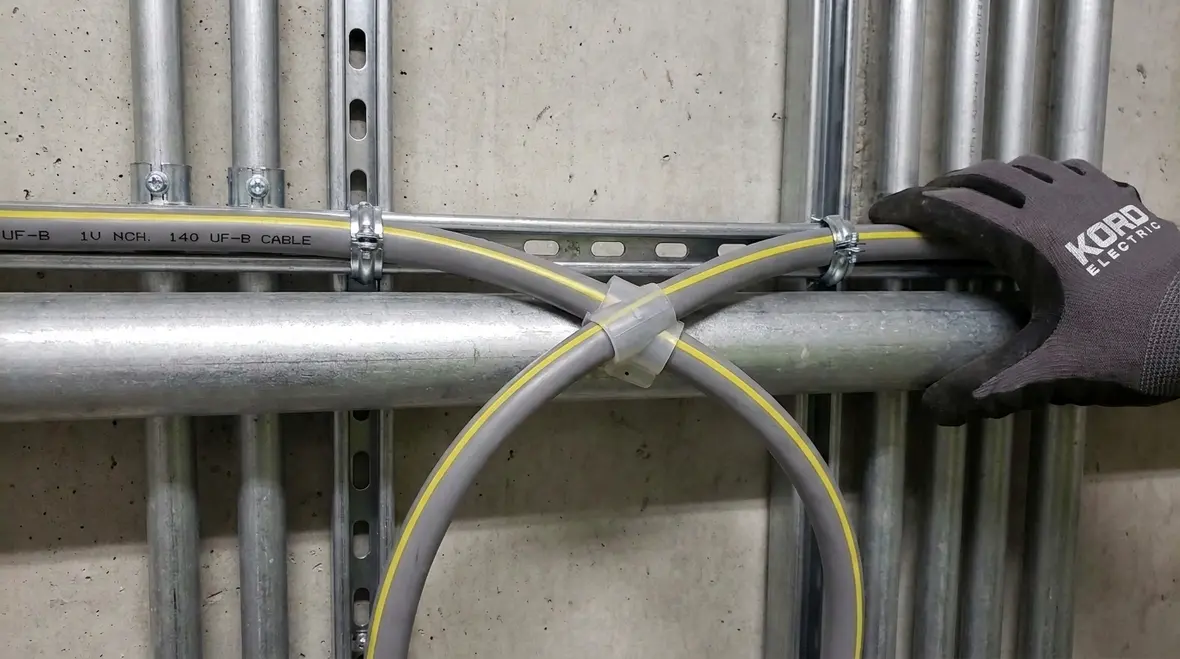
NEC UF Cable Crossings According to 324.18
NEC UF cable crossings, handled the right way from day one
In commercial and industrial spaces, we often see NEC UF cable crossings turn into a “we will fix it later” situation. That is where problems start, because people treat cable paths like they are invisible highways, when in reality the rules demand clear separation and smart routing. In this article, we explain how NFPA 70 Section 324.18 guides cable crossings when UF cable is involved. We do it with calm, practical guidance, and our own technicians explain the “why” behind the steps, not just the steps themselves. Because yes, even in a building that runs like a well oiled machine, a bad crossing can still cause surprises. And nobody wants surprises that show up after hours, like an uninvited guest with a toolbox.
What NFPA 70 Section 324.18 requires for cable crossings
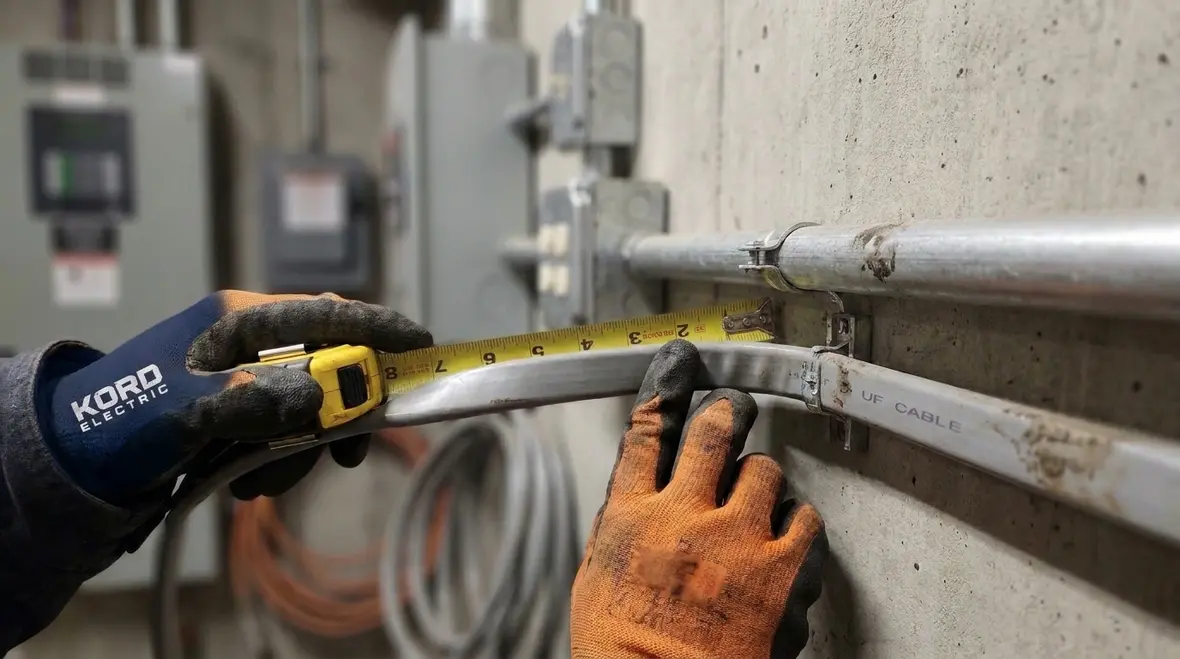
NFPA 70, also called the NEC, sets the safety baseline for electrical work. Within that baseline, Section 324.18 focuses on how cables and raceways cross under specific conditions. The goal is simple: protect the cable insulation and prevent damage that can turn a clean installation into a future failure.
When we talk about crossings, we do not just mean “they pass each other somehow.” Instead, we mean how a UF cable meets other cables, conduits, or building elements. For commercial and industrial facilities and major property buildings, we treat this as a life safety and continuity issue. Then we verify the crossing approach supports the requirements for mechanical protection, spacing, and routing.
And here is the practical truth: contractors can do everything else perfectly and still miss a crossing requirement. So our expert service staff slows down at this exact point and checks the setup before the cable gets covered, concealed, or buried behind finishes.
NFPA 70 Section 324.18 also does not stand alone. It ties into the broader NEC framework that governs wiring methods, scope, and application. For facility teams who want a deeper orientation to how this section fits into the bigger picture, Kord Electric’s article Understanding NFPA 70: The National Electrical Code Explained for 2026 is a helpful companion. It connects the high level rules to real-world planning and inspection expectations across commercial and industrial buildings.
How UF cable crossings change the planning phase
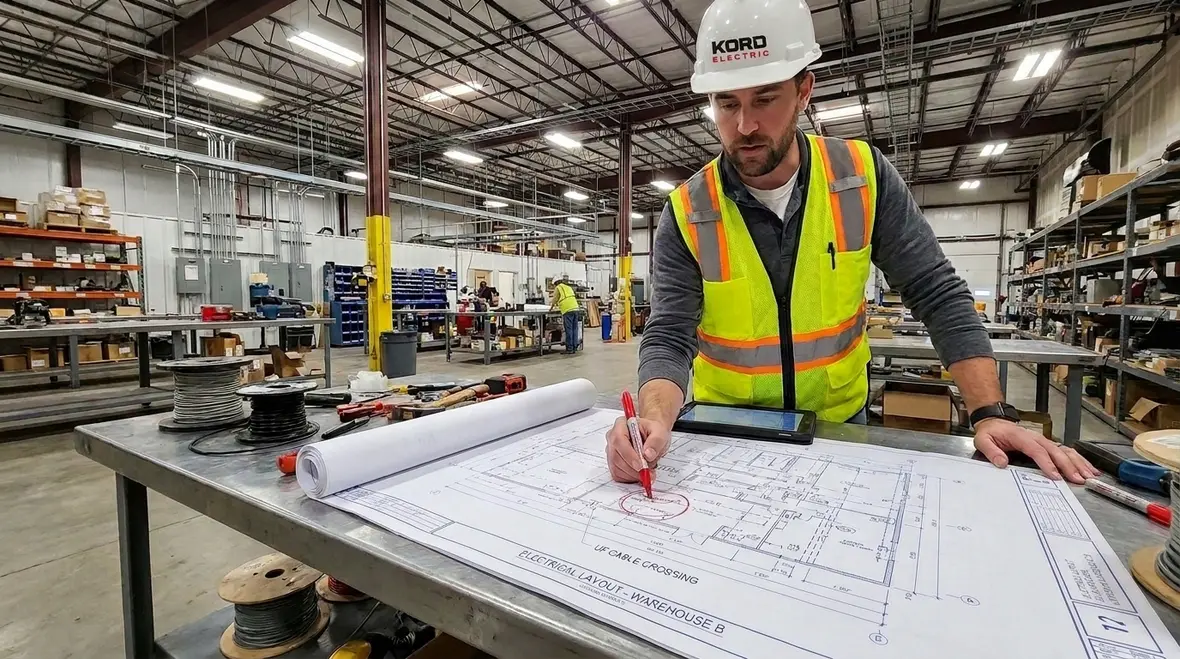
UF cable is commonly used because it can be installed for certain applications without raceway. However, when UF cable crosses other electrical parts, the design intent matters. In other words, the crossing must not create wear, stress, or moisture related damage. So we plan the route with the building layout, other systems, and access needs in mind.
First, our technicians review the cable path and identify each crossing point. Then we evaluate what the UF cable will cross and how the crossing will be formed. If there is a chance for physical contact, bending stress, or abrasion, we adjust the route, add a protective method, or coordinate the path with the facility team.
Also, we remember that buildings rarely stay still. Equipment gets added, walls get reworked, and tray layouts shift. Therefore, the best crossing design accounts for future maintenance paths and predictable access. If we do not do that, the next maintenance call turns into “who moved this” detective work, and nobody enjoys that.
For many projects, we treat critical UF cable crossings almost like we treat service equipment and feeder sizing: as decisions that must survive both time and change. When we review NFPA 70 articles on scope, conductor sizing, and application requirements, such as the Kord Electric resources on NEC 2026 code scope and specific load calculations, we apply the same thinking here. The crossing design should respect both today’s installation and tomorrow’s expansion.
Spacing, protection, and routing: what our field team checks
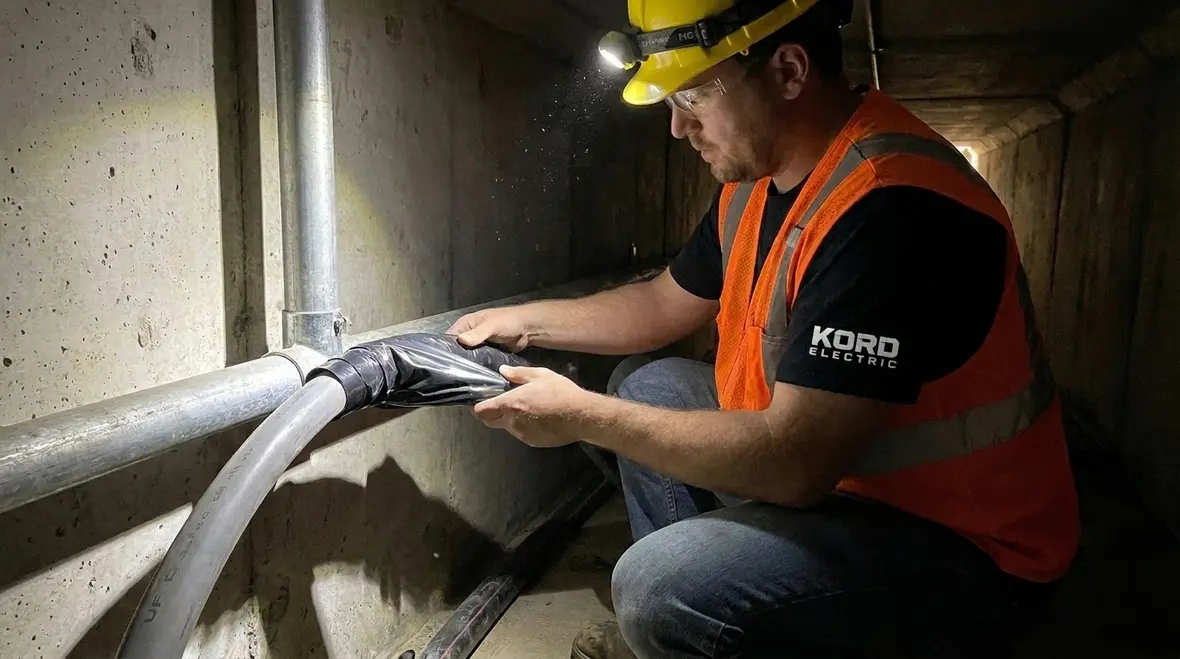
Our process stays grounded in what the NEC wants you to prevent. Therefore, we focus on spacing where required, and we focus on protection where there is any reasonable chance of damage. In commercial and industrial environments, the installation must also survive vibration, temperature swings, and normal building activity.
At each crossing, our technicians confirm these core points:
- Mechanical protection: If the crossing location can lead to abrasion or impact, we apply protection that matches the risk level and the installation type.
- Routing clarity: We avoid sharp bends near the crossing and keep the cable path stable, not “floating” in a way that can shift later.
- Separation from hazards: We ensure the crossing does not create a weak point where heat, moisture, or physical contact can affect the insulation.
- Access for inspection: We plan so the crossing can be inspected or serviced if the facility ever needs it.
As we do this, we also coordinate with other trades. That includes fire protection system work and underground or exterior pathways. In major property buildings, other systems like pumps and fire equipment often drive the layout. So we align our crossing approach early, not after the fact.
On many sites, NEC UF cable crossings share space with feeders, branch circuits, and life safety wiring. That is why our technicians use the same disciplined mindset we apply when interpreting NFPA 70 sections on feeder minimum rating size, grounding, and application scope. When the installation is viewed as a connected system rather than a set of isolated parts, crossing details become part of a bigger reliability story instead of a last-minute hurdle.
Real world coordination for major property buildings
In big facilities, the biggest challenge is not the math. It is the coordination. Multiple systems occupy the same real estate, and the schedule pressures can push people to “make it fit.” We do not ignore the schedule. However, we insist on crossing details being built safely so the facility does not inherit a hidden defect.
Our teams coordinate with site leaders and other contractors to make sure UF cable crossings meet the practical intent of NEC rules. For example, if there are areas used for firefighting operations or maintenance access, we keep electrical routing from interfering with those requirements. In some cases, we take extra steps to preserve clearances that allow equipment to work as designed.
Because commercial sites run on reliability, we also consider how crews will work later. When we leave space for inspection and we keep pathways organized, we reduce the chance that someone will drill, anchor, or route another line right through a weak crossing point. If you want a pop culture analogy, it is like building a set that looks good in the movie, not like a prop room that collapses the moment the camera pans away.
When NEC UF cable crossings are part of a larger project that includes new services, feeders, or specific purpose loads, we coordinate our approach with the same 2026 NEC application requirements that govern the rest of the work. That means early discussions about scope under Section 90, realistic assessments of load calculations, and careful routing that respects both electrical and fire protection needs. Kord Electric and Kord Fire use this shared framework so electrical and fire life safety systems support each other instead of competing for space.
Our expert guidance and documentation for safe compliance
We do not just install cables and move on. Kord Electric keeps documentation and quality checks tied to the site’s needs, because our clients rely on us to support safety and ongoing operation. Our expert service staff explains the crossing approach in plain language, so facility teams understand what was done and why.
During the job, our technicians perform checks at key points rather than only at the end. That includes verifying the crossing layout, confirming protection methods, and making sure the UF cable route matches the approved plan. After installation, we support the facility with clear notes, so inspections and future maintenance feel calmer.
In fact, if compliance feels like a maze, we treat it like a map. We use the NEC framework, including the direction from NFPA 70 Section 324.18, and we translate it into steps you can see. Then we make sure the field work matches the plan. That is how we protect commercial and industrial buildings from the kind of failures that turn into emergency calls.
Because NEC UF cable crossings rarely exist in isolation, we also reference broader NEC guidance when documenting our work. For example, when conductor sizing, grounding, enclosure ratings, and reconditioned equipment show up in the same project as UF crossings, we align our notes with the same 2026 NEC articles we use for feeders, specific purpose loads, and service grounding. This gives facility teams a consistent record that inspectors, engineers, and in-house staff can all read without guesswork.
FAQ about NFPA 70 Section 324.18 and NEC UF cable crossings
Conclusion: get crossing details right before the building moves on
When we handle NFPA 70 Section 324.18 correctly, we protect the UF cable and we reduce future failures at the worst possible places. Our technicians and expert service staff coordinate with facility teams and other trades so your cable routing stays safe, inspectable, and aligned with the NEC intent. If you want clean installations in commercial and industrial environments, contact Kord Electric for a review or new work plan. Let us help your electrical system age like wine, not like yesterday’s leftovers.
For facilities across Southern California, that support often starts with a focused look at how NEC rules apply to real projects. Whether your team is planning new NEC UF cable crossings, upgrading panels, or coordinating life safety power, our Los Angeles County electrical services team can help you align design, installation, and inspection requirements from the first walkthrough to final sign-off.


