
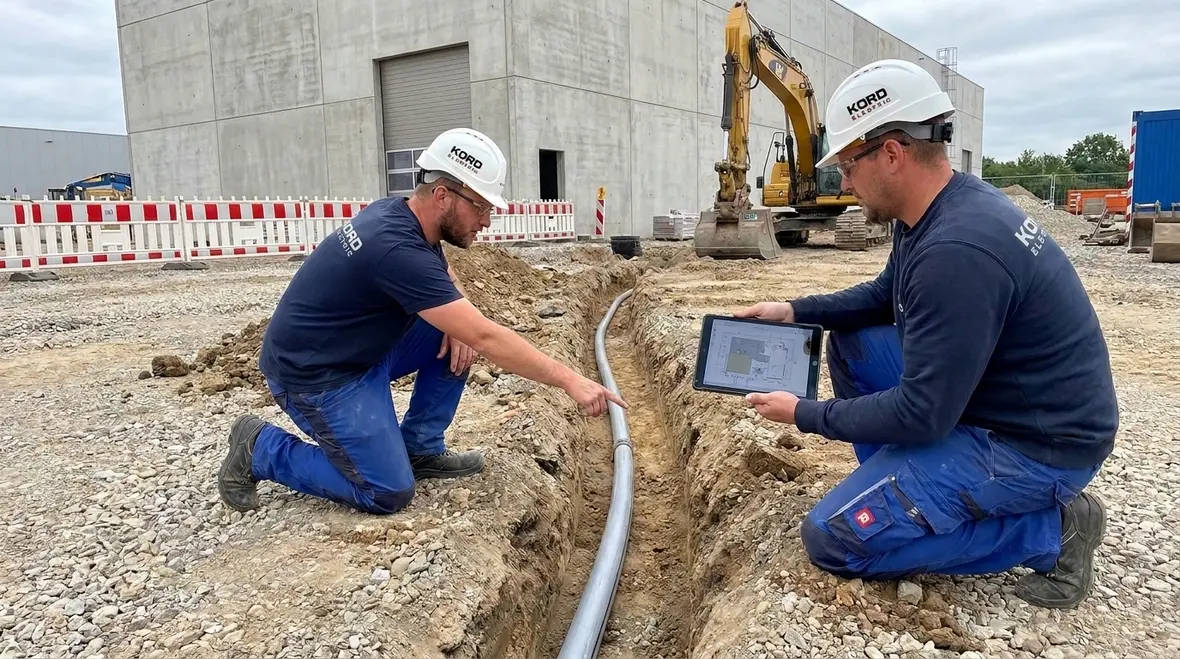
NFPA 70 324.10 UF Cable Use in Commercial Sites
NFPA 70 NEC UF Cable Use in Commercial and Industrial Sites
When people ask whether NEC UF cable uses permitted, we answer with care and clear limits. At Kord Electric, we guide commercial and industrial facilities through the rules that control where UF cable can run, how it gets protected, and what you must verify before anyone energizes a single conductor. In the sections that follow, we break down NFPA 70 Section 324.10 in plain language, and our expert service staff explains the “why” behind the code, not just the “what.” Of course, the code does not care about vibes, but we do. So we’ll keep it calm, direct, and useful.
If your team wants broader code context while you plan underground runs, you can also review Kord Electric’s article Understanding NFPA 70: The National Electrical Code Explained for 2026, which connects NEC structure and 2026 expectations to real-world design and inspection work for commercial and industrial facilities.
What NFPA 70 Section 324.10 actually controls
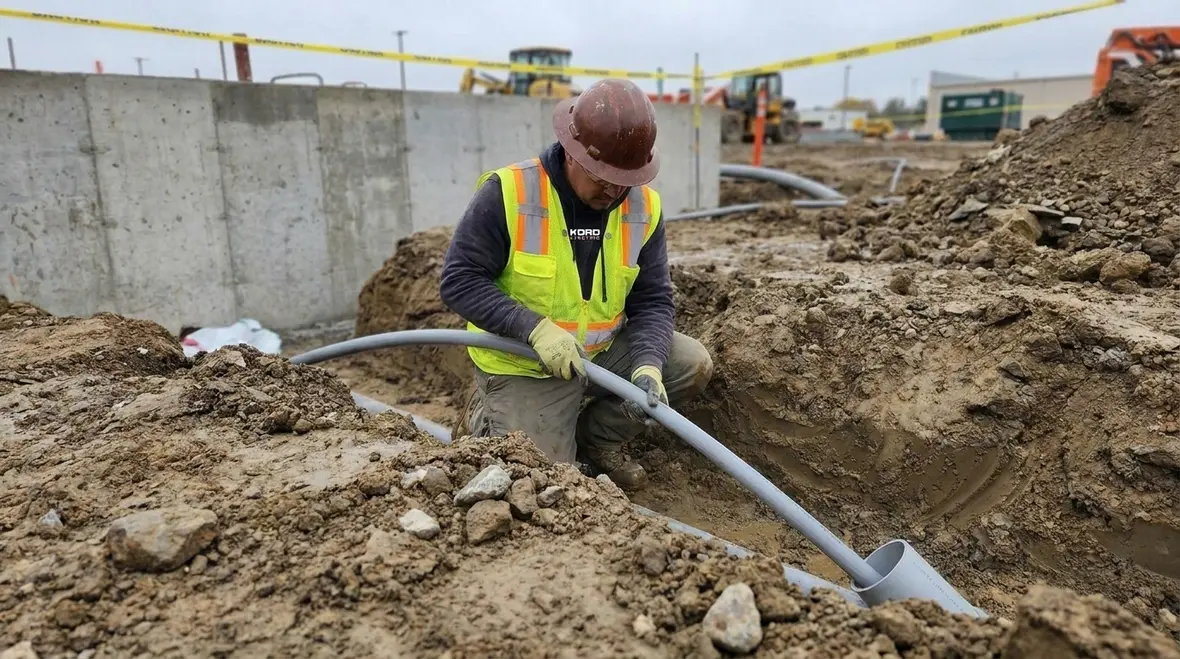
NFPA 70 Section 324.10 sets rules for where underground feeder and branch circuit cable, UF cable, may be installed without using a raceway. In other words, it explains the safe path for power in places where people expect wiring to hide under the surface and stay reliable. Then the code draws boundaries so the cable does not get damaged by the real world, which includes equipment traffic, soil movement, and the occasional future renovation project where someone “just digs a little.”
In practice, we see most problems start when a site team treats UF cable like it can go anywhere underground. However, when the cable location and protection do not match 324.10, you do not get a friendly warning. You get failed inspections, and you get delays that nobody budgets for. Our technicians review the site plan first, then we map each underground run to the code’s conditions before we install.
When UF cable runs are allowed without a raceway
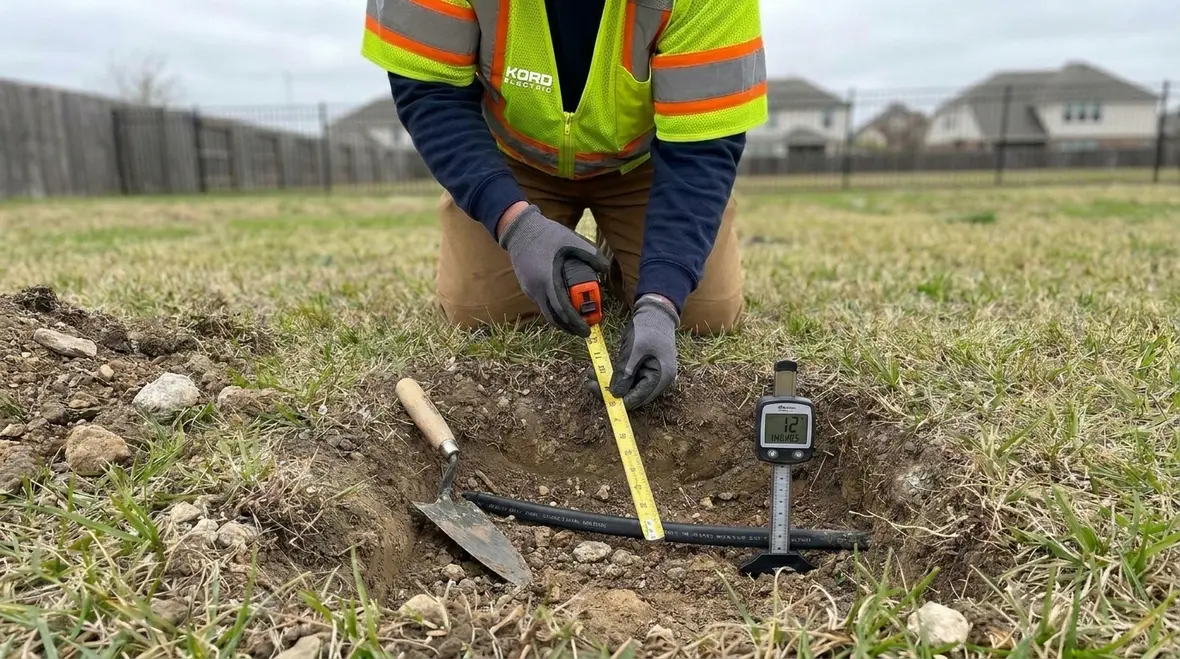
To understand NEC UF cable uses permitted areas, you have to look at the installation context. Section 324.10 focuses on practical locations where the cable can stay protected and perform as intended. Therefore, we treat each run as a mini project with a checklist: route, burial depth and protection, physical risk, and how the cable will behave if someone changes the site later.
At Kord Electric, we typically support commercial buildings, industrial facilities, and major property developments. So we pay special attention to areas where the ground sees stress. For example, a route that crosses a grassed strip might work one way, while a route that crosses a roadway service path needs a different level of protection. Furthermore, if the cable enters or exits a building, we make sure the transition method matches the code and the electrical design.
Where the code expects additional protection
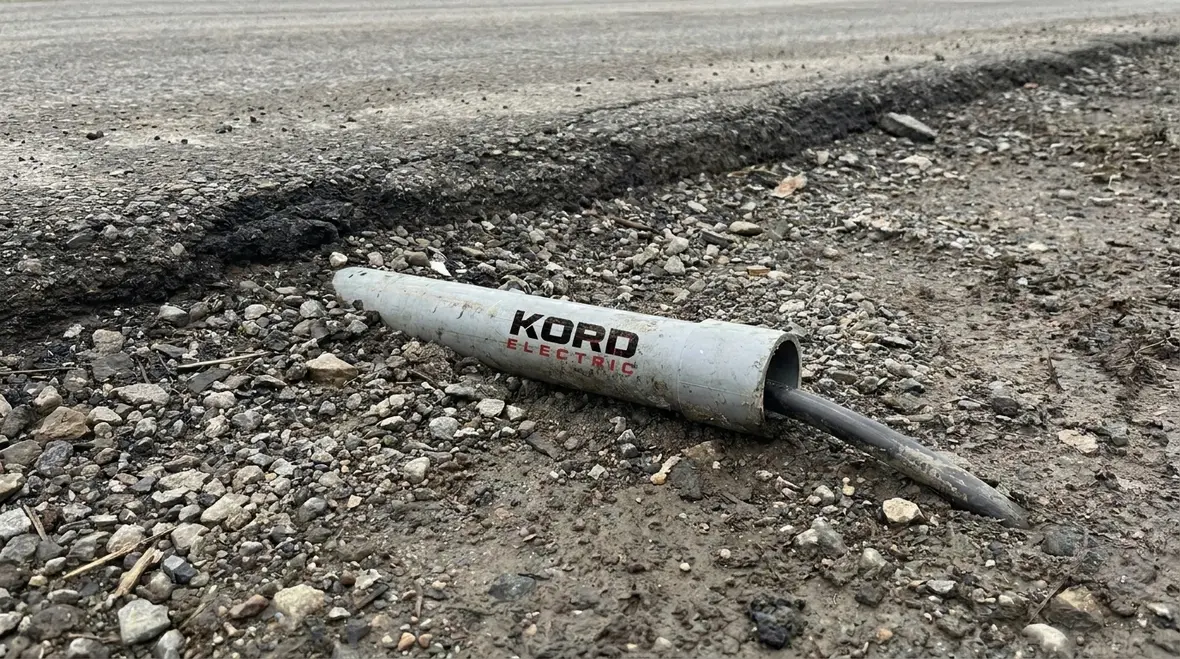
Even when UF cable uses permitted, NFPA 70 does not ignore the real risks underground. As conditions get harsher, the code expects additional protection. That means you may need to shield the cable from impact, boring, or digging activity that would crush it. Also, the cable should not become a “hidden weak link” in an area where forklifts, pallet jacks, or maintenance crews could contact the route.
Our expert service staff explains this part to facility managers in meetings that feel less like a lecture and more like a practical walkthrough. We show what usually goes wrong, such as cables laid too shallow or cable segments exposed during future utility work. Then we align the install plan with how the site actually operates. In a warehouse, “later” arrives fast, and the cable needs to survive it.
How we verify compliance before installation
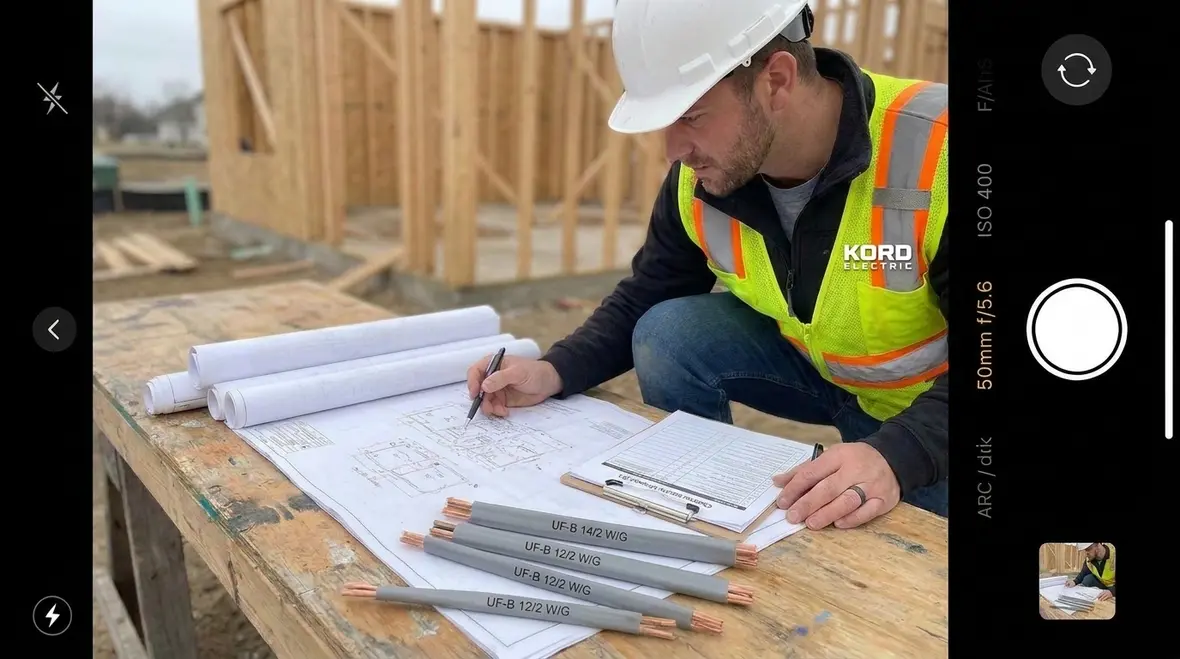
Code compliance does not start in the trench. It starts in documentation and layout. So we start by reviewing the job scope, then we confirm the cable type, ratings, and how the run connects to the feeder or branch circuit design.
Next, our technicians verify the route against site drawings. After that, we confirm where the cable enters structures and where it runs near other systems. Also, we check for conflicts with existing underground utilities. If another utility blocks the planned path, we do not “make it work.” We reroute or upgrade protection so the installation stays compliant.
Finally, we prepare for inspection. We provide clear labeling and support the testing and documentation your authority having jurisdiction expects. Because in the real world, an inspection is not a formality. It is the final judge, and we help you pass it on the first trip.
Common commercial site mistakes we help clients avoid
We see repeated themes across commercial and industrial properties. So rather than guessing, we address the patterns directly.
Using UF cable in the wrong location. People sometimes choose UF cable because it feels easy. Then the site condition proves otherwise. Our team matches installation location to the conditions required by NFPA 70 Section 324.10.
Skipping protection where traffic or digging happens. If a crew can reach the cable with a backhoe, the code expects the design to account for that risk. We plan protection so you do not end up with a power outage that costs more than the original trench.
Ignoring transitions from underground to aboveground runs. Transitions matter. We design and install with attention so the cable does not get stressed or exposed during the critical entry points.
Design assumptions made without current site mapping. As-built drawings change. Therefore, we verify the route in the field and update the plan when necessary.
And yes, we have heard the classic joke: “We will just run it and fix it later.” Later never pays invoices. Later only creates more paperwork. So we help teams do it right now.
Best practices for future maintenance at major facilities
Commercial and industrial facilities evolve. New docks get added. Utility corridors expand. Landscaping changes. Therefore, we install with future access in mind, because maintenance teams need to find and repair cable runs without ripping up half the property.
We recommend that clients keep underground route records updated and stored for maintenance staff. Then, when a project manager requests a change, the team can quickly see what is safe to alter. Also, we label key sections and mark routes in a way that supports field crews.
When you plan this way, the cable becomes less of a mystery and more of a known asset. And if you manage property at scale, you already know that unknowns become expensive fast. We just help you keep the surprises in the movies, not the electrical system.
Keeping your project aligned with code resources
At Kord Electric, we stay grounded in the code and the supporting materials our team references across jurisdictions. We also collaborate with trusted industry resources and guidance so our approach stays consistent with how authorities interpret requirements. For clients who want more context, we often point teams to Kord Electric and Kord Fire materials on the NEC and practical electrical planning, and we keep the focus on real installation outcomes.
Additionally, we support teams that need clear code explanations for planning and internal approvals. We do not speak only to the electricians; we also explain the decisions so facility owners, operations leaders, and property managers understand what they are approving.
How UF cable planning connects to broader electrical services
Underground feeder and branch circuit work does not live in a vacuum. Each UF cable run ties into a larger commercial system that includes panels, feeders, overcurrent protection, grounding and bonding, and often life safety loads. That is why we treat UF cable planning as one piece of a coordinated electrical strategy, not a side task someone squeezes in with a shovel and a spare afternoon.
For facilities across the region, our projects often start with a broader assessment of service equipment, distribution, and existing underground infrastructure. From there, we tune the NEC UF cable uses permitted approach so it supports the long-term reliability of the whole system, not just the immediate trench. When needed, we also coordinate with our team delivering Los Angeles County electrical services so upgrades, new circuits, and underground extensions line up with local adoption of NFPA 70 and inspection expectations.
FAQ
Call Kord Electric for code-ready UF cable planning
If your commercial or industrial facility needs underground power runs, Kord Electric helps you plan the job the right way, from route design to inspection support. We explain the requirements behind NFPA 70 Section 324.10 so your team makes decisions with confidence. Let our technicians and expert service staff review your drawings, confirm installation conditions, and prevent costly rework. Reach out to Kord Electric and get a code-ready plan that keeps your site powered, protected, and operating without drama.
When you are ready to move from planning to action, our team can integrate UF cable routing with a full commercial power strategy, coordinate with local authorities, and align your project with the latest NEC guidance your facility relies on. From first sketch to energized conductors, we help you avoid surprises and keep underground work as calm and predictable as it should be.


