
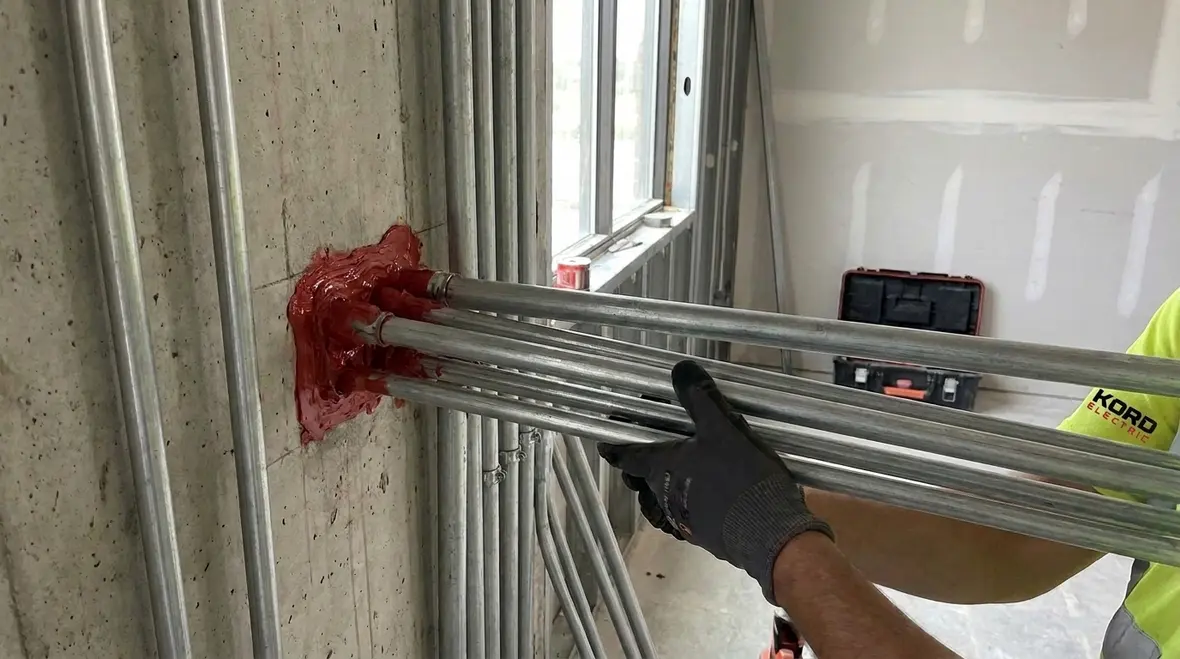
NFPA 70 225.27 Raceway Seal Building Penetrations Explained
NFPA 70 225.27 Explained for Commercial Builds
At Kord Electric, we handle NEC raceway seal building penetrations every day in commercial and industrial facilities, and we make sure the details match NFPA 70 requirements. In plain terms, when cables and conductors pass through building walls, floors, or other penetrations, we protect the openings so fire and smoke do not spread through gaps. Our expert service staff walks job sites step by step, and our technicians explain what they find, why it matters, and how to correct it before inspectors start asking questions that feel like a pop quiz.
Now, let’s talk about NFPA 70 Section 225.27, what it requires, and how you can plan it correctly for major property buildings. And yes, the building’s hidden openings can act like surprise party guests, showing up where they are not invited.
What Section 225.27 Demands at Penetrations
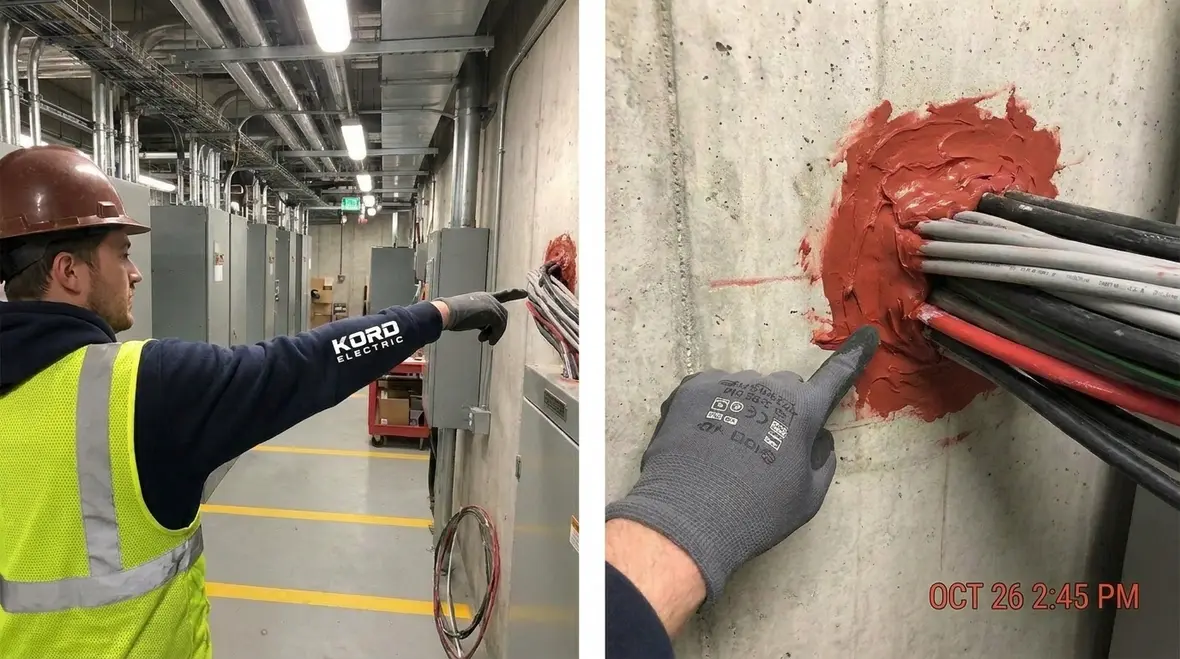
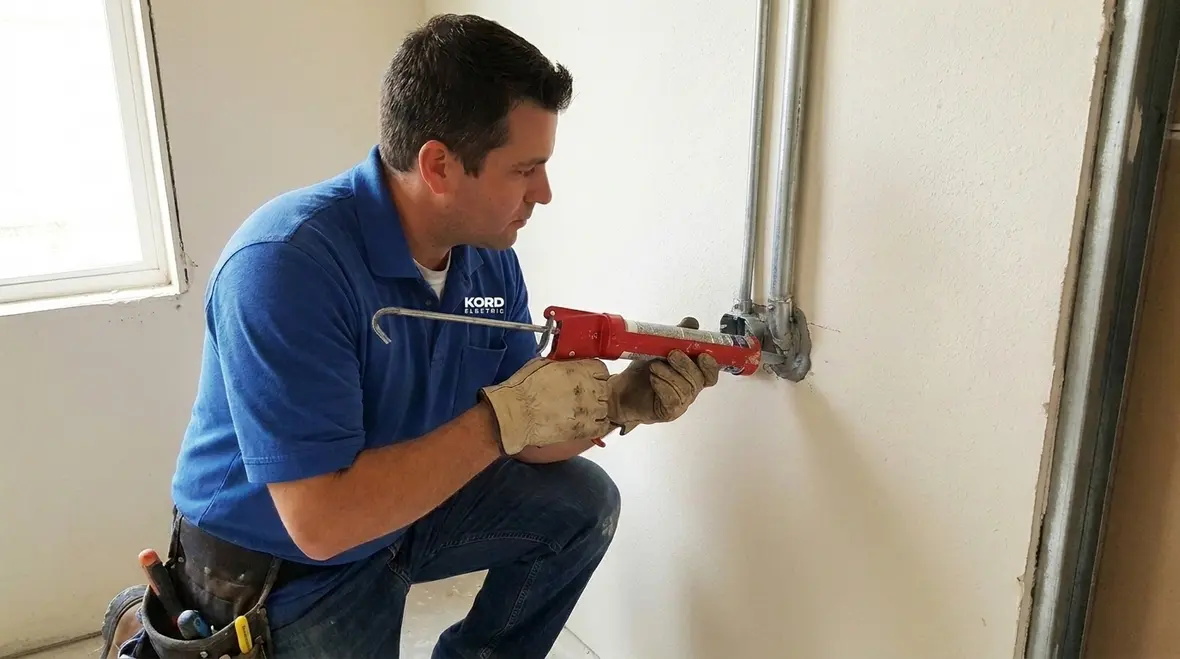
NFPA 70 Section 225.27 focuses on one key idea: raceway seals at building penetrations must be installed so the raceway opening does not become a path for smoke or fire. In practice, we apply this when conduits, cables, or raceways pass through walls, floors, ceilings, and similar barriers between compartments.
However, this is not just a “put a cap on it” situation. So, we review the specific raceway system, the route, and the barrier type. Then we confirm the seal method matches the installation intent. Because even when a penetration looks sealed from a distance, the interior path can still carry heat, gases, and smoke.
Our technicians also check for practical job site realities. For example, if the conduit arrives misaligned or the opening gets enlarged during construction, the seal can lose its effectiveness. Therefore, we treat sealing as a controlled step, not an afterthought.
Where NEC Raceway Seal Building Penetrations Actually Show Up
Major commercial and industrial facilities usually create more penetrations than people think. Therefore, we guide our clients to identify them early in design and during installation. When we plan correctly, we avoid late rework and minimize inspection delays.
Common places include:
Floors and slabs where feeders route to different levels
Wall penetrations for lighting circuits, power circuits, and control wiring
Fire rated assemblies where the building compartment must stay intact
Mechanical rooms where pathways turn and cross barriers
Vertical risers where conduit passes through multiple floors
Additionally, we consider how the raceway runs relate to fire stopping plans. In many projects, the electrical scope connects with the life safety scope, and we coordinate accordingly. It is like aligning actors before a scene. If one character walks into the wrong set, the whole production gets messy.
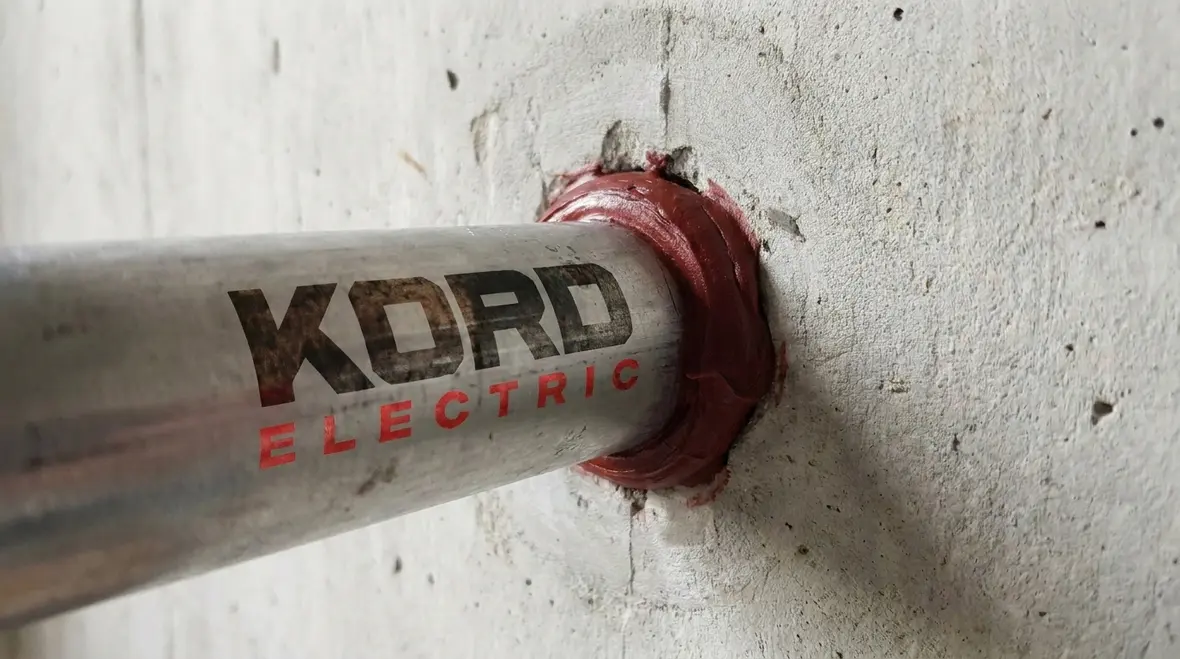
How Seals Work in Real Life, Not Just on Paper
NFPA 70 treats sealing as a safety measure, so we install it with purpose. A seal at a building penetration helps stop the migration of smoke and fire products along the raceway. In other words, it prevents the conduit from becoming a “duct” for hazards.
During our work, we verify a few practical items that often get overlooked. First, we ensure the conduit is properly prepared at the opening. That means we clean the ends, maintain the correct orientation, and keep the seal location consistent. Next, we confirm the sealing material and method meet the intent of the code and the listing or system requirements. Then we document what we did, so the next contractor or inspector can follow the trail.
Our technicians also pay attention to the stuff that happens between milestones. For instance, moisture, construction debris, and minor conduit movement can reduce sealing effectiveness. Therefore, we schedule sealing when the pathway is stable and ready, not when everyone is rushing to finish the floor.
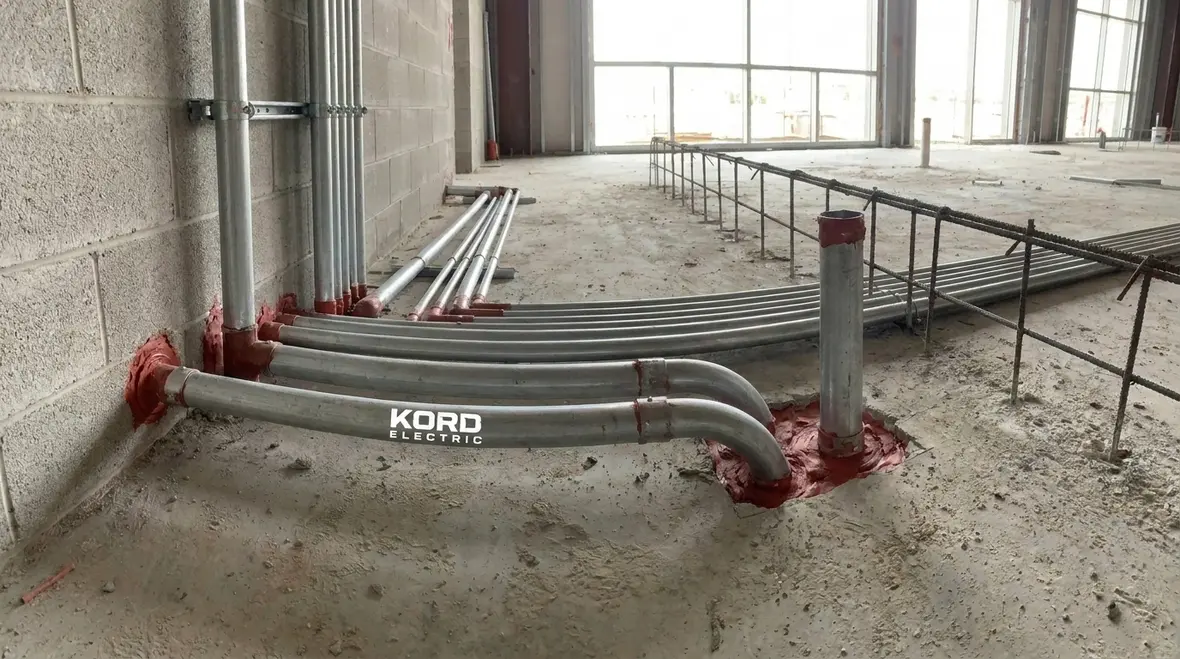
Planning and Coordination for Commercial Electrical Teams
Commercial and industrial facilities do not run on guesswork. They run on schedules, inspections, and responsibilities. So we coordinate sealing with the rest of the project team, including general contractors and fire protection stakeholders.
In practice, we recommend a sequence that reduces headaches:
Review the building fire stopping plan early, before rough-in closes wall cavities
Identify all conduit runs that penetrate rated barriers or create compartment boundaries
Set seal locations while routing is still accessible
Install raceway seals before the area gets covered
Verify and document the work for inspection readiness
Meanwhile, we explain decisions in plain language. Our expert service staff does not just say, “We seal it.” Instead, we explain why a specific seal point matters and how it supports the building’s fire resistance strategy. When clients understand the reason, approvals come faster and field friction goes down. No one wants a meeting that feels like a bad sitcom where the plot never moves.
Common Field Issues We Prevent Before Inspection
Even good teams can get tripped up during installation. So we focus on prevention, because the fix after walls close is rarely quick, and it rarely feels fun.
Here are issues we commonly avoid:
Missing seals at a barrier that looks “minor” but still carries risk
Wrong seal placement where the seal does not properly address the penetration opening
Improper conduit preparation that leaves gaps or blocks the seal
Uncoordinated changes where another trade modifies the opening size or location
Insufficient documentation that makes inspection review slower
Also, teams sometimes treat electrical sealing like a checkbox. We do the opposite. We treat it like a life safety step. If something seems uncertain, we pause and verify, because the cost of correcting a mistake later can be far greater than the time spent doing it right now.
And because we work with major property buildings, we follow through with quality checks at key points. Our process is calm, methodical, and built for repeatable outcomes, not chaotic last minute heroics.
FAQ on NFPA 70 225.27 and Raceway Sealing
Sources We Use to Keep Our Guidance Accurate
We base our field practices on NEC and NFPA expectations, and we reference authoritative guidance to keep our recommendations aligned with current standards. For a deeper background on the broader code framework, we often point clients to resources like our Kord Fire overview of NFPA 70 and the National Electrical Code and our Kord Electric guide Understanding NFPA 70: The National Electrical Code Explained for 2026. Those articles explain how the NEC connects to real safety outcomes and why details like raceway seals at penetrations matter long after a project turns over.
Alongside those NEC-focused explanations, we stay aligned with related fire protection and life safety context through our broader Kord Fire properties and other specialized resources in the fire and pump ecosystem. That cross-discipline perspective helps ensure that electrical penetrations, fire stopping systems, and emergency equipment all support one coordinated fire safety strategy instead of acting like separate, competing priorities.
Even with strong reference material, your specific building still matters. We do not treat any project like a copy of the last one. Instead, we verify site conditions, confirm how electrical penetrations interact with rated assemblies, and coordinate sealing with the overall fire strategy, because real buildings rarely follow theoretical diagrams.
How Raceway Sealing Ties Into Broader Electrical Services
Raceway seals at building penetrations might seem like a small detail compared to main switchgear or large feeders, but they sit at the intersection of electrical reliability and life safety. When we plan new installations or upgrades, we connect NFPA 70 Section 225.27 expectations with load calculations, branch circuit planning, and system-level distribution so the entire electrical design works as a single, code-aligned system.
For facilities across Los Angeles County and Southern California, that often means pairing raceway sealing work with broader Los Angeles County electrical services such as panel upgrades, distribution changes, or emergency power coordination. When those scopes move together, conduit routes, penetrations, and sealing details can be aligned early, rather than treated as scattered, last-minute patch jobs.
We also see raceway seals play a supporting role during fire alarm integration, emergency lighting work, and generator or transfer equipment projects. A well-planned conduit route with clear seal points makes it easier to document the life safety path, show inspectors how zones stay separated, and confirm that emergency systems will not be compromised by an overlooked penetration between compartments.
Schedule a Code-Minded Sealing Review With Kord Electric
If you manage a commercial or industrial facility, do not wait for a late inspection to find out where sealing needs improvement. Kord Electric sends our technicians and expert service staff to review raceway routes, penetration points, and installation readiness, so your electrical work supports your building safety plan instead of working against it.
During a review, we walk the site, identify where NEC raceway seal building penetrations intersect fire-resistance–rated assemblies, and clarify which locations require sealing, which need adjustment, and which can remain as they are. We document those findings with photos and clear notes so your project team, fire stopping contractor, and inspectors can all see the same picture.
We work with major property buildings using a steady, methodical approach and clear communication. Whether you are planning a new build, upgrading existing infrastructure, or preparing for a compliance-focused inspection, we help you plan sealing correctly from the start and keep your project moving forward, smoothly and safely.
To align your raceway sealing, electrical distribution, and life safety systems under one coordinated plan, reach out to Kord Electric and schedule a code-minded review for your facility. The earlier we join the project, the easier it becomes to turn NFPA 70 Section 225.27 from a line in the code book into a quiet, dependable part of your building’s protection story.


