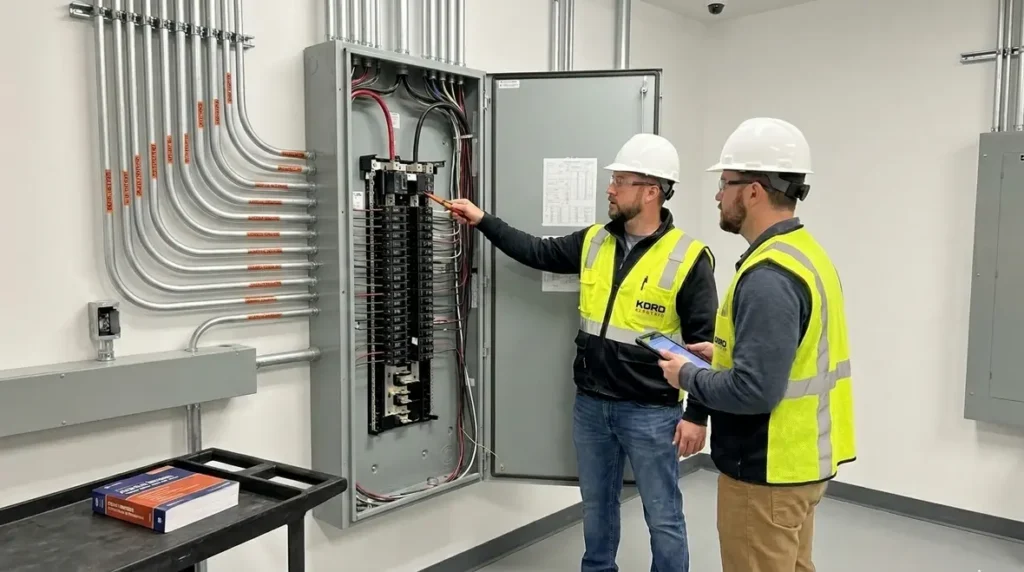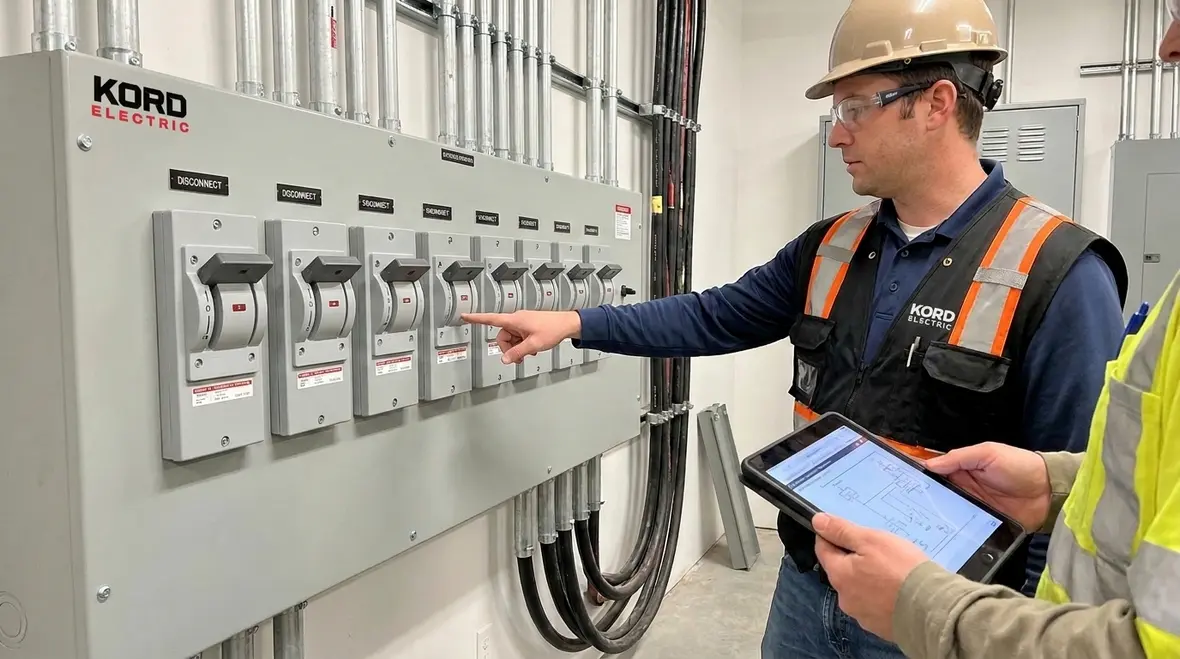
NFPA 70 Section 225.33 NEC Maximum Number of Disconnects
In commercial and industrial work, we do not guess when it comes to switching gear. We follow NFPA 70 Section 225.33, including the NEC maximum number of disconnects rule, because that limit affects layout, code compliance, and inspection outcomes. And yes, inspectors can spot a “creative” shortcut faster than a kid spots a phone on a couch. That is why our team at Kord Electric guides owners and site managers with clear, practical explanations. Moreover, our technicians and expert service staff walk through the real-world intent of the code, then connect it to the way commercial and industrial facilities actually operate.
What Section 225.33 really sets in place for switching equipment
NFPA 70 Section 225.33 addresses the maximum number of disconnects that may serve equipment under specific conditions. Essentially, the code limits how many disconnecting means you can put in series with, or supply to, a load category within the scope of the article. Therefore, it reduces complexity, improves safety, and helps ensure that field conditions match the electrical design intent.
At Kord Electric, our experts often tell stakeholders this in plain terms. First, a facility must be able to isolate equipment safely. Second, responders and maintenance staff need a clear, reliable process. Third, the design must stay within the structure the NEC expects. When a plan exceeds the NEC maximum number of disconnects limit, it can trigger rework, delays, or inspection failures. In other words, the code does not want a “disconnect buffet” that nobody can track during an emergency.

Why the limit matters for commercial and industrial operations
Facilities in healthcare, data centers, manufacturing, and large multi site properties rely on dependable power control. Consequently, disconnecting devices must support safe service while keeping the system understandable. When a design includes too many disconnects, it becomes harder to confirm which device controls which load. Moreover, more devices can mean more points of failure, more labeling demands, and more chances for misoperation during maintenance.
Our technicians also see a practical side. Maintenance crews want fast isolation, not a scavenger hunt. Therefore, we help teams organize disconnects so that procedures remain consistent across shifts and contractors. And we do it with a calm, deliberate approach, because no one wants surprises when a pump station or process line needs attention.
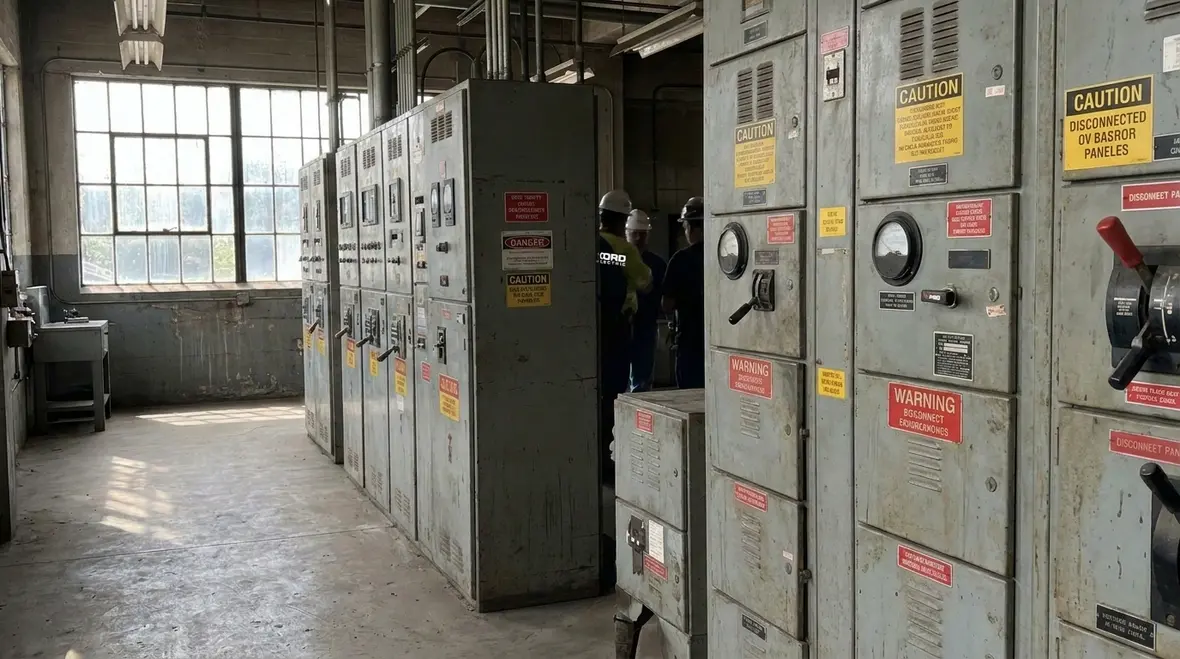
How Section 225.33 influences design and labeling decisions
Engineers and designers often start by choosing equipment and then shaping the controls. After that, they map disconnects for service, maintenance, and emergency procedures. However, Section 225.33 can change the final approach. Specifically, it can limit how many disconnecting points exist for certain systems under the article’s rules. As a result, teams may need to combine functions, choose a different method of disconnecting, or rework the one line diagram to match code intent.
Now, labeling becomes part of the story. When the number of disconnects stays within the NEC intent, labeling becomes clearer and procedures stay predictable. In contrast, when there are too many devices, labels can blur, and field staff can lose time. We do not just “stamp labels,” either. Our expert service staff explain how the labeling supports actual lockout tagout workflows, not just an inspection checkbox.

We compare the code intent with real field setups we see
Here is what we notice in commercial and industrial facilities. First, many projects already have a mature power management approach, such as centralized switchgear rooms, switchboards, and panelboards. Second, the site still has many interrelated loads, like HVAC systems, process equipment, and auxiliary power. Third, contractors often propose extra disconnects to simplify maintenance access. That is where Section 225.33 can matter most.
During plan review support, we help teams avoid designs that drift into “too many disconnects.” If the disconnect count approaches the limit, we help reduce the number of switching points through smarter design choices. For example, we may guide teams toward correct functional grouping, appropriate equipment selection, and proper integration with downstream controls. In addition, we verify that the field arrangement matches the one line diagram and that access stays safe and practical.
And because no one wants an inspection day comedy routine, we also plan for documentation. We make sure drawings, schedules, and as built records tell the same story. Otherwise, the building owner ends up asking, “Which one disconnects the thing?” while the crew holds a clipboard like it is a ticket at a theme park.

Practical steps our technicians use to stay compliant
Compliance does not happen by luck. It happens through a method, and our technicians follow that method on commercial and industrial builds and major property upgrades. Moreover, we keep the process calm and predictable so the site team knows what is coming next.
- Review the scope early. We confirm which equipment and circuits fall within the rule set tied to Section 225.33 so the project team does not build the wrong structure.
- Map the disconnecting means. We count and categorize disconnecting points based on the system design and code requirements, then compare the results to the NEC maximum number of disconnects limit.
- Validate the labeling plan. We align labeling with how maintenance and emergency isolation actually works, not just how a drawing looks on paper.
- Coordinate access and working clearances. We ensure the devices can be reached safely and that routing supports safe operation and service.
- Document the final layout. We help produce consistent records so the next contractor does not face a mystery box.
Then, once the field work begins, we test and verify. We treat the commissioning steps as part of safety, because the goal is not just passing an inspection. The goal is protecting people and keeping the facility running.
Where electrical and fire safety thinking connects
Commercial and industrial properties often involve multiple safety layers, including electrical and fire related protection. While Section 225.33 focuses on disconnect arrangement, the broader safety mindset matters. Our team at Kord Electric treats electrical safety as part of the facility’s total protection plan, because when isolation works the way it should, fire response and emergency operations gain clarity.
That mindset aligns with how major electrical code guidance gets discussed across the industry, including resources published by Kord Fire and Kord Fire Australia. Also, fire safety organizations like firepumps.org emphasize that operational clarity supports emergency actions. In other words, correct electrical switching supports the rest of the safety system, not just the electrical one.
So when we talk to facility owners, we explain it like this. If the disconnect strategy is clean and within the required limits, then emergency and maintenance teams can act with less confusion. And less confusion under pressure is a win that almost nobody complains about.
Common misconceptions we help teams clear up
In the field, we hear a few myths that lead to avoidable trouble. First, some teams believe more disconnects always makes maintenance easier. Yet too many disconnects can create maintenance confusion and slow troubleshooting. Second, some stakeholders assume the code only cares about the equipment rating. It does care about ratings, but it also cares about how the system is controlled and isolated. Third, some teams think they can “fix it later” after installation.
However, later often becomes a costly scramble. Therefore, we encourage teams to address the NEC maximum number of disconnects constraint during design review, then confirm it during construction and closeout. Our expert service staff help the team understand the why, not just the what. That approach saves time and reduces change orders for major property buildings where schedule pressure is real.
How this connects to broader NFPA 70 planning
Section 225.33 does not live alone in the code book. It sits inside a much larger framework that guides how services, feeders, branch circuits, and equipment must behave. Many facility teams first meet that framework in high level guides like Understanding NFPA 70: The National Electrical Code Explained for 2026, then zoom in to articles and sections as specific projects move forward. When we review disconnect layouts, we keep that bigger picture in view so decisions about isolation, wiring methods, and equipment ratings move in the same direction instead of fighting each other.
In practice, that means we help owners and engineers line up their disconnect strategy with grounding and bonding choices, overcurrent protection, and emergency power plans. A clear scheme for the NEC maximum number of disconnects works best when it matches the way generators, transfer switches, and distribution gear are structured. That coordination reduces surprises when your facility adds new production lines, upgrades IT loads, or renovates critical spaces.
Planning ahead for upgrades and inspections
Disconnect planning usually shows up at three moments: during new design, during major upgrades, and right before an inspection that everyone suddenly remembers. We prefer the first two. When we are brought in early, we walk through one lines, site constraints, and operational priorities so the disconnect count and arrangement make sense before equipment gets ordered. That timing gives the team room to adjust layouts, coordinate with other trades, and prepare documentation that matches what will actually be built.
If we arrive closer to inspection day, we focus on verifying counts, confirming labeling, and checking that the physical installation matches the plan. When we find discrepancies, we prioritize corrections that affect safety and clarity for maintenance and emergency operations. The goal is not to add drama. The goal is to walk into inspection with a system that looks organized, behaves predictably, and stays within the limits set by NFPA 70 Section 225.33.
For facilities that operate 24/7 or support critical processes, we also encourage periodic reviews of disconnect layouts during broader electrical assessments. As loads shift and equipment changes over the years, the original logic behind a disconnect arrangement can fade. A structured review helps restore that logic so the system today still reflects what the code expects and what the building actually needs.
Supporting your facility beyond the disconnects
A clean disconnect strategy is one piece of how we support commercial and industrial power systems. The same mindset shows up in how we plan distribution, protect equipment from surges, and keep critical loads online. Across the Kord Electric blog, you will see that pattern in resources on power quality, redundancy, supply planning, and NFPA 70 fundamentals. The message is consistent: safe, organized electrical work comes from deliberate choices, not quick guesses.
When facilities in Los Angeles County and surrounding areas need help turning that mindset into action, they often start by reviewing our Los Angeles County commercial and industrial electrical services. From there, we tailor support around what the site actually runs: data centers, manufacturing lines, healthcare spaces, logistics hubs, or major property portfolios. In every case, disconnect planning, code interpretation, and commissioning support work together so power feels less like a risk and more like a reliable tool.
FAQ
Call Kord Electric for a clean disconnect strategy
If your project involves major property buildings and commercial or industrial power equipment, do not leave disconnect planning to last minute decisions. Kord Electric helps teams understand NFPA 70 Section 225.33 and align the NEC maximum number of disconnects with the way your facility actually operates. Then our technicians support the build with clear documentation and practical verification. Contact us to review your one line, count disconnects, and prevent rework before it becomes your most expensive day. We move carefully, so you can move confidently.
If you want to see how this kind of thinking extends to your broader electrical planning, you can also explore resources like our NFPA 70 overviews and commercial power design guides across the Kord Electric blog. Together, they show how careful coordination of code requirements, field conditions, and maintenance practices keeps your system safe, compliant, and ready for the next inspection.