
NFPA 70 Section 225.30 NEC Number of Outside Supplies
At Kord Electric, we help commercial and industrial facilities stay compliant, safe, and reliable. One of the code details we review early is NFPA 70 Section 225.30, specifically the NEC number of outside supplies. In the first 100 to 150 words, we will be direct: this rule limits how many outside electric services can feed your building, and it depends on what the facility needs to keep running. So, when an owner asks us, we treat it like a mission briefing, not a guessing game. Because, yes, electricity does not care about our deadlines. Still, our technicians and expert service staff explain the “why” behind the requirements, step by step, in plain language that your team can actually use.
What NFPA 70 Section 225.30 controls for outside services
NFPA 70 Section 225.30 focuses on the number of outside supplies allowed to serve the premises. In other words, the code does not just ask whether you have power. It asks how many separate outside sources you use, and how those sources relate to reliability expectations. This matters most for commercial and industrial facilities and major property buildings, where interruptions can cost real money and real operations.
We explain it like this: outside supplies act like “doors” for electricity to enter your system. Then, depending on the building’s level of criticality, the NEC limits the number of doors so that the system stays coordinated and predictable. If you add too many outside supplies without the right plan, you can increase complexity, raise the chance of miscoordination, and create maintenance headaches that no one wants. As our expert service staff likes to say, it is not that more options are always better. It is that uncontrolled options behave like a cable spaghetti diagram, and everyone gets to suffer.

If your team wants a broader refresher on where this fits inside the National Electrical Code, Kord Electric’s resource on understanding NFPA 70 for 2026 is a helpful companion read. It connects the high level NEC framework to the practical decisions your facility faces on every project.
Why facility reliability depends on planning, not luck
Commercial and industrial power systems live in the real world. Motors start, HVAC ramps up, computers spin up, and loading dock doors do their daily dance. Meanwhile, utility transfers, protective device coordination, and emergency power strategies must work together. Therefore, NFPA 70 Section 225.30 supports a design approach that reduces uncertainty.
When we help an owner evaluate the electrical service plan, we start with function. For instance, what loads must stay alive during a disturbance? Then, we look at how the outside supplies connect, how switching happens, and how protective devices respond. Next, we verify that the building design avoids blind spots where one part of the system assumes a condition that another part does not support.
In addition, our technicians document assumptions and provide clear recommendations. In practice, that means we show your team how the system behaves during normal operation and during abnormal events. Then, we help ensure the design matches what the code expects. And if someone says, “We will figure it out later,” we smile politely and suggest they do not. Later is where compliance goes to die.

How outside supply limits connect to system coordination
System coordination means your devices and transfer equipment respond in the right order, for the right reason, at the right time. Section 225.30 fits into that larger goal. Even when a facility has strong engineering, too many outside feeds can complicate what protection must do and when. Also, it can affect how service conductors, grounding paths, and switching devices get arranged.
From our field experience, we often see two failure patterns. First, teams design “by availability,” stacking outside sources without fully checking how the electrical one line describes transitions. Second, teams design “by convenience,” adding an outside supply because it seems easier on a diagram, not because it reduces real operational risk. However, the NEC expects the end result to remain coherent and workable.
So, we walk facilities through practical checks. We review how each outside supply interfaces with the service equipment. Then, we confirm that the transfer and distribution logic matches the intended reliability. After that, we verify that protective devices coordinate so the system clears faults correctly. This is where our technicians earn their pay. Because theory is nice, but coordination is proven with careful review and solid commissioning.
Working with code updates and real project constraints
Electrical codes evolve, and owners often ask how to stay ahead without turning projects into endless research marathons. We respect that pressure. In commercial and industrial environments, timelines matter, procurement matters, and downtime budgets matter. Still, the code does not loosen its grip just because schedules get busy.
When we reference the broader NEC explanations we support across our resources, we focus on practical application. We follow the National Electrical Code principles in a way that helps your electrical team make decisions early, before you lock in equipment and routing. Consequently, facilities avoid redesign cycles that cost time and money.
We also keep a clear line between what the owner wants operationally and what the design must deliver technically. For example, if a building needs higher reliability, we help the team approach that goal through a structured design that aligns with the rules governing outside services, protective coordination, and switching arrangements. Then we align the electrical plan with commissioning and documentation. That way, when inspectors show up, your team does not scramble like it just found out tomorrow is picture day.
For teams that want a deeper dive into how individual NEC rules tie together, the Kord Electric post on what NFPA 70 is and how it shapes electrical work is another useful guide you can share with facility stakeholders before major decisions are made.
Service entry design and what our technicians check on site
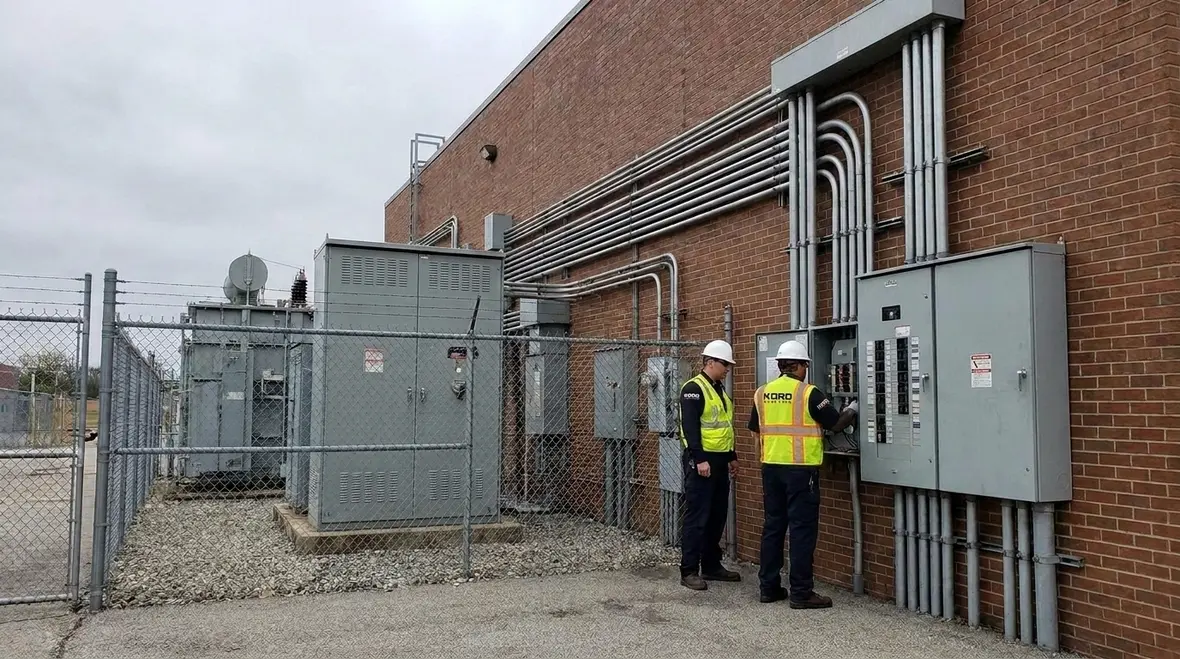
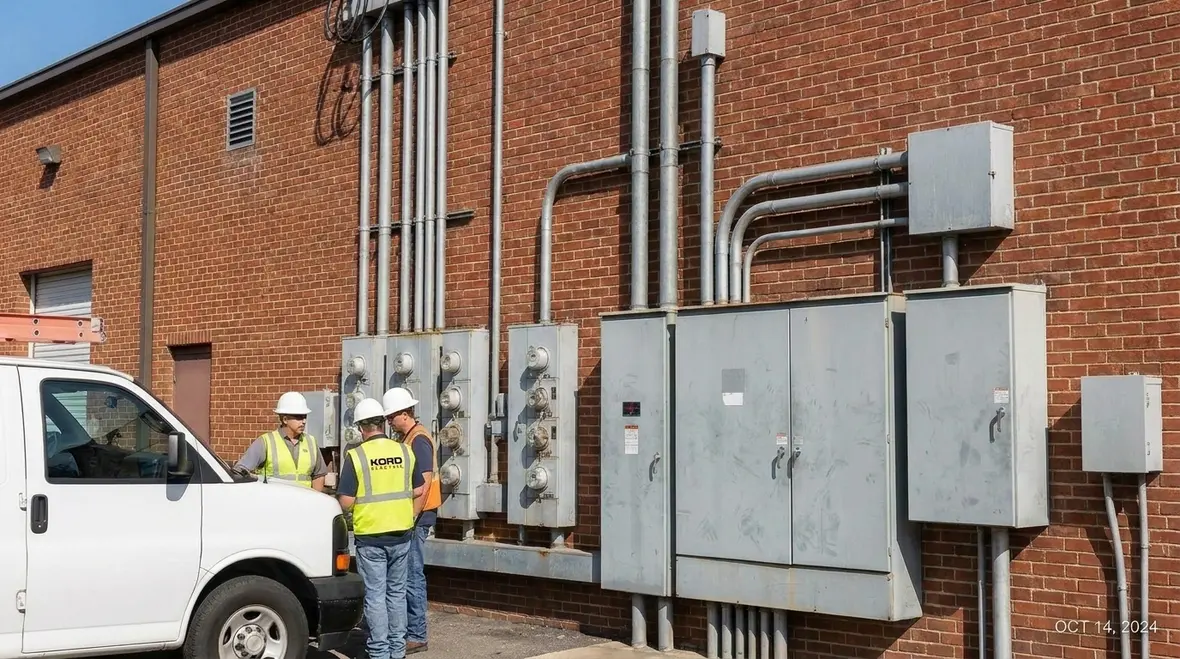
On real jobs, the paper one line and the physical equipment must agree. Therefore, we send our technicians to review service entry details, not just the drawings. They check hardware ratings, labeling, conduit routing, and how conductors enter and transition to service equipment.
For outside supplies, the on site checks matter even more. We look at how multiple outside feeds connect to the building’s service section. Then we confirm how switching and distribution support the intended behavior under normal and emergency conditions. After that, we verify that the grounding and bonding approach supports safe operation and fault clearing.
Additionally, our expert service staff explains the “what happens if” scenarios in a way that facility managers can understand. We do not bury the message in jargon. We explain it like a calm briefing. If you ever wanted a power system walkthrough that feels less like a lecture and more like someone translating a movie you actually care about, that is the goal.
Finally, we coordinate with the rest of the project team. We support electricians, electrical engineers, and general contractors so that the design decisions do not get lost between meetings. That coordination helps prevent last minute surprises.
A quick two column view: outside supplies, reliability, and compliance
Outside supplies and system design
Facilities choose service arrangements based on reliability needs, then implement coordination through switching and protection.
Design teams align outside feeds with service equipment behavior and fault response.
Technicians verify on site details match the approved plan.
What the code expects
NFPA 70 Section 225.30 limits the NEC number of outside supplies to support coherent operation.
Coordination reduces unpredictable behavior during disturbances.
Proper documentation and commissioning support safe, repeatable outcomes.
FAQ for NFPA 70 Section 225.30 and outside supply planning
Ready to tighten up outside supply planning with Kord Electric
When your facility needs dependable power, we make sure your design decisions hold up in the real world, not just on paper. Kord Electric supports commercial and industrial facilities and major property buildings with clear reviews of NFPA 70 requirements, coordinated service entry design, and on site verification by our technicians. If you are planning new work, upgrades, or a compliance refresh, contact us and let our expert service staff explain the path forward. We move carefully, document clearly, and help your system perform when it matters most.
If you are evaluating a broader electrical upgrade, our team can also connect NFPA 70 Section 225.30 with service reliability improvements, surge protection, and load planning. For facilities in Southern California, our dedicated Los Angeles County electrical services team supports everything from new service entries to power quality and preventive maintenance, so your outside supply plan does not sit alone on an island.
You can also explore more code focused topics in the main Kord Electric blog, where we connect NEC rules, field experience, and practical planning steps your team can actually use when projects move from “idea” to energized.


