
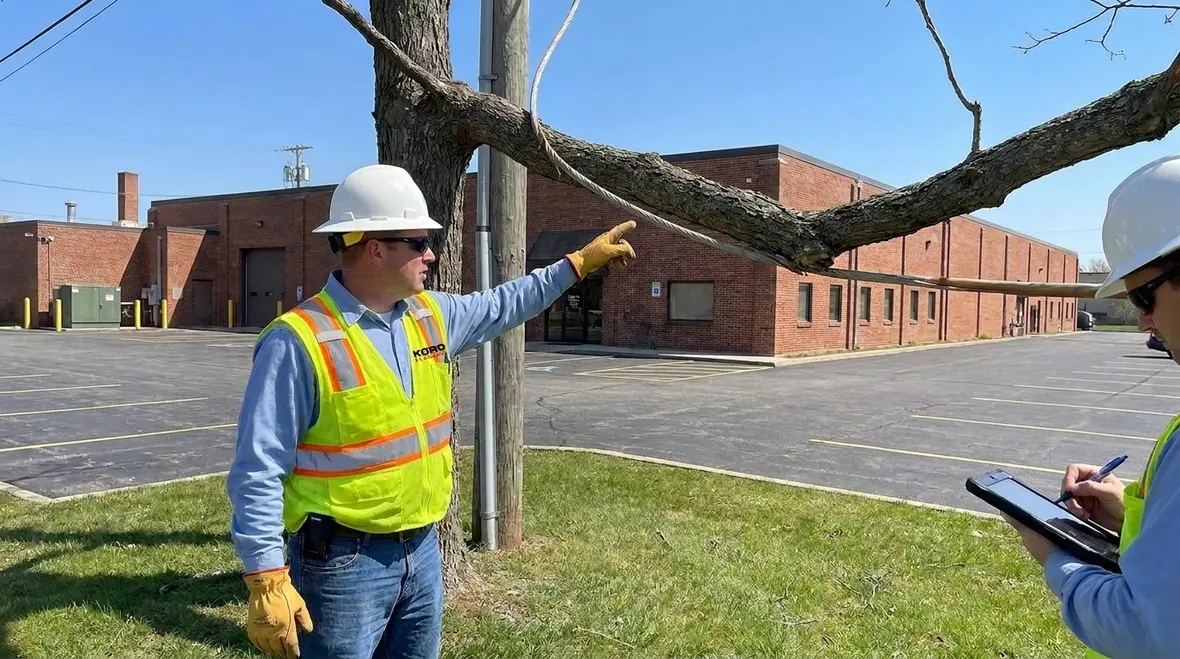
NFPA 70 Section 225.26 Vegetation Support Rules
NFPA 70 Section 225.26 sets clear boundaries for when and how vegetation can be treated as a support around electrical conductors. In our first pass with any site, we make sure the NEC vegetation support wiring rules line up with what the code actually allows, not what the field rumor says. Then we explain it in plain language, so the decision makers at commercial and industrial facilities can act fast and avoid expensive surprises. Our technicians and expert service staff walk the perimeter, check how growth could touch or interfere with equipment, and confirm the wiring and clearances follow the National Electrical Code.
Why Section 225.26 matters for commercial sites
In business and industry, you do not have the luxury of “we will deal with it later.” Power interruptions stop production, delay service calls, and inflate costs. Section 225.26 directly targets a common cause of trouble, vegetation that grows near electrical systems and then begins to act like an uninvited accessory. It starts innocent, like a shrub doing what shrubs do. However, it can become a support that changes tension, movement, and clearance patterns around conductors.
We see this most in major property buildings where landscaping sits close to service drops, risers, and parts of power distribution. Therefore, we treat vegetation management as an engineering issue, not a maintenance afterthought. And yes, someone always says, “It’s just a plant.” That statement is about as reliable as a screen door on a submarine. It might look fine, until it is not.
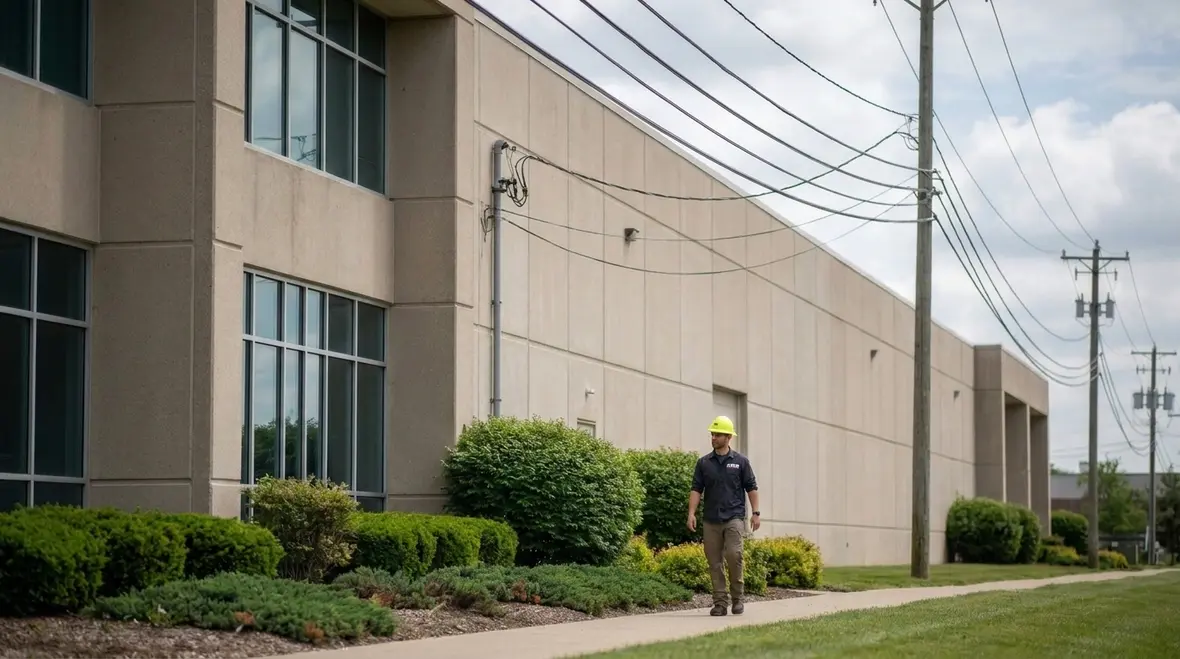
What NEC vegetation support wiring rules actually require
Section 225.26 focuses on the use of vegetation as support for electrical conductors and related equipment. In other words, it asks whether the installation depends on living growth to hold anything in place. The NEC does not want vegetation doing structural work in an electrical environment because vegetation changes over time. Leaves grow, branches sway, wind storms happen, and growth can shift clearances without notice.
So, we approach compliance with a simple method. First, we identify where conductors could rely on trees, vines, or large shrubs. Next, we check whether the installation design assumes vegetation support. Then, we verify the system maintains safe separation and does not create a path for faults through contact. Finally, our team documents findings so the facility can plan corrective action before the next storm season writes another headline.
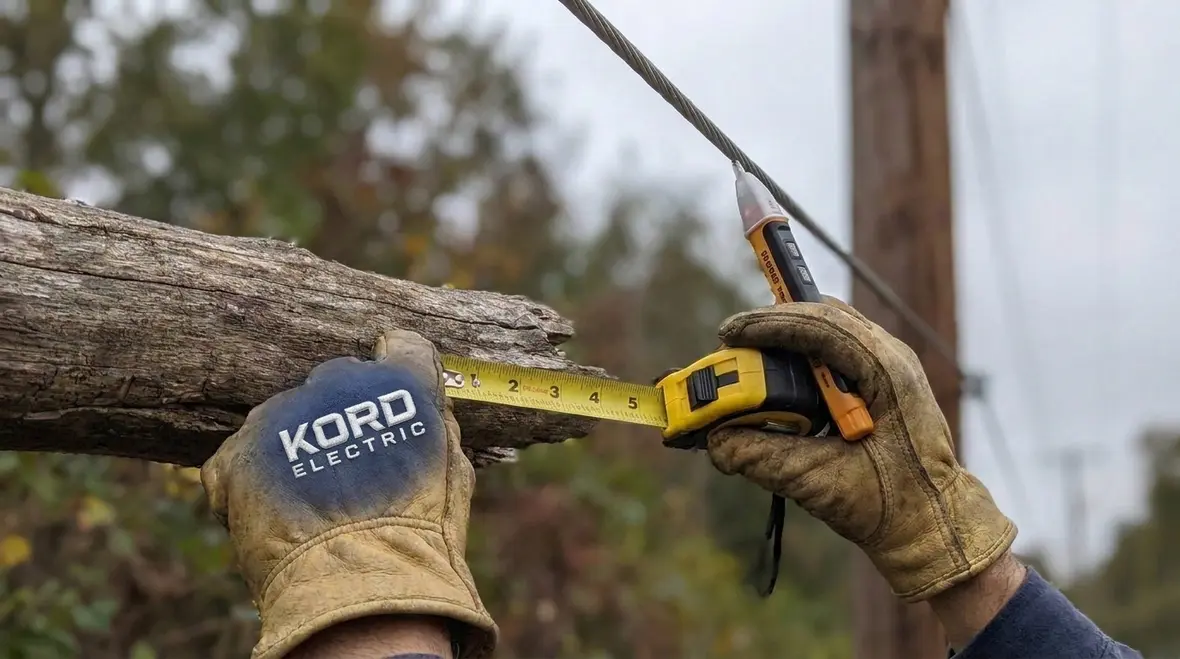
How vegetation becomes a safety and reliability risk
Vegetation creates risk in several ways, and the code goal is to stop the risk before it turns into a failure. For one, contact can lead to arcing or flashover under certain conditions. Additionally, vegetation can introduce moisture, especially after rain, which changes how surfaces conduct and how heat transfers. Also, wind and ice can make vegetation move in ways that stress conductors or connectors. Even if everything looks stable on a calm day, it can shift when weather arrives.
Moreover, vegetation support can mask poor clearance. A conductor that initially appears “fine” might slowly get closer to grounded surfaces as plants grow. Then technicians arrive after the fact and spend time untangling problems that could have been prevented with early inspection and targeted trimming. We tell facility managers this clearly because they plan budgets months ahead. In most cases, an ounce of prevention beats a pound of emergency callouts, and we are not just saying that to sound wise.
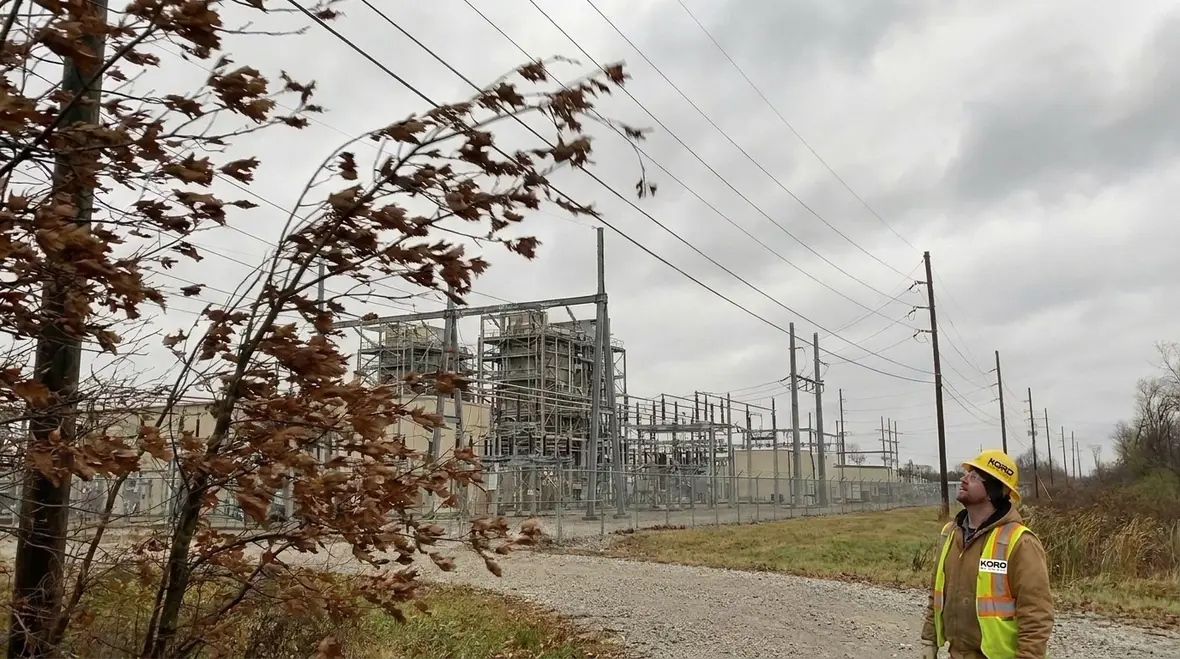
Our inspection workflow at Kord Electric
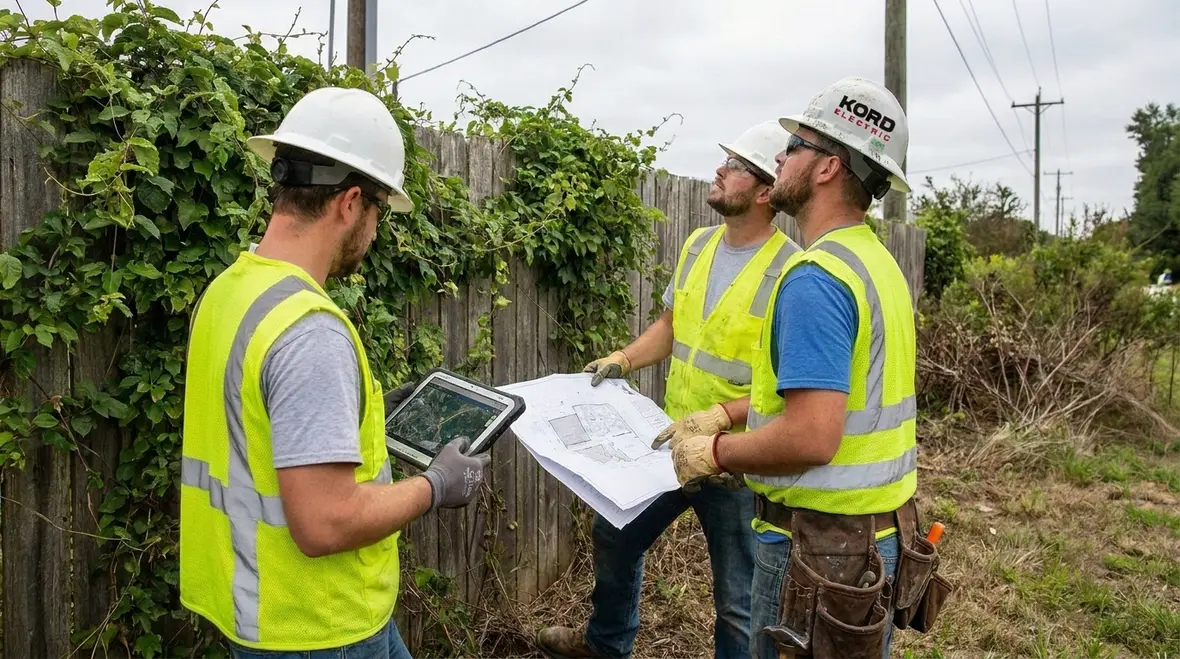
When we support commercial and industrial facilities, our process stays practical and repeatable. First, our technicians perform a walkdown of areas where power conductors and related attachments run near trees, vines, shrubs, fences, and roofline growth. Then, we check access routes and verify whether any vegetation can contact the system during normal movement. After that, we review how the facility currently handles landscaping changes, because mowing schedules and pruning plans affect compliance.
Next, we confirm that electrical components do not depend on plant growth. If we find conductors, attachments, or support structures that could be influenced by vegetation, we recommend corrective steps. Those steps might involve trimming, rerouting, changing attachment methods, or adding physical separation. Finally, we explain the “why” behind each action in a way that facility leaders can use to coordinate with outside crews or internal landscaping staff.
Our expert service staff does not just point at a problem and disappear. Instead, we show what would happen if vegetation grows one season more. Then we align the plan with the NEC vegetation support wiring rules so the facility stays safe and audit ready.
Compliance steps that keep major property buildings audit ready
Staying compliant is not about one-time fixes. It is about ongoing control. Therefore, we recommend a site plan that treats vegetation as a dynamic factor. First, create a map of vegetation that lies within potential electrical interaction zones. Then schedule pruning based on growth rates, not just on calendar dates. Also, keep records of actions taken, because compliance often depends on documentation as much as the work itself.
In addition, facilities should set clear ownership between electrical maintenance and landscaping. When the two groups work in isolation, issues slip through. So we encourage shared coordination, especially near entrances, loading areas, and utility interface points. If major property buildings hold critical loads, we recommend extra checks before severe weather and during periods of rapid growth.
For many teams, the biggest win comes from clear communication. We help by translating code language into site language. As a result, leadership understands the risk and can approve the right scope without guesswork. When facility leaders want a deeper grounding in how the National Electrical Code shapes these decisions, we often point them to resources like our guide on understanding NFPA 70, the National Electrical Code explained for 2026, which gives broader context around how vegetation, wiring methods, and protection all fit into the same safety rulebook.
Common field mistakes we help facilities avoid
Over time, our technicians and expert service staff have seen patterns. First, some sites allow vines to climb toward service entrances. The vines look harmless until they wrap around hardware and change how conductors behave. Second, other sites use vegetation for “temporary support” after storm cleanup. That move might pass the casual glance, but it can violate the NEC vegetation support wiring rules intent. Third, facilities sometimes prune only what is visible, instead of what could reach the system with future growth.
Also, some teams forget that rooftop growth acts differently. Heat cycles and wind can pull vegetation toward equipment. Then maintenance staff may address the problem after a contact event, which is like fixing a leak after your carpet becomes a sponge. Nobody wants that, especially in a building with steady operations.
Our goal is to remove the guessing. We show what areas need attention now, and what areas need a seasonal plan, so your electrical systems stay stable and predictable. For facilities that want to pair vegetation control with broader power reliability planning, we often coordinate this work alongside services like Los Angeles County commercial and industrial electrical services, so upgrades, maintenance, and code compliance move together instead of in isolated projects.
FAQ for NEC vegetation support and Section 225.26
Conclusion: get ahead of vegetation risk with Kord Electric
Vegetation problems do not announce themselves politely. They grow, sway, and eventually interfere with electrical systems, and Section 225.26 exists for a reason. At Kord Electric, we help commercial and industrial facilities handle NEC vegetation support wiring rules with real site checks, clear recommendations, and documentation you can trust. If you want a calmer operating day and fewer surprise electrical issues, contact us for an inspection and a compliance plan that fits your property. We will explain it plainly, act quickly, and keep your power safer.
For facilities that want to connect vegetation control with broader NEC planning, our team can also align your site review with upgrades guided by NFPA 70 resources, electrical reliability studies, and local jurisdiction expectations. The result is a single, practical roadmap that keeps your conductors, clearances, and supporting infrastructure in step with the code, instead of racing to catch up after the next storm or inspection.


