NFPA 70 225.41 Emergency Outside Disconnect Code Guide
Kord Electric helps commercial and industrial facilities keep critical electrical systems safe and reliable. In this guide, we focus on NFPA 70 Section 225.41 and the NEC emergency outside disconnect code that governs how emergency power disconnects must work when people need them most. In plain terms, we explain what the code requires, how it affects emergency circuits outside the building, and why a “quick switch” should never be treated like a casual afterthought. Then, we walk through practical steps our expert service staff use when they review site conditions, labeling, access, and inspection readiness.
And yes, we will keep it business casual. But make no mistake, when your facility’s emergency equipment needs action, we do not want it to act like a pop quiz you forgot to study for. Let’s begin.
NFPA 70 Section 225.41: why emergency disconnects exist
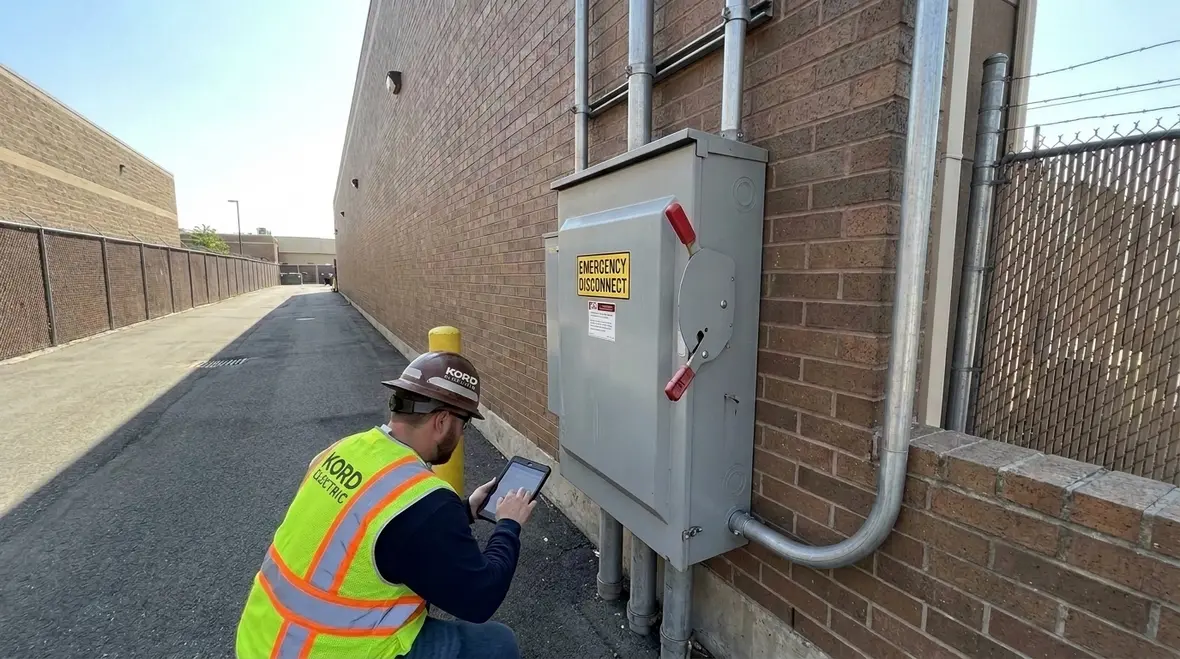
In most commercial and industrial buildings, emergency systems do not exist for decoration. They power life safety loads and keep operations stable during failures. NFPA 70 Section 225.41 focuses on emergency disconnects located outside the building, because a failure can leave occupants with only a limited window to respond. Therefore, the code sets clear rules for how the disconnect must be provided, identified, and accessed so responders and qualified staff can act fast.
Kord Electric technicians typically explain this concept with a calm, clear analogy. First, the disconnect is like the “off ramp” for emergency circuits. Next, it helps ensure that emergency equipment does not stay energized in a way that creates risk for maintenance, testing, or emergency response. In other words, we design the system so safety and control exist together.
Also, the requirement reduces guesswork. When a trained person arrives during an emergency, the goal is to know exactly where the disconnect is and how it works, not to search the yard like it is a lost remote control.
What the NEC emergency outside disconnect code requires on the site

The NEC emergency outside disconnect code addresses more than just “having a disconnect.” It governs the outside arrangement for emergency power disconnecting means and how that means supports safe operation. For facilities covered by the NEC scope, compliance ties directly to system design, installation details, and field labeling.
Based on how our team reads the code requirements in context, the key points usually come down to these themes.
- Correct disconnecting means for emergency circuits so shutdown actions match intent.
- Clear identification that prevents dangerous mix ups during emergencies or routine service.
- Accessible placement so qualified responders can reach the disconnect quickly.
- Installation integrity so the disconnect stays dependable through weather, vibration, and long service life.
Moreover, the code expectation interacts with other NEC rules that govern overcurrent protection, emergency power sources, and equipment wiring methods. Therefore, even when the outside disconnect feels like a single component, it must fit the entire emergency power design. If it does not, the result is often the same: confusion during service and delays during incident response.

How our technicians verify compliance in the field
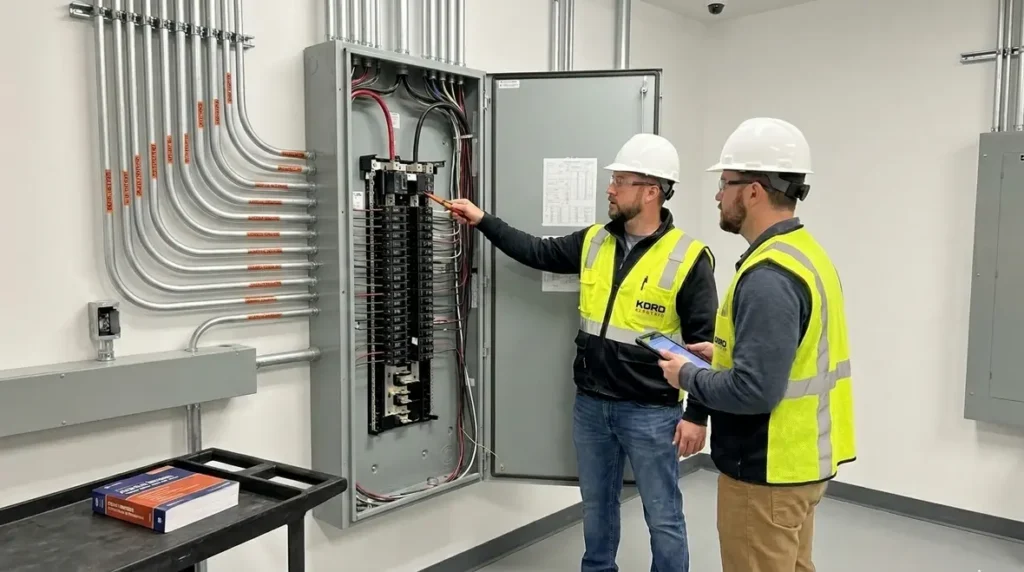
Kord Electric does not treat compliance like a checkbox. Instead, our technicians follow a disciplined process that checks the real-world details that inspectors and responders care about. Because commercial and industrial facilities vary widely, we evaluate each site as a system, not a collection of parts.
First, we confirm the emergency power source arrangement and how emergency circuits route outdoors. Next, we verify the location and accessibility of the outside disconnect. Then, we check labeling accuracy and legibility from reasonable viewing positions. After that, our expert service staff test whether the disconnecting means performs as expected in a safe, controlled manner, using established procedures.
Finally, we document what we find. We do not just say “it looks good.” We explain what meets requirements, what needs correction, and why. That way, the facility team understands the logic behind the work, and future service becomes easier.
And if you are thinking, “We already have a disconnect outside,” we get it. Plenty of facilities do. However, the disconnect must align with the NEC emergency outside disconnect code rules so it actually functions as intended, under the conditions the code expects.

Detailed checklist for major property buildings and campuses
Large properties often include multiple buildings, shared utilities, and several emergency loads. Consequently, the outside emergency disconnect setup becomes more complex. Kord Electric supports these environments by applying a practical checklist that focuses on what changes across campuses and industrial sites.
Here is the kind of checklist our technicians use when they evaluate emergency outside disconnect readiness.
- Emergency circuit map so the team knows what power paths connect to emergency loads.
- Outside disconnect location review to confirm access routes and safe approach.
- Labeling inspection for correct text, durability, and alignment with system design.
- Enclosure condition check to confirm weather resistance and physical protection.
- Operational verification planning so testing does not create new risks.
- Coordination with emergency procedures so staff training matches real hardware.
Transition matters here. When the site team changes a generator schedule or adds a new emergency load, the disconnect plan can silently fall out of sync. Therefore, Kord Electric encourages facilities to keep emergency electrical documentation current and to schedule periodic reviews after major upgrades. In many cases, the “fix” is not a new disconnect. It is the correction of mismatched labeling, missing signage, or an access problem that grew over time.
We also remind teams that emergency equipment coordination often involves multiple trades. While Kord Electric handles the electrical side, we communicate clearly with facility leadership so contractors, maintenance groups, and fire safety stakeholders stay aligned. That way, no one shows up like a character in a sitcom who enters the scene one minute too late.
Common mistakes we see during upgrades and tenant work
When commercial and industrial buildings add tenant spaces, expand offices, or relocate mechanical equipment, emergency power work tends to get “stitched in.” Unfortunately, stitching does not always follow code logic. Over time, small gaps can turn into big headaches during inspections or emergency response.
Our expert service staff commonly see these mistakes.
- Disconnects present but not correctly identified, so responders cannot confirm they control the right emergency circuits.
- Labels that fade or get covered during maintenance, which turns the area into a guessing game.
- Disconnects installed in locations that became hard to access due to new fences, equipment staging, or landscaping.
- Changes to emergency loads that do not get reflected in the emergency power documentation.
- Service work that disrupts enclosure condition, leaving the disconnect vulnerable to moisture or physical damage.
Now, let’s keep it real. Sometimes these issues come from good intentions and busy schedules. Yet, busy schedules do not stop the inspection clock, and they certainly do not stop emergency conditions. Therefore, Kord Electric focuses on prevention: we verify the outside disconnect setup during design coordination, during installation, and after system modifications.
Code context: NEC, safety, and how Kord Electric supports compliance
To keep the bigger picture clear, we treat the NEC as the baseline framework for safe electrical design and installation practices. If a facility follows the NEC intent consistently, the emergency outside disconnecting plan supports safe operation and reduces risk.
Additionally, Kord Electric aligns its approach with the broader compliance mindset described across our code education resources. For example, articles such as Understanding NFPA 70: The National Electrical Code Explained For 2026 help facility teams see how the rulebook shapes everyday design and inspection decisions. That way, when we discuss an emergency outside disconnect, it fits into a bigger story instead of feeling like a random requirement.
And if you operate in a multi-discipline safety environment, you may also want to review guidance that complements NEC electrical requirements, including emergency and life safety planning perspectives. For instance, fire and emergency systems organizations such as fire and pump readiness resources referenced by Kord Fire help stakeholders understand how emergency readiness connects to real-world response needs. We use this context to help our clients coordinate electrical design with practical site operations.
In short, we do not just install hardware. We help facilities build a safe, explainable system that a technician or responder can understand quickly.
For facilities in Southern California, this focus also connects to regional support. Our Los Angeles County electrical services team helps commercial and industrial properties apply NEC expectations to real projects, from design reviews to field verification of emergency outside disconnects and other critical equipment.
FAQ about emergency outside disconnects for commercial and industrial sites
Get Kord Electric to review your emergency outside disconnect setup
When your facility runs critical systems, you need emergency controls that work exactly as designed. Kord Electric helps commercial and industrial property teams confirm NFPA 70 Section 225.41 requirements, verify the emergency outside disconnecting plan, and document what we find so your staff can act with confidence. If you want a clear, field based compliance review, contact Kord Electric today. We will bring our expert service staff, our steady process, and the calm confidence you want when the moment arrives.
If your organization is also planning broader NEC upgrades or wants a deeper foundation in how NFPA 70 shapes projects, you can pair an emergency outside disconnect review with a walkthrough of resources like Understanding NFPA 70: The National Electrical Code Explained For 2026. Together, those efforts turn the NEC emergency outside disconnect code into a practical, site-specific plan instead of just another chapter in a rulebook.