
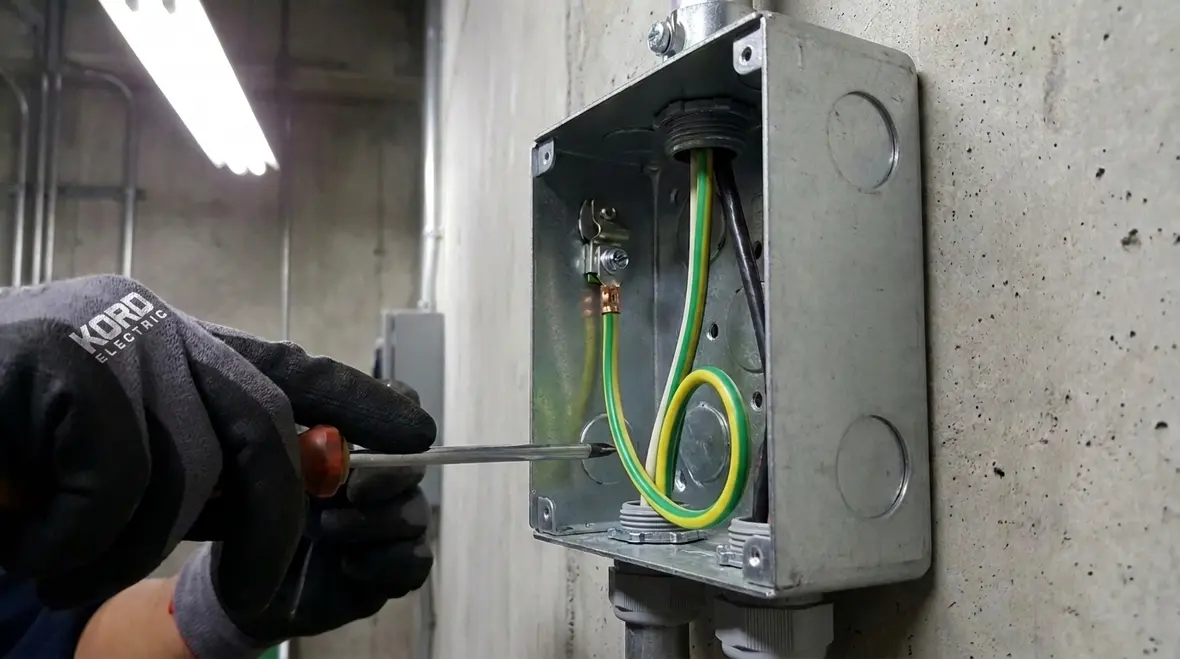
NFPA 70 250.148 EGC Continuity and Box Attachment
At Kord Electric, we build our work around one calm promise: when we touch an electrical system, we make it safe, clear, and durable. That mindset starts with how grounding equipment stays reliable in the real world. For example, NEC EGC boxes attachment, meaning the way the equipment grounding conductor stays continuous and properly fastened inside electrical boxes, matters every day. It matters when vibrations show up, when walls settle, and when someone later opens a box that was assembled correctly the first time instead of “good enough,” like a movie sequel that no one asked for. In this article, we explain NFPA 70 Section 250.148 and how our technicians and expert service staff apply it in commercial and industrial facilities and major property buildings.
NFPA 70 250.148 in plain business language
NFPA 70, also called the National Electrical Code, sets rules that protect people and equipment. In Section 250.148, the code addresses EGC continuity and how the equipment grounding conductor, or EGC, must connect and remain attached within boxes. In other words, the code cares about what happens at the “last stop” inside the enclosure. If the grounding path loosens, breaks, or becomes unreliable, then faults can become dangerous and costly.
Our expert service staff likes to say it this way: grounding is not a suggestion, it is the safety net. Therefore, when electricians install EGCs, they must ensure the conductor stays in place and the grounding path stays complete. This requirement fits perfectly for commercial and industrial projects, where maintenance cycles, tenant changes, and equipment upgrades can expose small installation mistakes that later grow into big problems.
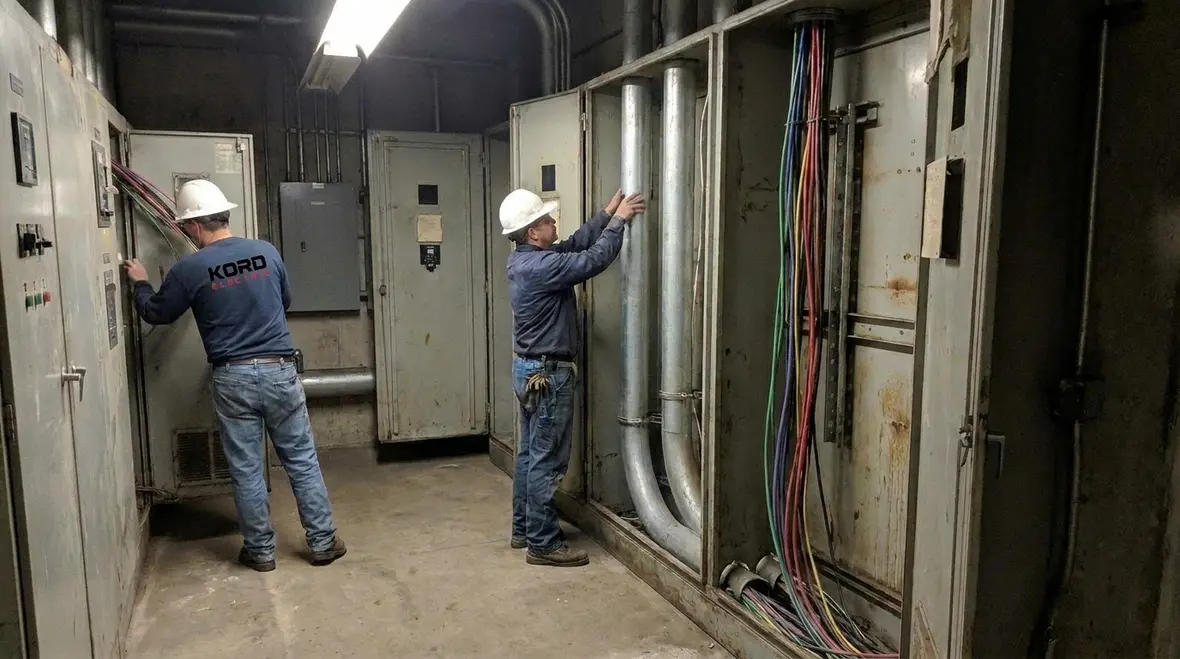
EGC continuity and why boxes can be trouble spots
Some people treat electrical boxes like passive housings, but in the field we know better. Boxes are where conductors enter, connect, and transition into devices or raceways. So, if an EGC gets disturbed during installation, remodeling, or service work, the grounding continuity can suffer. In addition, boxes hold sharp edges, movement, and heat. Those factors can stress connections over time.
That is why NFPA 70 250.148 focuses on how the EGC remains continuous and attached within the box. When our technicians install, they do not only “wire to work.” They wire to last, and they make the grounding path easy to verify. Consequently, we prevent the most common failure pattern: a conductor that looks correct at first glance but later loses integrity because it was not secured and supported as the code intends.
And yes, we have seen it. Sometimes a box gets closed with the EGC sort of hanging in the air like a prop in a low budget play. Later, someone opens it and discovers the conductor shifted. That is not drama, that is risk.
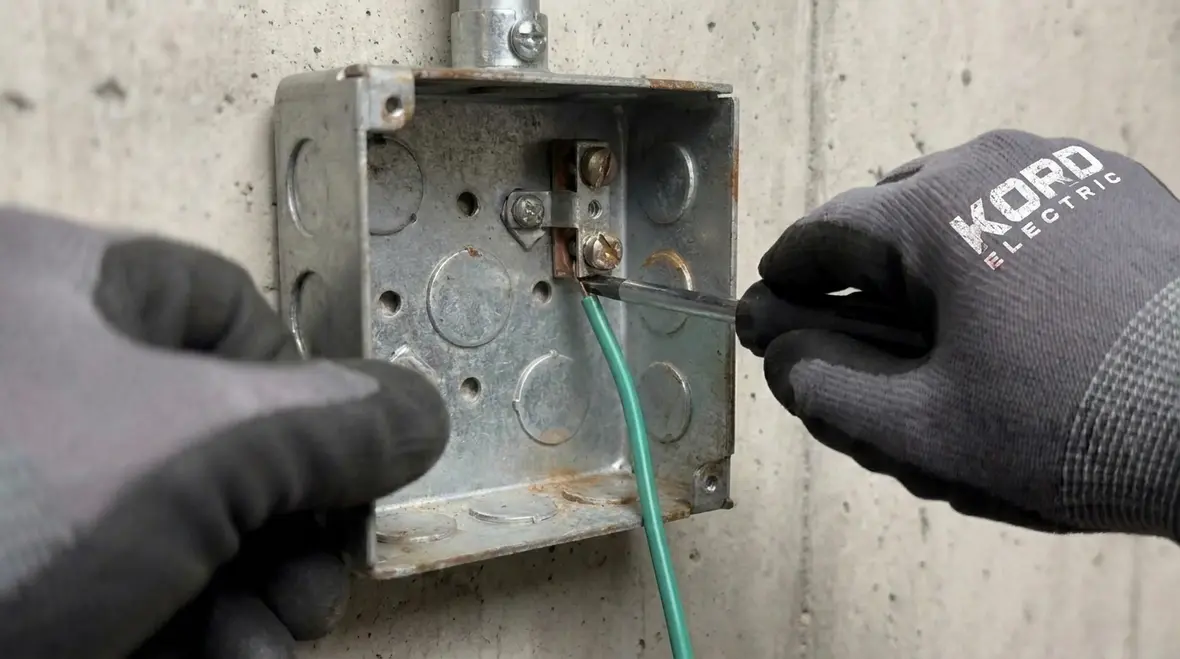
How attachment inside boxes supports safe grounding
The phrase EGC attachment might sound basic, but the code requires practical installation details. NFPA 70 Section 250.148 pushes for a secure, reliable method so the EGC does not break contact or loosen. When technicians follow this, they keep the grounding conductor firmly connected at the terminations and maintained through the enclosure.
Here is what this means on real projects. First, we plan the routing so the EGC path stays intact. Next, we secure it so it cannot loosen when cables expand, when devices get swapped, or when maintenance crews work quickly and efficiently. Then, we ensure the EGC connection points inside the box stay compliant and accessible for inspection. Finally, we document so future service does not turn into detective work.
For commercial and industrial facilities, this process matters even more. You might have motor controls, panels in mechanical rooms, or distribution runs that see frequent work orders. Therefore, a correct EGC connection inside every box becomes part of the facility’s overall electrical reliability plan.
Installation practices our technicians use on commercial and industrial sites
Kord Electric serves commercial and industrial facilities and major property buildings, so we match our methods to those environments. Our technicians use careful box practices that align with NFPA 70 expectations. Meanwhile, our expert service staff explains the “why” to the facility team so everyone understands what good looks like and how to spot problems early.
Typically, we focus on these areas during installation and verification:
- Proper conductor routing so the EGC path stays continuous through the box and does not get stressed at the entry point.
- Secure attachment so the EGC stays fastened and does not loosen during device installation, rework, or vibration.
- Reliable connections made with correct hardware and terminations that preserve grounding integrity.
- Inspection readiness so boxes remain serviceable and the grounding path remains verifiable.
Then, during commissioning or service checks, we confirm the grounding path behaves as intended. We do this with a calm, methodical process, because the goal is not just to pass a checklist. The goal is to protect people, equipment, and operations. Think of it like preseason training for the grid. You do the work before game day, not after the lights flicker and everyone gets nervous.
What happens when EGC continuity fails
If EGC continuity and attachment in boxes do not meet the intent of NEC standards, the electrical system can respond badly during faults. When an ungrounded or poorly grounded path exists, protective devices may not operate as expected, and touch voltage risks can rise. Also, even if equipment still powers up, weak grounding can cause nuisance alarms, damaged components, or repeated tripping patterns that cost time and money.
In major property buildings, these issues do not stay small. A problem that begins in one box can show up later on multiple floors, in shared equipment areas, or during common power events. For that reason, we treat grounding integrity like a foundation. You do not ignore it and hope the building will “figure it out.” Buildings do not negotiate, they just suffer the consequences.
Moreover, when teams perform repairs later, they rely on the original install quality. If the EGC is not secured correctly, future work can break the grounding path further. Therefore, a strong initial install makes later service smoother and safer, which helps facility managers keep their schedules intact.
How to verify compliance without turning it into a circus
Verification should feel steady, not chaotic. When we work with a facility, we coordinate our checks with your shutdown windows and safety requirements. Then we verify grounding continuity and inspect the physical installation in the boxes.
Our expert service staff typically explains findings in plain language. So, if we see something that needs correction, we outline the fix clearly and we focus on outcomes. That means we tell facility teams what to do now, what to monitor later, and what to avoid in future maintenance.
For those who want to deepen their understanding of the code framework and its context, we recommend reviewing related NEC guidance from resources like the NEC focused content we share at our sites, including Kord Electric’s code overview in Understanding NFPA 70: The National Electrical Code Explained for 2026 and our additional NEC and fire related materials. You can find the broader code background at kordelectric.com and supporting NEC details at kordfire.com. For those working with systems connected to fire and life safety considerations, Kord Fire resources can also help with the big picture at kordfire.com.au. And if your project sits near fire pump systems, firepumps.org provides practical context for how safety systems connect to the rest of the electrical world.
FAQ
What facility teams can do to stay ahead
Facility leaders can reduce risk by building a routine that supports electrical reliability. First, plan for periodic inspections in areas with frequent work orders, like distribution rooms and equipment corridors. Then, require that any box opened for device upgrades includes an EGC continuity check as part of the scope. Also, document what your contractor verified, so you can trend issues over time.
When we work with teams, we share what our technicians find and we explain it in a way your maintenance staff can use. That helps prevent repeat issues after the next tenant change or equipment replacement. It also reduces the “surprise bill” effect that shows up when an installation defect finally forces emergency troubleshooting, which nobody wants. Nobody.
For teams planning broader upgrades, pairing NEC EGC boxes attachment best practices with a full system review can be especially effective. Resources like Kord Electric’s guides on modernizing commercial building electrical systems and data-driven electrical design help connect grounding details to the larger questions of reliability, uptime, and future-ready infrastructure. And when facilities in Southern California need a partner who already understands regional requirements and inspections, our Los Angeles County electrical services bring those code-conscious practices directly to your site.
Conclusion and call to action
NFPA 70 Section 250.148 is not just fine print. It protects grounding continuity and keeps the EGC properly attached within electrical boxes where real problems often start. At Kord Electric, our technicians and expert service staff follow these requirements with careful installation, verification, and clear explanations for facility teams. If you manage a commercial or industrial building and you want safer electrical systems and fewer repeat issues, contact Kord Electric for an EGC and box installation review and service plan today.


