
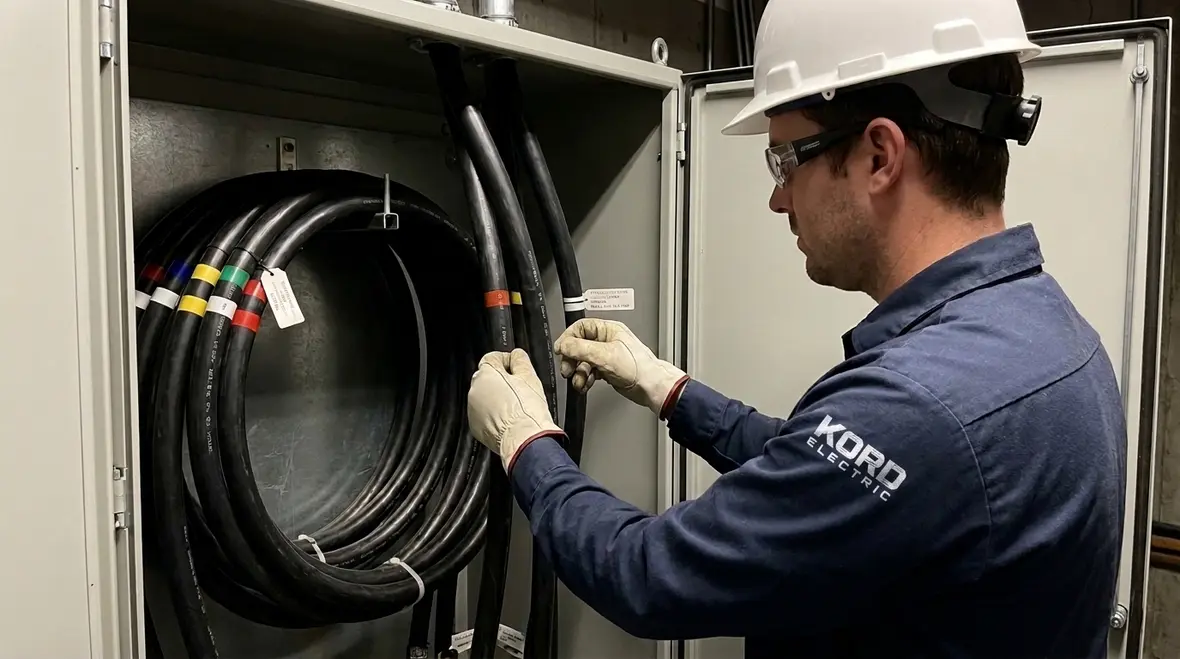
NFPA 70 315.14 NEC MV Conductor Identification
Kord Electric supports commercial and industrial facilities with clear, code level guidance, and one topic we often explain is NFPA 70 Section 315.14 for NEC MV conductor identification. In our work, we treat conductor labeling as more than a box to check. We start with the goal: when a utility, a contractor, or a maintenance crew opens a cabinet later, the wires must speak clearly. That means the NEC MV conductor identification rules help you keep phase, voltage class, and system intent straight, even after time, change orders, and the usual “who moved this cable” moments.
We know the National Electrical Code can feel like a long novel written in legalese. However, our field technicians and expert service staff break it down in plain language, and they document what they find so your facility stays safe and easier to maintain. For a broader walkthrough on how to approach the code as a whole, many facility teams also reference our guide on understanding NFPA 70, the National Electrical Code explained for 2026 as a companion resource.
1) Why MV conductor identification matters on real projects
Most people think conductor identification only matters during installation. Yet the real test shows up later, during troubleshooting, switching, or inspection prep. When labels fail, crews guess. And guessing in electrical work is like guessing the ending of a suspense movie you are currently watching in the dark, with gloves on, during a power study. It is not elegant.
For commercial and industrial buildings, medium voltage systems can feed critical loads. That means the cost of confusion rises fast. Instead of pausing for clarification, a skilled team should trace circuits quickly and accurately. As a result, NFPA 70 Section 315.14 supports operational clarity, maintenance speed, and safer working habits.
At Kord Electric, we also see identification as a key part of turning “as built” into “as understood.” When your drawings match the hardware, your future projects run smoother. When they do not, your maintenance cycle turns into detective work.
2) What NFPA 70 Section 315.14 requires, in plain terms
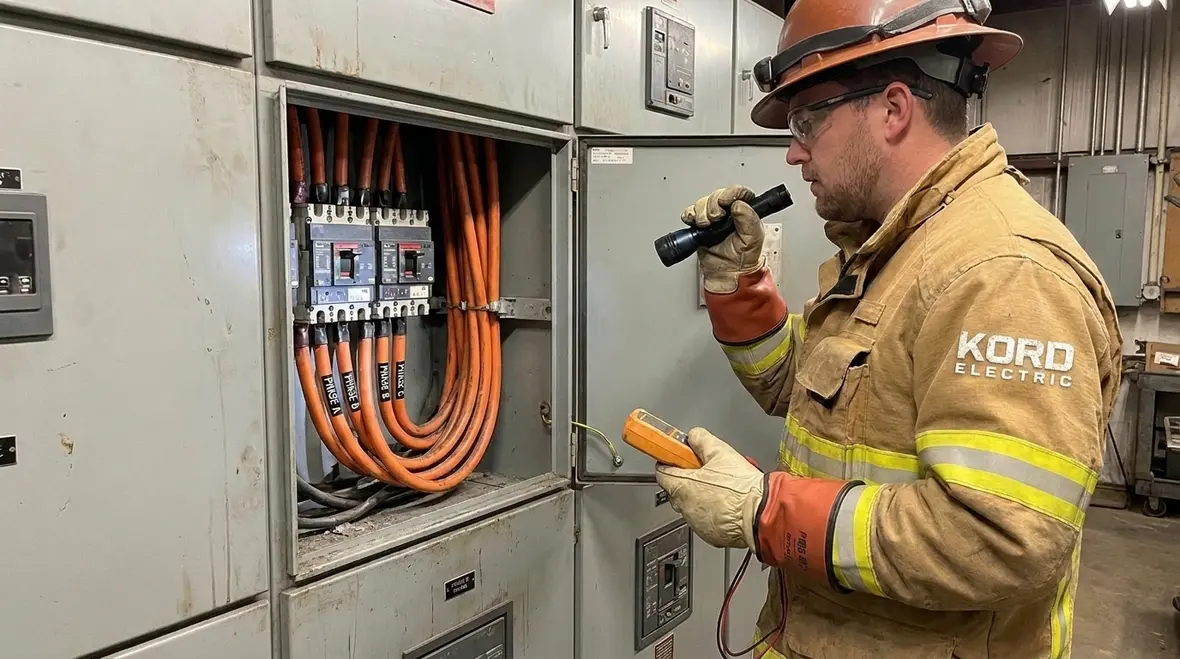
Section 315.14 focuses on how medium voltage conductors get marked or identified so the electrical system stays readable. In practice, we help teams apply identification that supports correct use of the conductor for its role in the system.
Here is how we approach it. First, we confirm the scope of “medium voltage” for your installation and the design intent. Next, we match your labeling method to the requirements that fit the conductor type and wiring method. Then we verify that the identification stays visible through normal installation conditions, access needs, and maintenance routines.
Our technicians do not just slap on labels and move on. They check how identification behaves at terminations, where sleeves, markings, and cable jackets can create confusion. In addition, they verify that the marking supports phase identification and aligns with how electricians and engineers read the system. That is how NEC MV conductor identification becomes a practical tool, not a decorative sticker.
3) Where labeling breaks down and how our team prevents it
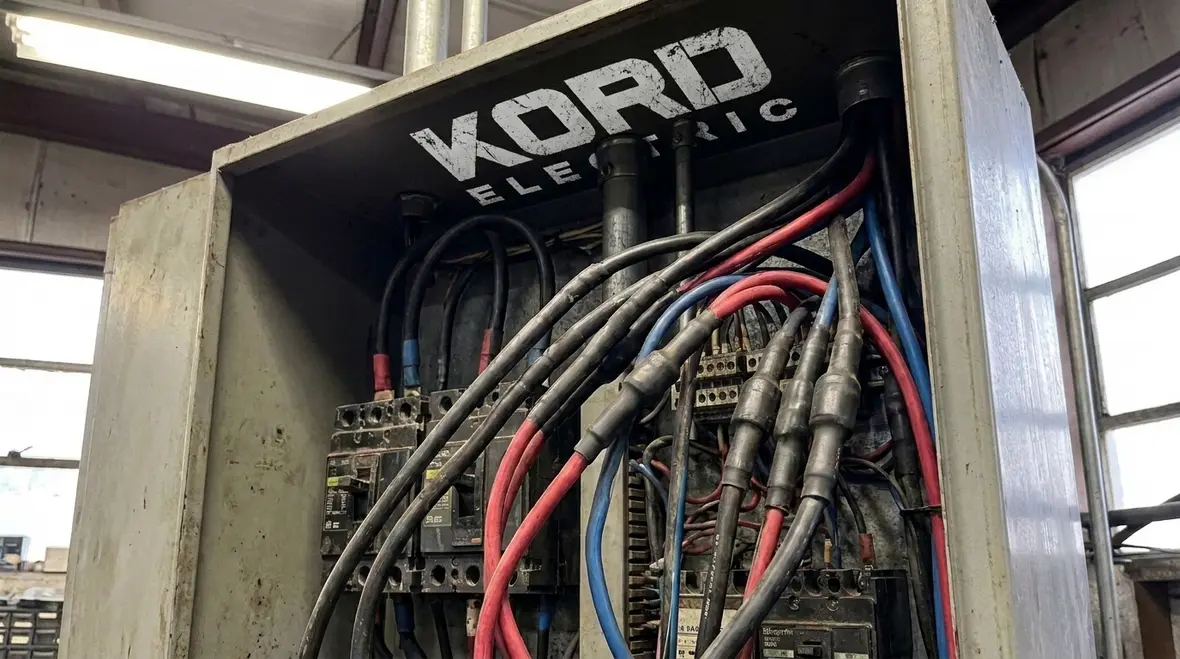
In the field, identification problems usually show up in predictable places. And once you know the usual trouble spots, you can prevent them before they turn into rework.
- Terminations and cabinets where label placement competes with wiring congestion
- Splices and transitions where jacket markings do not carry forward clearly
- Changes over time where contractors reroute circuits but the labeling lags behind
- Incorrect assumptions where teams rely on drawings alone instead of verifying conductor identity
We fix these by using a consistent verification flow. First, our expert service staff compares conductor labeling against system notes and your one line diagram. Then they review where the marking remains visible after the cabinet is closed and after access panels return to service. Finally, they document any field conditions that could affect future tracing.
In other words, we treat identification like a living system. It must keep up with reality, not just the original plan. If you have ever seen a label fade like a movie soundtrack after the credits, you understand why this matters.
4) Phase clarity, testing, and safety workflows for facilities
Commercial and industrial owners often ask how conductor identification ties into testing and safety. The answer is direct. Good identification shortens the time between “we think this is the right circuit” and “we confirm it is the right circuit.”
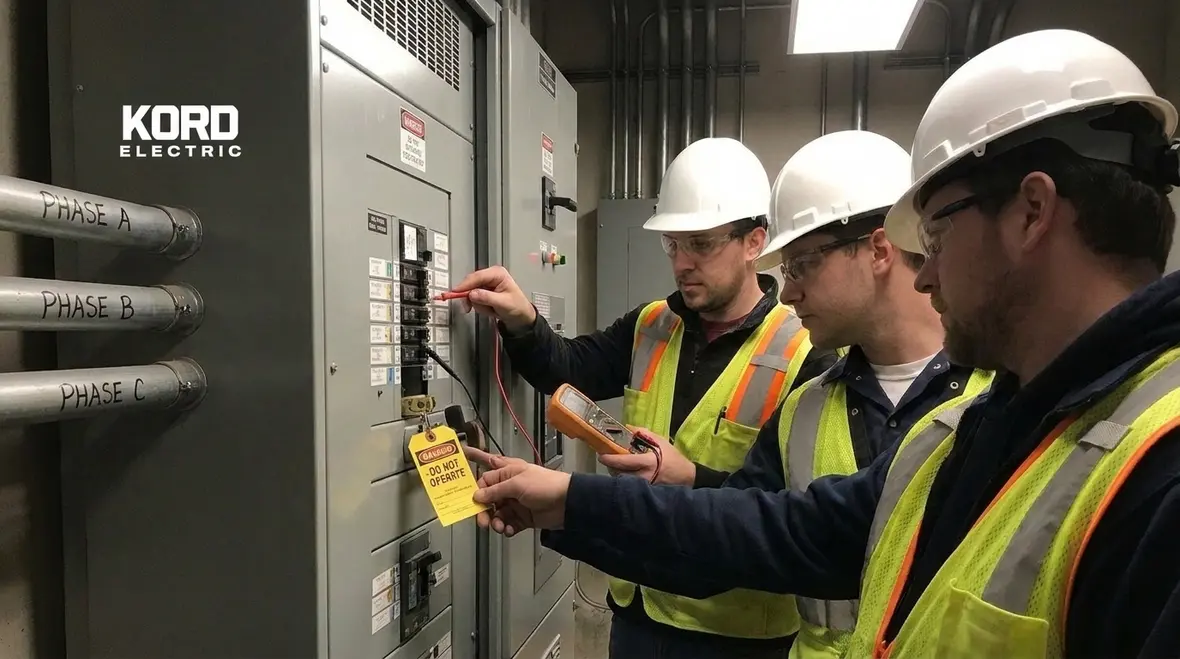
When our team supports switching or diagnostics, we rely on consistent conductor labeling to guide safe lockout and verify the correct points. Transitioning from planning to testing becomes more efficient, because technicians can follow a clear trail. Consequently, the facility reduces downtime and supports smoother maintenance windows.
Also, for facilities that manage multiple feeders, the labeling must work under real conditions. For example, a crew might have protective equipment staged, meters ready, and a strict schedule. If the identification does not match what they see, they slow down. So we help ensure that your NEC MV conductor identification supports those workflows from day one, not after an issue shows up.
And yes, we know safety steps can feel like “extra paperwork.” But it is really the best kind of paperwork, the kind that prevents the call at 2 a.m. when someone finds out the wrong wire talks back.

5) How we verify MV conductor identification on Kord Electric projects
Our process keeps projects steady, from planning through closeout. We start by reviewing the project documents and the applicable requirements for medium voltage systems. Then we build a checklist that focuses on the real places where identification can fail.
Next, our technicians perform a field verification pass. They check that identification exists where it should, that it follows a consistent standard across the run, and that it remains readable at the points where crews need it most. Then we compare those findings to the record set so what you approve matches what you get.
Finally, we provide clear documentation for your facility. We also coordinate with other trades when needed, because identification does not live in a vacuum. It needs to integrate with labeling standards, panel schedules, and maintenance expectations.
For organizations that already use code resources from our networks, you will notice the same theme in our guidance: clear rules, clear documentation, and safe installation habits. If you want additional background, you can explore our broader NEC coverage on Kord Electric and Kord Fire, and for related industry context, you can reference fire pump knowledge bases like firepumps.org. We connect the dots so your team spends less time searching and more time operating safely.
6) Quick alignment with code references and facility standards
NEC requirements do not replace your internal facility standards. Instead, they support them. As a result, we help your team align medium voltage conductor labeling with your building practices and maintenance plans.
Here is how we recommend teams keep things consistent:
- Match labeling to drawings and update records when field conditions change
- Use a clear labeling method that stays readable through installation and normal service
- Train maintenance staff on how the identification maps to circuit function
- Document verification so future work stays accurate and faster
We also remind owners and managers that electrical code compliance is not a one day event. It is an ongoing discipline. The moment a facility changes, identification must still lead the next person to the right circuit.
| What we check | Why it matters |
| Visibility of markings at terminations and accessible points | Crews trace circuits faster and reduce guesswork |
| Consistency of identification style across the system | Maintainers learn one standard and move quickly |
| Match to system intent and documentation | Testing and switching work stays safe and predictable |
| Verification after any route changes | Updates prevent mismatches that create downtime |
If your facility is planning broader upgrades that go beyond labeling, our team can fold MV conductor identification into larger initiatives like infrastructure modernization, energy efficiency work, and code upgrade planning. Whether you are mapping out an electrical infrastructure upgrade strategy or coordinating renovations, we align identification with the same disciplined approach we use on complex Los Angeles County electrical services projects so compliance, documentation, and practicality move together.
7) FAQ for NEC MV conductor identification
Conclusion: Get identification done right, the first time
Kord Electric helps commercial and industrial facilities handle medium voltage systems with clarity and code aligned practices. We send technicians and expert service staff who verify MV conductor labeling where it matters, not just where it looks good. If you are preparing for maintenance planning, upgrade work, or compliance checks, we can review your labeling approach and help you reduce delays and confusion. Call Kord Electric today and get a plan your operations team can trust. Then everyone can focus on running the facility, not chasing mystery wires.
When you are ready to align NEC MV conductor identification with broader code strategy, our team can also coordinate it with services like electrical infrastructure upgrades, preventive maintenance plans, and power quality analysis so your medium voltage labeling works as part of a complete safety and reliability picture.


