
NFPA 70 Section 315.10 MV Cable Constructions Explained
At Kord Electric, we regularly help commercial and industrial facilities and major property buildings plan, install, and maintain NEC MV cable constructions that will stand up to real world stress. In this guide, we focus on NFPA 70 Section 315.10, the part of the National Electrical Code that sets expectations for how medium voltage cable is built and how it gets used. Soon enough, you will see why cable type, jacket design, insulation method, and install style matter as much as the equipment they feed. And yes, we will explain it in plain language, because nobody wants to read a cable spec like it is a menu written in a different country.
To keep things clear, our technicians and expert service staff walk you through what the code is trying to prevent: unsafe heat, failing insulation, water and corrosion damage, and rushed installs that later turn into expensive surprises. Now let us slow down, take the right steps, and make this boring topic behave like a professional.
What Section 315.10 sets out for MV cable
NFPA 70 Section 315.10 focuses on medium voltage cable constructions and the way those cables get applied. Therefore, it ties material choices to performance under electrical stress, heat, moisture, and mechanical wear. In other words, the code does not just say “use the right cable.” It explains what the construction should accomplish so the system stays safe over time.
Meanwhile, commercial and industrial buildings rarely operate like labs. So, when we design MV feeder paths for factories, campus power systems, hospitals, data centers, and mixed use towers, we treat the installation like a living system. As a result, technicians verify conductor insulation style, shielding, conductor screen materials, and the outer jacket characteristics that protect the cable from what the building does every day.
If the cable construction can handle the conditions, then the rest of the system makes sense. If it cannot, then even the best switchgear will not rescue a weak link. And that is the part people learn the hard way, usually after the “quick fix” call gets placed.
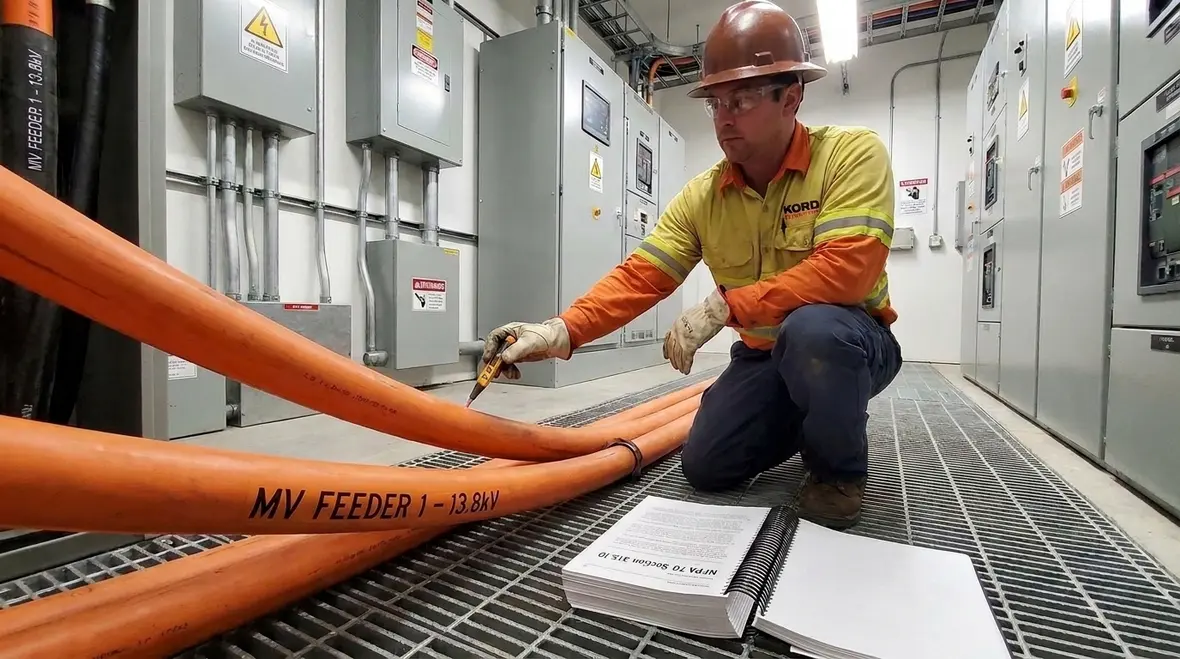
For readers who want to connect this detail back to the broader code picture, you can also review our resource on the National Electrical Code itself in Understanding NFPA 70, the National Electrical Code Explained for 2026, which helps frame how section level rules like 315.10 fit into the overall NEC structure.
How MV cable construction details drive safe performance
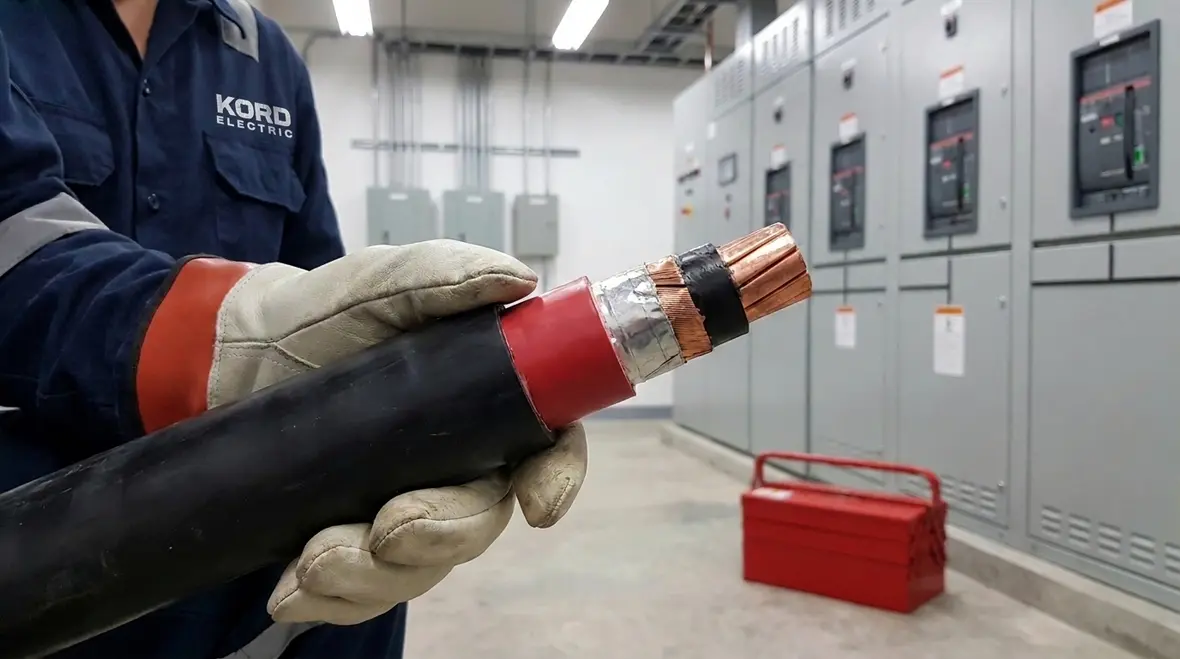
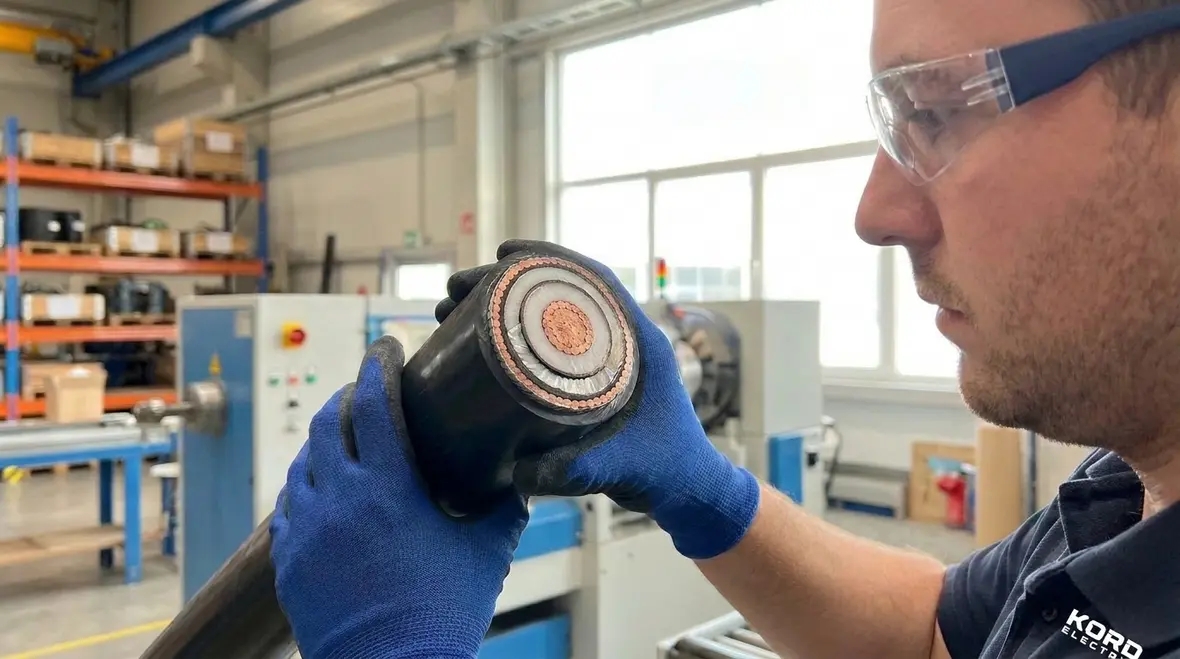
When we talk about MV cable construction, we mean the layered build that manages electric fields and protects the insulation. Typically, the key parts include conductor, insulation, insulation screening, metallic shielding or oversheath, and an outer jacket for protection. Then, depending on the system, the cable may use a specified armor or sheath setup for physical durability.
To make the code practical, our expert service staff break down how each layer supports real jobsite needs. For instance, NEC MV cable constructions depend on controlling stress at the conductor and insulation interface. When that stress control fails, you can see tracking, partial discharge, and early insulation breakdown.
Furthermore, outer protection matters just as much. Outdoor runs, underground pathways, and areas with humidity require jackets and compounds that resist water ingress, chemical exposure, and abrasion. Therefore, when we plan cable routes, we coordinate the cable jacket type with the pathway environment, not just the voltage rating.
And yes, sometimes the cable that fits on paper does not fit reality. One time, a team tried to reuse a cable type from an old renovation that looked “similar enough.” Similar enough is how you end up explaining failures during a project closeout, and nobody laughs at that part.
Linking MV cable behavior to code intent
NFPA 70 is concerned with what happens when insulation or shielding does not behave over time. That is why construction rules emphasize how the dielectric system, semiconductive layers, and metallic shields share voltage stress and manage fault currents. In real buildings, those rules become the difference between a cable that runs quietly for decades and one that starts to show “mystery” partial discharge activity after only a few seasons of loading.
Our project teams translate those requirements into specific checks: confirming insulation thickness and type, verifying shield continuity, confirming that jackets and armor match the environment, and validating that test reports actually match the assets delivered to site. It is the unglamorous part of high quality MV work, but it keeps operations calm later.
Applications and installation considerations for commercial power
Section 315.10 connects construction to use. So, when we plan MV feeder and distribution in commercial and industrial facilities, we treat application as a set of constraints: routing method, exposure conditions, support systems, and termination compatibility.
First, we confirm the cable pathway and the installed environment. Then, we select the construction approach that matches it. For example, underground duct systems need robust water blocking and proper bonding. Cable tray and tray like environments need support spacing that avoids undue stress. Indoor areas near process heat or equipment rooms require careful handling of temperature and physical protection.
Next, we coordinate terminations, splices, and accessories with the cable construction. In practice, a mismatch between cable type and termination kit can create weak points. As a result, our technicians use documented compatibility checks before install day. That step reduces risk and prevents the “it fit, so it must be right” mindset.
Finally, we consider how the building power system changes over the years. Major property buildings often add loads, upgrade switchgear, or expand HVAC and process capacity. Therefore, our team plans cable runs and spare capacity with future work in mind, so upgrades do not require cutting corners later.
Integrating MV cabling with broader facility planning
In large commercial sites, MV feeders rarely live alone. They share space with low voltage distribution, control cabling, mechanical systems, and life safety infrastructure. That means MV routing choices affect how easily you can add future automation, emergency power, or specialty systems. If you have read our work on data-driven design or emergency power planning, you have seen how up front planning prevents awkward retrofits later. The same principle holds true for MV cable: respect the future, and your building will treat you kindly when it is time to expand.
Coordination with related NEC sections and field checks
NFPA 70 does not work like a set of isolated rules. So, when we apply Section 315.10, we also coordinate it with other NEC requirements that affect MV systems, including installation and protection rules that come from across the code. Moreover, we keep an eye on bonding, grounding, working clearances, and the device lineup that interfaces with MV cable.
Our process stays practical. Our teams read the job design first, then validate it with code based requirements. After that, we document field checks: routing verification, proper support, correct bend radius handling, termination workmanship, and label integrity. We also verify that the cable construction matches the specified assembly in submittals.
Here is where our expert service staff earn their keep. They explain what inspectors look for and what “good workmanship” means on MV work. To keep projects moving, they guide contractors, owners, and facility managers through the details that matter before the first shutdown ever happens.
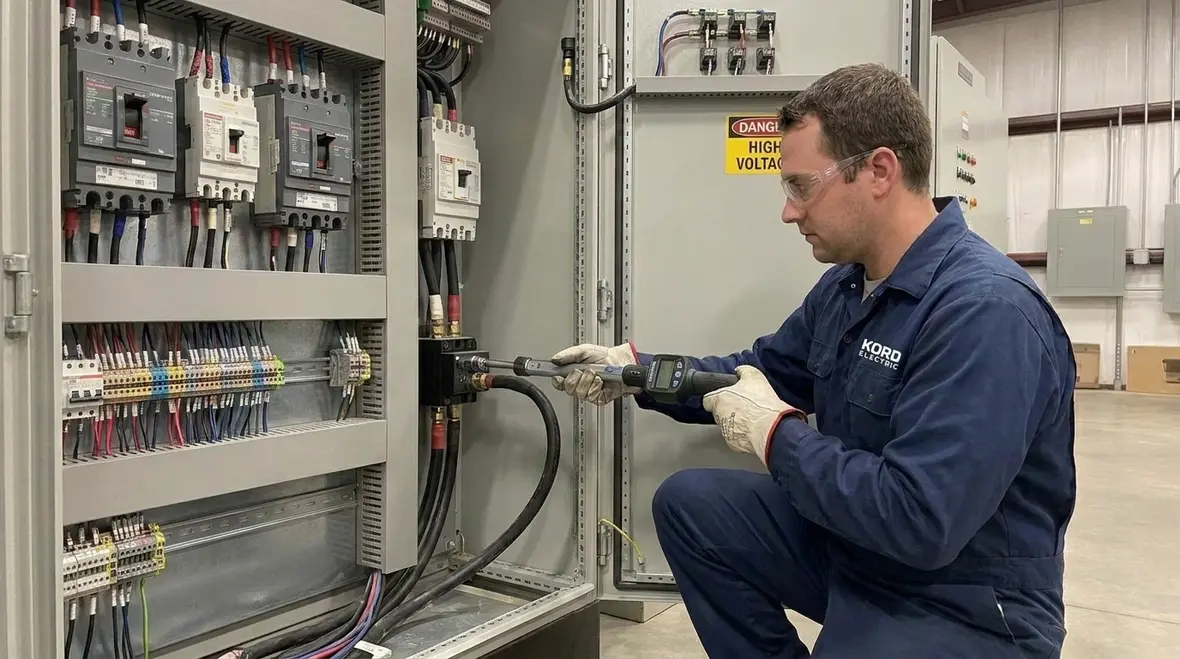
Also, we do not confuse speed with success. It is tempting to rush when the schedule gets loud, like a pop song that will not leave the radio. Yet, MV cable work demands patience and careful torque, proper sealing, and correct accessory installation.

Why NEC coordination keeps MV projects out of trouble
Sections dealing with overcurrent protection, grounding and bonding, working space, and equipment ratings all shape how MV cables are selected and installed. For example, if protective device settings, grounding schemes, and cable shield terminations do not line up, a fault can behave very differently than what the design intended. Our field teams routinely coordinate MV cable decisions with related NEC guidance so that the entire system acts like a single, coherent design instead of a stack of unrelated parts.
Common problems we prevent in MV cable projects
Even when teams use rated equipment, MV cable systems can fail due to predictable causes. At Kord Electric, we see the same failure patterns, and we help clients avoid them early.
Construction mismatch: a cable jacket or screen style that does not match the application environment. This often appears as moisture intrusion or accelerated insulation aging.
Accessory incompatibility: terminations and splices that do not match the cable type. Then, stress concentrates at the termination, and performance suffers.
Mechanical damage during install: sharp pulls, improper bend radius, or poor support spacing. As a result, the insulation system may weaken before anyone notices.
Poor routing discipline: ignoring pathways, congestion, and exposure to chemicals or water. Consequently, the jacket takes the hit first.
When these issues show up, the fix can get expensive fast. However, our technicians focus on prevention through checklists, on site inspections, and clear communication. We explain the “why,” not just the “what,” so your facility team knows what to expect and what to watch after turnover.
And since you operate commercial or industrial sites, we also think about downtime. We aim to plan work so the building keeps running, or at least runs with a controlled level of disruption. That is a business decision, not just a technical one.
Learning from past MV failures without repeating them
Every facility that has lived through an MV cable failure remembers two things: the outage and the bill. We use those stories as quiet motivation to design and install systems that do not repeat the same mistakes. By pairing NEC guidance with practical field experience, we help owners avoid a cycle of band aid fixes and instead build MV infrastructure that grows with their operations.
Choosing MV cable solutions for major property buildings
For major property buildings, the best outcome comes from matching code requirements, building constraints, and future growth. We start by reviewing voltage levels, load types, and how power flows through the site. Then, we map the route from source to distribution with the pathway environment in mind.
Next, we choose NEC MV cable constructions that align with the application conditions. We also ensure that the entire assembly, including accessories, supports the installation style. This is where our project teams stay methodical: proper submittals, clear install instructions, and verified compatibility.
Because many owners need predictable risk, we also help set expectations for testing and acceptance. Even when code sets minimum rules, good practice adds clarity around insulation integrity, termination quality, and correct labeling.
Finally, we support maintenance planning. Major facilities need repeatable processes for inspections, repairs, and upgrades. So, our expert service staff help facility managers set a plan for visual checks and response steps if alarms or performance issues show up.
If you have ever seen a building power upgrade stall due to unclear cable specs, you already know why this matters. We prevent that kind of chaos before it steals your week.
For owners and managers in Southern California, aligning these MV decisions with broader electrical support can make life simpler. Our Los Angeles County electrical services offering connects MV planning with everyday distribution upgrades, safety checks, and long term system support, so your facility has a single partner for both high level strategy and field execution.
FAQ about NFPA 70 Section 315.10 and MV cable construction
Get expert MV cable guidance from Kord Electric
If you manage power for a commercial or industrial facility, you deserve MV cable work that stays safe, documented, and install friendly. Kord Electric supports your team with expert technicians and an experienced service staff that explain the code in real terms, then help you apply it correctly. We help plan, coordinate, and validate MV cable constructions, accessories, and installation practices so your project stays steady. Contact us to review your scope and build a clear path forward.
Learn more through our resources and partners, including content from kordelectric.com, kordfire.com, kordfire.com.au, and firepumps.org.


