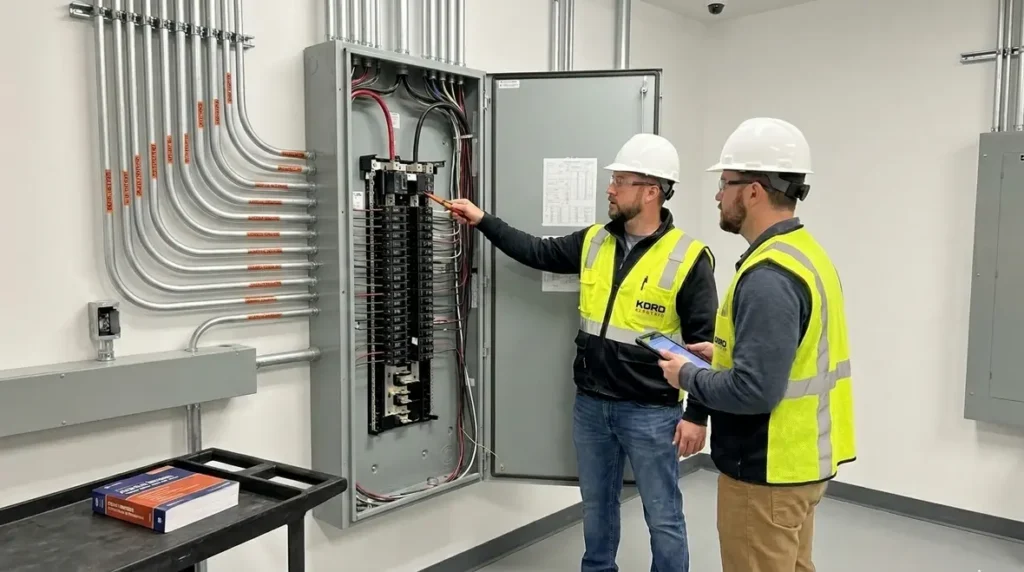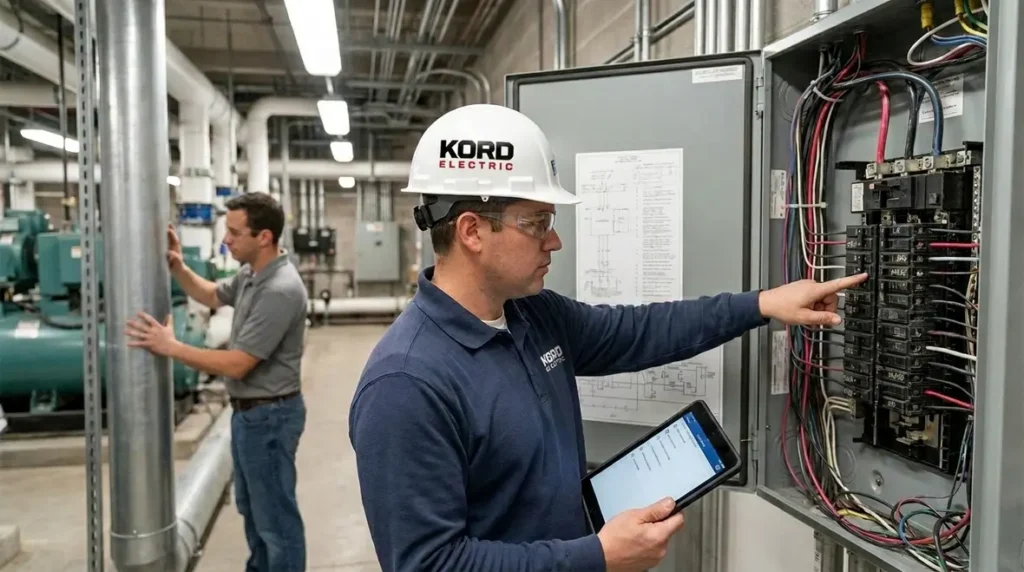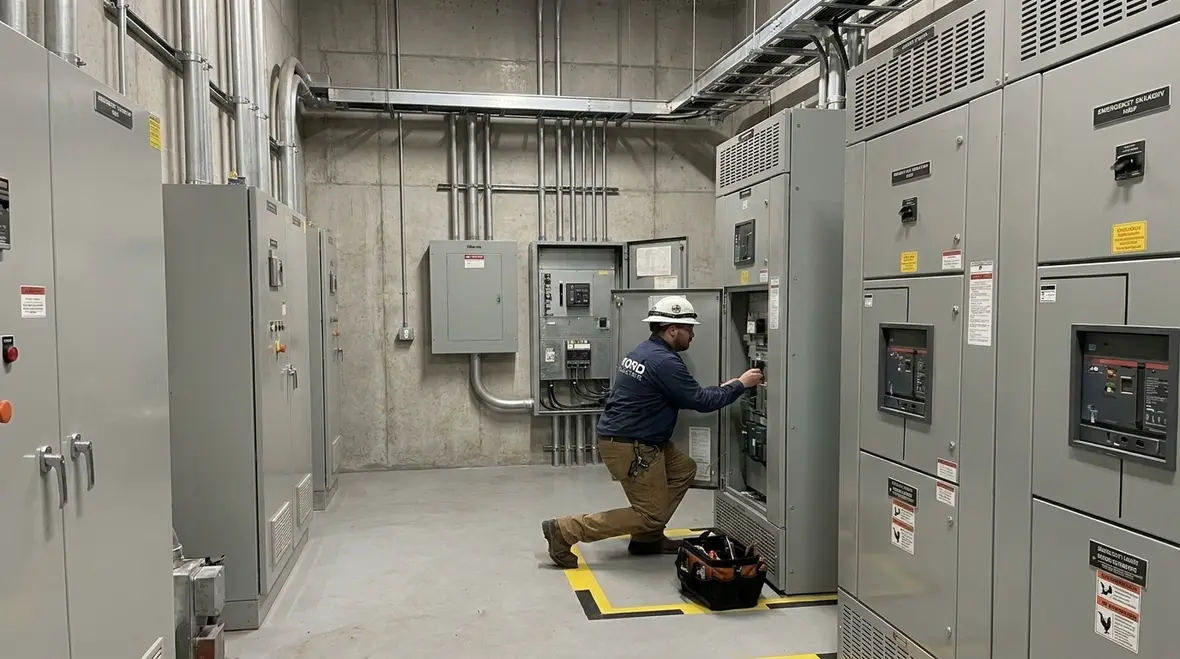
NFPA 70 Section 110.73 NEC Vault Equipment Work Space
At Kord Electric, we help commercial and industrial facilities keep their electrical systems safe, practical, and ready for the next inspection. In this article, we focus on NFPA 70 Section 110.73 and, specifically, the NEC vault equipment work space rules. Within the first moments of an electrician walkdown, we look at the vault and its access paths, because the wrong clearance turns a safe task into a stressful event. And yes, we have seen setups where the only “work space” was inside someone’s coffee cup. We explain the requirements in plain terms, and our field technicians go a step further by showing how the code idea turns into real, buildable clearance.
If your team is also trying to connect the dots between high level NFPA 70 requirements and what really happens in the field, you may want to pair this walkthrough with our broader overview in Understanding NFPA 70: The National Electrical Code Explained for 2026. Together, they give you both the big picture and the close up view of how code shapes real clearance decisions.
What NFPA 70 Section 110.73 is really protecting
Section 110.73 focuses on one big outcome: it gives people enough room to work on electrical equipment safely inside vaults. Instead of treating the vault like a storage closet, the NEC treats it like an active work zone. In other words, someone must be able to open equipment, reach connections, and operate tools without dangerous strain, sharp turns, or blocked access.
From our experience, many facilities follow the letter of other sections but miss the intent of 110.73 because vaults get designed once and then forgotten. However, electrical gear does not “stay still.” Wear, heat, vibration, and routine maintenance create a steady need for inspection and repair. Therefore, the clearance rules exist to support those tasks, not just the day the building opened.
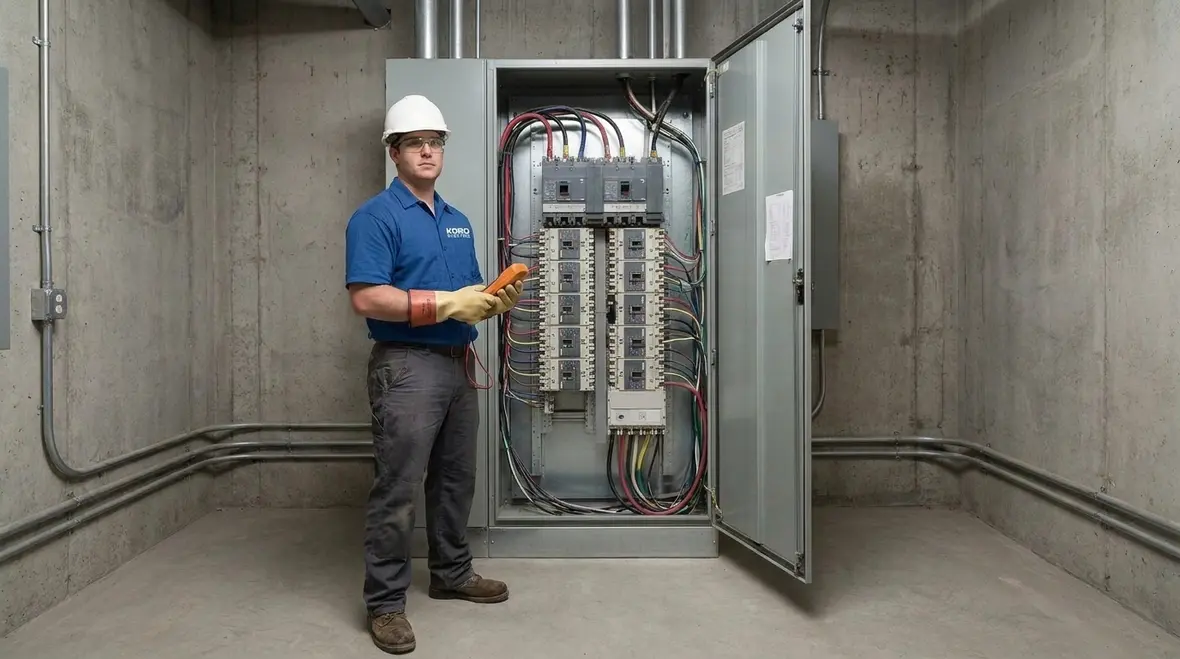
When we review vault layouts, we connect 110.73 to broader NEC intent. The National Electrical Code is not just theory; it is meant to be applied in working rooms, on real gear, during live inspections and maintenance. That is why experienced teams treat vaults as long term work environments, not background spaces.
How the NEC vault equipment work space affects access during maintenance
Electrical work in a vault usually follows a pattern. First, a technician opens doors or panels. Next, they inspect terminations, check for signs of overheating, and verify torque on critical connections when required by the facility’s maintenance plan. Then, they troubleshoot faults, replace components, or perform preventive service.
When the available NEC vault equipment work space falls short, the job becomes slower and risk rises. For example, if a worker cannot stand at a safe distance from exposed energized parts, they may improvise with awkward body angles. That is when mistakes happen. Also, blocked space can limit tool movement, which can damage equipment insulation or lead to loose conductors. So, while it sounds like a “small clearance” issue, it often becomes a chain reaction.
Tight vaults also tangle with schedules. A task that should take an hour can turn into a half day ordeal once you factor in partial disassembly, improvised access, and extra safety controls to compensate for poor clearances. Multiply that across a portfolio of major property buildings, and the cost of ignoring 110.73 shows up not just in risk, but in real downtime.
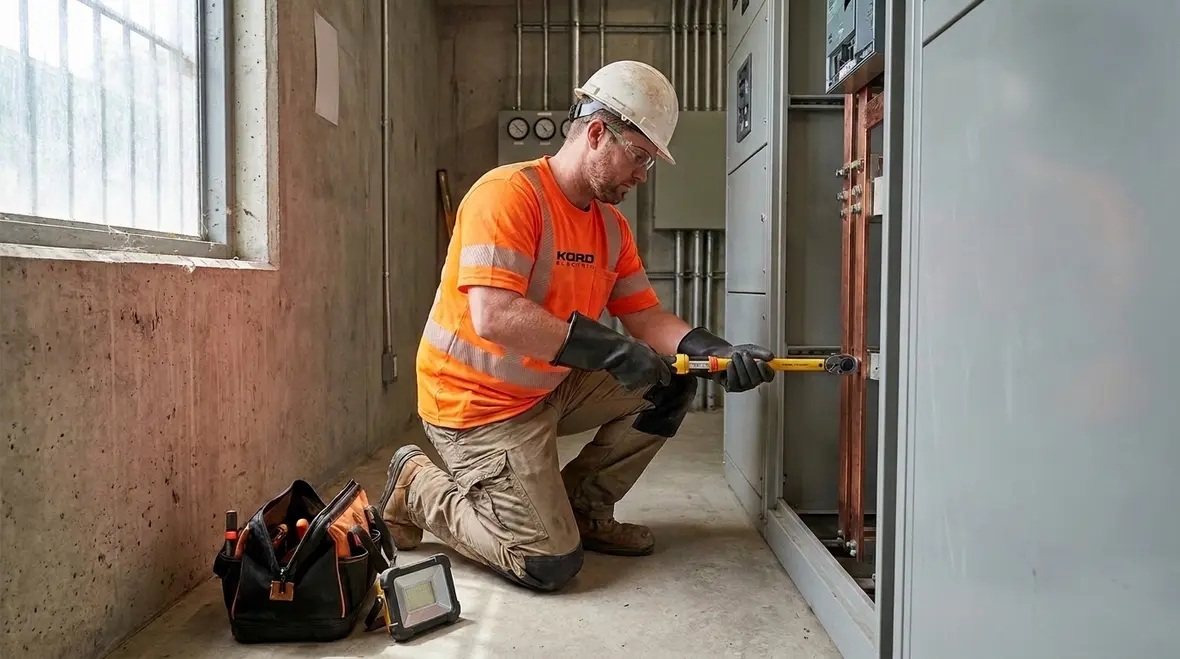
In contrast, when vault work space is designed correctly, maintenance feels calm and predictable. Technicians can open equipment without moving ladders three times, roll in test gear without stepping over storage boxes, and stand where they need to stand without negotiating with the walls. That confidence shows up in cleaner inspections, faster repairs, and fewer “we will have to come back another day” conversations.
Clearances and conditions that matter inside vaults
110.73 includes more than a single number. It addresses the full environment around the equipment. That means we look at access routes, whether doors and covers open fully, and how space changes when you remove or swing out covers. Additionally, the rules consider conditions that could expose personnel to live parts while they work.
Our technicians treat this as a practical checklist. They verify that the vault design supports safe reach distances to the equipment and that the layout prevents pinch points. Furthermore, they confirm that illumination and working conditions support safe tasks, because a dark vault forces people to rely on guesswork, and guesswork is not a maintenance strategy. If a building includes cable trays, conduit runs, or other equipment nearby, we also consider how those features impact real working space.
We also think about how vault conditions age. A vault that looked fine on the as built drawing can shift over time as dust, debris, added cabling, and new gear slowly eat into the original clearances. The code language does not shrink just because someone “temporarily” parked a ladder in the corner for the last three years. The NEC vault equipment work space has to be there every time someone walks in ready to work.
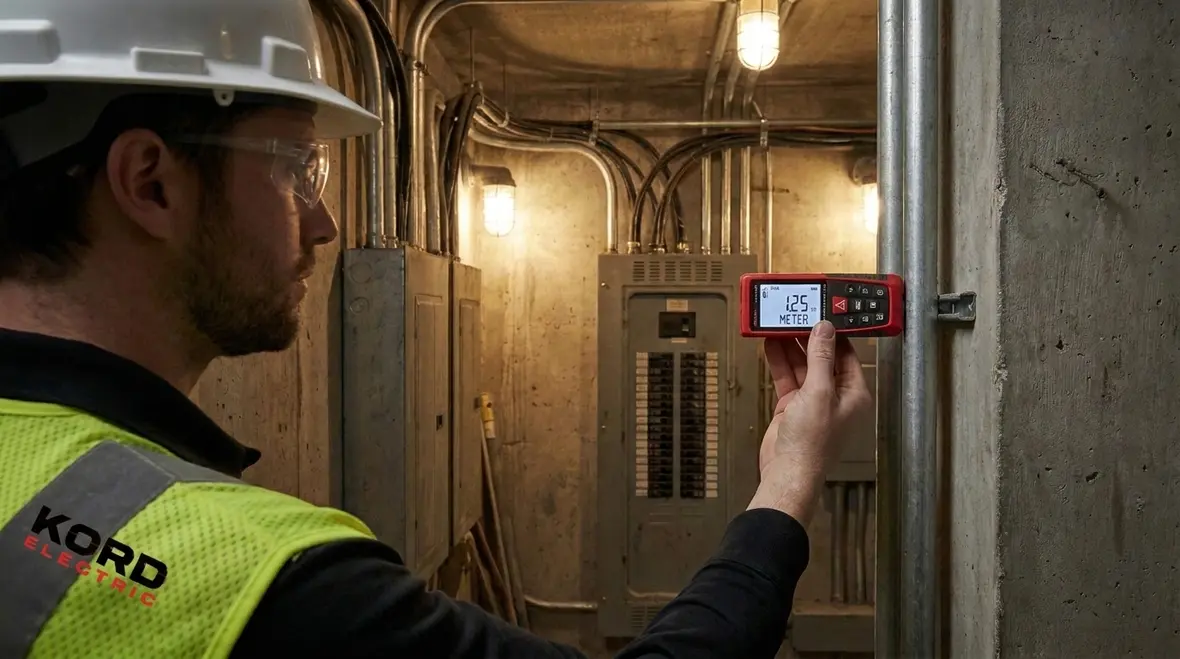
That is why our field teams often pair vault reviews with broader electrical evaluations. When we identify recurring clearance issues, we flag them alongside other NEC alignment topics so property managers can tackle them in a coordinated upgrade instead of piecemeal fixes that never quite catch up.
Coordination with other NEC safety rules in major property buildings
Vault work does not happen in a vacuum. It overlaps with other NEC requirements and typical building systems. For major property buildings and complex commercial and industrial facilities, design and maintenance teams often juggle multiple standards at once.
For example, designers may focus on protection from moisture, corrosion control, and ventilation, while electrical teams focus on guarding, working distances, and conductor routing. However, the vault is where these topics intersect. Therefore, when we review a project or help an ongoing facility, we coordinate the electrical clearance idea with the way people actually access the gear.
Also, we keep fire and life safety in mind. If the vault houses critical equipment, we want the electrical layout and fire protection plans to support safe access for both maintenance crews and first responders. Kord Electric works alongside the broader safety approach that you would see across Kord Electric and Kord Fire resources, because safe electrical work and fire readiness belong together. And in case you are wondering, no, we do not rely on “good vibes” as a substitute for code compliance.
When facilities look at projects like new fire pumps, upgraded emergency power, or changes to distribution equipment, we encourage teams to review vault arrangements at the same time. That keeps NEC 110.73 aligned with the broader NFPA ecosystem instead of leaving vault conditions stuck in a previous renovation era.
What our expert service staff does on-site
When we perform field assessments, our approach stays calm, methodical, and clear. First, we walk the vault with the people who know the equipment best. Then, our expert service staff measures working clearance, checks access paths, and identifies constraints created by doors, covers, and nearby components.
Next, we explain what the code requires and what that means for actual work. We do not hide behind vague talk. We show where a technician will stand, where a tool will go, and how the vault layout changes once covers are opened. If the facility plans upgrades, we help teams design adjustments that preserve safe working space without turning the vault into a construction battlefield.
Finally, we document findings in a way that helps operations teams plan repairs and maintenance. So rather than leaving a facility with a list of problems and no path forward, we support decisions. In major property buildings, that matters, because you cannot pause operations every time a breaker needs attention.
For portfolios spread across Los Angeles and surrounding areas, our assessments often tie directly into broader service plans. The same crews who review NEC vault equipment work space can support long term programs like preventive maintenance, electrical safety training, and targeted upgrades that keep your code posture strong across multiple sites.
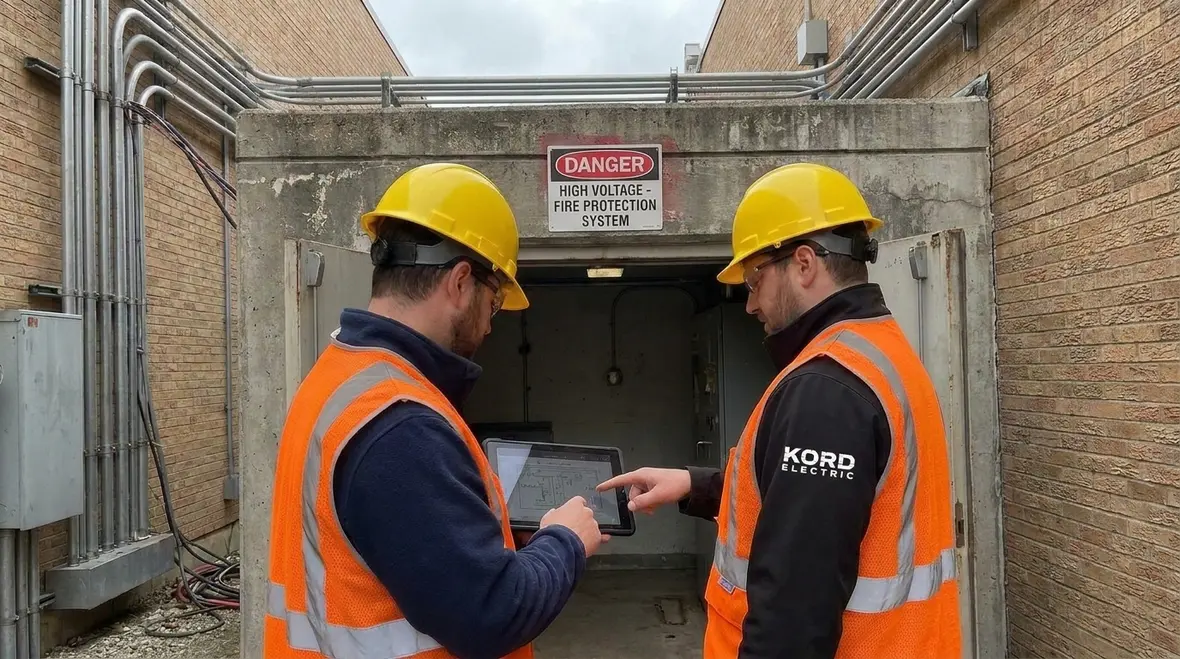
Because the NEC is updated regularly, we also help facility teams understand when code changes may affect existing vaults. Sometimes the right answer is a targeted modification; in other cases, the safest move is a more thorough rework. Either way, our staff works to connect code language to a realistic construction plan instead of dropping a citation and walking away.
Real world examples: where vault work space plans break down
Even in well-run facilities, vault arrangements can fail during later modifications. A frequent issue comes from “temporary” changes that become permanent: added conduits, updated cable routes, or new equipment that gets installed without rechecking working clearances. Then someone says, “We’ll just make it work,” which is a famous last sentence in electrical safety.
Another breakdown happens when equipment is replaced with a different model. The replacement may fit physically, but it can alter panel swing clearance, change access angles, or reduce reach distance to terminations. Also, teams sometimes move signage, relocate barriers, or add storage items near the vault opening. That can shrink the effective work zone and create trip hazards.
We also see issues when different contractors touch the same vault over time. One project adds control panels on a side wall. Another sneaks in a small transformer “just for now.” A third adds communication racks right where someone needs to stand to operate disconnects. None of those changes may feel dramatic in the moment, but together they quietly erase the NEC vault equipment work space the original designer intended.
When we review these cases, we focus on what a technician needs during routine service, not only during the first commissioning. Therefore, we design and recommend changes that keep working space consistent over time, even as the facility evolves.
Planning upgrades that keep vault safety intact
Facilities often upgrade electrical gear on a schedule driven by load growth, reliability goals, and budget cycles. We recommend planning vault clearance as part of the upgrade scope, not as an afterthought. When a project team treats working space like a requirement from day one, the result is cleaner install work, faster service access, and fewer shutdown surprises.
For commercial and industrial facilities, we also suggest aligning the electrical upgrade plan with maintenance operations. In other words, we ask who will work in the vault, how often the equipment requires service, and what access tools the crew uses. Then we map those needs to the clearance concept in 110.73.
And if you feel the urge to rush the process because the deadline is looming, we get it. Deadlines can feel like the villain in a superhero movie. Yet, vault safety cannot be the hero that shows up at the last second. It has to be built in, measured, and verified.
A thoughtful upgrade plan will also look beyond the vault. When main distribution equipment changes, feeder routing, labeling, and overcurrent protection all interact with how safely people can work downstream. Connecting these dots early keeps 110.73 aligned with the rest of your NFPA 70 strategy instead of leaving it as a separate, lonely requirement in a crowded spec book.
How NEC vault equipment work space ties into broader electrical reliability
It is easy to treat NEC vault equipment work space rules as purely safety driven, but they also play a quiet role in reliability. When technicians can reach terminations comfortably, they tend to perform tighter inspections, catch early signs of overheating, and complete torque checks without fighting for position. All of that reduces the chance of nuisance trips, insulation failures, and unexplained outages later on.
In Los Angeles County and similar regions, many commercial and industrial facilities run around the clock. That means vault work often happens on tight shutdown windows or overnight shifts. Giving crews clear, unobstructed working space makes those windows more productive and less stressful, which translates directly into fewer callbacks and fewer surprises when the building comes back online.
When our team helps facilities plan electrical preventive maintenance or troubleshoot recurring issues, we routinely flag vault layout problems as root causes. A breaker that never seems to stay tightened, for example, may trace back to a technician who could not safely position a torque wrench because other equipment was crowding the panel front. In that sense, maintaining code compliant working space is part of running a stable electrical system, not just passing an inspection.
FAQ about NFPA 70 Section 110.73 and vault work
Conclusion and next step with Kord Electric
If your facility has electrical vaults, we urge you to treat work space like an active safety feature, not a one-time design detail. Kord Electric serves commercial and industrial facilities and major property buildings, and our technicians explain the requirements in plain language while we verify working access in the field. If you want a clear path forward, contact us for an assessment and practical upgrade guidance that keeps maintenance safer and inspections smoother. Let’s make your vault a place where work happens, not where stress hides.
For properties across the region that need help beyond a single vault, our Los Angeles County electrical services team supports everything from troubleshooting and emergency response to long term upgrade planning. That way, your NEC vault equipment work space strategy fits inside a broader electrical roadmap instead of standing alone.