
NFPA 70 Section 210.23 Multiple Outlet Circuit Loads
NFPA 70 Section 210.23 and NEC multiple outlet circuit loads, explained for commercial buildings
For commercial and industrial facilities, NEC multiple outlet circuit loads rarely sit quietly in the background. They show up everywhere: break rooms, warehouse task lighting, office workstations, and specialty rooms with equipment that does not care about your tight schedule. Under NFPA 70 Section 210.23, the code allows certain kinds of loads on multiple-outlet circuits, and it also sets boundaries so your system does not fail in the real world. At Kord Electric, our technicians and expert service staff explain these rules in plain language, because you deserve clarity, not a worksheet disguised as an answer. And yes, we promise not to treat your panelboard like a mystery novel. We get to the plot quickly, then we secure the ending.
What Section 210.23 permits for multiple outlet circuits
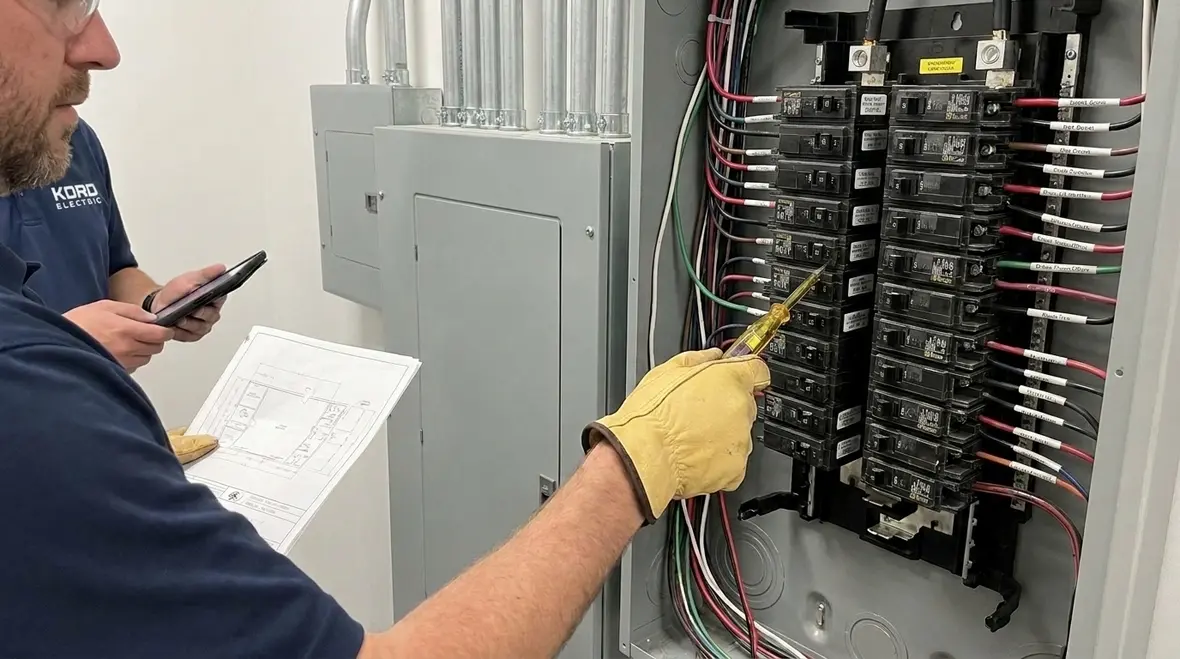
Section 210.23 addresses how you can supply multiple outlets on a single circuit while still meeting safety and sizing expectations. In plain terms, the rule helps you avoid oversizing every circuit just because you installed a second receptacle. However, the code does not give you unlimited freedom. Instead, it aims to match realistic use with electrical design.
So, when others review drawings, they should look for how the circuit is intended to serve outlets and equipment. Then, they should compare that intent to the actual wiring method, the expected connected load, and the demand the facility will place on the circuit. Consequently, the electrician and the designer both need to use consistent assumptions. If someone expects low use but another team designs for peak use, the finished installation becomes confusing. And confusion is expensive, like finding out your spare part ships from the other side of the planet.
Kord Electric approaches this step with discipline. Our technicians verify the circuit purpose, the outlet layout, and the load list for each area in commercial and industrial buildings. After that, we align the design with the NEC approach so the system stays predictable under everyday operations. For facility teams who want a broader view of how NFPA 70 shapes modern electrical decisions, our resource Understanding NFPA 70, the National Electrical Code Explained for 2026 provides added context for planning and upgrades.
How “permitted loads” work in the real world
Permitted loads in Section 210.23 do not mean “ignore calculations.” Instead, they mean the code recognizes that multiple outlets on the same circuit often do not draw full power at the same time. Therefore, the code provides a way to account for that diversity while still keeping the circuit protected.
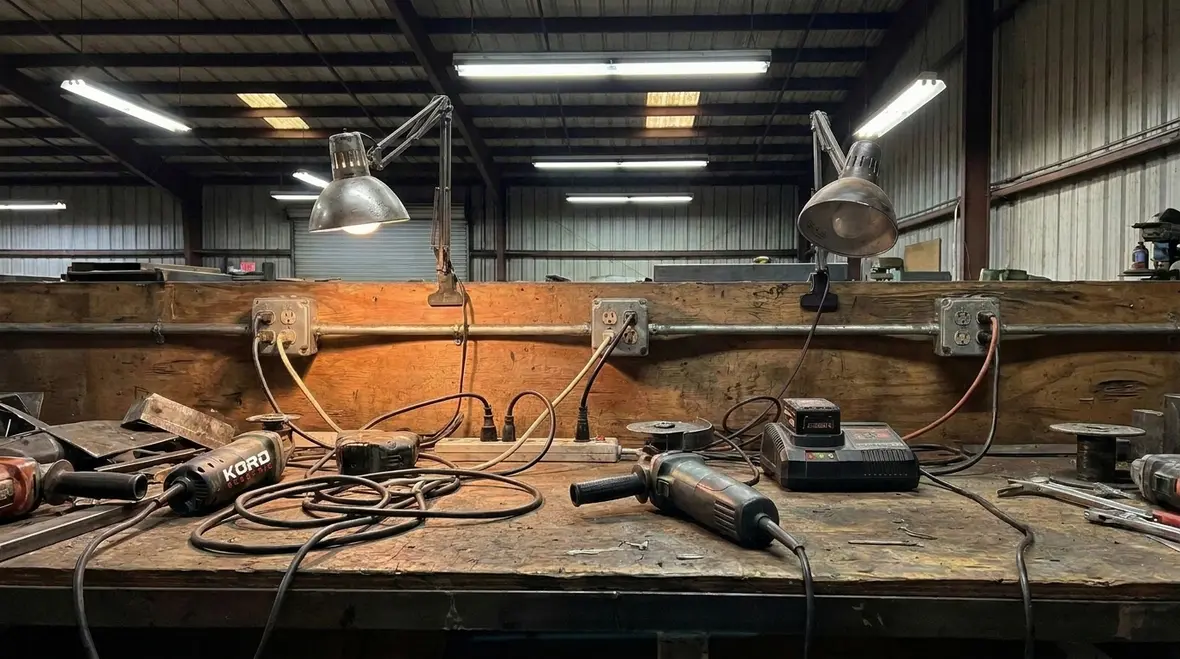
For example, in a typical office zone, computers, chargers, printers, and small tools may plug in across different desks. Meanwhile, not all devices run at their highest draw simultaneously. That reality supports how the code treats multiple outlets when sizing loads and selecting overcurrent protection. However, in warehouses or maintenance areas, the pattern can shift. A single heavy tool or machine could change the load profile fast. So, the facility team must describe operating patterns accurately, not optimistically.
When we assist project teams, our experts focus on connected equipment, operating schedules, and how staff uses outlets in practice. Then, we translate those details into code compliant expectations. That is how you prevent the classic scenario where everything looks fine on paper, and then the first busy day turns the breaker into a frequent guest at your facility.
Where multiple outlet circuit loads fit in commercial and industrial planning
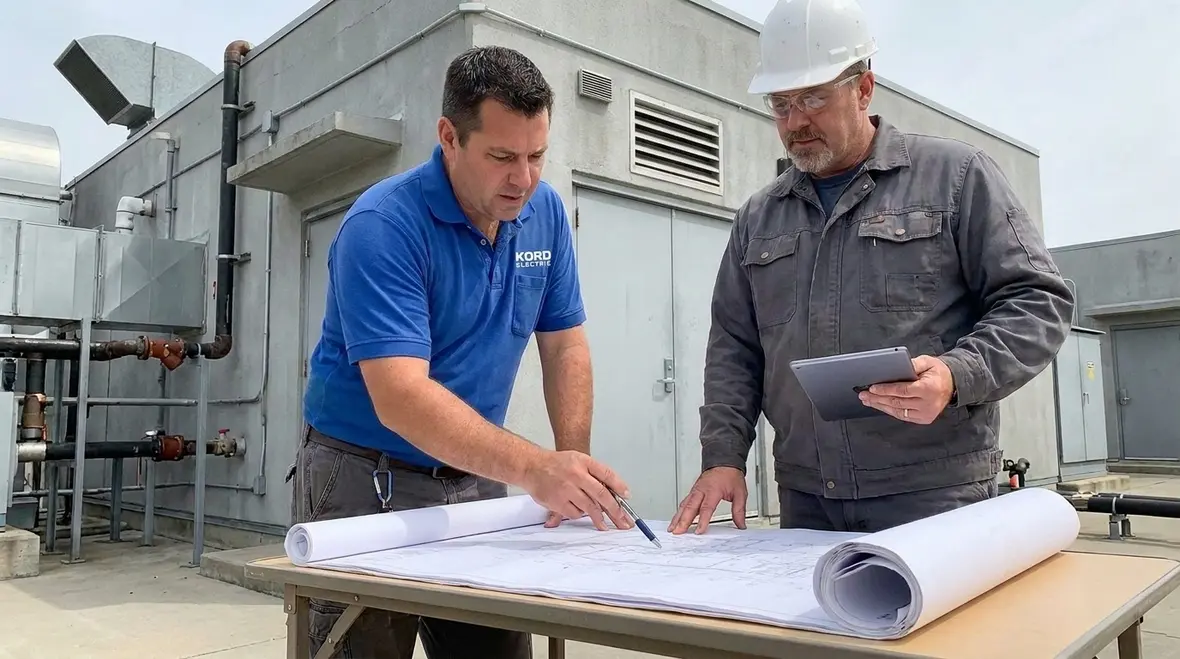
In large facilities, multiple-outlet circuits often serve spaces that need flexibility. Consequently, they support power distribution for changing workstations, temporary tasks, and recurring equipment. Kord Electric works primarily with commercial and industrial properties, and we see the same patterns repeat across property types.
Common use cases include
- Office and administrative floors where desks shift, teams grow, or departments reconfigure
- Training rooms and conference spaces where devices plug in for short sessions
- Maintenance bays and light industrial areas where hand tools and small equipment cycle through usage
- Shared break rooms and shared work areas where outlets support many everyday appliances
- Mechanical rooms where code compliant receptacle power supports service tasks
At the same time, the code still expects proper circuit design based on the facility’s actual load behavior. For example, if a space hosts equipment with consistent high demand, the approach to multiple outlet circuit loads must reflect that. Otherwise, you risk undersizing, nuisance trips, overheating concerns, or protection that does not match the load.
This is where our service staff adds value. We review labeling, outlet locations, and equipment lists. Then we confirm that the circuit strategy supports the operational plan. And if the plan is vague, we ask the questions early. That is less painful than discovering the answer after the building is running.
Common compliance pitfalls we see, and how to avoid them
Even good teams stumble. Furthermore, code rules interact with other design choices, so a small mistake can cascade. Here are some practical pitfalls related to permitted loads on multiple-outlet circuits, as our technicians frequently encounter during commercial and industrial projects.
- Assuming diversity without confirming use: Teams may estimate low simultaneous use, but the facility may run the opposite pattern during daily peaks.
- Mixing equipment types on the same circuit: If heavy equipment and normal receptacle loads share the same circuit, the circuit can behave differently than expected.
- Underestimating added devices: Facilities evolve. New routers, new testing equipment, or new charging stations can quietly increase the load.
- Skipping documentation updates: If drawings and labels lag behind real changes, maintenance teams struggle and circuit protection gets harder to manage.
- Ignoring the protection strategy: If breaker sizing, conductor selection, and circuit purpose do not align, the system stops being predictable.
Instead of guessing, our team at Kord Electric verifies details. We connect code logic with how the building operates. Then we help facilities plan for growth without turning your electrical system into a patchwork quilt.
And yes, we have seen “temporary” equipment live longer than some office plants. If a device stays for months, it is not temporary anymore. We treat it like real load and we address it at the design level.
NEC coordination steps our expert electricians follow
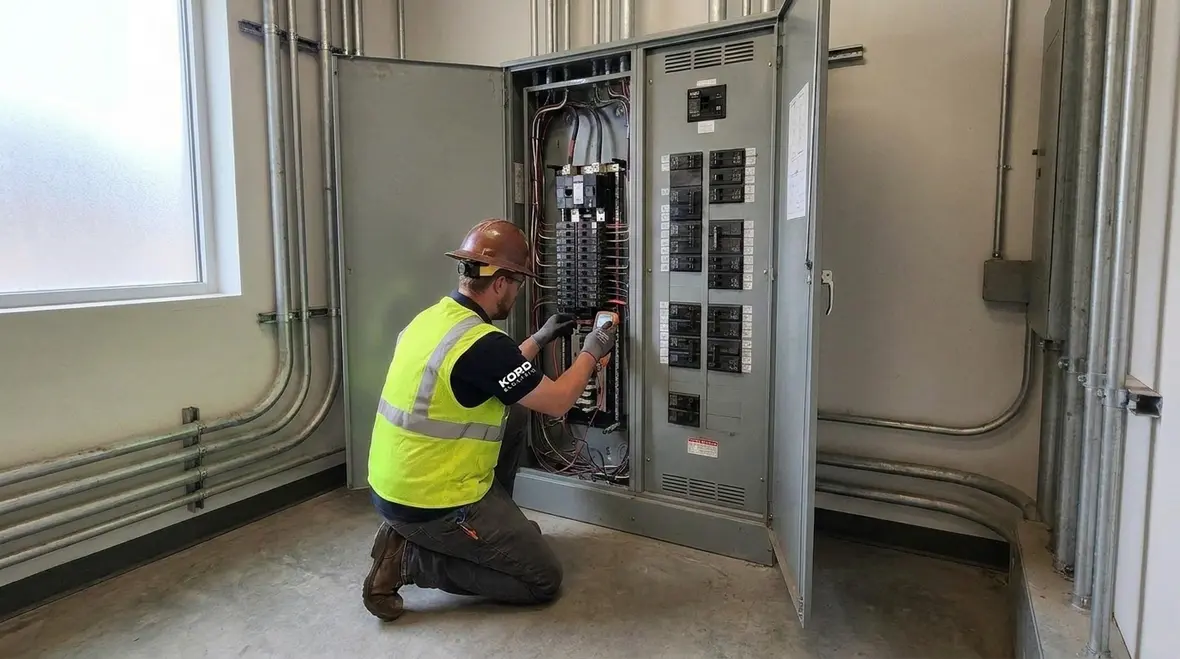
To keep multiple outlets safe and reliable, you need coordination, not guesswork. Kord Electric organizes this work into clear steps that match how commercial and industrial teams plan projects. First, we identify where multiple outlets connect and what they serve. Next, we review the facility’s load behavior, including when loads run and how often staff uses equipment.
Then, our technicians align the design with code intent. After that, we check that conductors and overcurrent protection match the load calculation approach. This is not a rubber stamp. It is a chain of decisions that must hold together under real conditions.
Finally, we focus on field verification. Outlets must match the intended circuit plan, labeling must stay accurate, and installation methods must meet the NEC expectations for safety. Because commercial and industrial facilities operate on tight timelines, we keep communication steady and corrections focused, so your project does not stall.
For teams who want more code background, Kord Electric and our related resources emphasize how the NEC framework supports safe electrical planning for 2026 and beyond, and how the broader code requirements connect to practical installation decisions. You can also explore Kord Fire’s NEC explainers for an additional viewpoint on national electrical code themes and fire protection considerations that often travel with electrical planning. Our overview on What Is NFPA 70? Understanding the National Electrical Code is a helpful companion read when you are aligning branch circuit planning with overall code direction.
Planning lens
- Outlet purpose and location
- Connected equipment list
- Operating schedules and duty cycles
- Future changes that facilities can predict
Safety lens
- Circuit sizing approach
- Conductor selection and method
- Overcurrent protection alignment
- Field verification and labeling
FAQs on permissible loads for multiple-outlet circuits
Final call for commercial and industrial electrical reliability
If your facility uses multiple outlets across offices, warehouses, or shared service areas, we recommend a focused review of your circuit strategy. Kord Electric brings expert technicians and clear explanations to help you apply NFPA 70 Section 210.23 correctly, avoid common compliance pitfalls, and keep power steady when staff needs it most. For facilities in Southern California, our Los Angeles County electrical services support everything from new NEC-driven designs to upgrades, maintenance, and troubleshooting for complex commercial systems. Contact us to discuss your plans, your equipment list, and how your building actually operates. Then we build a safer electrical path forward, without the boring drama.


