
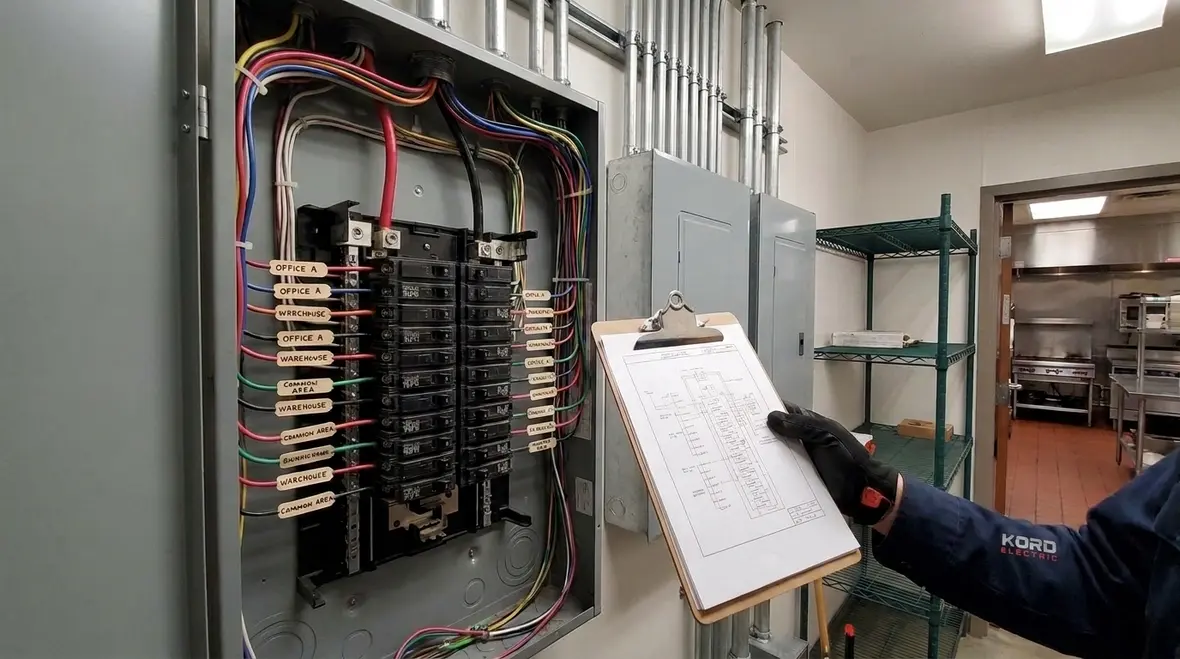
NEC Mixed Occupancy Branch Circuits Section 210.25
NEC mixed occupancy branch circuits: what Section 210.25 requires for real jobs
In commercial and industrial facilities, mixed use is the norm, not the exception. A building might hold offices next to storage, light manufacturing next to break rooms, or a showroom beside a workshop. That is where NEC mixed occupancy branch circuits come into the picture, especially under NFPA 70 Section 210.25. Our team at Kord Electric explains these rules in plain language so your design intent matches the field reality. And because no one wants the kind of electrical inspection feedback that reads like a mystery novel, we help prevent confusion before it becomes a costly plot twist.
Third person writers can explain code, but our experienced technicians and expert service staff also live the code. Therefore, the guidance below focuses on what Section 210.25 is trying to protect: safe operation when one part of a building cannot share the same wiring assumptions as another part. That is the calm, steady goal behind the fine print.
How Section 210.25 handles mixed occupancy separation

Section 210.25 addresses how branch circuits behave when a building includes more than one type of occupancy. In other words, the code does not treat every space like it is the same room. Instead, it requires that branch circuit conductors and their supply paths account for different rules that apply by occupancy type and risk level.
To keep this practical, consider a facility that combines offices with a storage or industrial area. Even if both areas use standard receptacles, the electrical intent can differ. Consequently, designers must ensure the branch circuit organization and the distribution method follow the occupancy based requirements, not just the “it all looks similar” mindset.
Here is the key idea that our technicians stress on job walks. When occupancies differ, the wiring method and circuit grouping must allow compliance with the applicable sections. That way, when inspectors look at labeling, routing, and circuit separation, the building tells a consistent story.
And yes, mixing occupancies without planning circuit rules can feel like putting salad and power tools in the same toolbox. It may be possible, but it is not a good life choice.
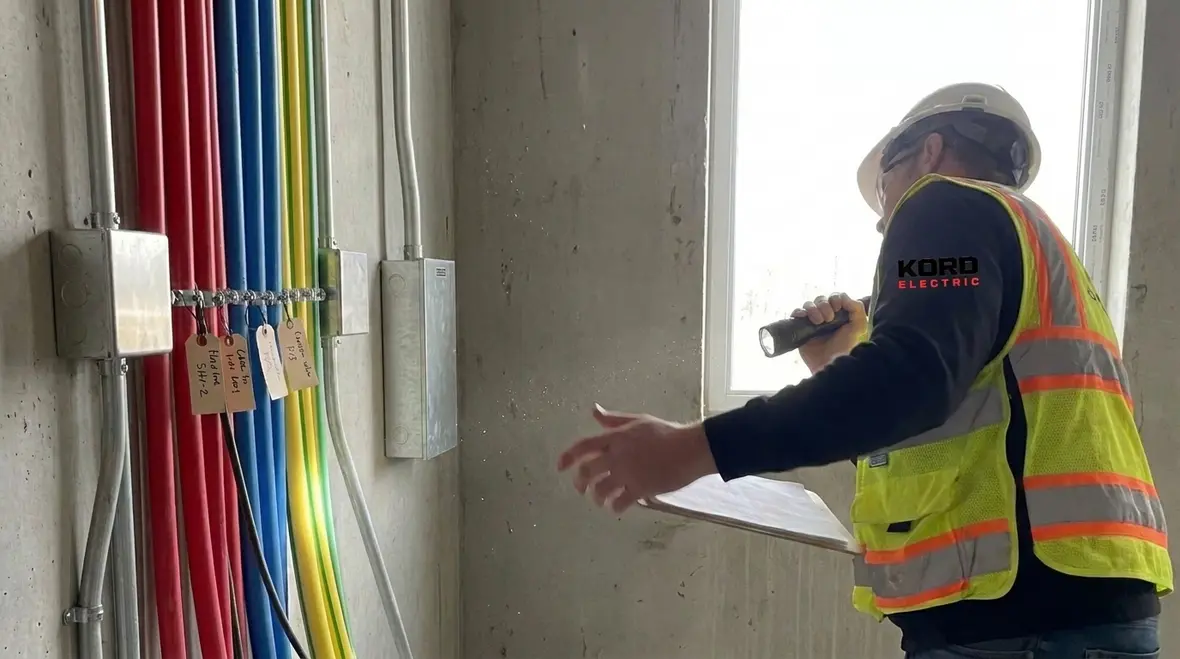
What “branch circuit rules” mean for distribution and labeling
Branch circuits are not just wires that happen to reach outlets. They are part of a system that supports loads, safety limits, and code based separation. Under Section 210.25, the rules push projects to define how branch circuits serve the spaces, and how they are arranged so each occupancy receives the appropriate electrical treatment.
So what does that look like in the field? Our expert service staff commonly sees issues in three areas. First, drawings show one circuit layout, but the actual wiring changes during install. Second, panel schedules do not match the tenant build out or remodel history. Third, labels get delayed or skipped, and later everyone guesses what each breaker really feeds.
Therefore, our process emphasizes coordinated panel schedules, circuit numbering, and clear labeling. We also recommend that the electrical design team and the contractor align early on how branch circuits will be separated or shared, based on the occupancy rules that apply. When that alignment exists, the building gets safer, commissioning gets faster, and the inspection day feels less like a stress test.
Transitioning from concept to reality is where Kord Electric earns its reputation. We translate the code into a clean field plan that your facility team can operate and maintain.
Where misunderstandings happen during commercial buildouts
Commercial and industrial sites often evolve. A warehouse gets reconfigured into a production area. A training room becomes a break room. An office suite expands into adjacent space. Even a minor remodel can quietly change how occupancies should be treated under NFPA 70.
In these scenarios, the risk is not only safety. It is also compliance clarity. A building can pass an initial inspection and then fail later because the branch circuit decisions no longer match the updated occupancy arrangement. That is why Section 210.25 matters even after the permit stamp dries.
Common misunderstanding number one: assuming that “same breaker, same cable, same result” always works. It does not. Occupancy changes can shift the electrical requirements, so the branch circuit planning must keep up.
Common misunderstanding number two: treating receptacles as identical loads across occupancies. Yet lighting loads, equipment loads, and general receptacle loads can demand different approaches in how circuits are arranged and protected.
Common misunderstanding number three: relying on verbal explanations without updating documentation. Our technicians often point out that the best plan in the world is still only as good as the drawings and panel schedules that survive the next renovation. If the documentation stays current, the facility team can manage changes without turning your electrical system into a guessing game. And nobody wants to play “Guess the Breaker” in a server room.
As Kordfire and Kord Electric perspectives reinforce, understanding NEC structure early helps keep the whole site aligned over time.

Keeping safety and service access in focus
When branch circuits follow mixed occupancy rules correctly, safety benefits show up immediately. Circuit separation supports proper operation and reduces the chance that a control or safety expectation fails because wiring assumptions were incorrect.
Additionally, correct circuit planning improves service access. When our expert service staff opens a panel, they should find a clear layout that matches the intended occupancy based organization. That makes troubleshooting faster and more accurate, which matters for uptime in commercial and industrial facilities.
We also think about long term maintenance. Over the years, facilities add devices, swap out equipment, and expand workflows. If circuit organization follows the occupancy intent from the start, expansions can stay cleaner. On the other hand, when systems start out mixed without the right rules, future work becomes harder, more expensive, and more risky.
So we guide clients toward planning that protects both the people and the schedule. And if you want a pop culture analogy, this is like building a solid set for a movie before the stunt scene. You can still shoot the scene, but at least the platform does not collapse.
How Kord Electric supports compliance across the NEC
Kord Electric focuses on commercial and industrial facilities and major property buildings. That scope shapes how we deliver help. We do not treat code questions like generic blog topics. We treat them like part of a real asset management plan. Our technicians and expert service staff explain what Section 210.25 changes, then we translate that into drawings, labeling, and on site verification steps.
We also coordinate with other fire and electrical related guidance where relevant. For example, people may also look at fire systems guidance such as fire pump rooms and related electrical supply concerns. While this article centers on NFPA 70 Section 210.25, our teams stay aware of the broader safety ecosystem because buildings rarely use only one rule set.
That holistic approach matters for mixed occupancy planning. The code framework works as a system, and the field decisions must reflect that. When clients work with us, they get a practical path: understand the occupancy driven requirements, organize branch circuits accordingly, and document everything so future work does not break compliance.
And because we work in the real world, we keep communication calm and clear. We explain what matters, why it matters, and what needs to happen next. Like a steady voice in the room, so the team can act without panic.
If your team wants a broader view of how NFPA 70 shapes electrical decisions, you can also review our overview on understanding NFPA 70 and the National Electrical Code for 2026, then bring those insights back to your NEC mixed occupancy branch circuits planning.
FAQ: quick answers on NFPA 70 Section 210.25 and mixed occupancy wiring
Get help before the next inspection day
If your facility has mixed areas, Kord Electric helps you plan and verify the branch circuit approach needed for NFPA 70 Section 210.25. Our technicians and expert service staff walk the site, review drawings, and explain what changes in a way your team can act on. Then we support clean documentation so future work stays consistent. Contact us to align your electrical design with the NEC and protect uptime, safety, and compliance. Let’s handle the detail now so the inspection day stays boring in the best way.
For facilities that want support beyond one project, our dedicated Los Angeles County electrical services for commercial and industrial properties provide ongoing help with design, installation, and maintenance, so NEC mixed occupancy branch circuits stay compliant as your building evolves.
If you are planning a larger upgrade or new build where occupancies share power infrastructure, you can also pair this guidance with broader electrical planning resources, such as how we approach building electrical system design and power planning for commercial facilities. That way, NEC mixed occupancy branch circuits are not an isolated detail; they are part of a coordinated electrical strategy.


