
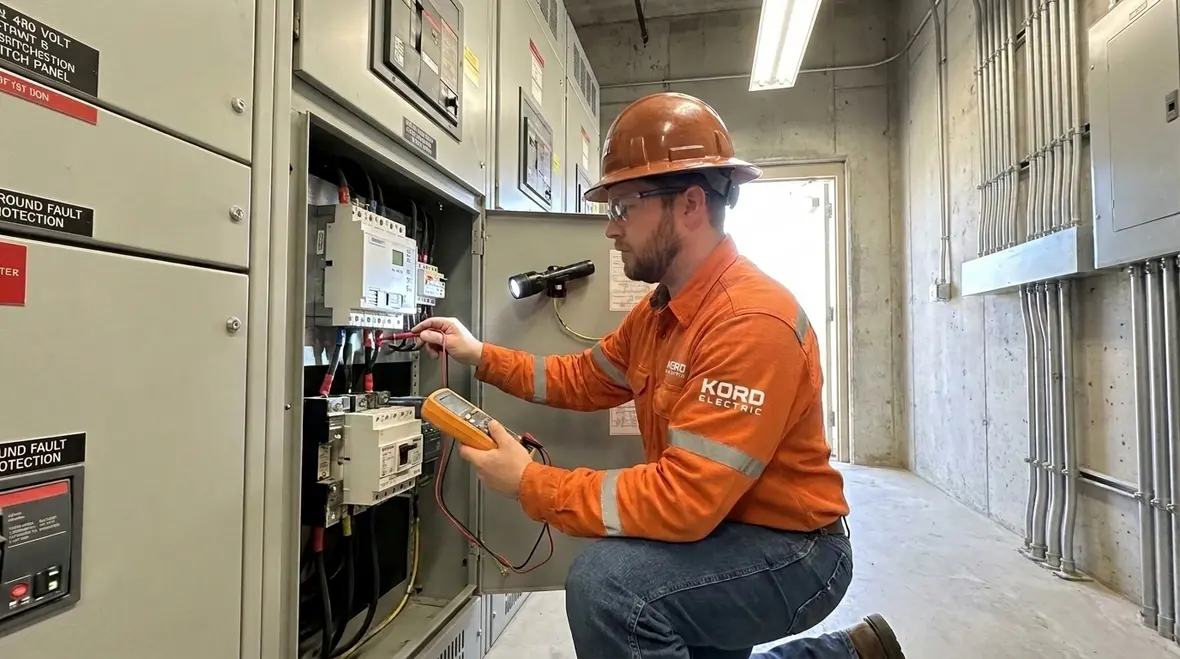
NFPA 70 Section 240.13 NEC GFPE 480 volt Equipment Protection
Kord Electric serves commercial and industrial facilities, and we understand that electrical safety cannot be treated like an optional add on. In many buildings, our work starts with NEC GFPE 480 volt systems, because real projects run on real loads and real risks. When ground fault shows up, it can create shock hazards, fire risk, and expensive downtime. That is why NFPA 70 Section 240.13 matters. As we explain it to property owners and facility managers, our technicians lay out what the code requires, how installers verify it, and how teams keep protection working as intended.
And yes, sometimes clients ask questions that sound like they came from a mystery novel. Good. We will solve the mystery. Calmly. Like we are turning a flashlight on in a dark room, one careful step at a time.
NFPA 70 240.13 explained for 480 volt equipment in real buildings
NFPA 70 Section 240.13 sets out Ground Fault Protection of Equipment, often called GFPE. In simple terms, the code aims to limit how long and how severely ground faults can persist on electrical equipment. Therefore, it focuses on conditions where a ground fault could energize metal parts or create fault current paths that do not clear quickly enough. As a result, the goal becomes twofold: reduce shock risk and help prevent damage that can lead to fire.
Now, commercial and industrial facilities face a wide spread of equipment types, from switchgear and transformers to feeders that serve motors and distribution panels. Since many of these systems use NEC GFPE 480 volt systems, the code’s intent shows up in how we select protective devices and how we coordinate settings. Moreover, it is not enough to “install something that trips.” The system has to meet the requirement for the specific equipment and application.
At Kord Electric, our expert service staff does not just quote rules. They walk the job team through what 240.13 expects in the field, including how ground fault sensing works, what “equipment protection” means for your setup, and where mistakes usually hide.
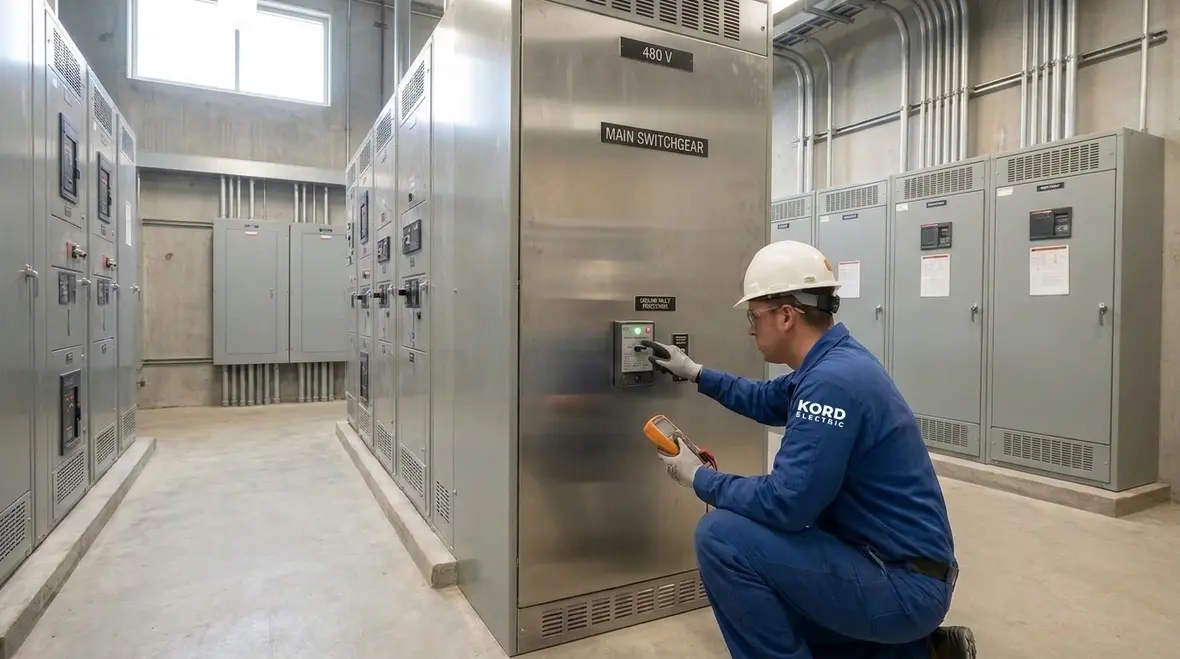
Where GFPE fits into a facility electrical plan
To keep this practical, we look at where GFPE requirements typically show up in a project scope. First, we identify the service and distribution arrangement, including voltage levels and grounding scheme. Next, we review which feeders or equipment are likely to need protection based on code language and the facility’s design. Then, we cross check whether the protection strategy aligns with other required functions, such as overcurrent protection and short circuit ratings.
Additionally, many teams try to treat GFPE like it only belongs in the electrical room. However, electrical faults can originate at loads and travel through conductors and connections before they find their path. Therefore, the protection must be set to respond to ground fault conditions in a way that matches how current flows in your specific system. In other words, the code does not ask for a random trip curve. It asks for protection that performs.
In the Kord Electric process, we also consider operational realities. For example, if your facility runs continuously or has sensitive processes, you need protection that clears fast enough to protect people and equipment, yet does not cause nuisance trips that shut production down. Our technicians focus on both safety and uptime, because one without the other is a bad business plan. Pun intended, and we stand by it.
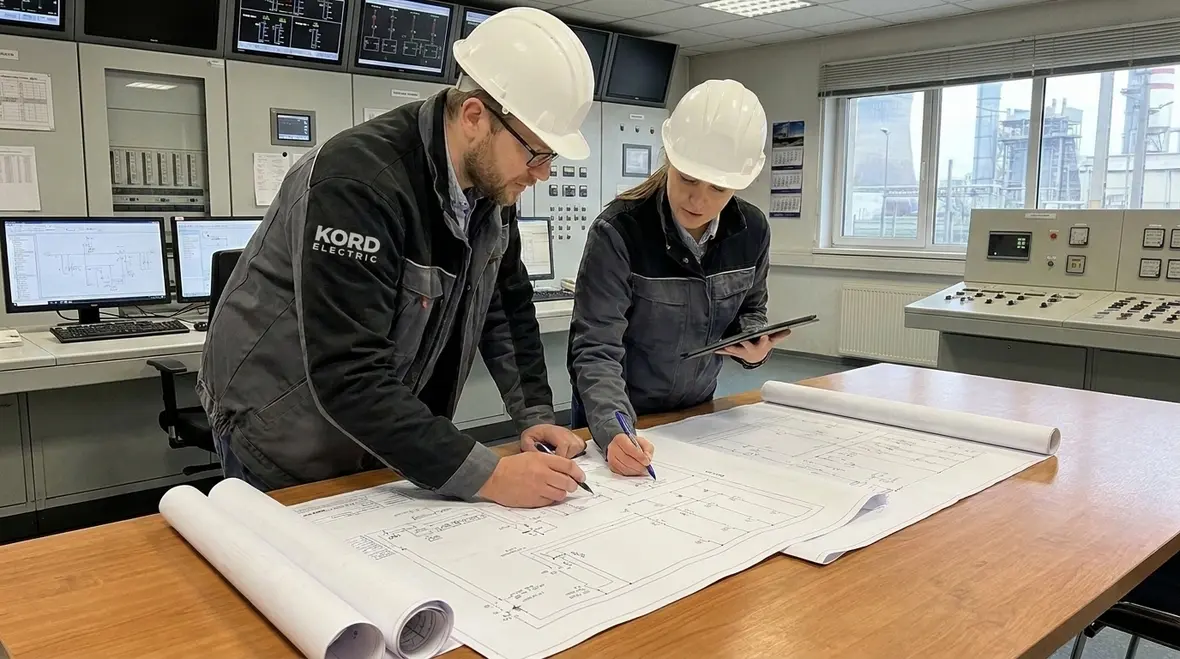
How ground faults create risk and how protection reduces it
When a ground fault occurs, current can take an unintended route from an energized conductor to grounded metal or other grounded paths. Consequently, exposed conductive parts can become energized. That is the shock hazard part of the story. At the same time, ground fault currents can heat conductors and connections. If they persist, that heating can damage insulation, loosen terminations, and contribute to fire risk.
Furthermore, the electrical system’s configuration controls how ground fault current behaves. Depending on the grounding method and fault path, a ground fault might not be detected by standard overcurrent devices in the time frame that safety demands. That is where NFPA 70 Section 240.13 pushes the use of dedicated ground fault sensing and tripping functions.
In NEC GFPE 480 volt systems, we pay close attention to coordination. We want ground fault protection to clear faults before damage occurs. At the same time, we want it to cooperate with downstream protective devices and control logic. Otherwise, the wrong device trips, or the system trips too slowly, or worse, the fault clears in one place but keeps re energizing elsewhere.
Our team explains these dynamics in plain language, and we document the approach so facilities teams can maintain it. After all, a protection system that works once, but fails during maintenance, is like a smoke alarm that only chirps during company inspections.
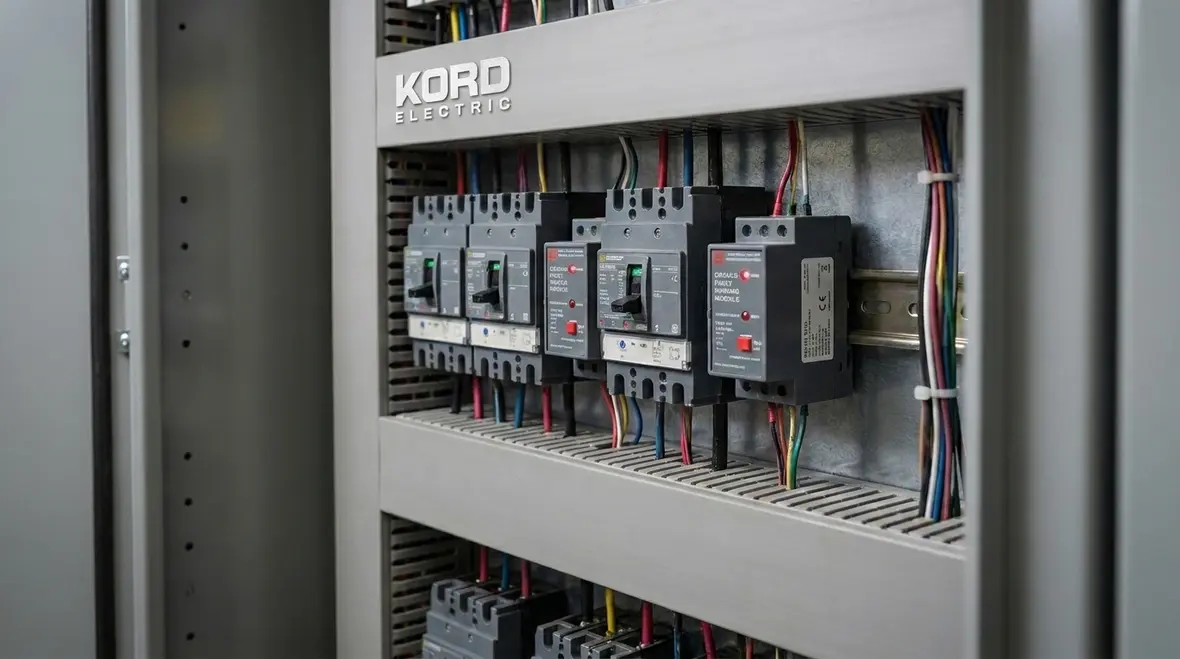
Selection and coordination for NEC GFPE 480 volt systems
Now we get into the part that project teams usually rush. Proper equipment selection and coordination. Since commercial and industrial facilities operate with real constraints, we treat GFPE as a system design task, not a last minute add on.
First, we confirm the voltage class and the equipment context. NEC GFPE 480 volt systems often connect to feeders that supply panelboards, motor control centers, or distribution gear. Next, we align the protection devices with the fault detection method. We verify that the sensing method captures ground fault current reliably for the conductor configuration and operating conditions.
Then, we coordinate with overcurrent elements. Even though ground fault protection has its own job, overcurrent protection still handles short circuit and overload conditions. Therefore, coordination ensures the system clears the right fault at the right time. Additionally, we check settings and time delays so the ground fault protection acts when it should, not when it feels like it.
Our expert service staff often reviews documentation and field measurements. They verify wiring connections, polarity, grounding paths, and device configuration. As a result, we reduce the chance of mis operation that can come from incorrect transformer ratios, incorrect neutral and ground wiring practices, or swapped conductor identification. Those issues do not politely announce themselves, so we look for them before they become emergency phone calls.
If you want broader background on how the NEC is organized for these topics, our teams also point clients to resources like the Kord Electric blog posts that explain the National Electrical Code approach and the way major sections interact. For example, Understanding NFPA 70: The National Electrical Code Explained for 2026 connects the high level NEC structure to everyday decisions about equipment selection, coordination, and long term safety performance.
Inspection, testing, and maintenance that keep GFPE dependable
Once the system installs, the work does not stop. Therefore, we treat inspection and testing as part of electrical safety life cycle management for commercial and industrial buildings.
In practice, inspection means checking labeling, ensuring the correct devices exist where design drawings show them, and confirming that the protection scheme remains intact after modifications. Many facilities expand over time, add circuits, replace gear, or repurpose feeders. When these changes happen without careful electrical review, the protection strategy can drift out of alignment.
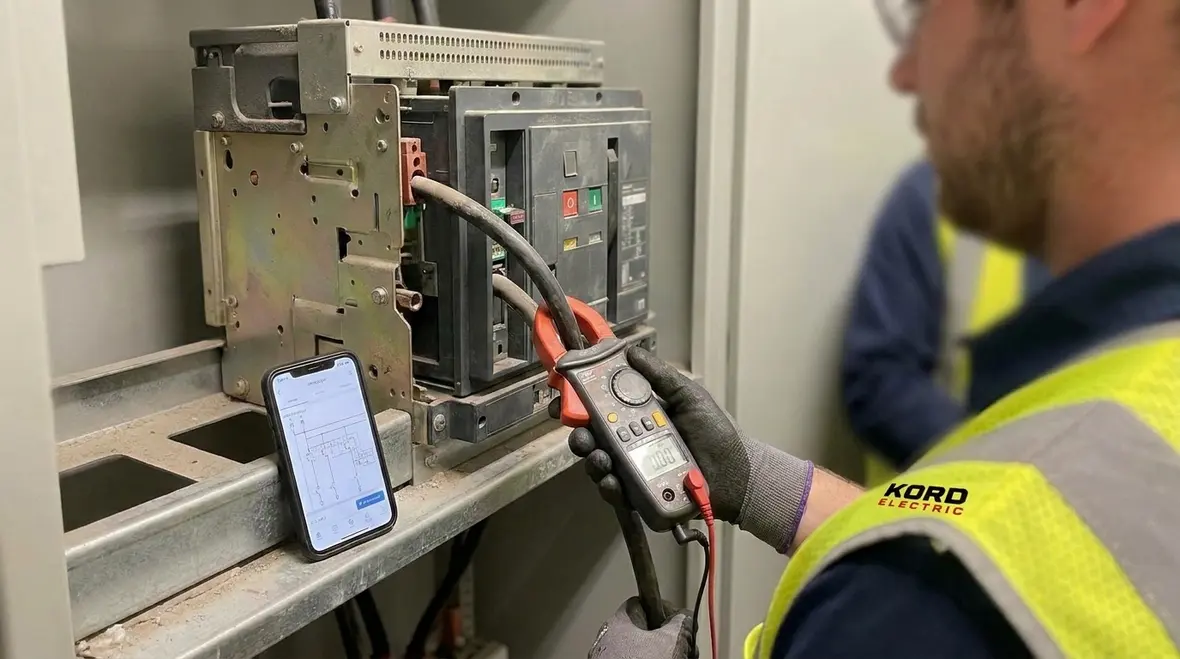
Testing then becomes essential. We verify that the ground fault sensing and trip functions respond as intended. Our technicians follow procedure and document results. Additionally, we check alarm and indicator behavior, because operators need to know what happened and why, not just that something tripped.
Maintenance matters because loose terminations, corrosion, or insulation wear can change system behavior. Over time, these factors can influence ground fault detection and clearing performance. Thus, recurring checks help keep NEC GFPE 480 volt systems reliable. In a world where “it probably still works” is a common mindset, we prefer “it is proven to work.” That approach keeps people safer and reduces unplanned downtime.
For fire and life safety planning, teams also often coordinate with resources from fire focused organizations. For example, guidance from dedicated fire pump and fire protection experts gives helpful context around fire system safety thinking, and that perspective helps facilities leaders connect electrical protection to broader risk management.
Common mistakes we see on commercial GFPE projects
Even careful teams can make errors. However, most of the issues we see fall into a few repeat categories. First, some installations use the right idea, but the wrong settings. The code does not only want “trip happens.” It wants the protection to meet the performance intent. Therefore, we verify device configuration against the design basis.
Second, some projects ignore coordination. As a result, the system may trip at the wrong level, shutting down more than necessary. This creates operational harm and pushes teams to override protection, which is never a great long term plan. We do not do that.
Third, wiring and grounding mistakes can undermine GFPE sensing. A swapped conductor ID, an unexpected connection path, or a grounding path changed during renovations can lead to mis operation. Additionally, missing documentation makes it hard to troubleshoot later. That is why our technicians record what they install and how they verify it.
Finally, some facilities delay testing. Then, when something finally fails, it fails during a busy shift, with limited time and high stress. That is how people end up speaking in short sentences like, “We need this fixed. Now.” We prefer a slower, calmer approach in the beginning.
FAQ about NFPA 70 Section 240.13 and GFPE
Call Kord Electric for GFPE compliance and safety support
If your team operates commercial or industrial equipment, you deserve ground fault protection that performs as designed, not as a guess. At Kord Electric, our technicians and expert service staff review your system, help coordinate protection for NEC GFPE 480 volt systems, and support inspections and testing so your facility stays safe and productive. Contact us to discuss your equipment, drawings, and field conditions, and let’s put your GFPE strategy on solid ground, literally and legally.
Because ground fault protection ties directly into broader electrical reliability, many facility leaders also look at their wider power distribution and service needs at the same time. If your organization operates in Southern California, services such as Los Angeles County electrical services from a qualified commercial contractor can help align GFPE upgrades with panel work, distribution changes, and long term maintenance planning, instead of treating everything as separate projects.


